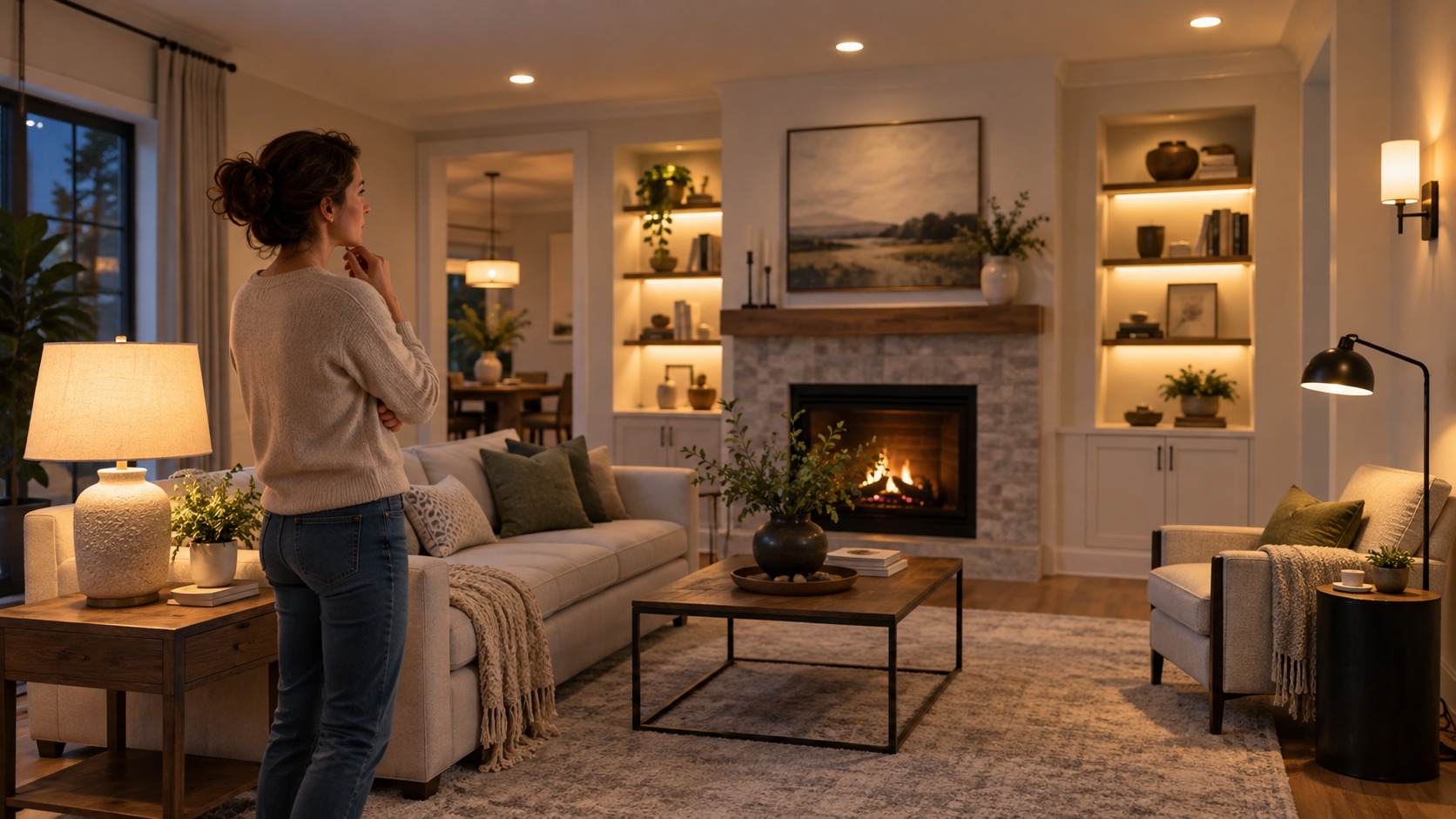
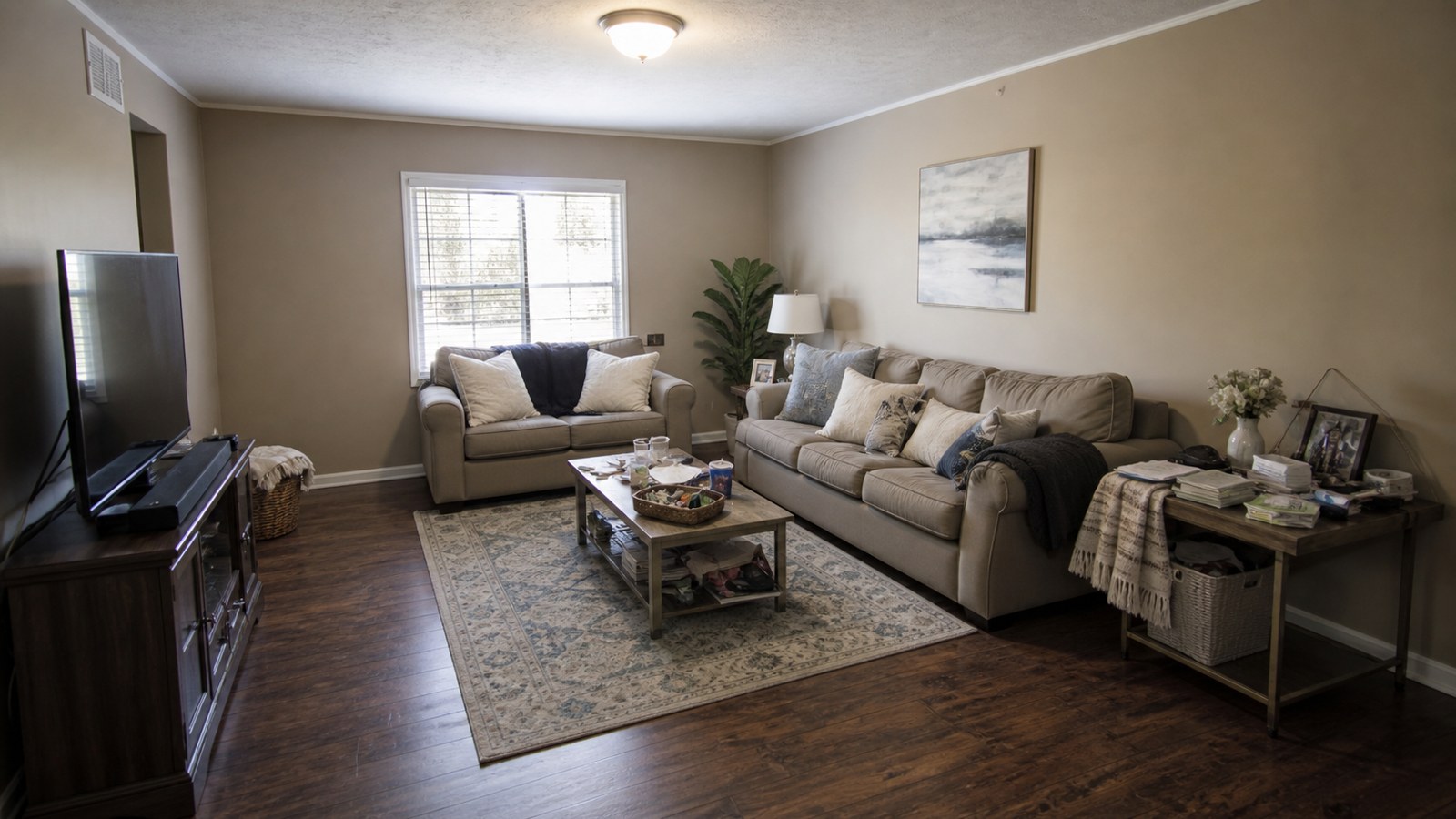
A good interior layout makes a home easier to move through before it makes the home prettier. Furniture, storage, lighting, doors, windows, walkways, and views all have to work together. When the layout is right, rooms feel calmer because people can enter, sit, cook, work, gather, and leave without fighting the furniture.
Planning a home layout is not only about where the sofa goes. It is about circulation between rooms, the size of each zone, how open spaces connect, where storage belongs, and which pieces deserve the best walls. Start with the way people live in the house, then let the furniture plan support those routines.
A: Start with circulation, fixed elements, and the activities each room must support.
A: Doors, windows, fireplaces, stairs, outlets, vents, built-ins, plumbing, and structural features.
A: A zone is an area organized around one activity, such as seating, dining, work, sleep, or storage.
A: Place the largest functional pieces first, then add rugs, lighting, storage, and smaller items.
A: Rugs anchor zones and make furniture groups feel intentional in open or large spaces.
A: Storage should sit near the activity that creates or uses the items.
A: Lighting determines whether seats, desks, bedsides, counters, and paths are actually usable.
A: Repeat a few colors, materials, shapes, or lighting ideas while keeping each room's purpose clear.
A: Test footprints, walkways, drawer clearance, chair movement, rug size, and cord paths.
A: Movable pieces, open floor area, modular storage, and clear zones that can adapt over time.
Begin With Circulation
Circulation is the path people use to move through the home. It includes the route from the front door to the kitchen, the hallway to the bedrooms, the path around a dining table, and the trip from a sofa to a patio door. A layout can look beautiful from one angle and still fail if these paths feel cramped.
Walk the house and notice the routes that get used every day. Mark where people carry groceries, laundry, school bags, tools, or luggage. These paths need more generosity than decorative corners. If furniture blocks a route that people naturally take, the room will feel awkward no matter how good the pieces look.
Plan clear paths before arranging decorative zones. The empty space is part of the design. It gives furniture room to breathe and lets the house function without constant sidestepping.
Identify the Fixed Elements
Every layout begins with things that are expensive or impossible to move. Doors, windows, stairs, fireplaces, built-ins, plumbing walls, radiators, vents, outlets, cable locations, ceiling beams, and exterior views all shape the plan. The furniture should respond to these features instead of pretending the room is blank.
Sketch the rooms with the fixed elements marked. Add door swings, window heights, traffic entries, and anything that needs service access. This prevents common mistakes like covering a return vent, blocking a closet, or placing a sofa where the door cannot open fully.
Fixed elements can also become strengths. A window can anchor a reading area. A fireplace can set the seating direction. A long wall can hold storage. A view can decide where the dining table belongs. Layout improves when the house’s existing structure is treated as useful information.
Define Zones in Each Room
Most rooms do more than one job. A living room may include television, reading, conversation, toys, and storage. A kitchen may include cooking, homework, coffee, pantry overflow, and gathering. An open floor plan may need living, dining, entry, and work zones in one large space.
Name the zones before choosing furniture. A zone should have a purpose, the right size, and enough circulation around it. Rugs, lighting, furniture backs, console tables, open shelving, and ceiling fixtures can define zones without adding walls.
Open rooms especially need this structure. Without zones, furniture can look like it is floating in a large space. With zones, the room becomes easier to understand and easier to use.
Place the Largest Pieces First
The largest furniture pieces control the layout. Sofas, beds, dining tables, desks, sectionals, media consoles, wardrobes, and large cabinets should be placed before smaller pieces. If the largest items are wrong, accessories cannot fix the room.
Use painter’s tape to mark the footprint of major pieces before buying them. Include the space needed for chair pullback, drawers, cabinet doors, bed making, and walking paths. A piece that fits the floor plan only when nobody moves is too large for daily life.
Scale matters more than matching. A smaller sofa with good side tables may work better than a sectional that blocks every path. A round dining table may solve a tight room better than a rectangular one. The right large pieces make the rest of the layout easier.
Choose a Focal Point for Each Main Room
A focal point gives a room direction. It can be a fireplace, view, bed, dining table, television, artwork, built-ins, or a seating group. Without one, furniture can feel scattered. With one, pieces have a reason to face a certain way.
Some rooms have competing focal points. A living room might have both a fireplace and a television. A bedroom might have a view and an awkward bed wall. Decide which feature matters most for daily use, then arrange the room honestly. If the family watches TV every night, the layout should admit that.
A focal point does not have to dominate. In a quiet room, the seating arrangement itself may be the anchor. The goal is simply to make the room readable.
Respect Furniture Clearances
Clearance is where many layouts fail. Dining chairs need room to slide out. Bedroom dressers need drawer space. Coffee tables need walking room around them. Office chairs need space to roll back. Cabinet doors, closet doors, and appliance doors need to open without conflict.
Measure the room with movement in mind. Do not measure only the object. Measure the object plus the action. A table is not just its top size; it is the chairs and people around it. A bed is not just the mattress; it is the space to make it and access storage nearby.
When a room is tight, choose furniture that reduces clearance problems: sliding doors, round tables, nesting tables, wall-mounted shelves, storage beds, shallow consoles, or armless chairs. Good layout often comes from choosing pieces that respect the room’s limits.
Plan Storage Where Items Are Used
Storage works best near the activity it supports. Entry storage belongs near the door. Media storage belongs near the television. Toy storage belongs near the play area. Linens belong near bedrooms or bathrooms. Office supplies belong near the desk. When storage is far away, clutter returns quickly.
Use a mix of closed and open storage. Closed cabinets hide visual clutter. Open shelves display books, baskets, art, or items that look good enough to see. In busy homes, closed storage usually needs to carry more of the load.
Built-ins are helpful when they solve a real problem, but freestanding pieces can be just as effective. A sideboard, storage bench, dresser, bookcase, or cabinet can create structure and function without construction.
Make Lighting Part of the Layout
Lighting should be planned with the furniture, not after it. A reading chair needs a lamp. A dining table needs light centered on the table, not necessarily the room. A desk needs task light and access to power. A hallway needs switches where people enter and leave.
If the furniture layout changes, the lighting plan may need to change too. A pendant over the wrong part of the dining room can make the table feel misplaced. A floor lamp without an outlet nearby can create a cord across a walkway. Recessed lights in a rigid grid may ignore the actual seating or work areas.
Layered lighting makes layouts more flexible. Ceiling light gives general visibility, lamps support use, and accent light gives depth. Each zone should have enough light to work on its own.
Use Rugs to Anchor Zones
Rugs are layout tools. They define seating groups, dining areas, bedroom zones, entries, and open-plan spaces. A rug that is too small can make furniture look disconnected. A rug that is properly sized makes separate pieces feel like one group.
In a living area, the rug should relate to the sofa and chairs. In many rooms, the front legs of the main seating pieces should sit on the rug. In a dining area, the rug should remain under chairs when they are pulled out. In a bedroom, the rug should extend beyond the sides and foot of the bed enough to feel intentional.
Material also matters. Flat rugs work well under dining chairs and doors. Softer rugs may be better for bedrooms and lounges. Rug choice should support both comfort and movement.
Coordinate Connected Rooms
Rooms that can be seen together should feel related. This does not mean every room uses the same furniture or color. It means the transitions make sense. Flooring, trim, wall color, metal finishes, wood tones, and sightlines should be considered as people move through the home.
In open plans, keep the major zones connected through repeated materials or colors. A wood tone in the dining chairs might repeat in the living room table. A black window frame might connect to lamp bases or cabinet hardware. Repetition keeps the home from feeling like unrelated rooms placed side by side.
Transitions matter in hallways too. A bold room can work beautifully when the rooms around it give the eye a pause. Layout planning includes these visual paths, not just furniture footprints.
Think Vertically
Layout is not only floor space. Walls, windows, ceiling height, shelves, art, curtains, and tall storage affect how a room feels. A room with all low furniture can feel unfinished. A room with too many tall pieces on one wall can feel heavy.
Use vertical space where it helps. Tall bookcases can add storage. Curtains hung higher can make a ceiling feel taller. Art can balance a large wall. Wall-mounted lights can free table space. Vertical planning is especially useful in small rooms where floor space is limited.
Balance tall elements around the room. One tall cabinet may need a floor lamp, art grouping, or curtain height elsewhere so the room does not feel lopsided.
Plan for Flexibility
Homes change. Kids grow, work habits shift, guests arrive, hobbies move rooms, and furniture gets reused. A good layout should have some flexibility. Lightweight chairs, nesting tables, storage ottomans, modular shelves, and multi-use rooms can help a home adapt.
Do not make every piece oversized or built in unless you are sure the need is long-term. Freestanding storage and movable seating can solve problems now without locking the room into one future. This is especially useful in offices, guest rooms, playrooms, and open living areas.
Flexibility does not mean temporary or messy. It means the layout can respond to life without requiring a full redesign every time something changes.
Avoid Common Layout Mistakes
The most common mistake is buying furniture before understanding the room. The next is pushing everything against the walls by default. Another is ignoring walkways because the room looks fine from one photo angle. These mistakes make rooms feel less comfortable than they should.
Other layout problems include rugs that are too small, lighting that does not match the furniture plan, storage placed far from where items are used, dining tables without chair clearance, beds jammed against awkward walls, and open rooms without clear zones.
Fix layout issues before buying more decor. A room with poor circulation or wrong-scale furniture will not be saved by pillows, art, or accessories. The bones need to work first.
Test the Layout Before Final Decisions
Use tape, cardboard, boxes, or existing pieces to test the plan. Walk through the house at normal speed. Sit where people will sit. Open doors and drawers. Pull out chairs. Turn on lamps. Move through the room in the morning, evening, and when the house is busy.
Take photos from doorways and connected rooms. Photos reveal scale and balance problems quickly. You may notice that a sofa blocks a path, a table looks too small, a chair faces the wrong direction, or a wall needs vertical height.
Expect to adjust. Layout planning is not a one-shot decision. Moving a chair six inches, changing a rug size, or swapping a side table can make the room feel much more natural.
Final Interior Layout Review
Before calling the layout finished, review the home as a whole. Check circulation, fixed features, zones, large furniture, storage, lighting, rugs, clearances, connected rooms, and flexibility. Then compare the layout to the way the household actually lives.
A good layout should make daily routines easier. It should give people clear paths, comfortable places to sit, useful storage, light where they need it, and rooms that feel connected without being identical.
The strongest interior layouts do not call attention to themselves. They simply make the house feel settled. When movement, scale, storage, and purpose are planned together, the decorating that comes afterward has a much better place to land.