
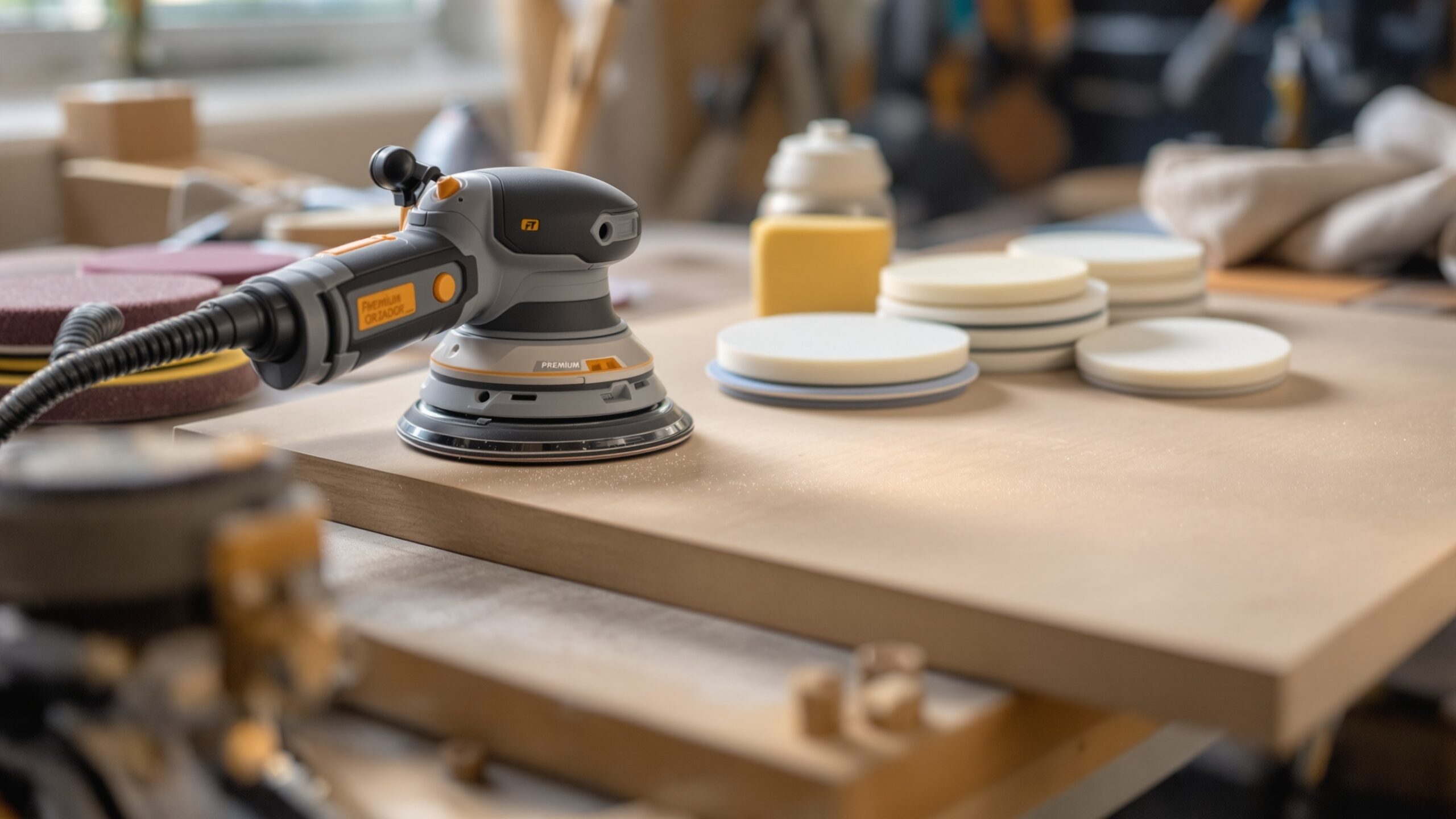
Sanders & Polishers on Drill and Skills is where good builds become great—because the finish is what people see and feel first. Whether you’re smoothing rough lumber, flattening a tabletop, refining a paint job, or bringing a dull surface back to a deep shine, the right tool (and the right grit) turns frustration into flow. This category collects articles that break down the essentials of random orbital sanders, belt sanders, detail sanders, and polishers—plus the discs, pads, compounds, and techniques that make them perform. You’ll learn how to progress through grits without leaving swirl marks, how to avoid rounding edges, how to manage dust, and how to prep wood, metal, and painted surfaces for coatings that look clean and last. We’ll cover smart pressure control, speed settings, pad choices, and quick troubleshooting when things go hazy, blotchy, or uneven. From fast cleanup passes to showroom-level shine, Sanders & Polishers helps you dial in the final 10% that makes a project look professional.
A: A random orbital sander is the most versatile for DIY finishing.
A: Scratches from coarser grits weren’t fully removed—use a tighter progression.
A: Light pressure; let the abrasive do the cutting.
A: Usually no—skipping grits leaves deep scratches that take longer to fix.
A: Fine enough for smoothness, but not so fine paint won’t bite—follow coating guidance.
A: Too much pressure, wrong abrasive type, or not enough dust extraction.
A: Compound cuts defects; polish refines clarity and gloss.
A: Keep the pad flat and feather edges lightly—finish edges by hand.
A: Not always, but it makes high-gloss results easier and more consistent.
A: Use raking light and wipe the surface—if scratches show, step back a grit.