
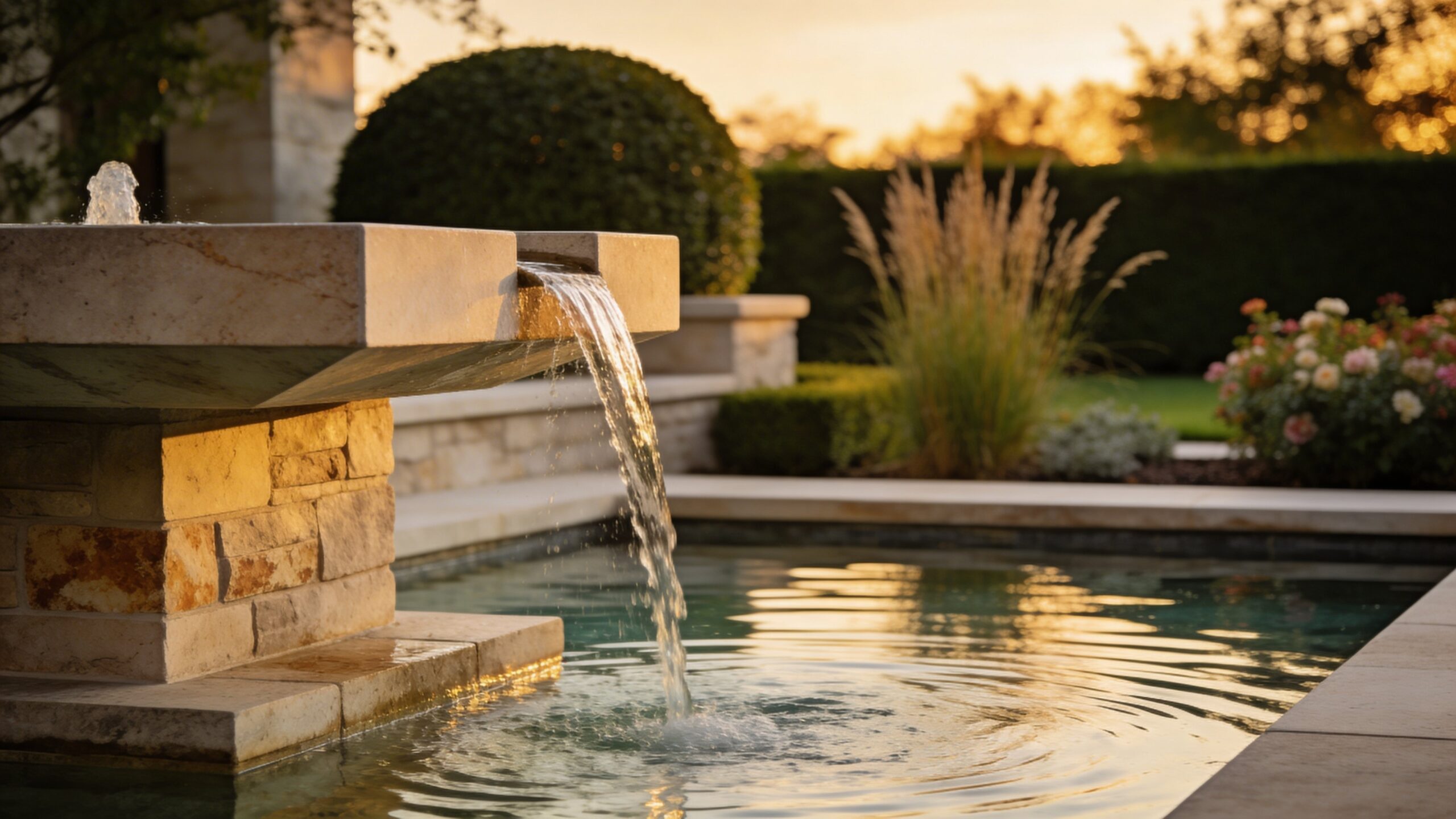
Outdoor water features bring motion, sound, texture, and atmosphere into a landscape in a way few other design elements can match. A well-placed fountain, pond, waterfall, or bubbling basin can turn an ordinary yard into a space that feels cooler, calmer, and more intentional. These features do more than decorate a property. They shape how outdoor spaces are experienced, soften hard edges in the landscape, and create focal points that draw attention through both sound and movement. This section explores the systems, materials, and creative decisions behind successful outdoor water features. From pump sizing and basin design to stone placement, splash control, and seasonal maintenance, every detail affects how a feature looks and performs over time. Whether the goal is a quiet garden accent or a bold landscape centerpiece, understanding the build process matters. By the end, you’ll have a clearer view of how outdoor water features are planned, installed, and maintained to deliver beauty, durability, and lasting visual impact across many different styles, spaces, and project goals.
A: A small recirculating fountain or pondless basin is usually the simplest starting point.
A: Most recirculating systems reuse water, but evaporation and splash still require refills.
A: Common causes include splashing, evaporation, leaks, or misdirected flow.
A: Small fountains may not, but ponds and larger systems benefit from filtration.
A: Many systems are designed for continuous use, as long as water levels stay safe.
A: Reduce excess sunlight, clean debris, and use proper circulation and treatment methods.
A: Maintenance varies, but regular cleaning and pump checks keep most systems manageable.
A: Yes, many simple fountains and pondless systems are DIY-friendly with careful planning.
A: It depends on lift height, tubing distance, and the amount of visible flow you want.
A: In freezing climates, many features should be drained or winterized to avoid damage.