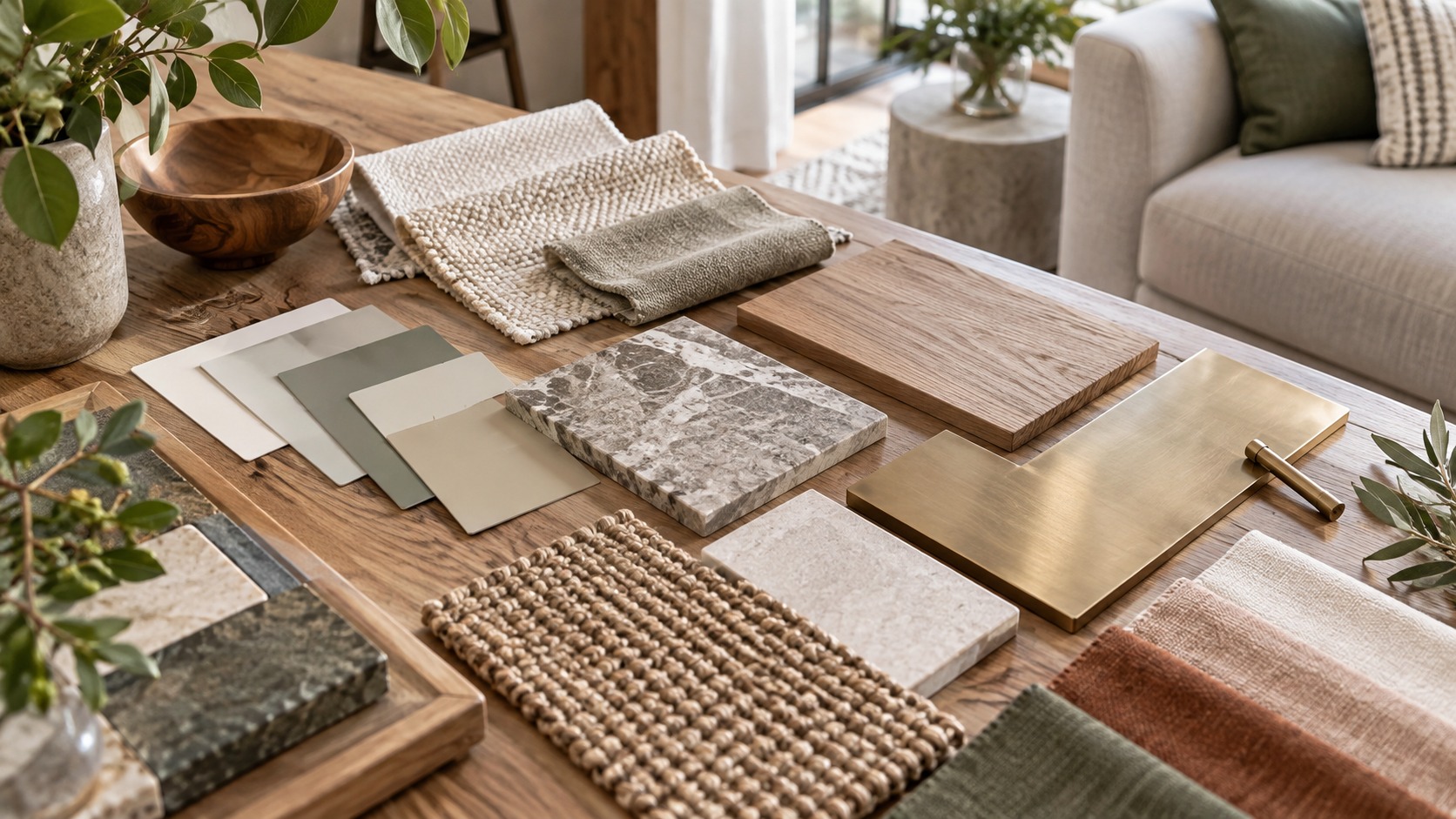
A strong color scheme starts with the room you already have. Floors, cabinets, countertops, tile, trim, stone, wood tones, rugs, and natural light all influence which colors will feel right. Choosing paint or fabric without looking at those fixed pieces is the fastest way to end up with a room that feels slightly off.
The perfect palette is not one color that looks good on a sample card. It is a group of colors that works in the actual room, at different times of day, with the furniture, lighting, and finishes that will stay. Start with what cannot change, then build a palette that supports the room’s mood and use.
A: Start with fixed finishes and the mood you want before choosing wall color.
A: Natural light, bulb temperature, nearby finishes, and undertones all affect color.
A: The base color is the main color that carries the largest areas of the room.
A: Use one or two accent colors unless the room is intentionally colorful.
A: Not always. Neutrals have undertones that must work with floors, trim, light, and furniture.
A: It is a loose balance idea for main, secondary, and accent colors.
A: It can be, but the white needs to work with the wall color and fixed finishes.
A: Repeat undertones, colors, materials, or contrast levels through visible transitions.
A: Use large samples on multiple walls and check them in daylight and evening light.
A: Compare the palette to fixed finishes, lighting, trim, ceiling, furniture, and adjacent rooms.
Start With What Is Staying
Before choosing any new color, list the fixed or expensive pieces that will remain. Flooring, cabinets, countertops, tile, brick, stone, trim, built-ins, large furniture, and rugs all have color in them, even when they seem neutral. Those colors are part of the palette whether you like them or not.
Look closely at undertones. A beige tile may lean pink, yellow, gray, or green. Wood floors may be orange, red, brown, or ash. White trim may be warm cream or cool blue-white. If the new wall color fights those undertones, the room can feel wrong even when each individual color is attractive.
Bring samples next to the fixed finishes, not just into the room. Hold paint chips beside the floor, cabinet, sofa, or tile. A color that looked perfect in the store can change completely when it sits next to the materials that are staying.
Decide the Mood Before the Hue
Color should support how the room is meant to feel. A bedroom may need calm, a dining room may need warmth, a home office may need focus, and a family room may need comfort that survives daily life. Choosing the mood first narrows the palette before you get lost in hundreds of paint names.
Use descriptive words that mean something to you: quiet, crisp, cozy, earthy, polished, playful, dramatic, airy, traditional, modern, collected, or relaxed. Then ask which colors naturally support those words. A room meant to feel restful may not need high contrast. A room meant to feel energetic may need stronger accents.
Mood also depends on contrast, not just hue. A soft green room can feel calm with cream and wood, or sharper with black and bright white. The relationships between colors decide the feeling.
Study the Natural Light
Natural light changes color throughout the day. North-facing rooms often make colors feel cooler and grayer. South-facing rooms may make colors brighter and warmer. East-facing rooms can look bright in the morning and muted later. West-facing rooms can become warm or intense in the afternoon.
Test colors in the room where they will be used. Paint large samples or use peel-and-stick samples on more than one wall. Look at them in morning, afternoon, evening, and under artificial light. A color that looks beautiful at noon may feel muddy after sunset.
Rooms with little natural light do not automatically need white paint. Sometimes a richer color looks more intentional than a pale color struggling to be bright. The goal is to choose a color that behaves well in the light the room actually has.
Account for Artificial Lighting
Bulbs affect color as much as daylight does. Warm bulbs can make whites creamier and colors softer. Cool bulbs can make grays sharper and warm colors look dull. Poor color rendering can make paint, fabric, food, and skin tones look flat.
Before finalizing a palette, check the room at night with the bulbs you plan to use. If the room has mixed bulb colors, fix that before judging paint. A wall color may not be the problem; the light may be.
Dimmers can also change the mood. A color that feels lively at full brightness may feel much richer when the lights are dimmed. Test the whole range if the room uses dimmable lighting.
Choose a Base Color
The base color is the color that covers the most visual area. It may be the wall color, large upholstery, cabinets, flooring, or a dominant rug. A strong palette usually has a base that is easy to live with because it surrounds everything else.
Neutral base colors are common because they give flexibility, but neutral does not mean colorless. Warm white, cream, greige, taupe, mushroom, pale gray, soft beige, clay, and muted green can all function as bases. The right neutral depends on the room’s fixed finishes and light.
A colored base can work too. Deep green, navy, dusty blue, terracotta, charcoal, or warm ochre can make a room feel intentional when the rest of the palette is controlled. If the base is bold, the supporting colors need more discipline.
Understand Neutrals
Neutral colors are not automatic safe choices. White, gray, beige, taupe, cream, black, brown, and greige all have undertones and personalities. A gray can feel blue, green, purple, or brown. A white can feel warm, stark, creamy, or icy. A beige can feel calm in one room and muddy in another.
Choose neutrals with the same care as stronger colors. Compare them to flooring, trim, countertops, and upholstery. If the fixed finishes are warm, a cold gray may feel disconnected. If the room has crisp black and white finishes, a muddy beige may feel tired.
Neutrals work best when texture, contrast, and material variation are present. A neutral room with flat surfaces can feel unfinished. Add wood, woven shades, wool, linen, leather, ceramic, metal, plants, or art so the palette has depth.
Add Supporting Colors
Supporting colors connect the base to the rest of the room. They may appear in curtains, chairs, bedding, pillows, rugs, lamps, art, cabinets, or accent walls. These colors should feel related to the base without copying it exactly.
A simple palette might use a warm white base, medium wood tones, soft blue textiles, and black accents. Another might use greige walls, olive upholstery, brass lighting, and cream curtains. The palette should have enough variation to feel layered but not so many colors that nothing feels connected.
Repeat supporting colors in more than one place. A color that appears only once can feel accidental. Repetition in small amounts makes the room feel planned.
Use Accent Colors With Restraint
Accent colors are easiest to change, so they are good places for personality. Pillows, throws, art, vases, books, lampshades, flowers, and small decor can carry stronger color without locking the whole room into it. This is especially useful if you like seasonal changes.
One or two accent colors are usually enough. Too many small accents can make a room feel busy. If the room already has patterned rugs, colorful art, or strong upholstery, the accents may need to be quieter.
Choose accents from something already in the room when possible. Pulling a color from art, a rug, tile, or fabric makes the accent feel connected instead of random.
Decide Where Bold Color Belongs
Bold color can be wonderful when it has a clear role. It might belong on cabinets, a powder room wall, a dining room, a front door, a built-in, an upholstered chair, a rug, or a large piece of art. The right location depends on how often you see the color and how easy it is to change later.
Use strong color where it supports the room’s purpose. A dramatic dining room can feel intimate. A rich office color can help the room feel focused. A playful bedroom accent can make a child’s room feel personal. A bold sofa may work when the rest of the room stays calmer.
If you are unsure, use bold color in changeable layers first. Art, pillows, throws, lamps, and small furniture let you test how much intensity the room can handle before committing to walls or cabinetry.
Watch Color Temperature
Colors have temperature. Warm colors include creams, tans, terracotta, rust, gold, warm greens, and many wood tones. Cool colors include blues, blue-grays, cool whites, some greens, and purples. A palette can mix warm and cool, but it should do so intentionally.
If every element is warm, the room may feel heavy or yellow. If every element is cool, the room may feel flat or chilly. A warm room often benefits from a small cool note. A cool room often needs warmth from wood, brass, leather, natural fiber, or warm white.
Temperature is where many almost-right rooms fail. A cool gray sofa beside warm beige walls may look unrelated. A creamy white wall beside a blue-white trim may make one of them look dirty. Compare samples side by side before committing.
Use the 60-30-10 Idea Loosely
The 60-30-10 rule is a helpful starting point: about 60 percent dominant color, 30 percent secondary color, and 10 percent accent. It is not a law, but it helps beginners avoid equal amounts of too many colors.
In a bedroom, the walls and bedding might be the dominant color, the rug and curtains the secondary color, and pillows or art the accent. In a living room, walls and sofa might dominate, chairs and rug might support, and lamps or accessories might accent.
Use the idea to check balance. If every color is fighting for the same amount of attention, the room may feel unsettled. Let one color lead, another support, and a smaller color add energy.
Consider Flow Between Rooms
Rooms that are visible from one another should feel related. This does not mean they all need the same wall color. It means the undertones, trim, flooring, and major colors should not clash from one doorway to the next.
One way to create flow is to repeat a few colors throughout the home in different amounts. A green used as an accent in one room might become upholstery in another. A wood tone might repeat in furniture. A black detail might connect lighting, frames, and hardware.
Open floor plans need special care because several rooms are seen at once. Use stronger color changes where there is a natural break, such as a doorway, cased opening, ceiling change, or clear zone shift.
Test Paint the Right Way
Small paint chips are not enough for final decisions. Paint a large sample on poster board or use a large peel-and-stick sample. Move it around the room and view it beside trim, flooring, furniture, and windows. A color on one wall may behave differently on another.
Do not judge wet paint. Let samples dry fully. Paint finish matters too. Matte, eggshell, satin, semi-gloss, and gloss reflect light differently. A color in satin may look stronger or shinier than the same color in matte.
Test finalists against the actual white or trim color. Many wall colors change dramatically next to the trim. If the trim color is staying, it has a vote.
Coordinate Trim, Ceiling, and Doors
Trim and ceiling colors affect the palette more than many homeowners expect. Bright white trim can sharpen a wall color. Cream trim can soften it. A ceiling painted the same white as the trim can feel clean, while a ceiling tinted slightly toward the wall color can feel more enveloping.
Doors are part of the scheme too. White doors disappear in many rooms, black doors add contrast, wood doors bring warmth, and painted doors can become a design feature. The choice should relate to trim, flooring, hardware, and nearby rooms.
Do not pick trim white randomly. Compare whites next to the wall color and fixed finishes. The wrong white can make a carefully chosen wall color look dirty, cold, or too yellow.
Use Pattern as a Palette Guide
A patterned rug, fabric, wallpaper, or artwork can be an excellent palette starting point. Designers often pull wall colors, upholstery colors, and accents from one patterned piece because the relationships are already built in.
Choose one pattern to lead if the room is new to you. Too many unrelated patterns can make the palette harder to control. A large rug or artwork can establish the mood, then smaller patterns can echo one or two colors from it.
Scale matters. Mix large, medium, and small patterns if using more than one. Repeating the same pattern scale can feel busy even when the colors match.
Avoid Common Color Mistakes
The most common mistake is choosing paint first and then trying to force everything else to match it. Paint is usually easier to change than flooring, tile, sofas, cabinets, or rugs. Let the harder-to-change pieces guide the paint, not the other way around.
Another mistake is using too many clean, bright colors with muted fixed finishes. If the floor, stone, or sofa is muted, very pure colors may look harsh beside it. Likewise, muddy colors can look dull in a room with crisp white and high contrast.
Skipping the night test is another common problem. A room is used after dark, and artificial light can change everything. Check the palette when the room will actually be lived in.
Final Color Scheme Review
Before committing, review the palette in the real room. Check fixed finishes, undertones, natural light, artificial light, base color, supporting colors, accents, trim, and room-to-room flow. Look at the palette from doorways and from the main seats in the room.
Remove one color if the scheme feels scattered. Add texture if it feels flat. Add contrast if it feels too blended. Warm it up or cool it down if the fixed finishes are pulling the room in one direction.
The perfect color scheme is not the trendiest one. It is the one that makes the room’s existing pieces feel intentional, supports the mood you want, and still looks good when the light changes. When those pieces line up, the room feels cohesive before a single accessory is added.