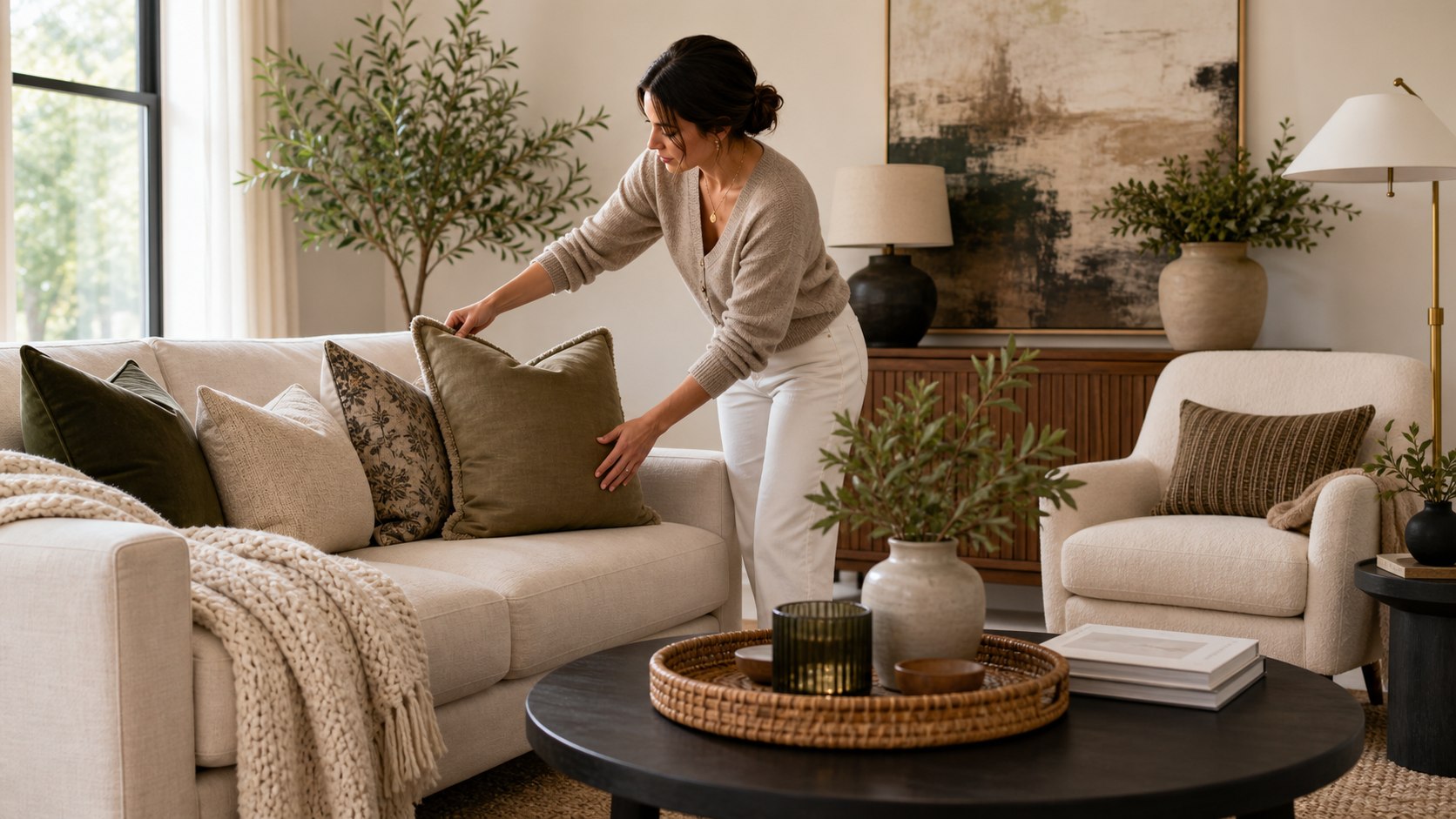
A small room feels bigger when the eye can move easily and the furniture does not fight the floor plan. The solution is not always white paint or tiny furniture. A better plan uses clear paths, right-sized pieces, visible floor, layered light, smart storage, and fewer visual interruptions.
The goal is to make the room feel open without making it feel empty. A small bedroom, office, den, or living room still needs comfort, storage, and personality. The trick is choosing each element carefully so the room gains function without gaining clutter.
A: Clear the main sight line from the doorway before changing color or furniture.
A: Not always. Use properly scaled pieces with enough clearance and comfort.
A: Raise furniture on legs, reduce clutter, and avoid too many separate floor pieces.
A: No. A mirror helps when it reflects light, depth, or a clean view.
A: Colors that reduce harsh boundaries and work with the room's light usually help most.
A: They can, especially when you want the window wall to feel taller and less broken up.
A: Use layered lighting so the room has brightness at the ceiling, task areas, and corners.
A: Add enough to control clutter without making the walls feel heavy.
A: One large piece can feel calmer than many small pieces in a compact room.
A: Stand at the doorway and confirm the room feels open, useful, balanced, and easy to move through.
Start With the Room’s Real Job
A small room cannot do everything equally well. Before changing paint or buying furniture, decide what the room most needs to accomplish. A small bedroom may need sleep and clothing storage. A small office may need a desk, files, and video-call lighting. A small living room may need seating, media, and a place to set drinks.
Once the main job is clear, remove pieces that do not support it. Extra chairs, unused tables, bulky storage, and decorative items with no role can make a small room feel smaller. Editing is often the first design move, not the last.
That does not mean the room has to be plain. It means each piece should earn its place. Small rooms look better when function and design are working together.
Protect the Main Sight Line
The first view into a room shapes how large it feels. If the doorway view is blocked by the side of a tall cabinet, the back of a bulky chair, or a cluttered surface, the room feels tight immediately. A clear sight line to a window, wall, artwork, or open floor makes the room feel calmer.
Stand in the doorway and notice where your eye stops. If it stops too soon, move or lower the object causing the block. Low furniture, open-leg pieces, glass, mirrors, and wall-mounted storage can help the eye travel farther.
In very small rooms, even a few inches matter. Shifting a desk away from the doorway or replacing a tall bookcase with lower storage can change how open the room feels.
Choose Furniture With the Right Scale
Small rooms do not always need tiny furniture. Too many small pieces can create clutter. Often, one well-scaled sofa, bed, desk, or cabinet works better than several undersized pieces. The key is choosing furniture that fits the room’s proportions and leaves clear paths.
Look for pieces with slimmer arms, exposed legs, lower backs, or rounded corners where movement is tight. A loveseat with narrow arms may seat almost as well as a bulky sofa while using less visual space. A storage bed may solve more than a bed plus separate bins.
Measure before buying. Include door swings, drawers, chair pullback, and walking room. A piece that technically fits but blocks the room’s daily movement will make the space feel smaller every day.
Use Fewer, Better Pieces
A small room usually benefits from fewer pieces with clearer jobs. Instead of a side table, magazine rack, extra stool, and storage basket, one side table with a shelf may solve several needs. Instead of two small bookcases, one neat cabinet may make the wall feel calmer.
Multi-use furniture is helpful when it stays easy to use. Storage ottomans, benches with lids, nesting tables, wall desks, sleeper chairs, and beds with drawers can all work. Avoid pieces that require too many steps, because complicated storage often stops being used.
Leave some empty space. A small room packed perfectly edge to edge still feels packed. Breathing room is a design feature.
Show More Floor
Visible floor makes a room feel larger. Furniture with legs, wall-mounted shelves, floating vanities, open-base tables, and raised cabinets let the eye see under and around pieces. This creates a sense of depth even when the room is compact.
Too many skirted, solid, or blocky pieces can make the floor disappear. If the bed, sofa, cabinet, and chairs all sit heavily on the floor, the room may feel weighed down. Mix in lighter bases where practical.
Rugs should also be sized carefully. A rug that is too small can chop up the floor and make the room feel smaller. A larger rug that connects the main furniture often makes the layout feel more expansive.
Keep Storage Vertical but Not Heavy
Small rooms often need vertical storage, but tall storage can become visually heavy. Use height where it helps, and keep the design clean. A tall bookcase, wardrobe, or cabinet should look intentional rather than like a last-minute place to hide clutter.
Closed storage is useful for busy items. Open shelves work best when they are edited and arranged with breathing room. If every shelf is packed, vertical storage can make the room feel crowded even though it saves floor space.
Use the upper wall for things that do not need constant access. Daily items should stay easy to reach. Storage that is awkward to use becomes visual clutter because things stop going back where they belong.
Use Mirrors Strategically
Mirrors can make a small room feel larger, but placement matters. A mirror that reflects a window, lamp, artwork, or open part of the room adds depth. A mirror that reflects clutter, a blank door, or a crowded shelf doubles the problem.
Large mirrors usually work better than many tiny mirrors. A tall mirror can stretch the room vertically. A wide mirror over a console can make a wall feel broader. Mirrored furniture can help in small doses, but too much reflection can feel busy.
Think about what the mirror shows from the doorway and from seated positions. The reflection should improve the room, not just fill a wall.
Choose Color With Contrast in Mind
Light colors can help a small room feel airy, but they are not the only answer. A small room can also feel larger with a deeper color if the palette is cohesive and the edges feel intentional. The real issue is how much contrast chops up the space.
Low contrast between walls, trim, large furniture, and curtains can make the room feel smoother. Strong contrast can be useful when it creates a focal point, but too many high-contrast breaks can make the room feel busy.
If you use dark color, consider carrying it confidently instead of using it timidly on one disconnected wall. A rich, wrapped palette can make a small room feel cozy and deliberate rather than cramped.
Paint Trim and Doors Thoughtfully
Trim and doors can either chop up a small room or help it feel continuous. Bright contrast between walls, trim, doors, and closet panels draws attention to every edge. Sometimes that is beautiful, but in a tight room it can make the walls feel busier.
Painting trim close to the wall color can reduce visual stops and make the room feel smoother. Painting doors the same color as the wall can help a closet or awkward door recede. On the other hand, a darker door or trim color can add depth when the rest of the palette is quiet.
The right choice depends on the room’s architecture. If the trim is beautiful, contrast may be worth it. If the room has many chopped-up doorways or closet panels, a lower-contrast approach may feel larger.
Hang Curtains to Enlarge the Window
Curtains can change the apparent size of a room. Hanging the rod higher and wider than the window can make the window feel taller and broader. When panels sit outside the glass, more daylight enters and the wall feels more generous.
Choose enough fabric fullness so panels do not look thin. In small rooms, simple curtain styles often work better than heavy swags or bulky treatments. Sheers, linen-look panels, woven shades, or tailored curtains can soften the room without crowding it.
Match curtain color close to the wall if you want a quiet, expansive feeling. Use contrast if the window is meant to be a focal point. Either choice can work when it is intentional.
Layer Light Instead of Depending on One Fixture
Small rooms can feel smaller when the corners are dark. One overhead fixture may light the middle of the room while leaving walls and corners dim. Lamps, sconces, picture lights, shelf lighting, and dimmers can help the room feel wider and more comfortable.
Light vertical surfaces when possible. A wall sconce, shaded lamp, or picture light can make a wall feel active instead of flat. A floor lamp in a dark corner can visually extend the room.
Use warm, consistent bulbs. Random bulb colors can make a small room feel patched together. Good lighting makes the room easier to use and easier to read visually.
Reduce Visual Clutter
Visual clutter is not only mess. It can be too many small objects, too many colors, too many patterns, exposed cords, busy shelves, mismatched storage bins, or furniture legs everywhere. Small rooms have less room for visual noise.
Group small items on trays, use matching or coordinated storage, hide cords, and leave open space on surfaces. Choose a few larger accessories instead of many tiny ones. Larger pieces often feel calmer because the eye does not have to process as much.
Clutter control is easier when storage is close to the activity. If the room collects books, chargers, toys, makeup, or paperwork, give those items homes within reach.
Use Pattern Carefully
Pattern can work in a small room when it has a clear plan. A patterned rug, wallpaper, curtain, or bedding can add personality, but several unrelated patterns may make the space feel crowded. Choose one main pattern and let the others stay quieter.
Scale matters. Very tiny patterns can look busy from a distance. Oversized patterns can make a small room feel bold and intentional if the palette is controlled. Medium patterns are often easiest to use in pillows, rugs, and textiles.
Repeat colors from the pattern elsewhere in the room. That connection makes the pattern feel integrated instead of pasted on.
Make Built-Ins and Corners Work Harder
Small rooms often have corners, alcoves, awkward walls, or shallow niches that can be useful. A narrow desk, corner shelves, a built-in bench, a wall-mounted cabinet, or a custom-depth bookcase can add function without eating the center of the room.
Built-ins should be planned carefully. A bulky built-in can make a small room feel smaller if it projects too far. Shallow, wall-colored, or open-base built-ins often feel lighter. Closed lower storage with open upper shelves can balance usefulness and airiness.
If custom work is not in the budget, look for ready-made pieces with the right depth. Depth is often more important than width in a tight room.
Choose Art That Supports the Room
Art can make a small room feel finished, but scale matters. One larger piece can feel calmer than many small frames. A vertical piece can make a low room feel taller. A horizontal piece can make a narrow wall feel wider.
Do not hang every piece too high. Art should relate to furniture and human eye level. In a small room, art that floats near the ceiling can make the walls feel awkward rather than taller.
Use art to create depth. Landscapes, abstract pieces with movement, or art with a strong focal point can give the eye somewhere to go. The subject matters less than whether the piece helps the room feel intentional.
Keep Furniture Edges Clear
Small rooms feel tighter when furniture edges overlap visually. A chair shoved into a cabinet, a bed pressed against a nightstand with no breathing room, or a desk blocking part of a window can make the room feel improvised. Even small gaps can make pieces look more intentional.
Choose rounded corners where traffic is tight. Round side tables, oval coffee tables, curved chair arms, and softened bed frames can make movement feel easier. Sharp corners are not wrong, but they are less forgiving in narrow paths.
Also watch the height of nearby pieces. If every item sits at the same height, the room can feel blocky. A mix of low, medium, and tall elements gives the eye more movement without adding clutter.
Final Small Room Review
Before calling the room finished, stand at the doorway and check the first sight line. Then walk the room, sit in the main seat, open storage, use the lighting, and look at the corners. The room should feel clear, usable, and comfortable from more than one position.
If it still feels tight, remove one item before buying another. Check whether the rug is too small, the curtains are cutting the wall short, the furniture is too heavy, or the shelves are too crowded. Small changes can make a compact room feel much more generous.
A small room looks bigger when the design reduces interruption. Clear paths, smart scale, visible floor, controlled contrast, layered light, and edited storage let the room feel like a complete space instead of a storage challenge.