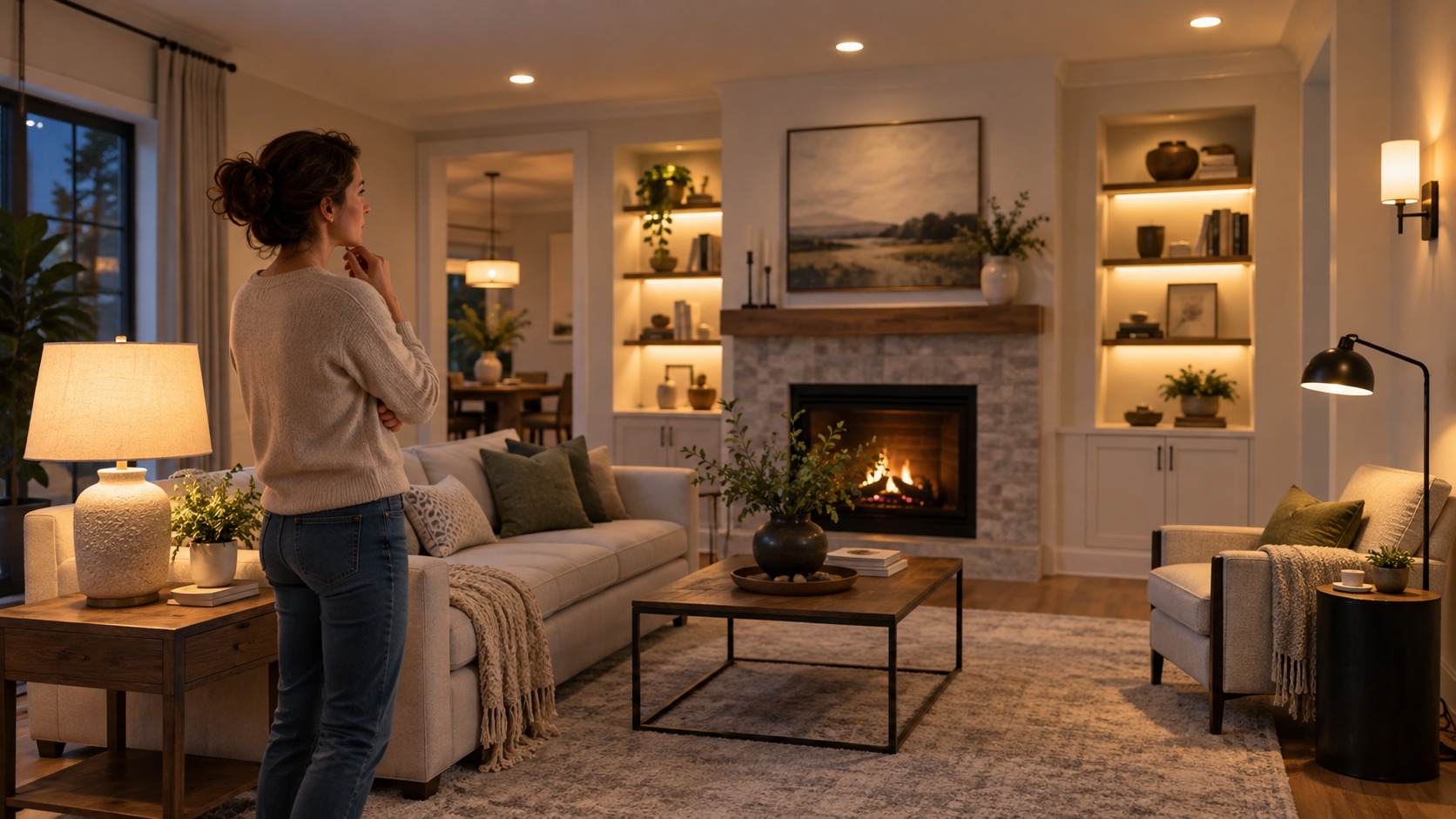
Designing a room from start to finish is easier when the first decisions are practical instead of decorative. Before paint colors, rugs, lamps, or pillows make sense, the room needs a purpose, a layout, a budget, measurements, and a clear idea of what has to stay. A finished room looks polished when those early choices support one another.
The process does not have to be mysterious. Start with how the room will be used, solve the furniture placement, choose a palette from the fixed finishes, add lighting in layers, and then bring in texture, art, storage, and accessories. Each step should make the next one easier, not send the project back to the beginning.
A: Define the room's purpose, users, problems, and must-keep pieces before shopping.
A: Measure before buying anything large, including furniture, rugs, curtains, and storage.
A: Include repairs, paint, furniture, rugs, lighting, storage, textiles, art, delivery, and extras.
A: Usually yes, because layout controls furniture size, rug size, lighting, and flow.
A: Treat them as palette and material anchors instead of ignoring them.
A: Choose the rug after the main furniture layout is clear.
A: Plan ambient, task, accent, and mood lighting based on how the room is used.
A: Style after storage, furniture, lighting, and major textiles are working.
A: Plan storage for real items before adding decorative pieces.
A: Use the room, check every view and path, then edit anything that weakens function or calm.
Define the Room’s Purpose
A room design should begin with use. A living room for movie nights is different from a sitting room for conversation. A guest bedroom that doubles as an office needs different decisions than a bedroom used only for sleep. A dining room used for homework every afternoon should not be planned as if it is only used for holidays.
Write a short room brief before shopping. Include who uses the room, what happens there, what must be stored, what feels wrong now, and what the finished room should feel like. This does not need to be fancy. A few plain sentences can keep the project from drifting every time you see a new product or trend.
Also name the non-negotiables. Maybe the sofa stays, the carpet cannot be replaced yet, the room needs pet-friendly fabric, or the budget has a firm ceiling. Good design works with constraints instead of pretending they will disappear later.
Measure Before You Buy
Measurements protect the whole project. Measure wall lengths, ceiling height, window size, doorway width, closet doors, fireplace size, outlet locations, vents, radiators, and the path furniture must travel to enter the room. A beautiful cabinet is not useful if it cannot turn the corner at the stairs.
Take photos from every doorway and from the main seated or working position. Photos reveal awkward corners, blank walls, bad glare, crowded traffic paths, and unfinished areas that the eye starts ignoring in person. Keep the photos with your measurements so the room is always in front of you when you shop.
If you are buying large pieces, mark their footprints with painter’s tape. Walk around them for a day. Open doors, pull out chairs, reach for lamps, and imagine cleaning around them. This simple test prevents expensive scale mistakes.
Set a Realistic Budget
A room budget should include more than the obvious furniture. Paint, hardware, window treatments, light bulbs, dimmers, rug pads, delivery, installation, art framing, storage baskets, and small repairs all add up. If every dollar goes to the sofa, the room may stall before it feels finished.
Decide where quality matters most. Sofas, mattresses, dining chairs, rugs in high-traffic areas, and frequently used lighting often deserve more of the budget. Decorative accents can usually be added slowly. Spending in the right order keeps the room from looking expensive in one corner and neglected everywhere else.
Build in a small reserve for surprises. Older rooms may need outlet changes, drywall repair, floor touch-ups, blind replacement, or hardware updates once the project begins. A little flexibility keeps one unexpected issue from derailing the room.
Decide What Happens First
The order of work matters. Paint is easier before new furniture arrives. Electrical changes should happen before walls are patched and finished. Window treatments may need lead time. Rugs often need to be chosen before final pillow, curtain, or accent colors make sense. A room feels less chaotic when the sequence is clear.
Make a simple project order: repairs, electrical or lighting changes, paint, large furniture, rugs, window treatments, storage, art, and accessories. Some rooms will need a different order, but writing it down prevents the common problem of buying decorative pieces before the basic work is settled.
Lead times can also affect decisions. Custom upholstery, special-order lighting, large rugs, and window treatments may take weeks. If one item controls the schedule, choose it early enough that the room does not sit half-finished longer than necessary.
Solve the Layout First
Layout is the skeleton of the room. Decide where the largest pieces belong before choosing colors or accessories. In a living room, that may mean sofa, chairs, media console, coffee table, and rug. In a bedroom, it means bed, nightstands, dresser, chair, and circulation. In an office, it means desk, storage, outlets, and light.
Protect walkways and daily movement. People should be able to enter, sit, stand, open drawers, reach storage, and leave without squeezing around furniture. If the room has several doors, the traffic path may matter more than symmetry.
Choose a focal point and let the furniture acknowledge it. The focal point might be a fireplace, view, television, bed, artwork, or a conversation group. Without an anchor, pieces can feel scattered even when they are attractive individually.
Work With Fixed Finishes
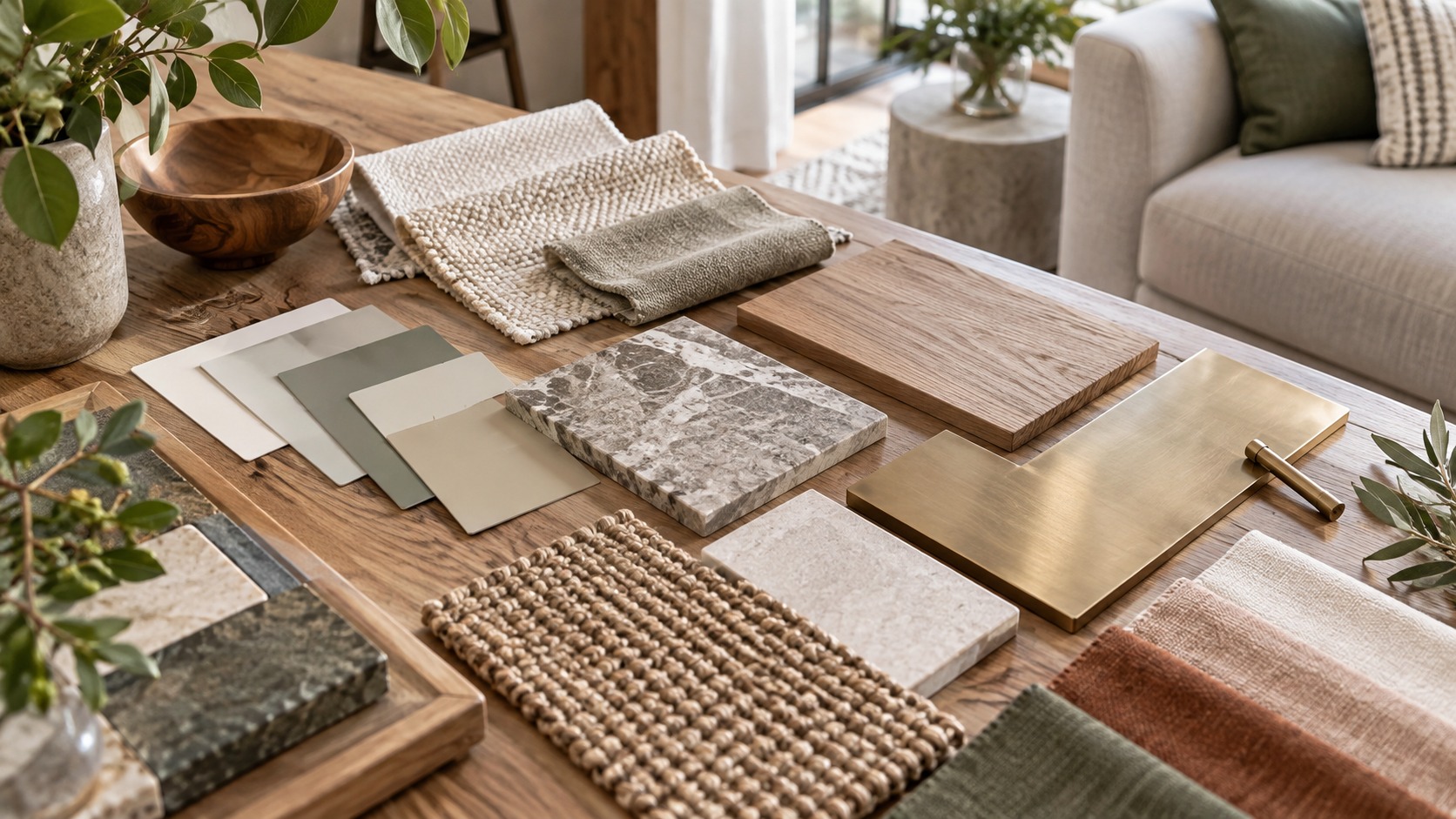
Every room has fixed finishes that influence the design: flooring, trim, cabinets, stone, tile, brick, countertops, wood tones, metal finishes, or a large piece of furniture that will remain. These are the starting palette, even if they are not your favorite parts of the room.
Look at undertones before choosing paint or fabric. A warm floor can make a cool gray wall look flat. Cream trim can make a stark white sofa feel disconnected. Red brick, honey oak, black windows, or gray tile all push the palette in certain directions.
You do not have to match fixed finishes exactly. You do need to respond to them. Repeating a wood tone, balancing a cool surface with warmer textiles, or choosing a wall color that bridges old and new elements can make the room feel intentional.
Choose the Main Furniture
Main furniture should fit the room’s use, scale, and maintenance needs. A sofa should be deep enough for the way people sit but not so large that it blocks the room. A bed should leave enough clearance to move around it. Dining chairs should be comfortable enough for the length of meals actually eaten there.
Think about durability at this stage. Homes with children, pets, rental guests, or heavy daily use need fabrics and finishes that can recover from real life. A fragile fabric may be beautiful but wrong for the room. A glossy table may show every fingerprint in a busy household.
Do not buy every matching piece from one set unless that is truly the look you want. Rooms often feel more designed when the large pieces relate through scale, color, and material rather than matching exactly.
Choose the Rug Before the Small Accents
In many rooms, the rug is one of the hardest pieces to choose after everything else is already set. It affects color, texture, scale, comfort, acoustics, and furniture placement. Waiting too long can leave you trying to find a rug that matches every later decision, which is much harder than letting the rug help guide the room.
Size the rug to the furniture group, not just the visible floor. In a living room, the rug should connect the seating. In a bedroom, it should extend beyond the bed enough to feel intentional. In a dining room, chairs should stay on the rug when pulled out. The right size often matters more than the perfect pattern.
Material should match the room’s life. Wool is durable and forgiving, washable rugs can help with children or pets, flatweaves work well under doors, and thick rugs can make chairs harder to move. Choose for use first, then for color.
Build the Color Palette
A good palette usually has a base, a supporting color, and a few accents. The base may come from walls, large upholstery, flooring, or cabinetry. Supporting colors might appear in rugs, curtains, chairs, bedding, or art. Accents can show up in pillows, lamps, books, ceramics, or small decor.
Use the room’s light to guide color. North-facing rooms, dark rooms, and rooms with heavy shade may need warmer or clearer colors than bright rooms. Test paint samples on more than one wall and look at them morning, afternoon, and evening before committing.
Color should move around the room. If blue appears only in one pillow, it may feel random. If it appears in art, a book spine, a patterned rug, and a small textile, it feels like part of the plan.
Plan Lighting in Layers
Lighting changes whether the room feels finished. Most rooms need a mix of ambient light, task light, and accent light. A ceiling fixture alone may make the room visible, but it rarely makes the room comfortable. Lamps, sconces, under-shelf lights, picture lights, and dimmers can all add flexibility.
Place task lighting where work actually happens. A reading chair needs light near the chair. A desk needs light on the work surface. A bedroom needs reachable bedside light. A bathroom mirror needs face light, not only a ceiling fixture behind the person.
Use consistent bulb color in connected spaces. Mixed random bulbs can make a room feel unfinished even when the fixtures are good. Dimmers are useful when the room changes from active use to evening quiet.
Plan Storage Before Styling
Storage is part of the design, not something to hide after the room is decorated. A room that needs toy storage, media equipment, office supplies, blankets, board games, paperwork, or craft materials should make room for those items early. Otherwise the finished room may look good for a day and then immediately collect clutter.
Use closed storage for things that are visually busy and open storage for things worth seeing. Cabinets, drawers, baskets, ottomans, benches, sideboards, and built-ins can all keep a room functional. The best storage is close to where the items are used, so cleanup feels natural.
Do not underestimate small landing zones. A tray near the entry, a drawer near the sofa, a basket for blankets, or a shelf for daily books can keep ordinary life from undoing the room.
Add Texture and Softness
Texture keeps a room from feeling flat. Wood, wool, linen, velvet, leather, ceramic, glass, metal, woven shades, plants, stone, and books all add different kinds of surface interest. This matters even in neutral rooms, where texture may do more work than color.
Softness is practical too. Rugs, curtains, upholstered pieces, pillows, and throws can reduce echo and make a room more comfortable. Hard surfaces may look clean but feel noisy or cold if nothing soft balances them.
Mix textures with restraint. Too many rough natural materials can feel heavy. Too many shiny surfaces can feel cold. A balanced room usually combines matte, soft, smooth, reflective, and organic elements in different amounts.
Choose Window Treatments
Window treatments affect privacy, light control, acoustics, and the finished look of the room. Shades, blinds, shutters, sheers, curtains, and layered treatments all solve different problems. Choose based on what the window needs to do, not only on appearance.
Mount curtains high and wide when the room allows it. This can make windows feel larger and let more glass show when panels are open. Make sure panels have enough fullness. Thin panels stretched across a wide window can make the room look unfinished.
In bedrooms and media rooms, consider blackout or room-darkening options. In living rooms, light-filtering treatments may be enough. In bathrooms, privacy and moisture resistance matter more than drama.
Bring in Art and Personal Objects
Art gives the room character. It does not have to match the sofa perfectly, but it should belong to the room’s mood and scale. One large piece may calm a room. A gallery wall may add energy. Small art needs grouping or strong placement so it does not disappear.
Hang art in relation to furniture and human eye level. Art over a sofa, console, or bed should feel connected to the piece below it. If it floats too high, the room can feel disconnected. If it is too small, it may look accidental.
Personal objects make the room feel lived in. Books, travel pieces, family photos, collections, handmade items, and inherited objects can all work when they are edited and placed with care.
Style Surfaces Without Clutter
Styling is the final layer, not the foundation. Coffee tables, consoles, shelves, nightstands, and mantels should have useful breathing room. A tray, a stack of books, a lamp, a plant, or a sculptural object can be enough. Every surface does not need to be filled.
Vary height and shape. Pair tall with low, round with rectangular, rough with smooth, and solid with open. Group small objects so they read as one arrangement instead of scattered clutter.
Leave room for daily life. A coffee table still needs space for a drink. A nightstand needs room for a book or phone. A room that looks styled but cannot be used will not stay that way for long.
Review the Room Before Calling It Done
Stand at each doorway and look at the room as a whole. Check the layout, walkways, focal point, rug size, lighting, color balance, window treatments, art height, and whether the room has enough storage. Then sit in every main seat and notice what feels missing from that position.
Take photos and compare them to the original room brief. Does the room support the purpose you wrote down? Does it solve the problems that bothered you? Does anything look crowded, undersized, too high, too dark, or unrelated?
A finished room does not have to be perfect on the first pass. Good design often comes from adjusting. Move a lamp, lower art, remove one accessory, swap a pillow, or shift a chair. The room is done when it feels useful, comfortable, and visually connected from start to finish.