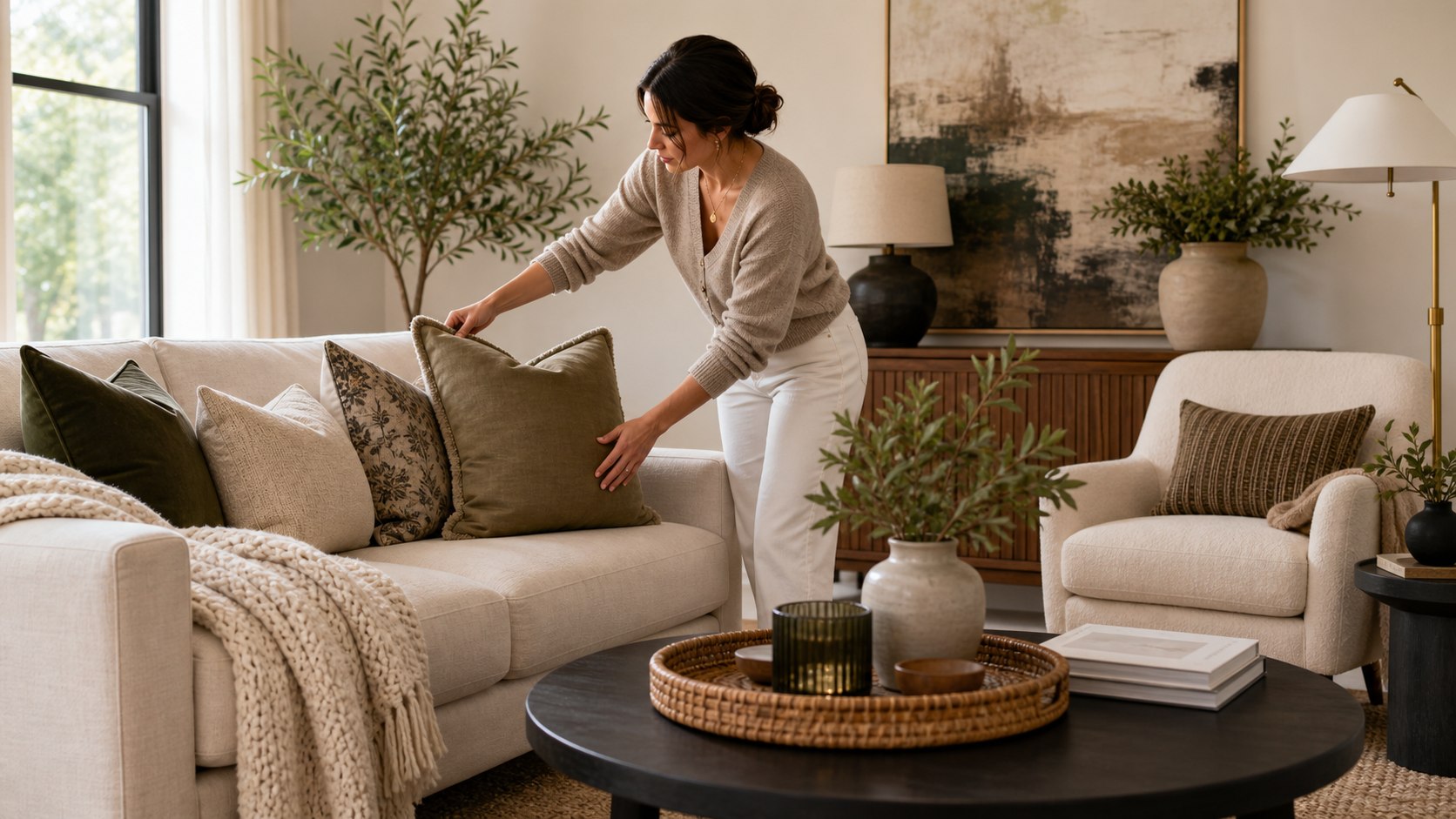
A professionally decorated living room is not just a room with expensive furniture. It is a room where the seating makes conversation easy, the rug belongs to the furniture group, the lighting works at night, the walls have a reason to be finished, and the small pieces support the way the room is used. The polish comes from decisions that relate to one another.
Start with the room as it is: doors, windows, traffic paths, television, fireplace, views, outlets, storage needs, and the pieces you already own. Once the main layout is honest, color, texture, art, lamps, pillows, and accessories have something to support instead of becoming a pile of unrelated purchases.
A: Decide how the living room is used and what the main focal point should be.
A: Build a conversation group with comfortable distances, clear paths, and tables within reach.
A: Large enough to connect the main furniture, often with front legs on the rug.
A: It can, but the layout should also respect conversation, windows, traffic, and the room's shape.
A: Start with fixed elements and repeat those colors through fabrics, art, and accessories.
A: It may need layered lighting, better rug scale, texture, curtains, or editing.
A: Hang art to relate to seated eye level and nearby furniture, not the ceiling.
A: Mix books, objects, art, and open space so each shelf has breathing room.
A: Balance it with layout, cabinetry, darker finishes, art, or surrounding visual weight.
A: Sit in every seat, test lighting, walk the paths, and remove anything that feels forced.
Begin With the Way the Room Is Used
Professional-looking living rooms usually begin with practical questions. Who sits here? How many people gather at once? Is the room used for television, reading, games, conversation, homework, music, entertaining, or a quiet end to the day? A formal room and a family room may share furniture categories, but they should not be planned the same way.
Write down the room’s regular uses before buying anything. A room that hosts movie nights needs different seating angles and lighting than a room meant for conversation. A living room that handles children, pets, and snacks needs different fabrics and tables than a sitting room used mostly by adults. The design should serve the real routine first.
This step also keeps the room from becoming a showroom that nobody wants to use. A designer’s room feels intentional because each piece has a job. Comfort, movement, storage, and durability are part of the design, not obstacles to it.
Find the Main Focal Point
Most living rooms need a clear focal point. It might be a fireplace, view, television, built-in shelving, large artwork, piano, or a strong seating arrangement. Without a focal point, furniture can drift around the room and accessories start competing for attention.
If the room has two focal points, such as a fireplace and a television, decide how they will share the space. Sometimes the seating can face both. Sometimes the television belongs beside the fireplace instead of above it. Sometimes swivel chairs solve the problem better than forcing every seat to face one direction.
The focal point does not have to be dramatic. It simply needs to give the room an anchor. Once the anchor is clear, the rug, lighting, art, and seating can work together instead of feeling like separate decisions.
Protect the Traffic Paths
A beautiful living room fails quickly if people have to squeeze around furniture. Walkways should feel natural from each doorway to the next, from the seating to the kitchen, and from the seating to nearby stairs, halls, or exterior doors. The main path should not cut directly through the middle of a conversation group if another layout is possible.
Before moving heavy furniture, tape the major pieces on the floor. Mark the sofa, chairs, coffee table, console, and side tables. Then walk through the room as you would during a normal day. If your hip catches the taped corner or the path feels awkward, the layout needs adjustment before money is spent.
Professional rooms often feel calm because circulation is resolved. People can enter, sit, set down a drink, reach a lamp, and leave without the furniture arguing with them.
Choose the Sofa With Scale in Mind
The sofa is usually the largest piece in the living room, so it sets the scale for everything else. A sofa that is too long can crowd doorways and make the room feel smaller. A sofa that is too small can make the room feel unfinished, especially on a large wall or in an open plan.
Measure the wall, the room depth, and the path around the sofa. Check seat depth too. Deep sofas are comfortable for lounging but can feel awkward for shorter guests or formal conversation. Tight-back sofas look neat, while loose cushions feel relaxed but need more fluffing and maintenance.
Fabric choice matters as much as shape. Performance fabric may be worth it in a busy household. A pale linen may look beautiful in photos but become stressful in a snack-heavy room. The right sofa should fit the room and the people who actually live with it.
Build a Conversation Group
Living room seating should make it easy for people to talk without shouting or twisting. A sofa and two chairs, two sofas facing each other, a sectional with an accent chair, or four chairs around a central table can all work. The right arrangement depends on room shape and how the space is used.
Avoid pushing every seat to the walls automatically. Pulling furniture inward can make a large room feel warmer and a small room feel more deliberate. Leave enough space behind and around pieces for circulation, but let the seating relate to itself.
Every seat should have access to a surface if possible. Side tables, a coffee table, nesting tables, or a small drink table beside a chair make the room feel finished because people have somewhere to put ordinary things.
Size the Rug to the Furniture
A living room rug should connect the seating group. The most common mistake is choosing a rug that floats under only the coffee table. A too-small rug makes the furniture look scattered, even if the pieces are attractive.
In many rooms, the front legs of the sofa and chairs should sit on the rug. In larger rooms, all legs may fit on the rug. In smaller rooms, a rug can still work if it reaches under the main seating pieces enough to visually tie them together. The exact rule is less important than whether the rug looks related to the furniture.
Rug material should match daily use. Wool is durable and forgiving. Flatweaves can be easier under doors but may need pads. Very thick rugs can make chairs harder to move. Pattern can hide wear, while solid pale rugs show every crumb and footprint.
Layer Lighting for Day and Night
A living room needs more than a ceiling light. At night, one overhead fixture can make the room feel flat or harsh. A better plan usually includes a mix of lamps, sconces, ceiling light, picture light, shelf light, or dimmable accent light.
Place light where people sit and where the room needs atmosphere. A reading chair needs a lamp that actually lights the page. A sofa may need table lamps or floor lamps at both ends. Built-ins may need small lights so the shelves do not become a dark wall after sunset.
Use warm, consistent bulbs in living areas unless the room has a special task need. Dimmers are useful, but they work best when the room has layers. A dimmed ceiling light alone is not the same as a room with lamps and soft accent light.
Use Color From Fixed Elements
Professional rooms rarely choose color in isolation. The palette should respond to floors, trim, fireplace material, built-ins, nearby rooms, large furniture, and natural light. If the room already has warm wood floors, cool stone, a brick fireplace, or strong cabinet color, those elements should be part of the plan.
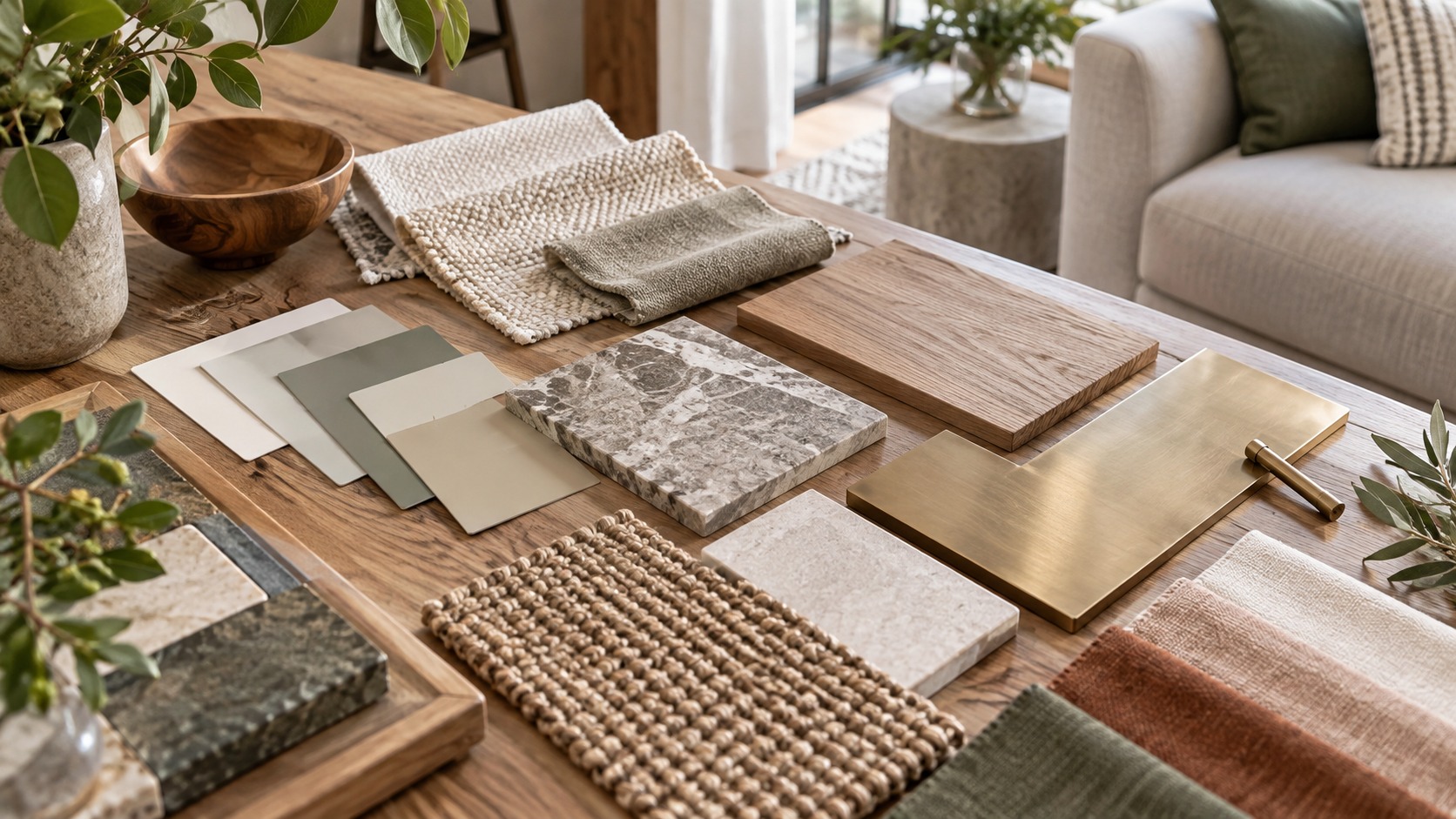
Choose one main direction before buying small pieces. A room can be warm and earthy, crisp and high contrast, soft and tonal, colorful and collected, or quiet and neutral. The palette does not need many colors, but it does need a point of view.
Repeat colors in different amounts. A blue chair, a small blue thread in the rug, and a blue-toned artwork can feel connected without matching exactly. Repetition is what makes a room feel designed rather than randomly decorated.
Mix Texture Before Adding More Color
If a living room feels plain, the answer is not always another accent color. Texture may be missing. Wood, woven shades, linen, velvet, leather, boucle, metal, ceramic, stone, glass, rattan, wool, and plants all change how the room feels without making the palette louder.
Texture is especially important in neutral rooms. A beige sofa, pale rug, white walls, and light curtains can look flat if every surface has the same smooth finish. Add a nubby throw, ribbed ceramic lamp, woven basket, natural wood table, or wool rug and the room gains depth.
Balance matters. Too many rustic textures can feel heavy. Too many glossy surfaces can feel cold. A polished room usually mixes smooth, soft, rough, matte, and reflective finishes in controlled amounts.
Hang Art at Human Height
Art should relate to the furniture and the person viewing it. A common mistake is hanging art too high. In a living room, art over a sofa, console, or fireplace should feel connected to the piece below it, not stranded near the ceiling.
Scale is just as important as height. A tiny print over a large sofa looks timid. A gallery wall can work if the collection reads as one larger shape. One large piece can calm a room that already has several patterns and objects.
Choose art for the room’s mood, not only for color matching. The subject, frame, scale, and negative space all affect the room. Art is often where a living room starts to feel personal instead of simply coordinated.
Style Shelves With Breathing Room
Built-ins and bookcases can make a living room feel custom, but they need editing. Fill them only with things worth seeing: books, ceramics, framed photos, small art, baskets, boxes, plants, or collected objects. Avoid lining every shelf with tiny items of equal size.
Vary height, shape, and depth. Stack some books horizontally, stand others vertically, and leave open space so the shelves do not feel packed. Larger objects often look better than many small ones because they can be seen from across the room.
Storage can be hidden in attractive boxes or baskets. A professional room still has remote controls, chargers, games, blankets, and paperwork. The difference is that storage is planned instead of scattered.
Choose Curtains With Enough Fullness
Curtains can make a living room feel taller, softer, and more finished. They can also look skimpy if the panels are too narrow or hung too low. Mounting the rod higher and wider than the window often makes the window feel larger and lets the panels clear more glass when open.
Length should look intentional. Panels can hover just above the floor, kiss the floor, or puddle slightly in formal rooms, but they should not stop awkwardly short unless the design calls for it. Fabric weight should match the room’s mood and privacy needs.
Even when privacy is not required, curtains or woven shades can soften echo, frame the view, and add texture. Window treatments are one of the details that move a room from furnished to finished.
Edit Accessories Ruthlessly
Accessories are where many living rooms become busy. Pillows, trays, candles, vases, books, bowls, plants, sculptures, and picture frames should support the room rather than cover every surface. A few stronger pieces usually look better than many small pieces fighting for attention.
Use trays to group small items. Vary height on coffee tables and consoles. Leave some surfaces partly empty so the room can breathe and people can actually use the tables. Editing does not make a room less personal; it helps the meaningful objects stand out.
Change accessories seasonally if you enjoy it, but keep the main room stable. A good living room should not depend on constant rearranging to feel right.
Make the Television Fit the Room
Many living rooms include a television, and pretending it is not there usually makes the design worse. Plan around it honestly. The screen should be comfortable to watch, not mounted so high that necks strain. Seating distance, glare from windows, and cable management all matter.
If the television is the main focal point, make the wall around it feel intentional with a console, built-ins, paneling, art, or balanced lamps. If it shares focus with a fireplace, keep the surrounding arrangement calm so the wall does not become cluttered.
Hide cords, size the console correctly, and leave enough ventilation for equipment. A television wall can still look designed when the practical parts are handled cleanly.
Leave Room for Real Life
A living room should have places for blankets, remotes, chargers, toys, games, pet supplies, magazines, and drinks if those things are part of daily life. Storage ottomans, closed cabinets, baskets, side tables with drawers, and built-ins can keep the room useful without making it messy.
Durability is part of the design. Choose finishes that match how the household lives. A fragile coffee table may be wrong in a room with small children. A delicate rug may be wrong near an exterior door. A room that requires constant worry will not feel professionally designed for long.
The goal is not perfection. It is a room that can recover quickly after use because the layout, storage, and materials were chosen with real life in mind.
Final Living Room Decorating Review
Before calling the room finished, stand at every entrance and look at the whole space. Check the focal point, traffic paths, seating comfort, rug size, table access, lighting layers, curtain height, art scale, shelf balance, and whether the palette feels connected. Then sit in each seat and notice what is missing from that position.
Take a photo of the room. Photos reveal things the eye starts ignoring: a lamp too small for the table, art hung too high, a bare corner, a rug that stops short, or too many accessories on one surface. Make small corrections before buying more.
A professional-looking living room is built from relationships: sofa to chairs, rug to seating, lamps to tasks, art to walls, curtains to windows, and accessories to daily life. When those relationships are clear, the room feels composed without feeling staged.