Texture is what makes a room feel alive after the color palette is chosen. Two rooms can use the same paint, sofa, rug, and lamps, but the one with better texture will feel warmer, deeper, and more finished. Texture gives the eye places to rest and gives the body a reason to feel comfortable in the space.
In interior design, texture is not only about rough surfaces. It includes smooth glass, nubby fabric, matte plaster, polished metal, woven shades, soft wool, leather grain, wood pores, stone veining, tile relief, and the shadows those materials create under light.
The best textured rooms are balanced. They mix smooth and rough, soft and hard, matte and reflective, quiet and expressive. The goal is not to add more objects. The goal is to make the surfaces already in the room feel intentional.
A: Texture is the visual or physical surface quality of materials in a room.
A: Visual texture is seen; tactile texture is felt by touch.
A: Start with fixed surfaces such as floors, walls, tile, counters, and large furniture.
A: Mix enough for contrast, then repeat key textures so the room still feels connected.
A: Yes, especially when small repeated pattern reads as surface movement from a distance.
A: Add woven fabric, wood, rugs, curtains, matte finishes, or natural materials.
A: Remove competing shine, roughness, pattern, or color and repeat fewer texture families.
A: Light changes shadows, shine, weave, grooves, and how strong a texture appears.
A: No. Some rooms need soft, smooth, or subtle texture more than roughness.
A: View the room in daylight and evening light, then remove any texture that feels distracting.
Understand Visual and Tactile Texture
Texture works in two ways. Tactile texture is what you can feel: linen, velvet, wool, leather, carved wood, rough stone, smooth tile, or ribbed glass. Visual texture is what the eye reads from pattern, grain, shadow, weave, and surface variation, even if the material feels fairly smooth.
A room needs both. A printed wallpaper may add visual texture without much touch. A wool rug adds both visual and tactile texture. A glossy cabinet may feel smooth but still create texture through reflection and contrast.
When a room feels flat, it is often missing either tactile contrast or visual depth. Adding texture helps the room feel layered without changing every color.
Start With the Fixed Surfaces
Before buying pillows or accessories, look at the surfaces that are already fixed: floors, walls, ceilings, tile, counters, cabinets, trim, fireplace material, windows, doors, and large upholstery. These surfaces set the texture baseline.
A room with smooth drywall, flat cabinet fronts, polished floors, and plain blinds may need softness and visible grain. A room with brick, rustic beams, patterned tile, and heavy wood may need smoother materials to calm it down.
Texture should respond to what exists. If the floor already has strong movement, the rug may need to be quieter. If the walls are plain, woven shades or textured art may carry more weight.
Mix Smooth and Rough Materials
Smooth materials make a room feel clean and controlled. Rough materials make it feel grounded and tactile. A good room usually needs both. Too many smooth surfaces can feel cold. Too many rough surfaces can feel heavy or dusty.
Try pairing a smooth leather chair with a woven throw, a polished stone table with a wool rug, or sleek cabinets with handmade tile. The contrast makes each material easier to appreciate.
Keep the mix purposeful. One rough accent in a very sleek room can look special. Too many unrelated rough accents can look like clutter.
Use Soft Texture for Comfort
Soft texture is what makes a room feel inviting. Rugs, curtains, upholstery, bedding, pillows, throws, and fabric lampshades absorb sound and soften hard edges. They also make a space feel more human because people physically interact with them.
Choose soft textures based on use. A family room needs fabrics that survive daily life. A formal sitting room can handle more delicate materials. A bedroom can use layered bedding and window treatments to make the space quieter and calmer.
Do not rely only on pillows. A few pillows can help, but rugs, drapes, upholstery, and bedding usually have more impact because they cover larger surfaces.
Let Wood Add Natural Variation
Wood brings grain, warmth, and irregularity. Even a simple wood table can add more depth than a perfectly flat painted surface. The grain direction, stain color, finish sheen, and edge shape all affect how the texture feels.
Wood does not have to match perfectly throughout a room. In fact, a room can feel richer when wood tones relate without being identical. The key is to repeat undertones and avoid too many competing finishes.
If the room already has heavy wood floors or cabinetry, add contrast with fabric, metal, painted surfaces, glass, or stone so the wood does not dominate every texture decision.
Use Stone, Tile, and Plaster Carefully
Stone, tile, brick, concrete, and plaster can give a room strong texture. They create shadow, temperature contrast, and a sense of permanence. They also tend to feel harder and cooler than fabric or wood.
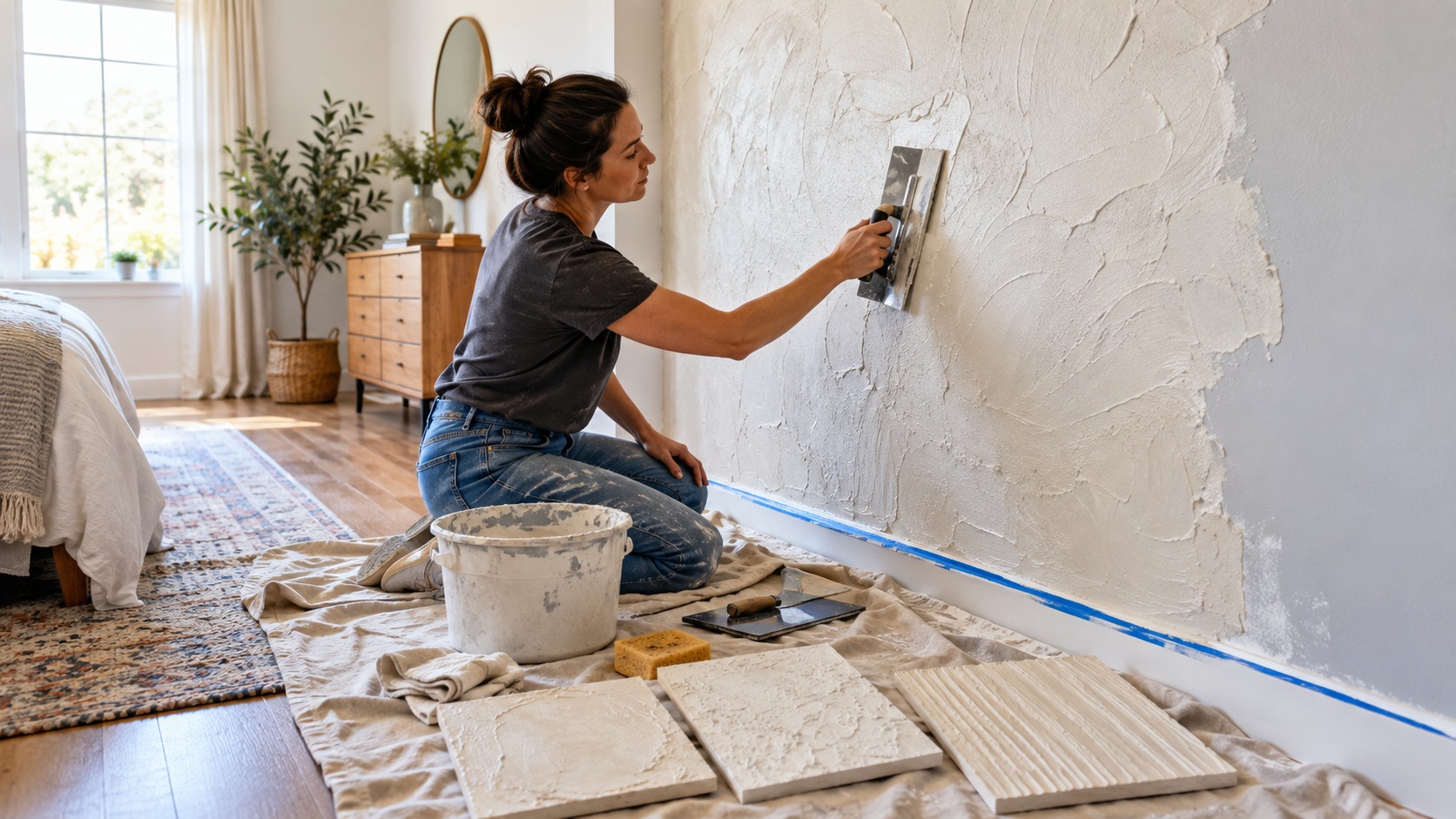
Because these materials are visually strong, they should be chosen with restraint. A textured plaster wall, handmade tile backsplash, stone fireplace, or brick surface can become a focal point. Several competing textured surfaces can make the room feel restless.
Lighting matters with these materials. Side lighting can reveal relief beautifully, while harsh overhead light can make uneven surfaces look accidental.
Balance Matte and Shine
Sheen is part of texture. Matte surfaces absorb light and feel soft. Glossy surfaces reflect light and feel crisp. Satin and eggshell finishes sit between those extremes. A room with only matte finishes can feel dull, while a room with too much shine can feel busy or glaring.
Use reflective materials where they help: mirrors, metal fixtures, glass tables, glazed tile, polished stone, or glossy ceramics. Then balance them with matte paint, fabric, wood, or woven materials.
Pay attention to glare. A shiny surface near a window or bright lamp may become distracting even if it looks beautiful in a showroom.
Layer Pattern as Texture
Pattern can behave like texture when it adds small-scale movement. A subtle stripe, woven rug, block print, herringbone floor, grasscloth wallcovering, or patterned pillow can create depth even before the surface is touched.
The trick is scale. Mix large, medium, and small patterns so they do not compete. If the rug has a bold pattern, the curtains may need to be quieter. If the sofa is plain, a patterned throw or pillow can add interest without overwhelming the room.
Pattern should support the room’s mood. Too many high-contrast patterns can make a calm room feel nervous.
Consider Texture Under Different Light
Texture changes throughout the day. Morning light may reveal grain, afternoon sun may create strong shadows, and evening lamps may make woven or ribbed surfaces feel warmer. A material that looks flat in one light can become beautiful in another.
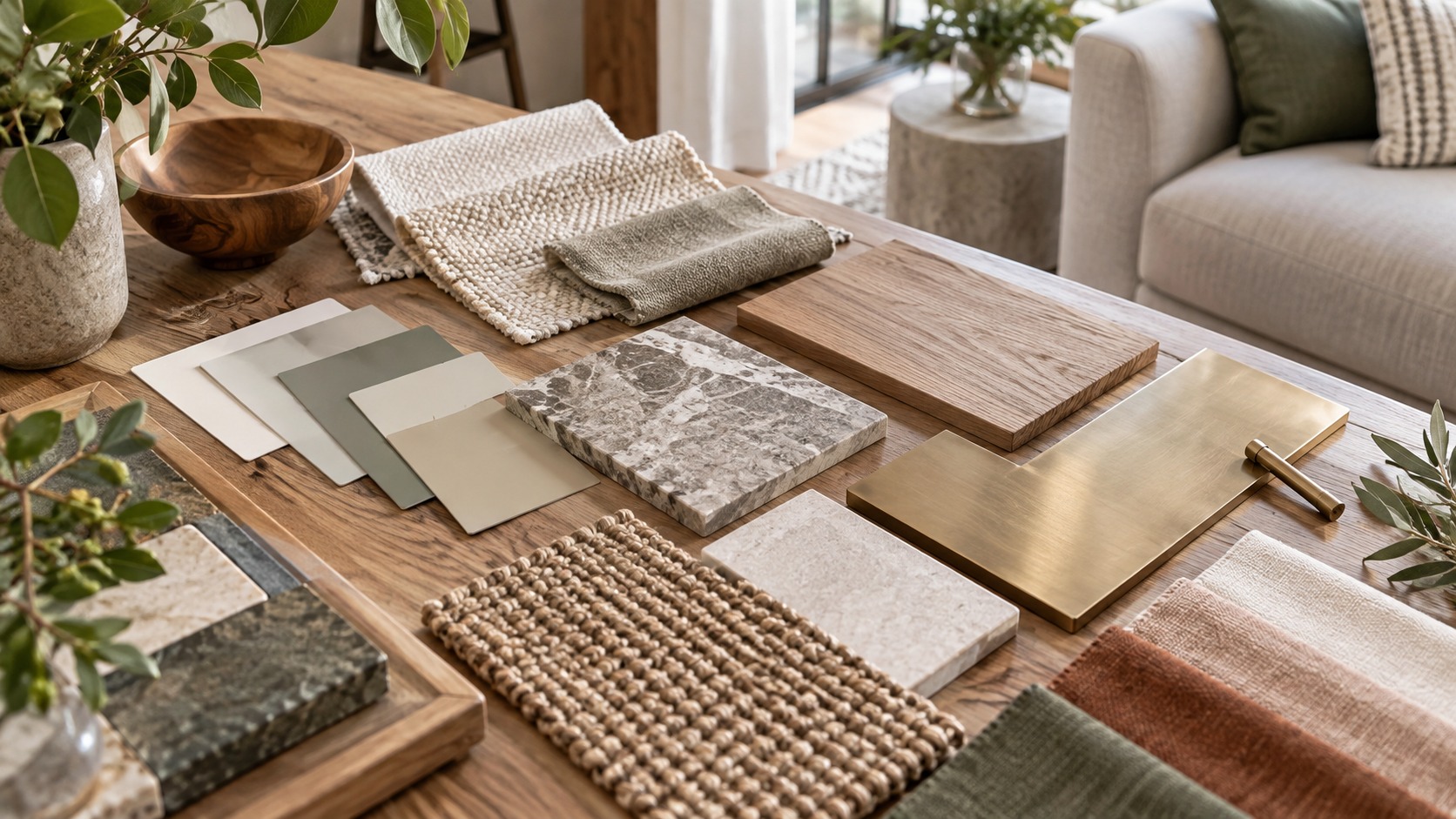
Before committing to a large textured item, view samples in the room. Look at them near windows, under lamps, and at night. This is especially important for rugs, upholstery, tile, stone, and wall finishes.
Use lamps to bring texture forward. A table lamp near a woven shade, plaster wall, or carved object can create depth that ceiling light alone will miss.
Use Texture to Control Mood
Texture affects emotion. Smooth, glossy, and high-contrast textures can feel modern and energetic. Soft, nubby, and matte textures can feel calm and relaxed. Natural textures can make a room feel warmer and less manufactured.
Decide the mood before adding materials. A bedroom may need soft linen, wool, matte paint, and warm wood. A kitchen may need wipeable surfaces with a few textured accents. A dining room may benefit from reflective pieces that catch evening light.
When texture supports the mood, the room feels designed even if the palette is simple.
Avoid Texture Clutter
Adding texture is not the same as adding more things. Too many baskets, fringe, carved objects, pillows, rough woods, and patterned fabrics can make a room feel crowded. Texture needs negative space just like color and furniture do.
Choose a few textures to repeat. For example, woven shades, a jute rug, and a linen lampshade can relate to each other. Black metal repeated in lighting and hardware can create another layer. Repetition makes texture feel intentional.
Edit anything that adds noise without improving comfort, function, or visual depth.
Texture in Minimal Rooms
Minimal rooms need texture even more because there are fewer objects to create interest. A simple room can feel rich when it uses good fabric, matte paint, natural wood, ceramic lamps, quiet rugs, and thoughtful light.
In a minimal space, small texture differences matter. A flat white wall and a plaster-look wall may read very differently. A plain cotton curtain and a linen curtain can change the whole room.
Keep the palette restrained and let the surfaces do the work. Texture is often what prevents minimal design from feeling empty.
Use Walls as a Texture Layer
Walls do not have to stay visually flat. Paint sheen, limewash, plaster, grasscloth, paneling, tile, wallpaper, picture molding, and art can all add texture. The right wall treatment can make a room feel more finished before any accessories are added.
Choose wall texture based on the room’s purpose. A busy family room may need washable paint and texture from art or textiles. A powder room can handle a more dramatic wallcovering. A bedroom may benefit from softer matte surfaces.
Do not texture every wall by default. One strong wall treatment can be enough, especially when the room already has wood floors, rugs, curtains, and furniture.
Let Window Treatments Soften the Room
Window treatments are often the missing texture in a room that feels unfinished. Woven shades, linen panels, Roman shades, sheer curtains, or layered treatments can soften glass, frame the view, and absorb sound.
The material should match the room’s function. A bedroom may need privacy and light control. A living room may need softness and filtered light. A kitchen may need something easy to clean.
Hang treatments with proper scale. Curtains that are too short or too narrow can make even good fabric look accidental. Texture looks better when the proportions are right.
Choose Furniture With Surface Variety
Furniture adds texture through upholstery, wood finish, metal, cane, leather, stone, glass, and shape. A room where every furniture piece has the same smooth finish can feel flat even if the layout is good.
Mix surfaces thoughtfully. A fabric sofa, wood coffee table, ceramic lamp, metal side table, and woven chair can create variety without clutter. The pieces do not need to match, but they should share enough color, scale, or mood to feel related.
Large furniture carries more visual weight than small accessories. If the sofa, rug, and table already provide strong texture, the smaller accents can stay quieter.
Test Texture Before Buying Large Pieces
Texture can look different at home than it does online or in a store. A rug may be rougher than expected, a sofa fabric may show every mark, or a shiny table may reflect too much light. Samples help prevent expensive surprises.
Bring fabric, rug, wood, tile, and paint samples into the room when possible. View them beside existing floors, walls, and furniture. Touch them and think about maintenance, not just appearance.
Texture is practical as well as visual. A beautiful boucle chair may not be right for pets. A rough jute rug may not feel good under bare feet. A glossy table may not suit a room full of fingerprints.
Repeat Texture Across the Room
Texture feels more intentional when it appears more than once. A woven shade can relate to a basket. A black metal lamp can relate to curtain rods. A linen pillow can relate to drapery. Repetition gives the room rhythm.
Repeating texture does not mean copying the exact same item. It means carrying a material idea through the room in a few places. This helps separate designed texture from random accumulation.
Use repetition lightly. Three quiet repeats are often enough. Too many repeated pieces can make the room feel themed.
Texture in Busy Rooms
Rooms with lots of color, art, books, collections, or patterned furniture need texture that calms rather than competes. Smooth surfaces, solid fabrics, simple rugs, and repeated finishes can make a busy room feel organized.
Not every object needs a distinct texture. If the room already has visual activity, let some materials be quiet. A plain sofa, simple curtains, or smooth table can give the eye a break.
The goal is balance. Texture should support the personality of the room without making it harder to read.
Final Texture Review
Texture is one of the main reasons a room feels finished. It comes from touch, light, grain, weave, sheen, pattern, and shadow. It can make a neutral room feel rich or make a colorful room feel grounded.
Start with fixed surfaces, then balance smooth and rough, soft and hard, matte and shiny, plain and patterned. Repeat a few materials, test them in real light, and edit anything that adds clutter. When texture is handled well, the room feels deeper, warmer, and more intentional without needing more decoration.