The right lighting starts with the way each room is used. A kitchen needs clear task light. A living room needs flexible layers. A bedroom needs calm light near the bed. A bathroom needs flattering mirror light and safe wet-area choices. One fixture style cannot solve all of those jobs.
Good lighting combines three layers: ambient light for general movement, task light for specific work, and accent light for mood or visual focus. The balance changes from room to room, but the principle stays the same. Light should support the activity before it shows off the fixture.
Use this guide to choose lighting by room, not by impulse. When brightness, placement, bulb color, fixture type, and controls match the space, the whole home feels easier to use.
A: No. Match color temperature to the room's use, finishes, and evening routine.
A: Put dependable task light on counters, sinks, islands, cooking zones, and cleanup areas.
A: Combine lamps, ceiling light, and accent light so the room can handle several moods.
A: Use softer bedside light, clear closet or dressing light, and controls reachable from natural paths.
A: Light the face from balanced positions and use rated fixtures near damp or wet areas.
A: Yes, because meals, cleanup, homework, and guests usually need different light levels.
A: Show turns, stairs, doorways, floors, locks, and transitions without creating glare.
A: Reduce screen glare, brighten paper or keyboard work, and keep the surrounding room from going dark.
A: Avoid bare glare, overlighting, neighbor spill, and fixtures not rated for the location.
A: Call for new boxes, moved switches, exterior wiring, bathroom zones, overloaded circuits, or uncertain wiring.
Know the Three Lighting Layers
Ambient light is the general light that lets people move through a room safely. It may come from ceiling fixtures, recessed lights, lamps, cove lighting, or reflected light from walls and ceilings. It should make the room readable without creating harsh glare.
Task light is aimed at a specific activity: cooking, reading, shaving, folding laundry, working at a desk, or using a workbench. Task light should be placed where the work happens, not simply in the center of the room.
Accent light adds depth. It can highlight art, shelves, plants, wall texture, architectural details, or a seating area. Accent light is not always necessary, but it often makes a room feel more finished.
Start With the Room’s Main Job
Before choosing fixtures, name the room’s main activities. A family room may need TV viewing, reading, games, and conversation. A bedroom may need dressing, reading, winding down, and nighttime movement. A kitchen may need prep light, cleanup light, and soft evening light.
Lighting should follow those activities. If the room has several jobs, it needs more than one light source. A single ceiling fixture usually creates a room that is either too bright in one spot or too dim where the work happens.
Walk through the room at night and notice where shadows fall. The dark places often reveal the missing layer.
Choose Kitchen Lighting for Work First
Kitchens need strong task lighting because knives, heat, water, and small details are involved. Under-cabinet lights can brighten counters better than a central ceiling fixture. Recessed lights or ceiling fixtures can provide ambient light, while pendants may help define an island.
Place light so your body does not cast a shadow over the work surface. A fixture behind you may look good but fail at the counter. Under-cabinet lighting, sink lighting, and island lighting should be planned around where hands actually work.
Use dimming where possible. A kitchen needs brightness during prep and cleanup, but softer light may be better for eating, conversation, or late-night use.
Make Living Room Lighting Flexible
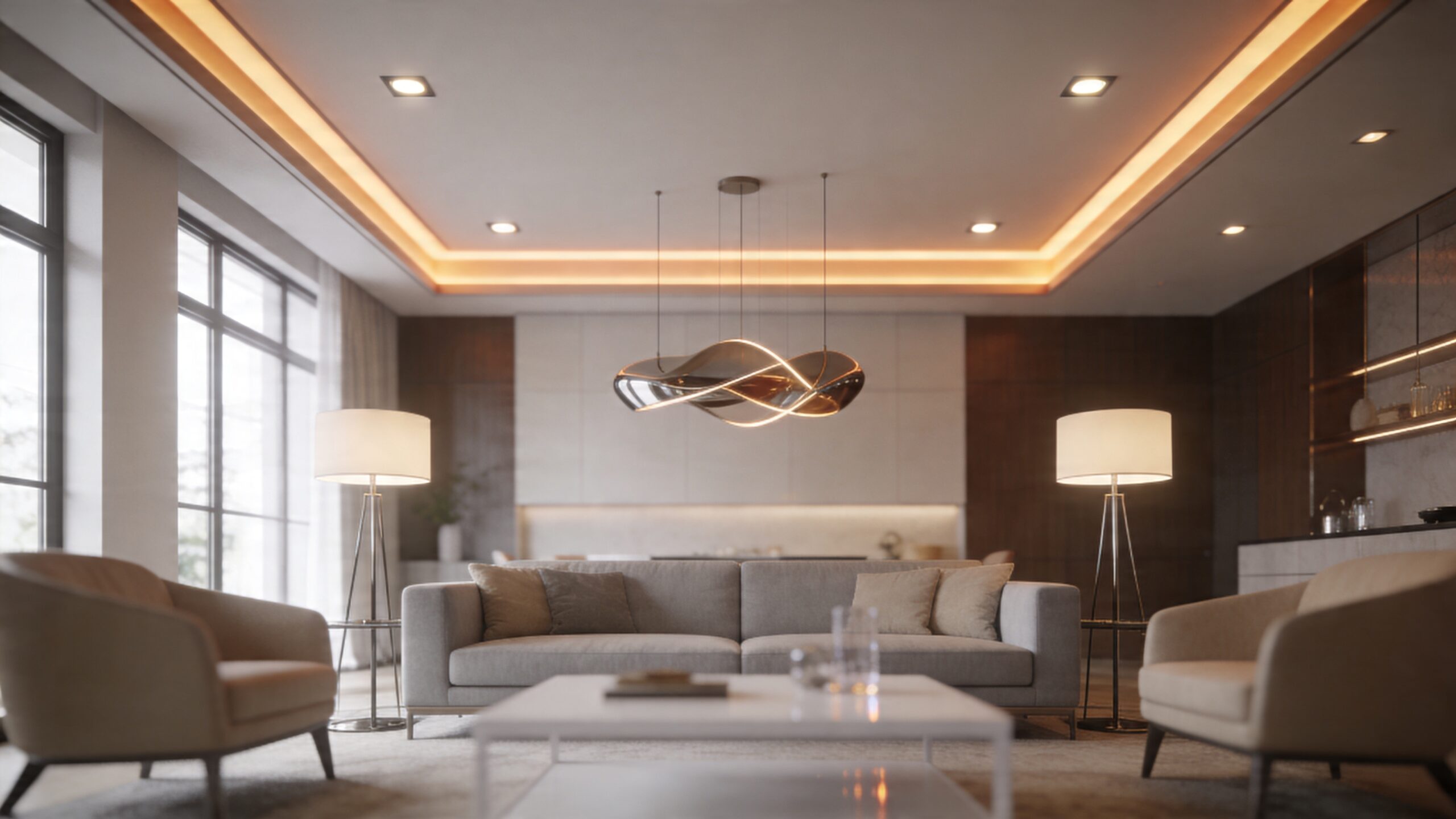
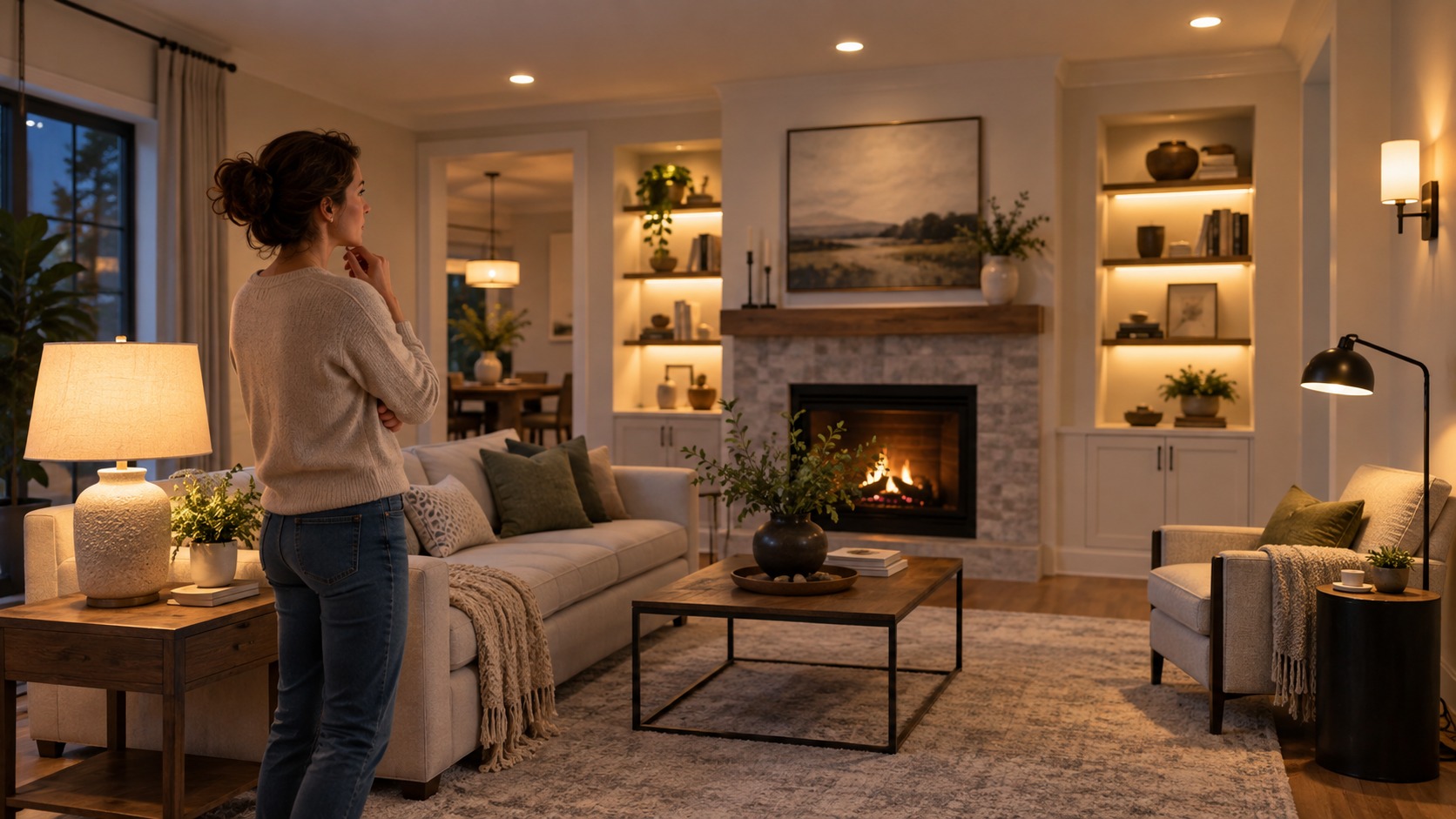
Living rooms often need the most flexibility. They may handle reading, television, guests, games, music, relaxing, and occasional work. Relying only on overhead light can make the room feel flat and uncomfortable.
Use several sources: table lamps, floor lamps, wall sconces, picture lights, recessed lights, or a ceiling fixture on a dimmer. Put light near seating so people can read without turning the whole room bright.
Control glare near screens. Lamps and windows reflected in a TV can make the room frustrating. Place lights so they support conversation and tasks without shining into eyes or screens.
Use Bedroom Lighting to Wind Down
Bedroom lighting should feel calm and controllable. Ambient light helps with dressing and cleaning, but bedside light is often more important in daily use. Lamps, sconces, or pendants near the bed should be easy to reach from lying down.
Warm color temperature usually works well in bedrooms because it feels softer at night. Bright cool light may be useful in closets or dressing areas, but it can feel too alert near bedtime.
Add a low-level night option if people move through the room in the dark. A dim lamp, motion night light, or low bedside setting can prevent the need for full brightness at 2 a.m.
Light Bathrooms for Faces and Safety
Bathroom lighting should not depend only on one ceiling light. Vanity lighting should help the face without heavy shadows. Side sconces near eye level are often flattering. A wide diffused bar above the mirror can also work when side lighting is not possible.
Wet and damp ratings matter. Shower lights, tub-area lights, and low-ceiling bathroom fixtures need to be appropriate for moisture exposure. A decorative fixture that is not rated for the location can fail quickly or create safety concerns.
Use separate layers when possible: vanity light, general light, shower light, fan control, and night light. Each layer solves a different bathroom problem.
Give Dining Rooms Adjustable Mood
A dining room fixture should light the table without glaring into faces. Chandeliers, pendants, or linear fixtures work best when sized to the table and hung at a comfortable height. The fixture should relate to the table, not just the room dimensions.
Dimmers are especially useful in dining rooms. Bright light helps with serving, cleaning, homework, and games. Softer light works for dinner and conversation.
If the dining room has art, cabinets, or architectural details, accent lighting can add depth. The table fixture should not be forced to do every job alone.
Plan Entry and Hall Lighting for Movement
Entries and halls need lighting that helps people arrive, leave, find keys, remove shoes, and move safely. These spaces often benefit from dependable ambient light and simple controls near the points of entry.
Use fixtures that fit the ceiling height. A low hallway may need flush or semi-flush fixtures. A tall entry can handle a larger pendant or chandelier. Scale matters because entries set the first impression.
Consider motion or smart controls where helpful, but keep basic switching obvious. Guests should not need instructions to turn on a hall light.
Choose Office Lighting to Reduce Strain
Home offices need light that supports screens, paperwork, video calls, and long periods of focus. Overhead light alone can create glare on monitors or shadows on the desk. A desk lamp or adjustable task light is usually important.
Place light to the side of the work area rather than directly behind the screen. Avoid shining bright light into the camera for video calls unless it is designed to light the face evenly.
Neutral color temperature can help work areas feel clear without becoming harsh. Dimming or layered controls help the room shift from work mode to evening mode.
Light Laundry and Utility Rooms Clearly
Laundry rooms, mudrooms, garages, and utility rooms need practical light. People sort colors, read labels, clean stains, find tools, and move around with full hands. Shadows make these rooms harder to use.
Choose bright, even light with good color quality. A single weak ceiling bulb can make laundry and storage frustrating. Linear fixtures, flush mounts, or well-placed LEDs can make the room much more useful.
Durability matters in utility spaces. Fixtures should suit dust, temperature, vibration, and moisture conditions where relevant.
Use Outdoor Lighting With Restraint
Outdoor lighting should improve safety, wayfinding, and comfort without blasting the yard or neighbors. Porch lights, path lights, step lights, garage lights, and patio lighting each serve different jobs.
Aim light where it is needed: doors, steps, paths, house numbers, and gathering areas. Shield fixtures to reduce glare. A lower, warmer, well-aimed light often works better than a very bright exposed bulb.
Use outdoor-rated fixtures and bulbs. Weather exposure, cold, heat, and moisture are not kind to indoor products.
Match Bulb Color to the Room
Color temperature changes the mood of a room. Warm light feels cozy and relaxed. Neutral light feels clear and balanced. Cool light can feel crisp but may become harsh in living spaces.
Use warmer light in bedrooms, living rooms, dining rooms, and evening spaces. Use clear neutral light in kitchens, baths, offices, laundry rooms, and garages where detail matters. Avoid mixing several color temperatures in one open view.
Color rendering matters too. Bulbs with poor color quality can make paint, food, fabric, and skin look wrong even when the brightness is adequate.
Put Important Lights on Dimmers
Dimmers make rooms more flexible. They allow the same fixture to support cleaning, daily use, and relaxed evenings. They are especially useful in kitchens, dining rooms, living rooms, bedrooms, and bathrooms.
Check compatibility between dimmers, bulbs, and fixtures. LED dimming problems can include flicker, buzzing, sudden drop-off, or lights that will not dim low enough.
Use separate controls when layers need to work independently. One switch for every light in a room often makes the room less comfortable.
Choose Fixture Size With the Room in Mind
Fixture scale affects both appearance and performance. A tiny light in a large room can look temporary and leave dark corners. An oversized fixture in a low room can feel crowded or create glare. Size should relate to the room, ceiling height, furniture, and task area.
Over a table or island, choose the fixture based on the surface below it. In a hallway or bedroom, check door swings, sight lines, and head clearance. In a living room, consider whether the fixture is meant to light the room, decorate the ceiling, or both.
When in doubt, mock up the fixture size with cardboard, tape, or a temporary object. Seeing the scale in the room prevents many buying mistakes.
Account for Natural Light
Rooms with strong daylight need different lighting than rooms with no windows. A sunny room may need softer evening layers rather than more daytime brightness. A dark interior room may need more ambient light and better task placement.
Watch the room at several times of day. Morning light, afternoon glare, and nighttime darkness can all reveal different needs. Fixtures should solve the weakest lighting condition, not just look good at noon.
Window treatments affect this too. Heavy curtains, woven shades, frosted glass, and shutters all change how much artificial light the room needs.
Use Lamps as Flexible Lighting
Lamps are often the easiest way to improve a room without opening walls. Table lamps, floor lamps, plug-in sconces, and picture lights can add task and accent light where overhead fixtures fall short.
Use lamps to bring light closer to people. A reading chair needs light near the page. A sofa may need lamps at both ends. A console lamp can soften an entry. A bedroom lamp should be reachable from the bed.
Lamps also add texture and scale. Shades, bases, and cord placement matter. A beautiful lamp that shines in the eyes or leaves cords exposed may not solve the room’s real problem.
Plan Controls Before Buying Fixtures
A good lighting plan can become frustrating if the controls are wrong. Think about where people enter, where they sit, where they sleep, and where they need to turn lights off. Switches, dimmers, remotes, smart controls, and lamp switches all shape daily use.
Three-way switches can help in halls, stairs, bedrooms, and large rooms. Smart controls can help with schedules and scenes, but they should not make basic lighting hard for guests. Dimmers should be placed where people actually adjust light.
Control planning is especially important in remodels. It is much easier to add wiring before walls are closed than after paint and trim are finished.
Avoid Common Whole-Home Lighting Mistakes
The most common mistake is using the same solution everywhere. A row of recessed lights may work in one room and feel cold in another. A decorative pendant may look great in a dining room but fail in a kitchen work zone.
Another mistake is choosing fixtures before deciding what the room needs. Style matters, but placement, brightness, glare, bulb color, and control matter first. A good-looking fixture in the wrong place will still be annoying.
Finally, avoid under-lighting work areas and over-lighting relaxation areas. A home feels better when each room can shift between useful brightness and comfortable lower light.
Final Room Lighting Review
The right lighting for every room comes from matching layers to use. Ambient light helps movement, task light supports work, and accent light adds mood and depth. The balance changes in kitchens, living rooms, bedrooms, bathrooms, dining rooms, offices, halls, and outdoor spaces.
Choose fixtures after the job is clear. When placement, brightness, bulb color, dimming, and controls are planned around real routines, the home feels better at every hour of the day.