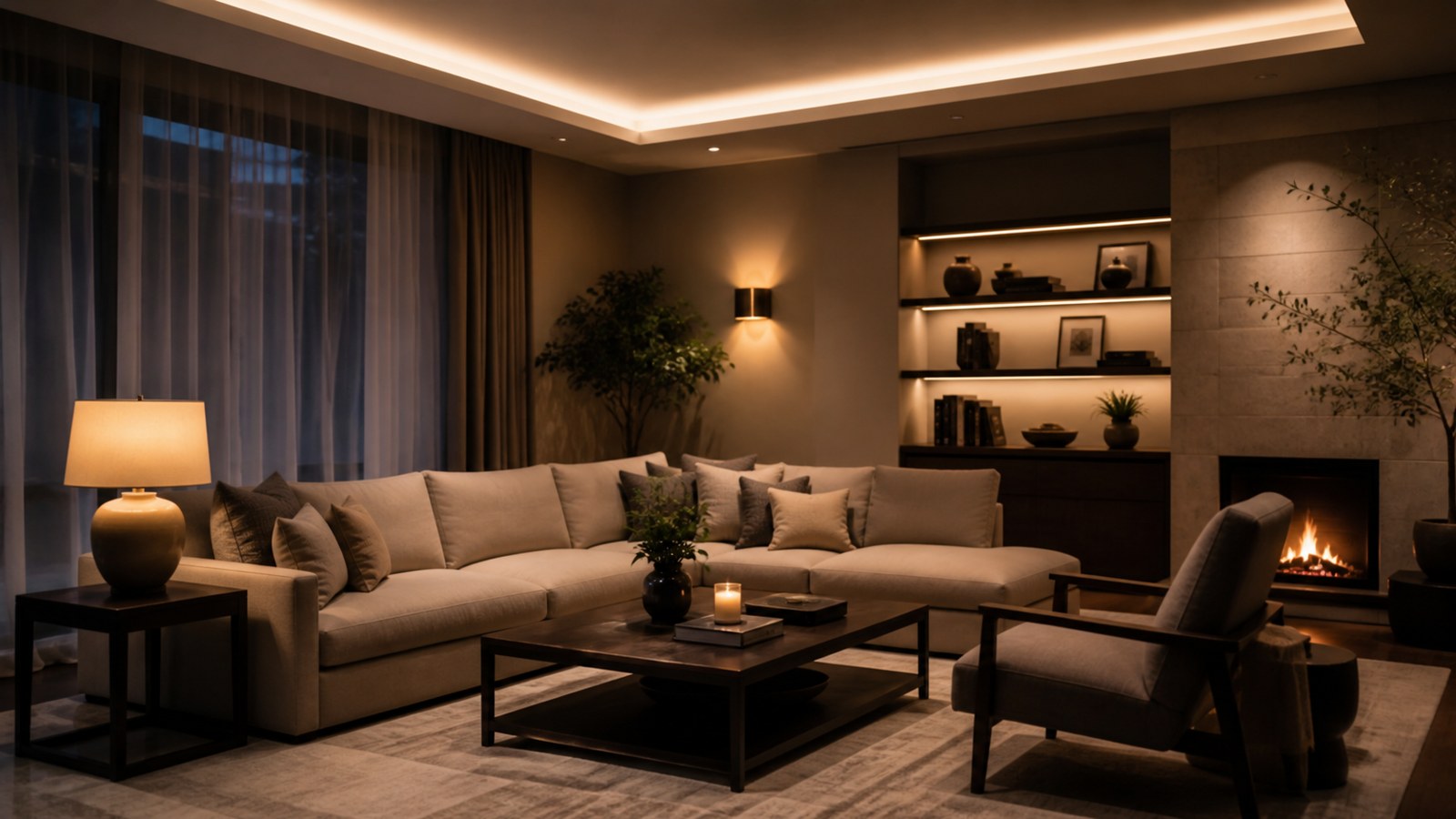
The right lighting starts with what the room asks people to do. A kitchen counter, reading chair, bathroom mirror, stair landing, dining table, and hallway all need different kinds of light, even when the fixtures are beautiful. A good plan looks at the tasks, the mood, the ceiling height, the wall colors, and the way people move through the room before choosing a fixture style.
Perfect lighting is not one bright fixture in the middle of the ceiling. It is a mix of useful brightness, soft background light, controlled glare, sensible switch locations, and bulbs that make the room look the way it should. When those pieces work together, the space feels easier to use at every hour instead of just looking good in a product photo.
A: Decide how the room is used, then choose light layers that support those jobs.
A: Most rooms work better with at least general light, task light, and one softer accent source.
A: Use warmer light for relaxing rooms and carefully chosen neutral light for kitchens, baths, laundry, and work areas.
A: The light may be aimed at the floor while walls, corners, shelves, or task areas stay underlit.
A: Shield bare bulbs, check sight lines, use diffusers, and avoid aiming bright light at reflective surfaces.
A: Yes, when the bulbs and fixtures are compatible and the room needs different moods during the day.
A: Use the fixture size, ceiling height, counter or table height, and sight lines to set the final drop.
A: Use moisture-rated fixtures where needed and place vanity light so faces are evenly lit.
A: Confirm size, rating, bulb type, dimmer compatibility, drop length, and where the switch will be.
A: Call for new wiring, moved boxes, overloaded circuits, outdoor fixtures, bathroom zones, or unclear electrical conditions.
Define the Room’s Real Jobs
Start by writing down what actually happens in the space. A bedroom may need quiet evening light, closet light, bedside reading, makeup light, and safe movement to the bathroom at night. A living room may need light for conversation, television, cleaning, reading, games, and display shelves. Those needs cannot be solved by one fixture doing everything.
The best lighting plans begin with activities because activities decide brightness, direction, color quality, and control. A room used mostly for relaxing can tolerate softer light. A room used for chopping food, shaving, paperwork, crafts, or small repairs needs more focused light where the work happens. Name the jobs first, then choose fixtures for those jobs.
Also notice who uses the room. Children, guests, aging parents, and people with low vision may need clearer switches, less glare, or brighter pathways. Lighting is not only decoration. It affects comfort, safety, and whether the room feels natural to use.
Separate Ambient, Task, and Accent Light
Most rooms work better when light comes from more than one layer. Ambient light gives the room general visibility. Task light helps with a specific job. Accent light highlights art, shelving, texture, plants, architecture, or a detail worth noticing. When all three are considered, the room feels more flexible.
Ambient light can come from recessed lights, ceiling fixtures, indirect cove light, wall sconces, pendants, or even lamps in a smaller room. Task light might be under-cabinet lighting, a desk lamp, a vanity sconce, a reading lamp, or a pendant over a work surface. Accent light is usually more selective and should not have to light the whole room.
If a room feels flat, it often has only ambient light. If it feels harsh, the ambient layer may be too bright or poorly aimed. If it feels inconvenient, the task layer may be missing where people actually need it.
Read the Ceiling Height
Ceiling height affects almost every lighting choice. A low ceiling may not have room for a deep chandelier, oversized pendant, or fan light that hangs into the walking path. A tall ceiling may swallow small fixtures and leave the lower part of the room dim. Sloped ceilings add another layer because fixtures need to hang straight or aim properly.
For low ceilings, look for flush mounts, slim recessed lights, wall sconces, lamps, and under-cabinet or shelf lighting that adds brightness without dropping into head space. For taller ceilings, use fixtures with enough scale and consider lowering light closer to the activity area with pendants, chandeliers, or lamps.
The goal is not just clearance. It is getting light where people live. A bright fixture high above the room can look impressive while leaving faces, counters, corners, and seating areas poorly lit.
Control Glare Before Adding Brightness
A room can be bright and still uncomfortable if the light source is in the wrong place. Glare happens when the eye sees a bare bulb, a harsh reflection, or a strong contrast between a bright source and a dark room. Adding more wattage rarely fixes it. Better placement, shielding, dimming, and fixture choice usually matter more.
Look at the room from seated positions, standing positions, and entry points. A pendant that looks fine from the doorway may shine directly into someone’s eyes at the sofa. Recessed lights placed over a bed can feel uncomfortable when someone lies down. A vanity light above a mirror can cast shadows that side lights would soften.
Use shades, diffusers, recessed trims, dimmers, indirect light, and lower-output lamps to keep brightness useful without making the room feel sharp. Comfortable lighting lets people stay in the room longer without thinking about the fixture.
Choose Bulb Color With the Room in Mind
Color temperature changes how a room feels. Warm light usually feels more relaxed and flattering in bedrooms, living rooms, dining rooms, and many traditional spaces. Cooler light can feel cleaner and more alert in garages, laundry rooms, workshops, and some task-heavy areas. The right choice depends on the room, finishes, and purpose.
Do not mix random bulb colors in the same open area. One lamp with a very warm bulb and another with a cool daylight bulb can make the room feel unfinished. In connected spaces, choose a consistent range so the lighting feels intentional as you move from room to room.
Color rendering matters too. Bulbs with better color quality make paint, wood, fabric, tile, food, and skin tones look more natural. This is especially important in kitchens, bathrooms, closets, art areas, and rooms where color choices matter.
Match Brightness to the Surface
Lighting is not only about room size. Dark walls, matte finishes, heavy wood, deep cabinets, and textured surfaces absorb light. White walls, glossy tile, mirrors, glass, and pale counters reflect it. The same bulb can feel bright in one room and weak in another because the surfaces respond differently.
When choosing fixtures, think about where the light lands. A pendant over a dark island may need more output than a pendant over a white quartz counter. A hallway with dark paint may need better wall washing. A bathroom with a large mirror may bounce light back into the room and require more careful glare control.
Test bulbs before buying a houseful of them. Install one in the real room at night and during the day. Look at the walls, floor, faces, fabric, and work surfaces. The room itself will tell you more than the package label.
Use Fixtures at the Right Scale
Fixture scale affects both light and design. A tiny flush mount in a large entry can look accidental. An oversized chandelier in a small bedroom can crowd the ceiling and make the room feel lower. A pendant that is too small over a kitchen island may look like a placeholder instead of a planned choice.
Scale should respond to ceiling height, furniture size, table width, island length, sightlines, and the amount of open space around the fixture. In dining rooms, the fixture should relate to the table, not the entire room alone. Over islands, multiple smaller pendants or one linear fixture may work better than a single decorative light.
Also check the fixture from nearby rooms. Lighting is often seen from hallways, open kitchens, stair landings, and adjacent seating areas. A fixture that looks balanced from only one angle may feel strange in an open plan.
Put Light Where Work Happens
Task lighting should land on the work, not behind the person doing the work. In kitchens, under-cabinet lighting is useful because ceiling lights can cast shadows from the cook’s body onto the counter. At desks, a lamp should light the writing or keyboard area without reflecting harshly on a screen. In bathrooms, light at face level is usually more flattering than light only from above.
Think about hands, faces, counters, steps, and tools. If the task requires accuracy, the light should be close enough and aimed well enough that the work is visible without squinting. Bright general light cannot always replace focused task light.
Task fixtures also need good controls. A reading lamp should be reachable from the chair or bed. Under-cabinet lights should not require walking across the room in the dark. Convenience is part of whether the lighting succeeds.
Light Vertical Surfaces
Rooms often feel dim because only the floor is lit. Human eyes read brightness from walls, faces, cabinets, art, curtains, and vertical surfaces. A room with light on the walls can feel more open and comfortable even when the total wattage is modest.
Wall sconces, picture lights, shelf lighting, grazing light on texture, and well-placed recessed fixtures can all brighten vertical planes. This is especially helpful in hallways, small rooms, basements, and rooms with dark corners. Lighting the walls can make a space feel larger without adding harsh overhead brightness.
Be careful with uneven wall surfaces. Light grazing across rough drywall, patched texture, or imperfect plaster can reveal flaws. That may be useful during renovation but distracting in a finished room. Aim and fixture placement should respect the condition of the surface.
Plan Switches Around Movement
Good lighting can still feel wrong if the switches are inconvenient. A room should be easy to enter, use, and leave without crossing dark space. Put controls where people naturally arrive: doorways, bed sides, hallway ends, kitchen entries, garage doors, basement stairs, and exterior exits.
Multi-way switching can make a large room or hallway much easier to use. Dimmers help one fixture serve different times of day. Smart controls can be useful, but they should not make basic operation confusing for guests or family members. Manual control still matters.
Label unusual switches during a renovation, especially in rooms with several layers of light. A beautiful lighting plan becomes annoying if nobody knows which switch controls which fixture.
Use Dimmers Thoughtfully
Dimmers make lighting more flexible, but the dimmer, bulb, and fixture need to be compatible. LED bulbs that are not designed for dimming may flicker, buzz, fail early, or refuse to dim smoothly. Some integrated LED fixtures require specific dimmer types. Check compatibility before installing controls across the room.
Dimming is especially useful in dining rooms, living rooms, bedrooms, bathrooms, kitchens, and media rooms. It lets the same space shift from cleaning bright to evening soft. In task spaces, a dimmer can reduce eye strain once the hard work is done.
Do not use dimmers as a substitute for good layering. One dimmed overhead fixture may still cast unflattering shadows. The best result comes from dimming several useful layers independently.
Respect Wet, Damp, and Outdoor Ratings
Bathrooms, covered porches, showers, laundry rooms, garages, and outdoor areas may need fixtures rated for damp or wet locations. A fixture that is fine in a dry bedroom may not belong near steam, splashing water, or exterior moisture. The rating protects the fixture and the people using the space.
In bathrooms, pay attention to shower zones, vanity placement, fan moisture, and ceiling height. Outdoors, consider wind, insects, corrosion, temperature swings, and exposure to direct rain. Coastal or snowy climates may need more durable materials than a mild covered entry.
If the fixture location is questionable, check the local code requirements or ask an electrician. Lighting failures in wet areas are not just cosmetic problems.
Coordinate With Daylight
Natural light changes the way artificial light feels. A room with big south-facing windows may need soft evening layers more than daytime brightness. A north-facing room may need help staying lively throughout the day. Rooms with deep overhangs, small windows, or heavy trees may rely on artificial light earlier than expected.
Look at the room in morning, afternoon, evening, and at night if possible. Notice where shadows fall and which corners disappear. The best fixture layout fills in the weak times instead of fighting daylight that already works.
Window treatments matter too. Sheers, shades, shutters, and curtains can soften daylight and reduce glare, but they also change how much artificial light is needed after sunset.
Avoid Common Lighting Mistakes
The most common mistake is relying on one ceiling fixture for everything. The next is choosing a fixture only because it looks good online. A third is buying bulbs without checking color temperature, brightness, dimming, or color rendering. These mistakes are easy to make because lighting products are often sold as objects instead of as part of a room.
Other mistakes include placing recessed lights in a rigid grid that ignores furniture, putting pendants where they block sightlines, using exposed bulbs at eye level, forgetting switches at second entrances, and installing cool bulbs in rooms meant to feel warm and relaxed.
Before ordering, imagine using the room on a dark winter evening. If you can read, cook, clean, relax, move safely, and make the room feel calm without one harsh blast of light, the plan is probably on the right track.
Final Lighting Selection Review
Before buying fixtures, review the room by layer. Identify the ambient light, the task light, the accent light, and the controls for each. Check ceiling height, fixture scale, glare, bulb color, dimmer compatibility, damp-location needs, and how the lighting connects to nearby rooms.
Then test one or two bulbs in the actual space before committing. Look at the room at night, not only during daylight. Check faces, work surfaces, walls, fabrics, paint, art, and flooring. Lighting is successful when the room feels comfortable and the work is easy to see.
The perfect lighting choice is rarely the single most dramatic fixture. It is the combination that supports the room’s purpose, flatters the finishes, avoids glare, and gives people control. When function and atmosphere are planned together, the fixtures can look good because the room actually works.