Choosing paint finish room by room is less about shine and more about how each surface gets used. A quiet bedroom wall, a hallway corner, a bathroom ceiling, a kitchen door, and a cabinet face all need different levels of cleanability, reflection, and toughness.
The safest whole-home plan starts with traffic, moisture, light, wall texture, and touch points. Flat and matte finishes hide flaws. Eggshell gives a soft washable wall. Satin handles busy rooms better. Semi-gloss and gloss belong where trim, doors, cabinets, or repeated cleaning demand a harder finish.
A: Use the chart as a starting point, then account for actual contact, light, moisture, surface condition, and product performance.
A: They can share an appearance, but choose products suitable for each room's wear and keep visible transitions intentional.
A: Select a washable coating that performs for the expected use; compare suitable lower-sheen alternatives if glare or wall condition matters.
A: Choose documented humidity suitability and the desired appearance together; a shiny label alone does not establish moisture performance.
A: Consider splashes, routine wiping, scuffs from baskets, and the specific contact demands of shelves and other woodwork.
A: Use it only if approved for that service; seating and storage surfaces can need different wear and curing properties.
A: Review task lighting, screen reflections, chair contact, and whether it doubles as a craft or homework room.
A: It can simplify maintenance when the product is suitable for the different substrates and exposures involved.
A: Label records and containers with room, surface, color, product, sheen, and date rather than identifying them by color alone.
A: Watch the actual contact areas, cleaning response, reflections, and moisture behavior, then adjust maintenance or future specifications from those observations.
Use Sheen as a Job Description
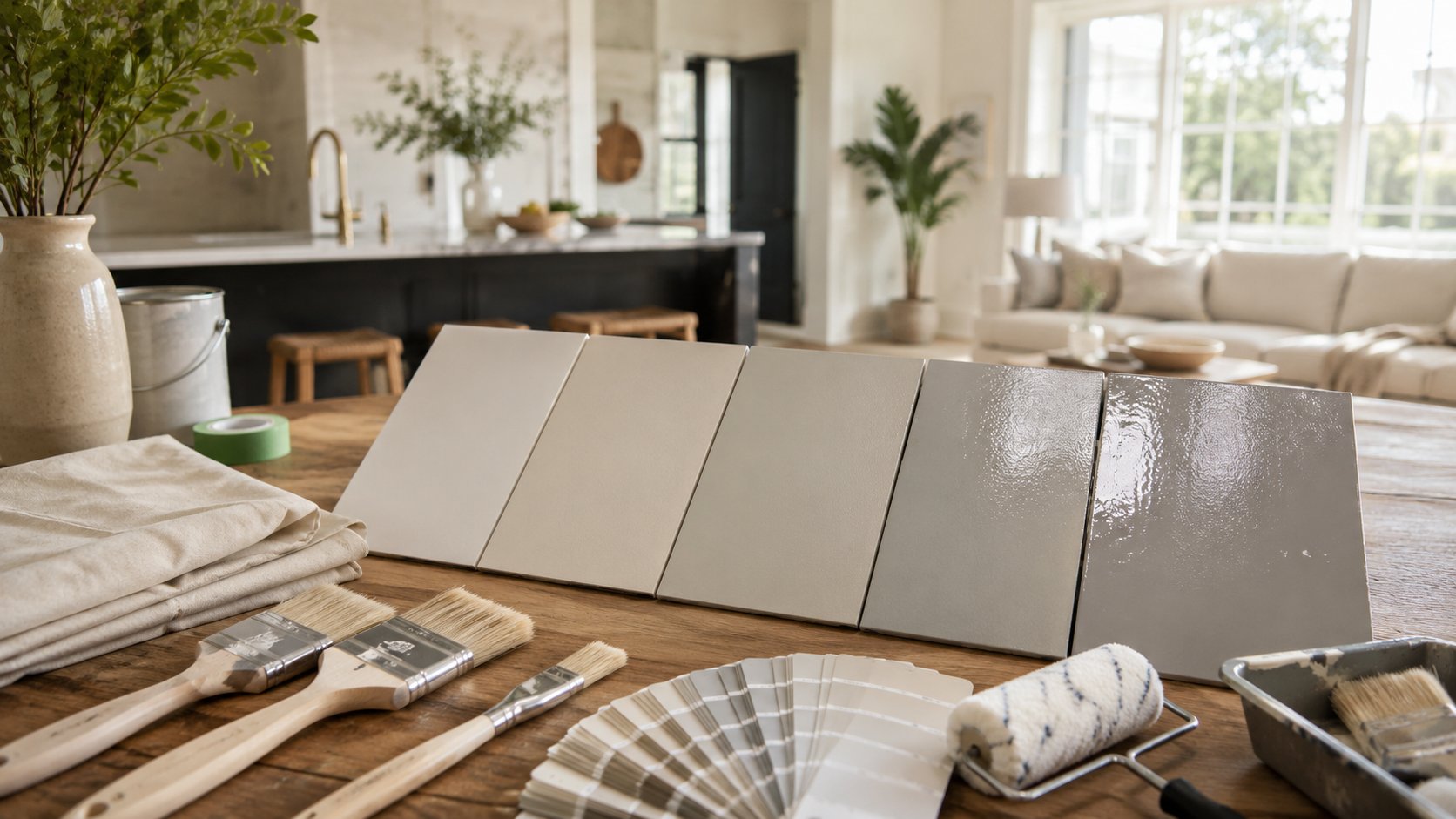
Paint sheen is not only a style choice. It describes how the finish reflects light, how easily it marks, how well it wipes clean, and how strongly it reveals surface flaws. The lower the sheen, the more forgiving it usually looks on imperfect drywall. The higher the sheen, the more durable and washable it often becomes.
That tradeoff is why one finish should not be used everywhere. A flat paint that looks beautiful in a dining room may fail quickly in a mudroom. A semi-gloss that works well on trim may make a patched living room wall look wavy. Good paint planning means matching the finish to the room’s work.
Flat Paint for Ceilings and Quiet Walls
Flat paint has the least reflection, so it hides drywall seams, patches, roller texture, and ceiling irregularities better than shinier finishes. It is especially useful on ceilings because overhead light can exaggerate flaws. A flat white ceiling usually looks calm and even.
Flat can also work in adult bedrooms, formal dining rooms, and low-traffic spaces where walls are touched rarely. The risk is cleanability. If fingerprints, scuffs, moisture, or children are part of the room’s normal life, standard flat paint may become frustrating quickly. Use flat where appearance matters more than frequent wiping.
Matte Paint When You Want Softness With Better Durability
Matte finishes sit close to flat visually but often offer better washability when the product line is designed for it. They are a good option for living rooms, bedrooms, offices, and open-plan areas where the homeowner wants a soft look without choosing the least durable coating.
Not all matte paints perform the same way. A premium washable matte can behave very differently from a basic flat wall paint. Read the label, consider the room traffic, and test touchups if future repairs are likely. Matte is best when you want low glare but still need a little more everyday resilience.
Eggshell for Main Living Areas
Eggshell is a common choice for living rooms, bedrooms, dining rooms, and general wall areas because it gives a subtle finish without looking shiny. It is easier to clean than flat paint and less revealing than satin. For many homeowners, it is the comfortable middle ground for standard walls.
Use eggshell where the walls need occasional wiping but are not constantly scrubbed. It works well in spaces with moderate traffic and decent drywall. In a house with pets, children, narrow hallways, or frequent wall contact, eggshell may still be too delicate for the hardest-working areas.
Satin for Busy Walls
Satin has more sheen and more practical durability than eggshell. It is a strong choice for hallways, entries, family rooms, playrooms, laundry rooms, mudrooms, kitchens, and bathrooms. These are the places where walls collect fingerprints, bag scuffs, shoe marks, splashes, and cleaning wear.
The tradeoff is that satin shows more. Roller marks, drywall patches, sanding scratches, and inconsistent texture can become more visible, especially in rooms with side light from windows. If the wall is rough, spend more time on prep before using satin. The finish will reward clean surface work and punish rushed patching.
Semi-Gloss for Trim, Doors, and Tough Edges
Semi-gloss belongs on the parts of the house people touch: baseboards, door casing, doors, window trim, built-ins, stair risers, and sometimes wainscoting. It wipes better than wall paint and gives trim a crisp edge against softer wall finishes.
Use semi-gloss carefully on large wall surfaces. It can look harsh in a living room and may reveal every wall flaw. On trim, that reflectivity is an asset because the surface is narrow and expected to stand apart. On broad drywall, it can become distracting.
Gloss for Specialty Surfaces
Gloss is the shiniest standard option and should be used with intention. It can look sharp on furniture, specialty trim, doors, and architectural accents, but it demands excellent prep. Gloss shows brush marks, dust, dents, sanding scratches, and uneven old coatings.
Most homeowners do not need high gloss on everyday walls. If gloss is used, it should be because the surface is meant to stand out and can be prepared to a high standard. A glossy finish over a rough surface looks less polished, not more durable.
Bedrooms Usually Need Softer Finishes
Bedrooms are good candidates for flat, matte, or eggshell because they are usually lower traffic than halls, baths, and kitchens. A softer finish reduces glare and makes the room feel calmer. It also helps hide small wall imperfections in spaces where lamps and low light create shadows.
Children’s bedrooms are different. Walls may need satin if they are cleaned often or take more abuse from toys, furniture, hands, and tape. Guest rooms can stay softer. Primary bedrooms usually do well with matte or eggshell unless pets, tight furniture paths, or heavy cleaning change the equation.
Living Rooms Depend on Light and Traffic
A formal living room can often use matte or eggshell. A busy family room may need satin on the walls, especially around sofa backs, switch plates, media areas, and traffic paths. The right finish depends on whether the room is mostly for relaxing or for daily wear.
Natural light matters here. Large windows can rake light across the wall and expose texture. If the drywall is imperfect, jumping to satin may make the room look worse even if the paint is more washable. In that case, a washable matte or eggshell may be the better compromise.
Hallways and Entries Need Tougher Paint
Hallways, stairwells, and entries take more abuse than most homeowners expect. Bags scrape corners, hands touch walls, shoes kick baseboards, and moving furniture leaves marks. Satin is often the best wall choice in these areas because it cleans better than eggshell without looking as shiny as semi-gloss.
Trim in these areas should usually be semi-gloss or a durable satin enamel. Door frames and baseboards collect dirt quickly near entries. A tougher trim finish lets those surfaces be cleaned without dulling or wearing through too soon.
Kitchens Need Washability Without Glare
Kitchen walls deal with grease, steam, splashes, fingerprints, and frequent wiping. Satin is often the best finish for walls because it balances cleanability with a livable appearance. Around backsplash edges, pantry doors, trim, and cabinet-adjacent details, semi-gloss or a trim enamel may be better.
Do not rely on sheen alone in a kitchen. Degrease walls before painting, prime glossy or stained areas, and choose a paint line meant for cleaning. A satin paint applied over cooking film can still fail, no matter how durable the label sounds.
Bathrooms Need Moisture-Aware Choices
Bathrooms usually need satin on the walls and a moisture-resistant ceiling plan. Semi-gloss can work on trim, doors, and beadboard, but it may be too shiny for broad walls unless the surface is very smooth. Powder rooms can sometimes use eggshell if there is no shower and the room stays dry.
Ventilation is part of the paint finish decision. If steam lingers, mildew appears, or old paint peels near the ceiling, choose the finish only after addressing airflow and moisture. A tougher sheen helps, but it cannot correct a wet room by itself.
Laundry Rooms and Mudrooms Need Practical Finishes
Laundry rooms and mudrooms are working spaces. They see detergent splashes, baskets, shoes, damp coats, pet gear, cleaning tools, and bumped walls. Satin is usually the best wall finish because it can be wiped more confidently than eggshell.
Trim, doors, shelving, and built-ins in these spaces deserve tougher coatings. Use a durable satin or semi-gloss enamel where hands and objects touch often. A beautiful soft wall finish is less useful if the room’s daily work beats it up in the first month.
Home Offices Can Stay Calm
Home offices often benefit from matte or eggshell because lower glare is easier on the eyes and looks better on video calls. If the office is also a craft room, homework zone, or equipment room, satin may make more sense on the walls.
Think about furniture contact. Desk chairs, filing cabinets, bookshelves, and rolling carts can mark walls. If the layout is tight, use a more washable finish behind high-contact areas or add chair rail, paneling, or a tougher accent surface where wear is predictable.
Trim Should Stay Consistent
Whole-house paint planning feels cleaner when trim finish is consistent. Semi-gloss white trim throughout the house is common because it creates a crisp line and handles cleaning. Satin trim can feel softer and more modern, especially in homes where high gloss would look too sharp.
Whatever you choose, document the product, sheen, and color formula. Trim touchups happen more often than wall touchups. A consistent trim system makes future repairs easier and keeps connected rooms from looking mismatched.
Cabinets Need Cabinet Paint
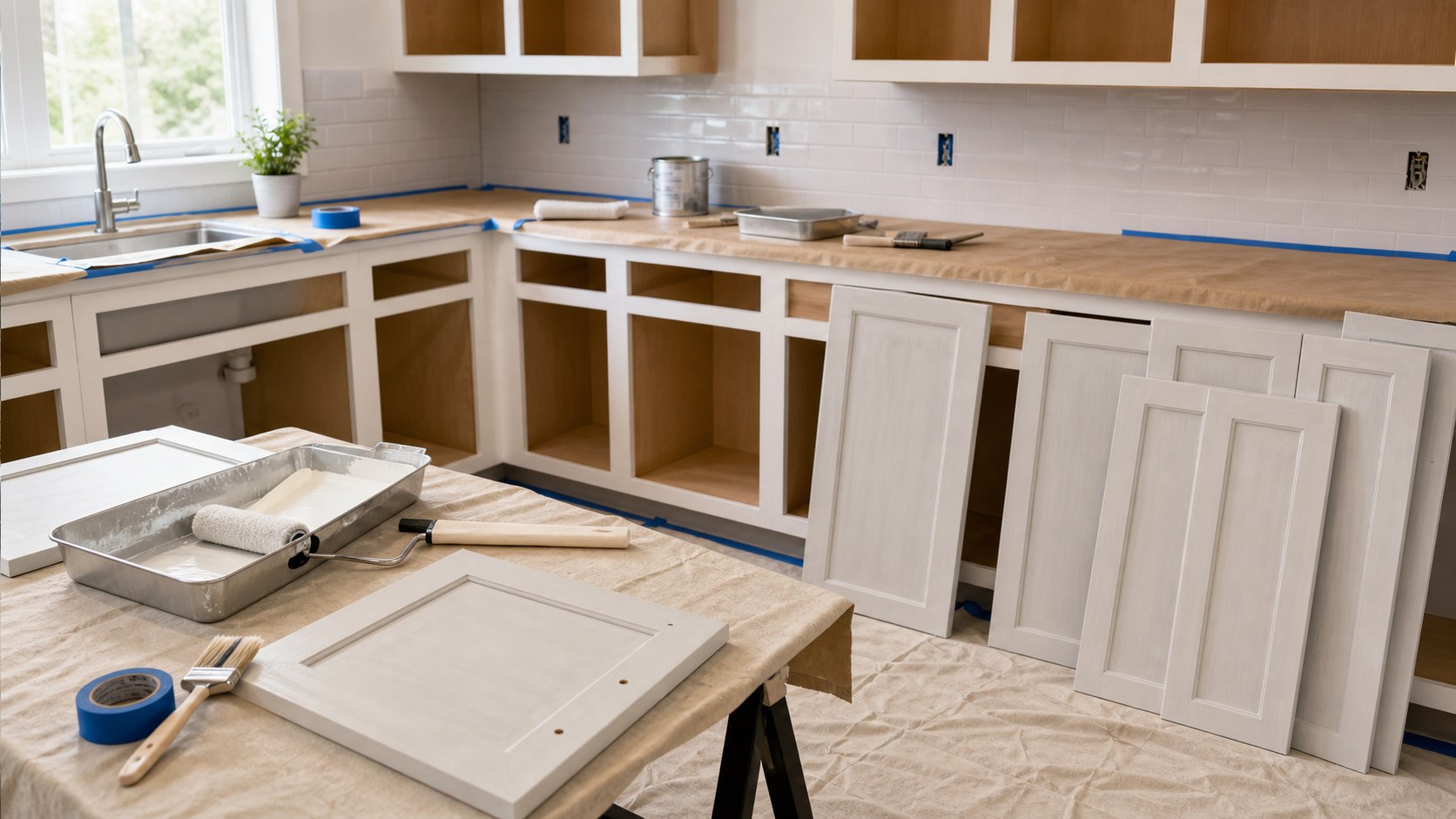
Cabinets should not be treated like ordinary walls. They need coatings that bond well, level smoothly, and cure hard enough for hands, grease, water, and repeated impact. A semi-gloss wall paint is not automatically a cabinet paint.
Use a cabinet-grade enamel or coating system and follow the prep schedule carefully. Cleaning, sanding, bonding primer, dust control, and cure time matter. On cabinets, the finish choice is only one piece of a much stricter surface process.
Prep Changes by Room
Every room needs a different prep focus. Bedrooms may need nail holes filled and dusty corners cleaned. Kitchens need degreasing. Bathrooms need mildew treatment and ventilation checks. Hallways need scuffs sanded smooth. Trim needs caulk, sanding, and sometimes bonding primer.
Do not use the same prep routine everywhere just because the color is the same. The finish will only perform as well as the surface underneath it. When a room has stains, glossy old paint, patched drywall, or moisture marks, primer is part of the finish plan.
Test Sheen Before Committing
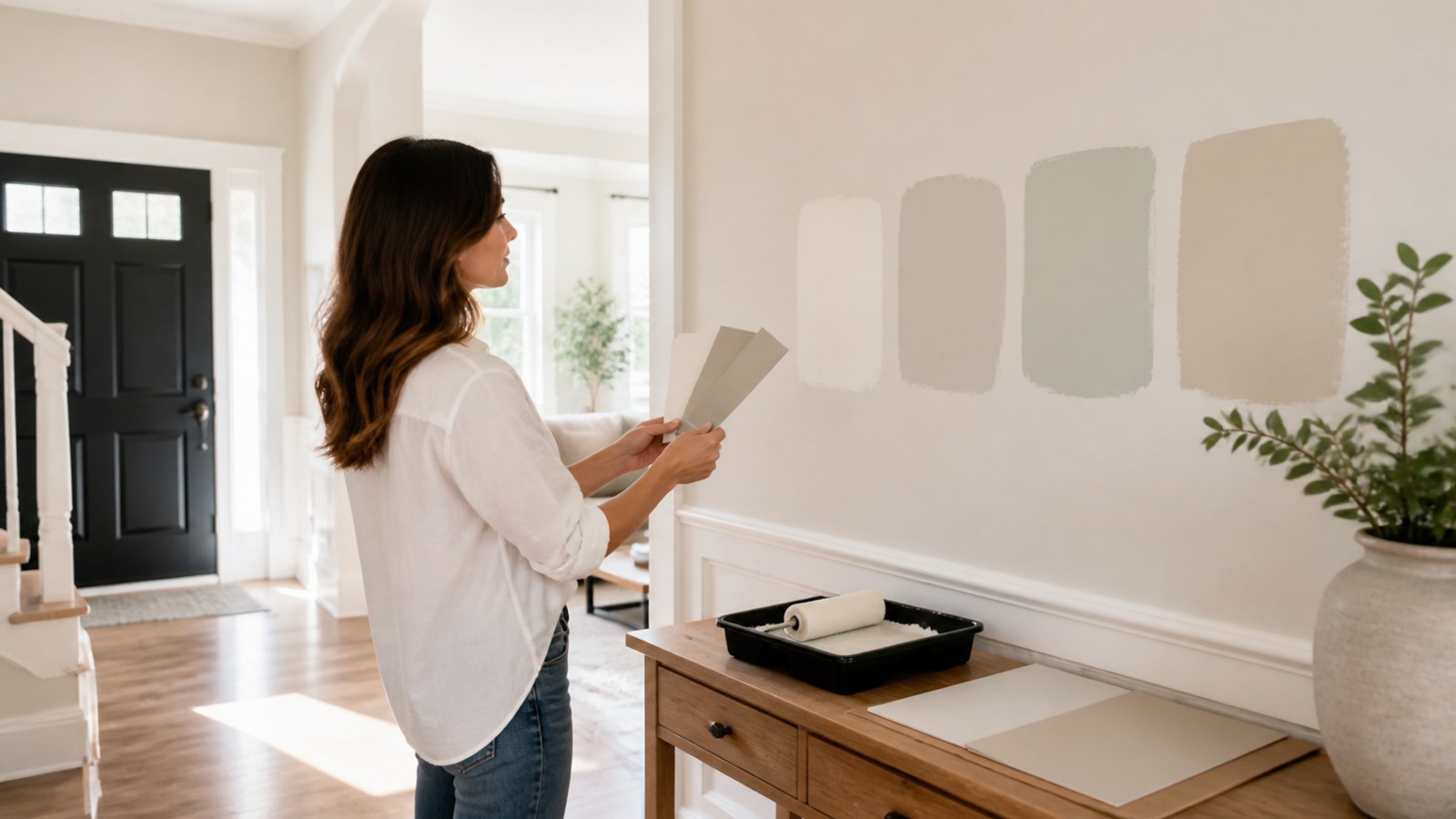
Color samples are common, but sheen samples are just as useful. A color that looks calm in eggshell may look brighter in satin and sharper in semi-gloss. The difference becomes more obvious near windows, mirrors, lamps, tile, glossy counters, and white trim.
Paint a sample board or a small prepared wall section with the actual product and sheen being considered. Look at it during the day, at night, and under the room’s normal lights. Then wipe it gently after it dries according to the label. That simple test can prevent a whole-room finish from feeling too shiny, too dull, or too fragile.
Touchups Are Part of the Finish Choice
Some finishes touch up better than others. Flat and matte paints often blend more easily on broad walls. Satin and semi-gloss can leave visible repair spots if the wall has aged, collected dust, or been cleaned unevenly. In high-light rooms, even a perfect color match may flash because the sheen is slightly different.
Keep leftover paint sealed and labeled with the room, product line, color formula, sheen, and date. For visible walls, repainting corner to corner may look better than dotting small touchups across the middle. Choosing a finish is also choosing how future maintenance will work.
Final Whole-Home Paint Finish Review
Use flat or matte for ceilings and quiet low-traffic walls. Use eggshell for main living areas that need a soft look with moderate cleanability. Use satin for busy walls, kitchens, bathrooms, entries, hallways, laundry rooms, and mudrooms. Use semi-gloss for trim, doors, and details that need frequent wiping. Save gloss for specialty surfaces that can be prepared carefully.
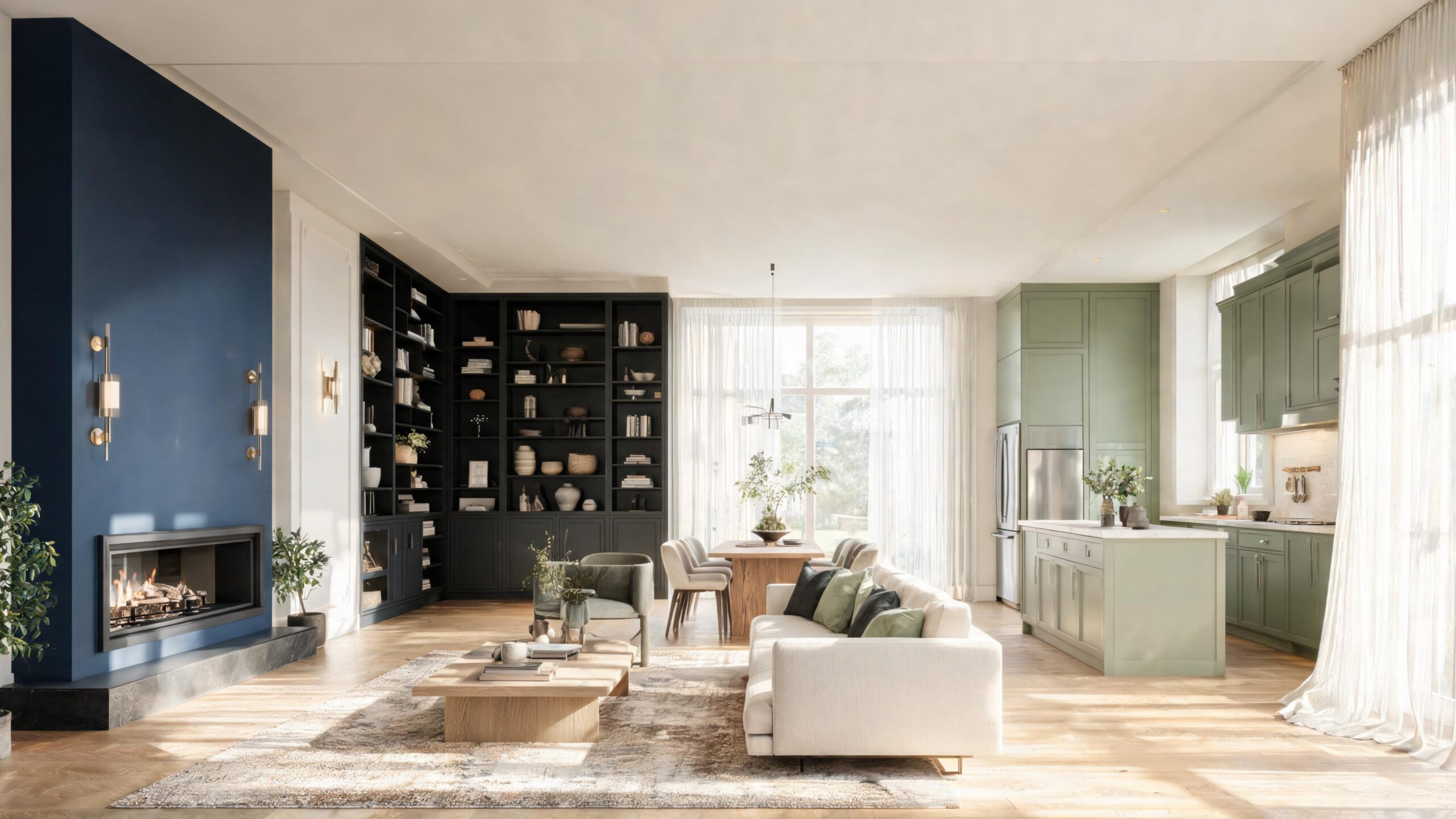
The best paint finish plan makes the house feel consistent without forcing every room to do the same job. Match sheen to traffic, moisture, light, texture, and cleaning needs. Then write down the product, sheen, color, primer, and room so future touchups do not turn into guesswork.