HVAC maintenance works best as a steady rhythm, not a scramble after the house is already too hot or too cold. The system depends on clean filters, open airflow paths, clear drains, safe electrical operation, clean coils, working safety controls, sound ductwork, and thermostat settings that match the way the home is used.
A homeowner does not need to open sealed compartments or diagnose every component to make a real difference. The practical job is to keep visible parts clean and accessible, notice changes early, document patterns, and know when a symptom belongs to a licensed HVAC technician instead of a weekend checklist.
A: Begin with regular inspections and follow the equipment and filter guidance, adjusting to observed loading rather than one universal replacement date.
A: Make equipment accessible and gather manuals, filter details, prior invoices, and a concise record of any changes in operation or comfort.
A: No. Keeping surrounding airflow clear is separate from coil maintenance, which must follow the equipment's service requirements.
A: Use only a maintenance method approved for the equipment and drain arrangement; generic plumbing chemicals are not an assumed substitute.
A: It can support reminders and observations, but filters, drainage, mechanical condition, and professional inspection still need attention.
A: Ask for the findings relevant to your system and visit, such as airflow-related temperatures, electrical checks, or combustion results where applicable.
A: Limit homeowner tasks to permitted access and maintenance; internal testing or sealed compartments require the appropriate qualified procedure.
A: No. Keep alarms installed and maintained as instructed independently of service visits and combustion-equipment upkeep.
A: Record the room, season, outdoor conditions, thermostat behavior, and timing so the technician can compare a consistent pattern.
A: Match tasks to the installed equipment, assign responsibility, keep access practical, record outcomes, and act on unresolved findings.
Think in Monthly, Seasonal, and Professional Tasks
Not every HVAC task belongs on the same schedule. Filters and visible airflow deserve frequent attention. Outdoor clearance and thermostat settings should be checked as seasons change. Electrical testing, refrigerant evaluation, combustion inspection, coil cleaning, and safety control checks belong in professional service.
Dividing maintenance this way keeps the list useful. A homeowner checklist should not tempt anyone to bypass panels, defeat safety switches, or guess at refrigerant. It should keep the system clean, observable, and ready for a technician to service efficiently when the deeper work is due.
Check the Filter Every Month at First
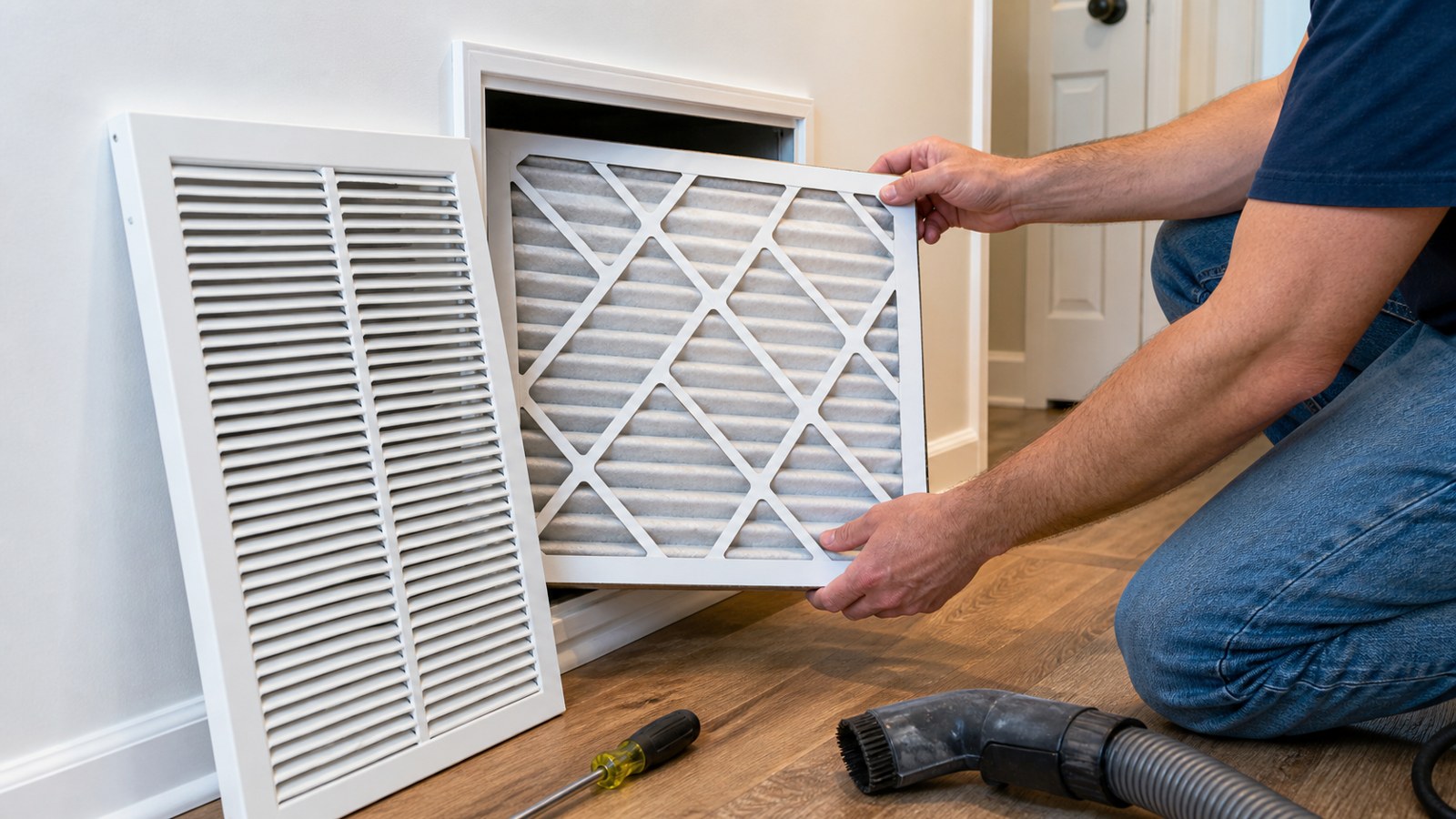
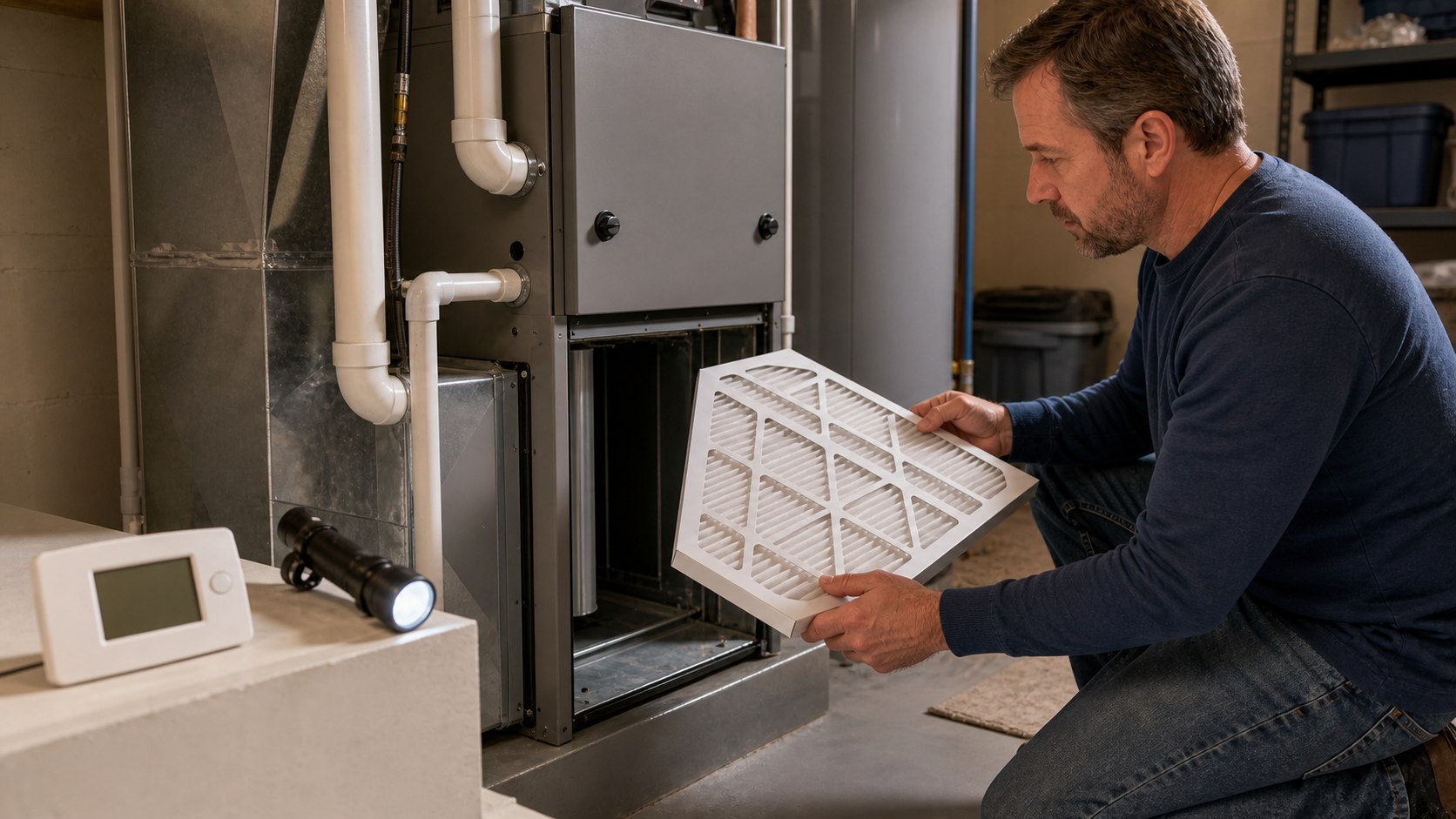
The filter is the one maintenance item most homeowners can control directly. Check it monthly until you learn how fast your home loads it. Pets, remodeling dust, wildfire smoke, heavy cooking, open windows, high fan runtime, and dusty roads can shorten the replacement interval dramatically.
Use the correct size and a filter type the system can handle. A filter that is too loose lets air bypass the media. A filter that is too restrictive can reduce airflow and strain the blower. Write the install date on the frame so the next decision is based on evidence instead of memory.
Keep Return Air Moving
Return grilles need open space so the system can pull air back to the equipment. Furniture, curtains, rugs, storage bins, pet beds, and dust-covered grille faces can restrict airflow before the air ever reaches the filter. Vacuum return grilles and keep the area around them clear.
Closed doors can also change return airflow in some homes. If bedrooms become uncomfortable when doors are shut, or if doors pull hard against pressure, make a note for an HVAC technician. Maintenance is not only about the equipment cabinet; it is also about how air moves through the house.
Walk the Supply Registers
Supply registers should be open, clean, and unobstructed. A couch over a floor register or a rug covering a vent can create a comfort problem that looks like equipment failure. Dust streaks around vents can also reveal air movement patterns or gaps that deserve attention.
Avoid closing many registers to force air into other rooms. That can raise duct pressure, increase leakage, and reduce total system performance. If certain rooms are consistently too hot or too cold, note the pattern for balancing, duct inspection, or return-air evaluation rather than trying to solve it by choking off other vents.
Clear the Outdoor Unit
The outdoor condenser or heat pump needs clear airflow. Leaves, weeds, grass clippings, cottonwood, mulch, snow, fencing, stored items, and overgrown shrubs can keep the unit from rejecting or absorbing heat properly. Keep vegetation trimmed back and the top discharge path open.
Homeowners can gently remove loose debris around the cabinet. Do not bend fins, remove electrical panels, or blast the coil with high pressure. If the coil is packed with debris, fins are crushed, or the fan area looks damaged, professional cleaning and inspection are safer than aggressive DIY work.
Watch Condensate Drains and Pans
Air conditioners and high-efficiency furnaces create water that must drain reliably. Look for standing water, algae buildup, wet floors, rust in a pan, a condensate pump that sounds strained, or a float switch that has shut the system down. Water near HVAC equipment should never be ignored.
Condensate problems can damage ceilings, floors, cabinets, and electrical parts. If a drain clogs repeatedly, do not treat every overflow as a new one-time mess. Recurring drainage trouble may involve slope, traps, algae, dirty coils, pump failure, or installation issues that need a better fix.
Review the Thermostat Before Each Season
A thermostat can create comfort complaints even when the equipment is healthy. Before cooling season, confirm cooling mode, schedules, sensor priorities, away settings, and setpoints. Before heating season, confirm heat mode, battery condition, time settings, and any smart-home automations that may override the schedule.
Keep schedules simple enough for the household to understand. A complicated program that everyone fights with manual overrides may not be saving energy or improving comfort. The best thermostat setup is predictable, easy to adjust, and matched to when the home is actually occupied.
Listen to Normal Startup
Run heating and cooling before the season is extreme, then listen from a safe distance. Notice whether the blower starts smoothly, whether the outdoor unit sounds steady, whether a furnace ignition sequence sounds normal, and whether shutdown is quiet. The goal is not to diagnose by ear; it is to learn what normal sounds like.
A new buzz, rattle, scrape, boom, grinding sound, whistle, or hard-start noise is easier to catch when you already know the baseline. Write down what changed and when it happens. A sound that appears only at startup tells a different story than a sound that continues through the whole cycle.
Prepare for Cooling Season Early
Before hot weather arrives, replace or inspect the filter, clear the outdoor unit, open supply and return grilles, verify the thermostat cooling mode, and look around the indoor equipment for water stains or old overflow marks. Pick a mild day to test the air conditioner before service companies are buried in emergency calls.
Let the system run long enough to confirm that the indoor blower moves air, the outdoor unit runs, the house temperature begins to drop, and condensate drains where it should. Early testing gives you time to schedule service before a small issue becomes a no-cooling emergency during a heat wave.
Prepare for Heating Season Safely
Before heating season, confirm the filter is clean, the furnace or air-handler area is clear, the thermostat heat mode works, and carbon monoxide alarms are installed and current according to the alarm manufacturer. Keep storage away from equipment, vents, and combustion-air paths.
The first furnace run of the season may create a brief dusty odor. Persistent burning smell, gas odor, soot, unusual flame appearance, repeated shutdowns, or a carbon monoxide alarm should stop the test immediately. Heating maintenance must keep safety ahead of comfort.
Keep Mechanical Areas Accessible
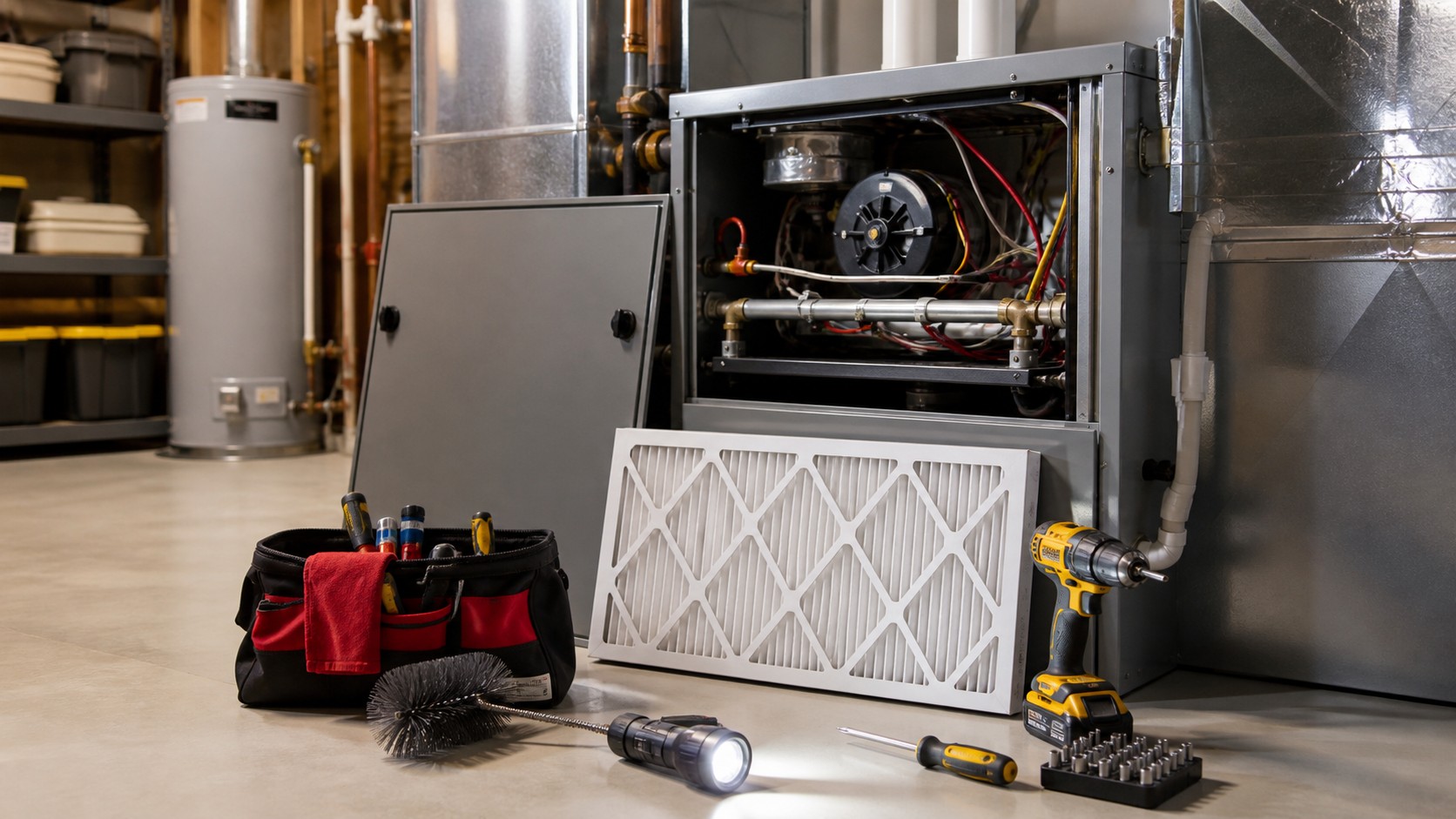
Mechanical rooms and closets tend to collect storage. Boxes, paint cans, holiday bins, tools, and laundry items can block access, hide leaks, crush drain tubing, bump switches, or restrict combustion air. Keep a clear working area around the furnace, air handler, filter cabinet, and condensate equipment.
Accessibility also helps during service. A technician can do better work when panels, drains, labels, and shutoffs are visible. A tidy equipment area makes small changes, damp spots, loose insulation, or unusual corrosion easier to notice between appointments.
Check Exterior Intake and Exhaust Pipes
High-efficiency furnaces often use exterior intake and exhaust pipes. Snow, leaves, nests, landscaping, or stored items can block them. Heat pumps and air conditioners also need exterior clearance, but combustion intake and exhaust pipes deserve their own attention because blocked venting can create serious safety problems.
If you see soot, melted plastic, corrosion, disconnected venting, sagging pipes, or signs of backdrafting, stop and call for service. Combustion venting is not a cosmetic detail. It is part of how the system protects the home while producing heat.
Use Duct Clues
Ductwork can create comfort and efficiency problems even when the furnace or air conditioner is maintained well. Look for crushed flex duct, disconnected runs, missing insulation, whistling joints, dusty streaks, rooms that never match the rest of the house, or returns that sound unusually loud.
Homeowners can observe and document these clues, but major duct sealing, redesign, balancing, and attic or crawlspace repair may require professional work. Duct problems often show up as room complaints, not equipment alarms, so they belong in the maintenance record.
Check Room-to-Room Patterns
A maintenance walk should include the rooms, not only the mechanical equipment. Notice whether upstairs rooms overheat, basement rooms overcool, one bedroom smells dusty, or a far room has weak airflow in both heating and cooling seasons. Those patterns help separate equipment problems from distribution problems.
Write down the pattern instead of adjusting random vents every week. A room that is always uncomfortable may need duct balancing, return-air changes, insulation improvements, or a damper adjustment. The system cannot be maintained well if the house keeps hiding the same comfort complaint.
Watch Humidity Along With Temperature
Comfort is not only a thermostat number. In cooling season, high indoor humidity can make the home feel warm and sticky even if the temperature is close to the setpoint. In heating season, very dry air can make the house feel cooler and less comfortable. A small humidity gauge can reveal patterns the thermostat misses.
If cooling season humidity stays high, note whether the system short cycles, whether condensate drains steadily, and whether the fan runs continuously after cooling calls. Humidity clues can point toward airflow, sizing, thermostat settings, duct leakage, or maintenance problems before a dramatic failure appears.
Change Habits During Remodeling
Remodeling dust is hard on HVAC systems. Drywall sanding, floor refinishing, cabinet cutting, attic work, and demolition can load filters quickly and send fine particles toward the blower and coil. Check filters often during projects and avoid running the system during the dustiest work when possible.
After the project, replace or inspect the filter again after several normal cycles. Dust can stay suspended after the tools are gone. If the system ran heavily during construction, ask during service whether the blower, coil, and return areas should be inspected.
Use Alarms and Detectors Wisely
Carbon monoxide alarms are essential in homes with fuel-burning appliances, attached garages, fireplaces, or other combustion sources. Test and replace alarms according to the manufacturer’s schedule. A furnace tuneup does not replace working alarms, and alarms do not replace safe equipment maintenance.
Water alarms can also help near attic air handlers, basement equipment, condensate pumps, and finished spaces where a leak would cause expensive damage. Maintenance is partly about catching small failures before they become hidden damage.
Schedule Professional Tuneups
Professional maintenance goes beyond visible checks. A technician can test capacitors and electrical connections, inspect motors, clean coils where appropriate, check refrigerant conditions, verify temperature rise or split, evaluate safety controls, inspect combustion, check drains, and look for wear before it becomes a breakdown.
For many homes, a cooling-season visit and a heating-season visit are a practical rhythm. At minimum, annual service creates a documented inspection. The point is not just to keep equipment running today; it is to catch the kind of slow decline homeowners cannot see from the filter slot.
Ask Better Service Questions
During a tuneup, ask what was measured, cleaned, adjusted, and observed. Good maintenance notes may include filter condition, capacitor readings, temperature split, temperature rise, drain condition, coil condition, blower condition, refrigerant observations, combustion readings, and safety control checks where applicable.
You do not need to become the technician, but you should understand whether the visit produced useful information. A vague statement that everything looks fine is less helpful than a few specific readings and recommendations. Clear service notes make future comparisons possible.
Keep a Maintenance Record
Save model numbers, serial numbers, filter sizes, warranty papers, service invoices, repair notes, thermostat settings, and photos of equipment labels. A phone album or folder is enough. The record prevents repeated detective work and helps technicians understand the system history faster.
Write down recurring symptoms. If the drain clogs every summer, the upstairs bedroom overheats in August, the furnace rattles only on startup, or one register always smells dusty, the pattern matters. Maintenance notes turn vague memories into useful troubleshooting evidence.
Know the Stop Signs
Stop homeowner maintenance when you notice gas odor, burning electrical smell, repeated breaker trips, ice on refrigerant lines or coils, water near electrical parts, smoke, sparks, carbon monoxide alarms, or safety switches that keep shutting the system down. Those are not checklist items to push through.
A good maintenance routine should make the home safer, not more daring. Turn the system off when appropriate, document what you saw, and call qualified help. Knowing where the homeowner checklist ends is part of maintaining the system responsibly.
Make the Checklist Fit the House
A small condo, an older two-story home, a house with pets, a basement system, an attic air handler, and a home in a dusty or smoky region will not all need the same rhythm. Start with the basics, then adjust the schedule based on how the system actually behaves.
The best HVAC maintenance checklist is the one you will repeat. Keep filters visible, reminders simple, records easy to find, and service planned before the weather is harsh. A system that is clean, open, documented, and inspected has a much better chance of staying comfortable when the season leans on it.