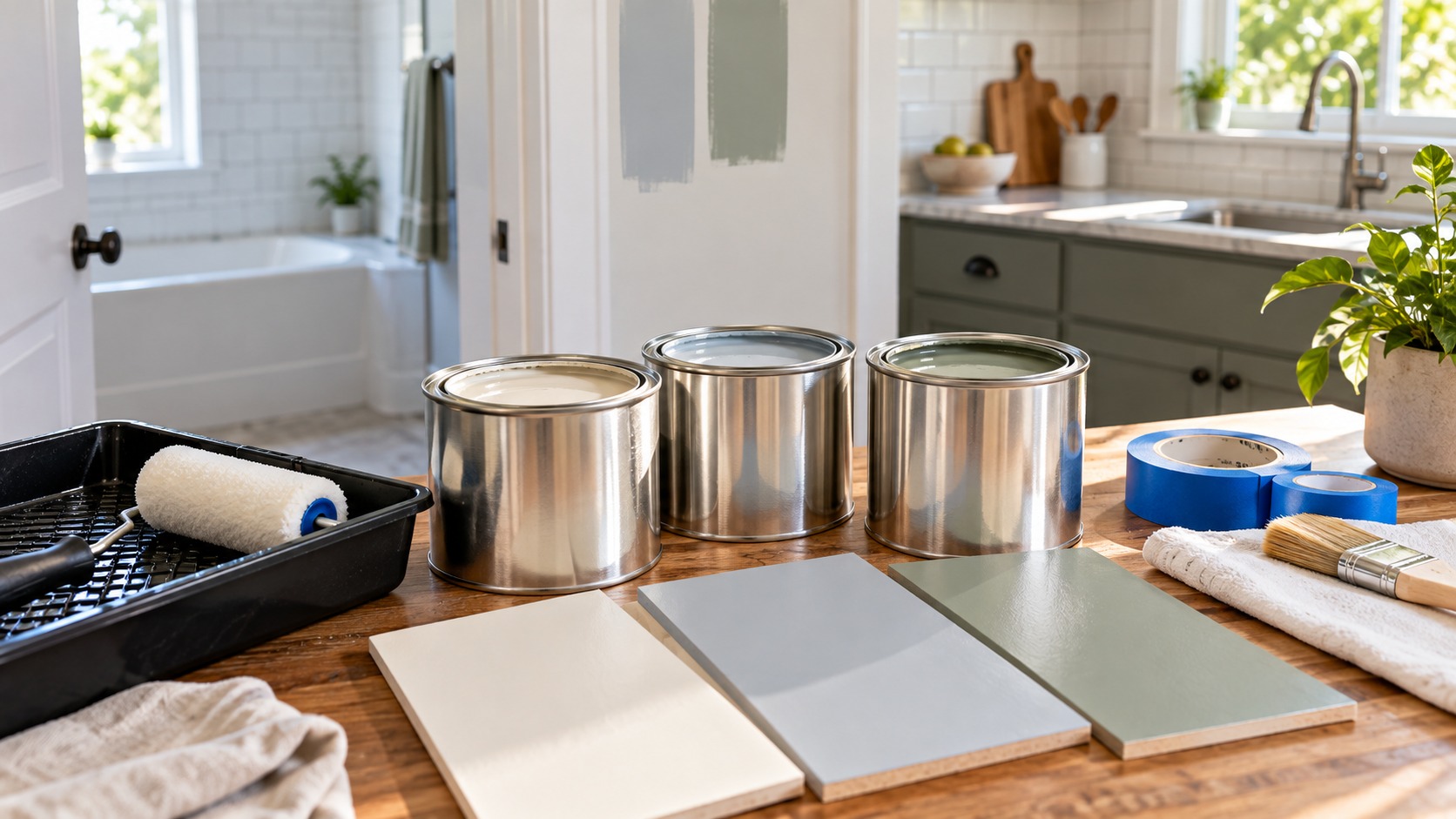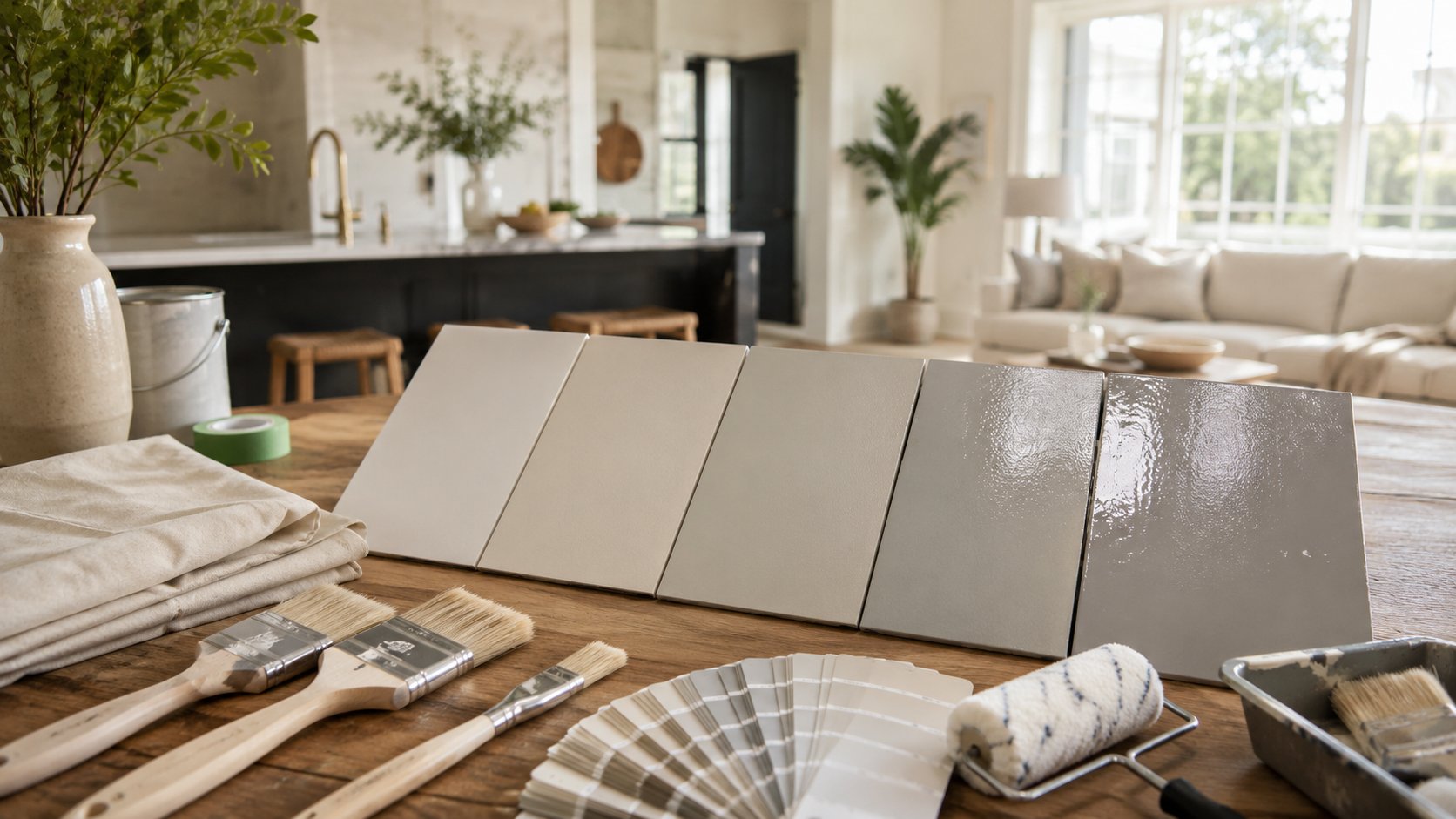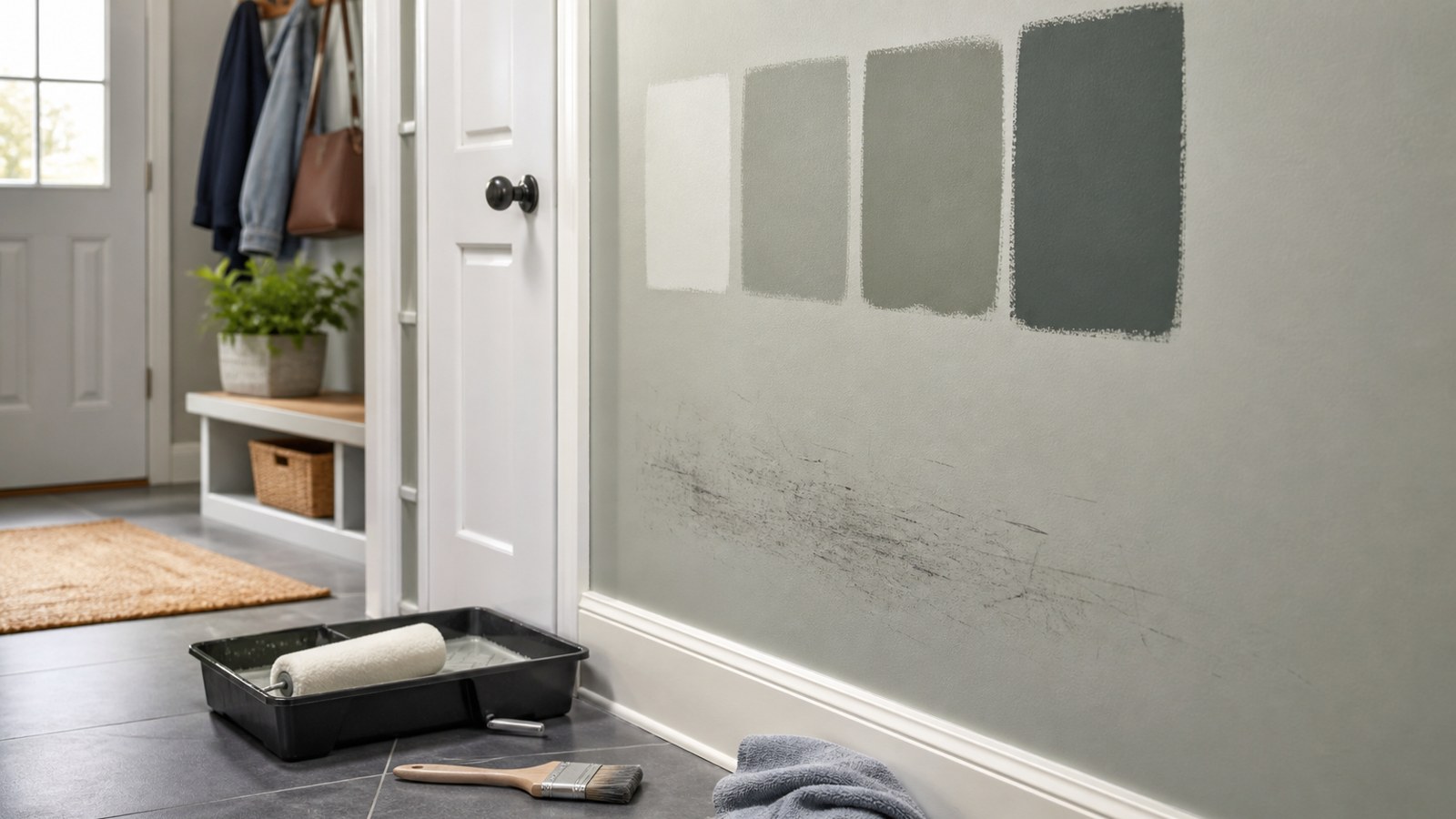
Matte, eggshell, and satin can make the same color feel completely different. The choice affects glare, cleanability, touch-ups, wall flaws, and how the room feels once the paint is on every surface. A finish that looks soft and expensive in one room can look marked-up or shiny in another.
The best pick depends on the surface condition, the traffic level, the light, and how often the wall needs to be cleaned. Matte is calm and forgiving, eggshell is the everyday middle ground, and satin is stronger where wiping and moisture matter.
A: Matte is generally the lowest-reflection choice, followed by eggshell and satin, but compare the particular products you plan to use.
A: It can be, if its cleaning performance and visible luster suit that room's actual contact, lighting, and wall condition.
A: Not necessarily. A suitable eggshell or washable matte may offer the preferred balance, so compare performance as well as shine.
A: It can reduce how strongly some flaws reflect light, but raised patches, dents, and loose surfaces still require appropriate preparation.
A: Use a manufactured finish or an expressly approved mixing method; informal mixing does not produce a predictable sheen or performance result.
A: A chip helps with color, but actual painted samples are needed to evaluate the reflection of the intended finish.
A: That can create a visible reflection boundary on a continuous wall; consider a consistent suitable coating or a deliberate architectural break.
A: Compare suitable products on the actual color, since scuff visibility, cleaning resistance, and touch-up behavior all influence the answer.
A: Prepare and cure the samples as directed, then use the permitted gentle cleaning method rather than an aggressive scrub test.
A: Select the tested combination of appearance, maintenance performance, application quality, and future repair needs that works best in your room.
What Paint Sheen Means
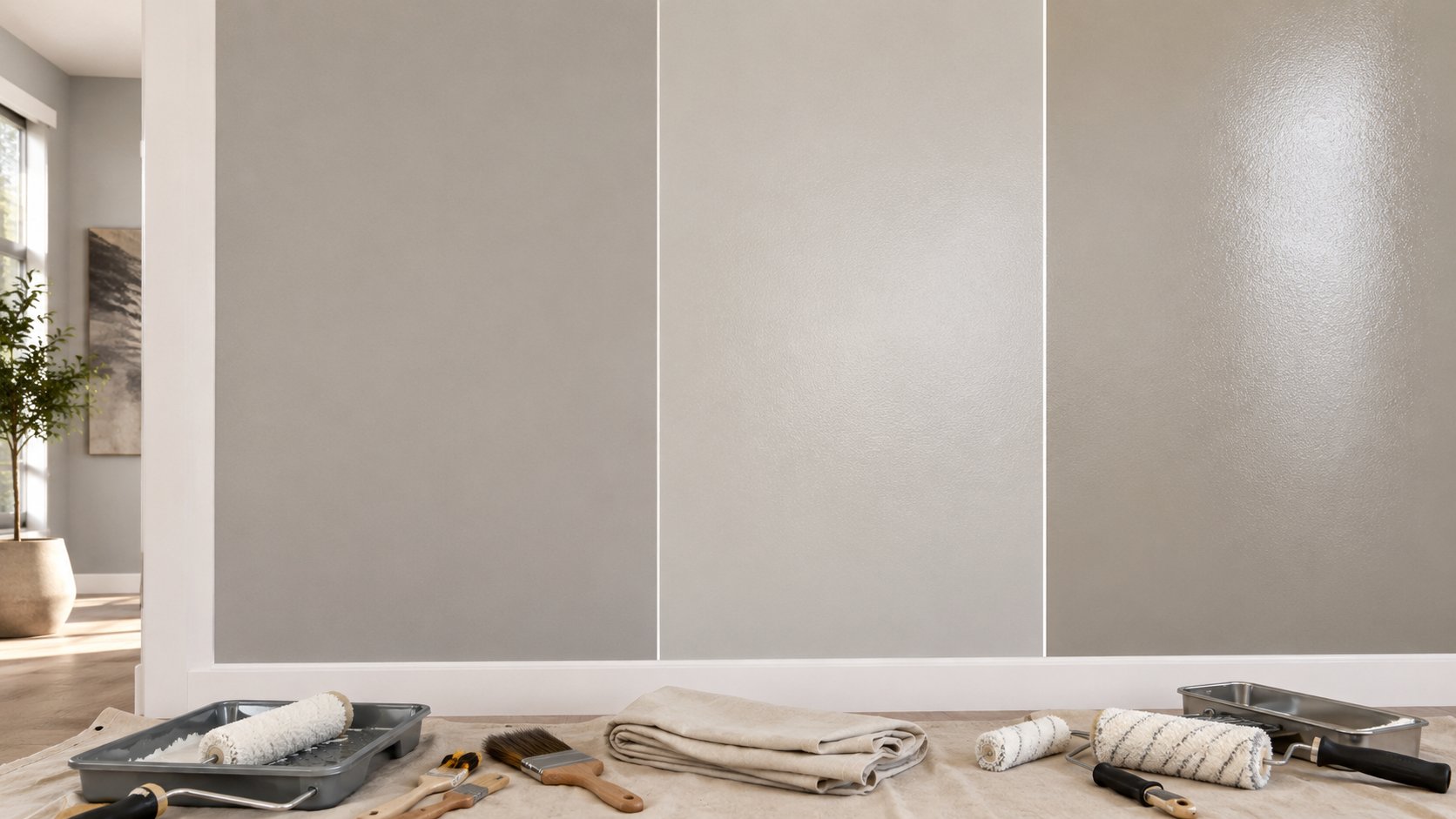
Sheen describes how much light a painted surface reflects. Matte reflects very little light, eggshell reflects a small amount, and satin reflects more. That reflection changes both appearance and performance. More sheen usually means better wipeability, but it also makes texture, patches, roller marks, and drywall waves easier to see.
Sheen names are not perfectly identical across brands. One company’s matte may look closer to another company’s flat, and one eggshell may look shinier than another. Product quality also matters. A premium washable matte can clean better than a cheap eggshell, even though eggshell is normally considered more durable.
Matte Paint: Soft and Forgiving
Matte paint is best when you want a calm, low-reflection wall. It hides drywall flaws better than eggshell or satin because it does not bounce as much light across the surface. That makes it useful for bedrooms, dining rooms, ceilings, adult living spaces, offices, and older walls with minor imperfections.
The tradeoff is cleaning. Basic matte paint can scuff, burnish, or show shiny spots when rubbed. Washable matte products are much better than old flat paints, but they still may not be the best choice for stairways, mudrooms, kitchens, or walls where children and pets leave marks every day.
Eggshell Paint: The Balanced Choice
Eggshell has a slight glow without looking obviously shiny. For many homes, it is the safest wall sheen because it balances appearance and durability. It can work in living rooms, bedrooms, family rooms, hallways, offices, and dining areas when the wall does not need constant scrubbing.
Eggshell usually wipes better than matte and hides flaws better than satin. It is a good choice when you want a finish that looks soft in daylight but still handles normal fingerprints, dust, and occasional cleaning. It is not magic, though; cheap eggshell can still mark, and strong side light can still reveal wall patches.
Satin Paint: Durable but More Reflective
Satin is more washable and reflective than eggshell. It is useful in kitchens, bathrooms, laundry rooms, entries, mudrooms, kids’ rooms, stair walls, and other spaces that need regular cleaning. It can also work well on trim, doors, furniture, and built-ins when the product is designed for those surfaces.
The downside is visibility. Satin can show roller lines, sanding scratches, drywall repairs, orange peel texture, and uneven walls. On a long wall with sunlight skimming across it, satin may look busier than expected. It is often worth using satin only where the room truly needs the extra durability.
Choose Based on Wall Condition
If the wall is smooth, well-prepped, and evenly primed, all three finishes are possible. If the wall has old patches, waves, heavy texture, or visible seams, matte or eggshell usually looks better. Satin does not hide flaws; it tends to spotlight them.
Look across the wall from the side before choosing a sheen. Daylight from a window, recessed lighting, or a hallway view can reveal imperfections that are hard to see straight on. The rougher the surface, the quieter the sheen should usually be.
Choose Based on Traffic
Low-traffic rooms can prioritize appearance. Bedrooms, formal dining rooms, guest rooms, and offices often do well with matte or eggshell. These rooms are touched less, so flaw-hiding and softness may matter more than scrub resistance.
High-traffic rooms need more practical thinking. Entries, hallways, stairs, family rooms, kids’ rooms, kitchens, bathrooms, and laundry rooms often benefit from eggshell or satin. If hands, backpacks, pets, shoes, chairs, or cleaning cloths hit the wall often, durability needs to move up the priority list.
Choose Based on Light
Light changes sheen dramatically. A matte wall can look smooth and quiet under strong daylight. An eggshell wall may have a soft glow. A satin wall can show glare, especially when sunlight or artificial light hits at a low angle.
Rooms with large windows, long uninterrupted walls, or recessed lighting need sample testing. Put the sample where the light is hardest on the wall. If satin looks streaky in that spot, it will probably look worse across the full room.
Use Matte for Ceilings
Ceilings usually belong in flat or matte paint because they are large overhead surfaces that reveal texture and patching. A low-sheen finish reduces glare and makes the ceiling visually recede. This is especially helpful under recessed lights or near windows.
In bathrooms or laundry rooms, choose a moisture-resistant matte or low-sheen ceiling product rather than assuming the ceiling must be shiny. The goal is to resist humidity while still hiding overhead flaws.
Use Eggshell for Most Everyday Walls
If you are stuck between matte and satin, eggshell is often the practical middle. It gives walls a little more cleanability than matte without creating the stronger reflection of satin. For many living rooms, bedrooms, hallways, and open-plan spaces, eggshell is the easiest answer.
Eggshell is also a good choice when the house has mixed use. A family room may need some wipeability but still benefit from a softer look. A hallway may need cleaning but also have side light that would make satin too shiny. Eggshell often handles those compromises well.
Use Satin Where Cleaning Matters
Satin earns its place where walls get touched, splashed, or wiped often. It can be useful near kitchen tables, bathroom vanities, laundry sinks, back entries, stairways, playrooms, and mudroom benches. It is easier to clean than most matte finishes and often resists moisture better.
Do not choose satin just because it sounds tougher. If the wall is rough or heavily patched, satin may make the room look less finished. A high-quality eggshell can sometimes be a better compromise than satin on imperfect walls.
Think About Kids and Pets
Homes with kids or pets need honest expectations. Paw marks, fingerprints, chair scuffs, toy bumps, and hallway traffic can wear down low-sheen paint quickly. Eggshell or satin is usually safer in those zones, especially in washable product lines.
That does not mean every wall must be satin. Bedrooms, ceilings, and low-touch walls can still use matte. Use tougher sheens where the damage happens instead of making the whole house shinier than you want.
Understand Burnishing
Burnishing happens when rubbing a painted surface creates a shiny spot. It is common with low-sheen paints, especially darker colors or lower-quality products. The wall may not be dirty anymore, but the cleaned area reflects light differently.
If a wall will be cleaned often, test the paint before committing. Let the sample cure, then wipe it gently. If it shines up immediately, use a better washable matte, move to eggshell, or choose satin for that room.
Watch Dark Colors Carefully
Dark colors show sheen changes more clearly than light colors. A dark matte wall can look rich and soft, but it may show scuffs. A dark satin wall can look dramatic, but it may reveal roller marks, fingerprints, and touch-up patches.
Use large samples for dark colors and view them at night and during the day. If the wall gets touched often, plan for a durable product. If the wall has strong light, keep the sheen lower unless the surface is very smooth.
Touch-Ups Are Easier With Lower Sheen
Matte is usually easier to touch up than eggshell or satin because it reflects less light. Eggshell can touch up reasonably well if the paint is fresh and applied the same way. Satin often shows touch-up patches because the sheen difference catches the eye.
Save the exact paint, sheen, formula, and product line. Touch up with the same roller or brush style when possible. On satin walls, repainting corner to corner may look better than spot repairs.
Prep Matters More as Sheen Rises
The shinier the finish, the more important prep becomes. Sand patched areas smooth, clean grease, prime repairs, caulk trim lines, and remove dust before painting. Satin over poor prep can make a room look rushed even if the color is perfect.
Primer helps control flashing, especially over drywall compound, raw wood, stains, and repaired areas. A consistent base coat makes matte, eggshell, and satin all look cleaner.
Do Not Judge From the Can Label Alone
Labels help, but they cannot predict your room. Brand, product line, color depth, wall texture, lighting, and application technique all affect the final sheen. A small chip in a store rarely shows enough information.
Use a sample board or test patch with the actual paint. Look at it from different angles, wipe it after curing, and compare it beside trim and furniture. A sheen decision made in the room is almost always better than one made under store lights.
Application Changes the Final Look
Even the right sheen can look wrong if the paint is applied poorly. Dry rolling, uneven pressure, stopping in the middle of a wall, using the wrong roller nap, or stretching paint too far can leave lap marks and texture differences. Satin is least forgiving, eggshell is in the middle, and matte hides the most.
Work in manageable sections, keep a wet edge, and use enough paint for even coverage. Follow the recoat time on the can. Rushing the second coat can create drag marks, uneven sheen, or soft paint that takes longer to cure.
Washable Matte Can Be a Good Upgrade
Washable matte paint is useful when you want the soft look of matte but need better performance than basic flat paint. It can be a strong choice for living rooms, bedrooms, offices, and open spaces where glare would be distracting but occasional cleaning is still needed.
The key is product quality. A premium washable matte may perform beautifully, while a bargain matte may mark quickly. If the room is expensive to repaint or highly visible, spending more on the right product can matter as much as the sheen choice.
Rental and Resale Rooms Need Practical Choices
Rental properties, guest spaces, and homes being prepared for resale often need finishes that touch up reasonably well and survive normal turnover. Eggshell is common because it balances appearance, cleaning, and broad appeal. Satin may be useful in kitchens, baths, and entries, but it can make patched walls more obvious.
For resale, avoid making every wall shiny in the name of durability. Buyers often notice glare and wall flaws more than they notice the technical cleanability of a finish. A clean eggshell or washable matte in a neutral color can feel fresher than a satin finish on imperfect drywall.
When to Use More Than One Sheen
Using more than one sheen in a home is normal. A ceiling can be matte, the walls eggshell, the trim satin, and the bathroom walls satin. The finishes do not have to match; they have to make sense for each surface.
Try to avoid changing sheen randomly within the same continuous wall area. If a hallway turns into a living room without a clear break, keep the wall sheen consistent unless there is a good architectural stopping point. Use corners, doorways, trim breaks, or room transitions to make changes feel intentional.
Quick Room-by-Room Guidance
Bedrooms, ceilings, offices, and formal rooms usually lean matte or eggshell. Living rooms and family rooms often do well with eggshell. Hallways, entries, stairs, kids’ rooms, kitchens, bathrooms, and laundry rooms often need eggshell or satin depending on wall condition and cleaning needs.
Trim, doors, cabinets, and built-ins are separate decisions. They usually need enamel or a harder coating, often in satin or semi-gloss. Do not use a wall-sheen rule for surfaces that get handled like furniture.
Final Matte vs Eggshell vs Satin Review
Matte is best when softness and flaw-hiding matter most. Eggshell is the balanced wall finish for many everyday rooms. Satin is the better choice where washing, moisture, and handling matter, but it needs smoother walls and better prep.
Choose the finish by surface condition, traffic, light, and cleaning needs. The right sheen should make the color look better, make the wall easier to live with, and avoid drawing attention to flaws that the paint was supposed to improve.