Modern paint color is less about chasing one fashionable shade and more about making the whole house feel calmer, cleaner, and better connected. The right palette works with the floors, trim, cabinets, counters, furniture, daylight, and the way each room is used.
A good upgrade usually starts with a flexible neutral, then adds depth through muted color, controlled contrast, and a few deliberate dark accents. The best colors look current without making the home feel cold, flat, or disconnected from the finishes that are already in place.
A: No. Whites, warm neutrals, subdued colors, and stronger accents can all suit a modern update when their roles fit the home.
A: Start with a major connected space or the area with the most limiting fixed finishes, then evaluate neighboring rooms together.
A: First compare wall colors that cooperate with the cabinets; an otherwise unnecessary cabinet repaint may be avoidable.
A: Yes. Compare the visible doorway relationship and use a compatible transition rather than assuming identical walls are required.
A: Assign colors only where they have a purpose; there is no required count, and several competing accents can weaken the scheme.
A: Test the actual door, trim, and wall combination, including the repeated effect along a hallway.
A: Treat it as a candidate and compare it with your home's permanent materials and lighting before committing.
A: Images can inspire the scheme, but physical samples of the intended coatings are needed to assess the colors in your home.
A: Select products appropriate to their surfaces and wear requirements even when you want the same color across both.
A: Retain approved samples and records of the brand, formula, product, sheen, and room assignments so later work has a clear reference.
Start With the Fixed Finishes
Before looking at paint chips, identify the finishes that are not changing. Flooring, stone counters, tile, cabinets, stained wood, fireplace material, large furniture, and trim color all influence how paint will read. A color that looks beautiful in a store can look wrong beside a yellow oak floor, pink beige tile, cool gray counter, or warm white cabinet.
Modern palettes work best when they respect those fixed elements. If the house has warm wood and cream tile, a sharp blue-white wall may feel harsh. If the house has cool stone and black hardware, a very golden beige may look dated. Paint should bridge the existing finishes, not fight them.
Use Warm Whites Carefully
Warm white is one of the most reliable modern interior paint choices because it brightens rooms without feeling sterile. It works well in living rooms, bedrooms, kitchens, halls, and open-plan spaces where the goal is a clean backdrop. The key is choosing a white with enough warmth for the room’s flooring and light.
A creamy white can soften hard surfaces and make older homes feel fresher. A cleaner warm white can support modern furniture and black accents. Test it beside trim, cabinets, and flooring because whites exaggerate undertones. What looks neutral on a chip can turn yellow, gray, green, or pink on the wall.
Soft Greige Still Works
Greige remains useful because it sits between gray and beige. In a modern home, the best greiges are softer and less muddy than the heavy versions that were common years ago. They can connect warm wood, white trim, stone counters, and mixed furniture without pulling the room strongly warm or cool.
Greige is especially helpful in open areas where several rooms are visible at once. It creates flow without using stark white everywhere. Choose a shade light enough to keep the space open, then add contrast with trim, doors, lighting, rugs, art, or dark furniture.
Try Muted Taupe and Mushroom
Taupe and mushroom colors can make a home feel more sophisticated than plain beige. These shades work well in bedrooms, dining rooms, offices, and living spaces where you want warmth with a modern edge. The best versions are muted, balanced, and not too purple or too brown.
These colors pair nicely with white oak, walnut, black metal, cream upholstery, linen textures, and aged brass. They also help rooms feel finished when white walls look too bare. Test them in morning and evening light because taupe can shift dramatically as the sun changes.
Use Muted Green for Calm
Muted green is one of the strongest modern paint choices because it brings color into a room without feeling loud. Sage, olive gray, eucalyptus, and soft moss tones can work in bedrooms, kitchens, mudrooms, offices, and bathrooms. Green also pairs naturally with wood, stone, woven textures, plants, and black or brass hardware.
The safest greens have gray, brown, or muted yellow in them rather than a bright mint or primary green feel. If the room has cool light, choose carefully so the color does not look dull. If the room has warm light, a slightly grayer green can keep the palette grounded.
Use Blue With Restraint
Blue can look modern, but it needs the right setting. Soft blue-gray works well in bedrooms, baths, laundry rooms, and offices. Deeper navy or inky blue can be strong on built-ins, doors, powder rooms, or a small room where drama is intentional.
Avoid using saturated blue everywhere unless the home already supports that look. Blue can quickly become theme-like when it appears on too many walls. A muted blue used in the right room feels calm and tailored; a bright blue chosen from a chip can feel disconnected from the rest of the house.
Clay and Terracotta Add Warmth
Modern interiors do not have to be gray, white, and black. Clay, plaster, cinnamon, soft rust, and muted terracotta can bring warmth to rooms that feel flat. These colors work best when they are earthy rather than orange. They pair well with natural wood, woven shades, cream upholstery, and matte black accents.
Use these shades where warmth is welcome: dining rooms, bedrooms, sitting rooms, powder rooms, or accent areas with strong architecture. Test large samples because clay colors can become intense once they cover a full wall.
Dark Colors Need a Reason
Charcoal, black, deep green, navy, and espresso can make a home feel modern when they are used with intention. They work well on interior doors, built-ins, fireplace walls, powder rooms, office walls, cabinetry, and trim details. The goal is contrast, not heaviness.
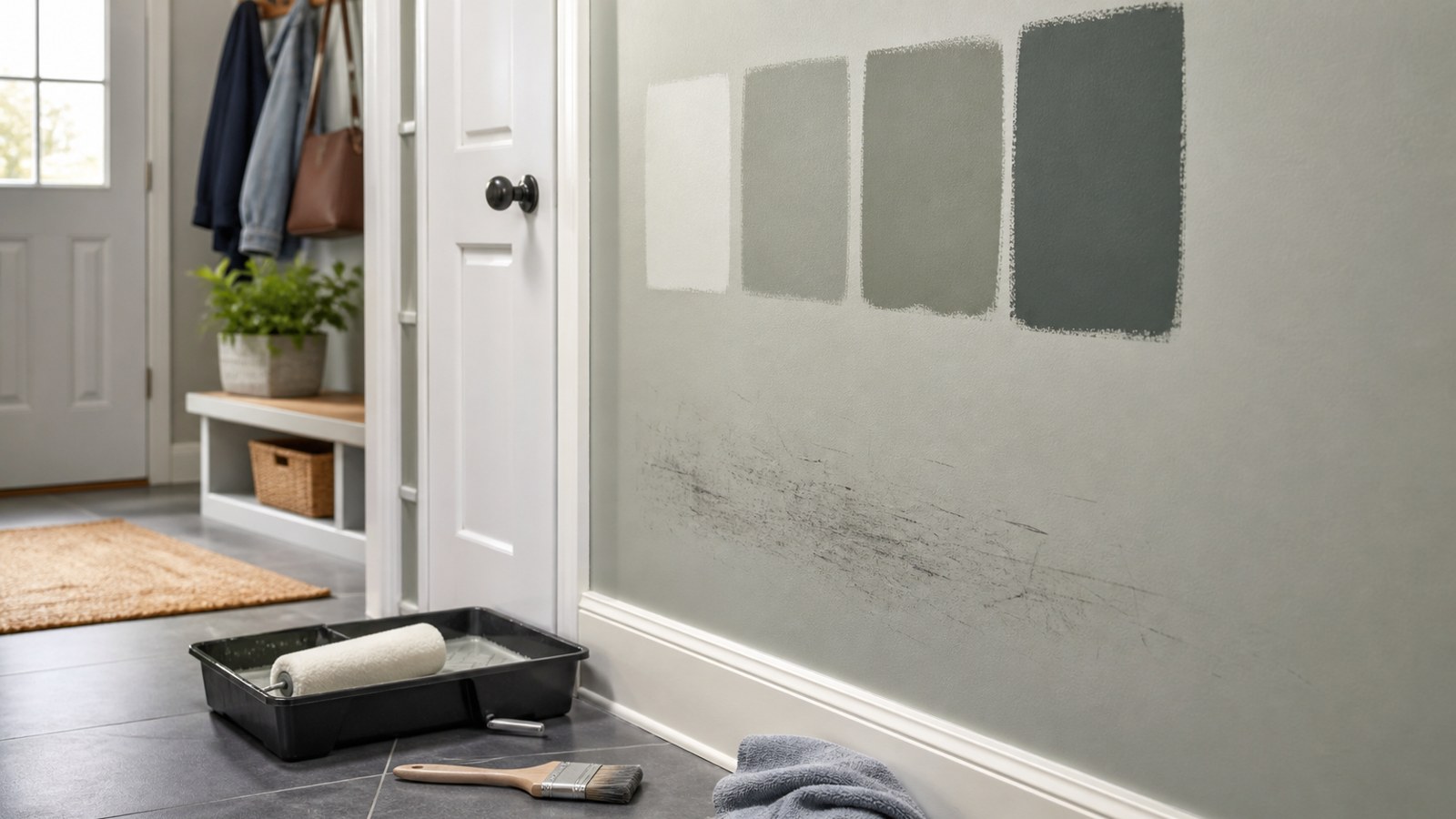
Dark colors need good edges and a finish that suits the surface. They show dust, scuffs, roller marks, and uneven drywall more readily than mid-tone colors. If the wall is wavy or heavily textured, a deep shade may highlight flaws instead of hiding them.
Update Trim Without Guessing
Trim color has a huge effect on whether a modern palette feels clean. Bright white trim can make walls look sharper, but it can also clash with creamy cabinets or warm floors. Soft white trim may be better in homes with beige tile, warm stone, or traditional millwork.
If trim is staying the same, choose wall colors that cooperate with it. If trim is being repainted, test the trim and wall together. A modern room often uses a quieter contrast than older high-contrast palettes, especially when the architecture is simple.
Consider Painting Doors
Interior doors are a good place to add modern contrast without repainting every wall. Soft black, charcoal, muted taupe, olive, deep blue, or warm gray doors can make hallways, bedrooms, and closets feel more finished. This works especially well with simple hardware and clean trim.
Door color should connect to something else in the home. It might echo cabinet hardware, stair railing, window frames, furniture legs, or a dark fireplace detail. When the color appears only on doors with no other relationship, it can feel abrupt.
Make Open Rooms Flow
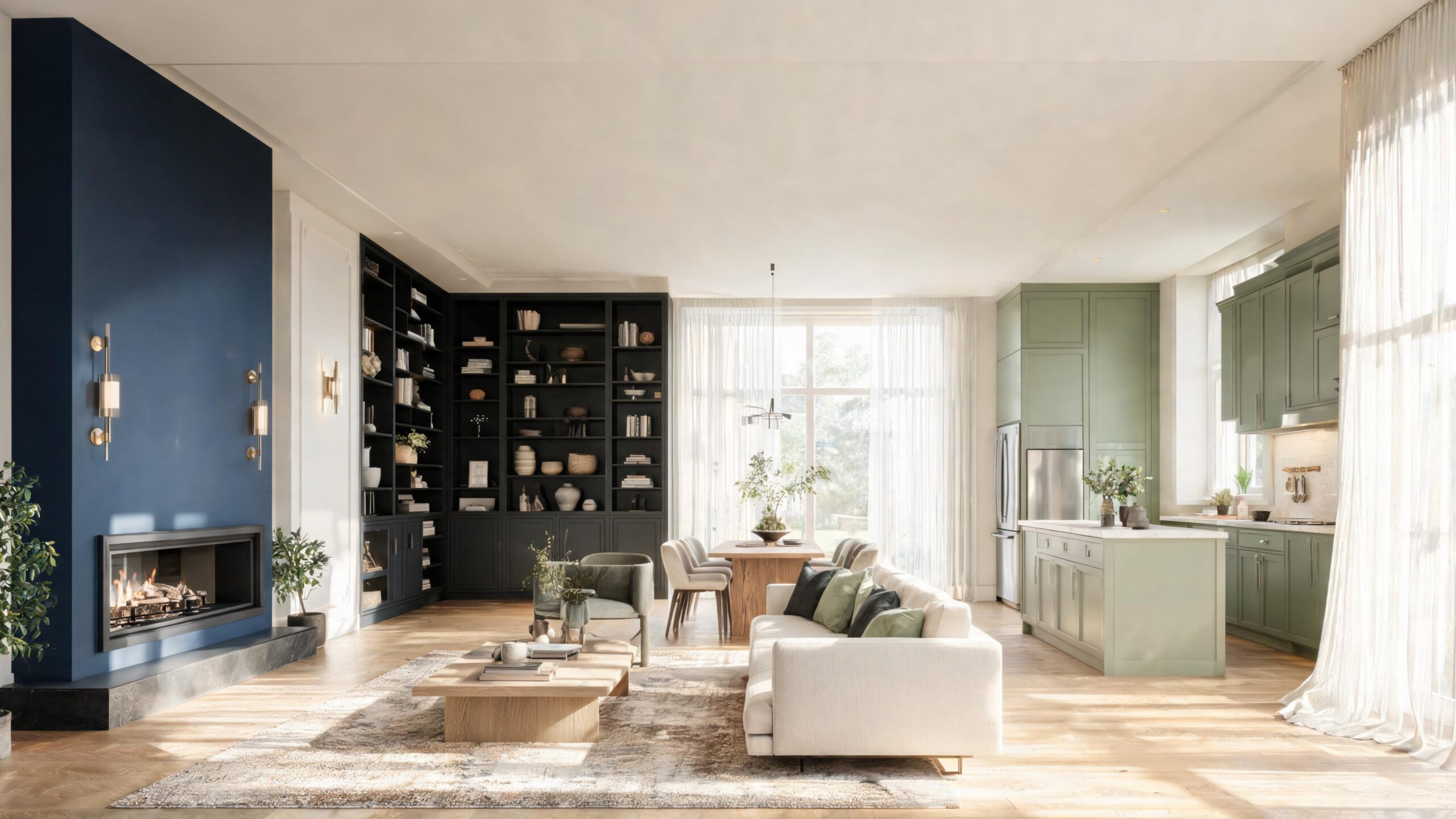
Open-concept homes need color flow because several rooms are seen at once. That does not mean every wall must be the same color. It means the colors should share an undertone, value, or mood. A warm white kitchen, greige living room, and muted green office can work together if the transitions are planned.
Stand where rooms connect and look across the sight lines. The color visible through a doorway matters as much as the color in the room you are painting. A modern palette should feel like a sequence, not a set of unrelated decisions.
Use Accent Walls Sparingly
Accent walls can still work, but they need architectural logic. A fireplace wall, bed wall, built-in wall, dining niche, or entry feature can support a different color. A random wall chosen only because the room needs interest often looks dated.
When an accent wall is used, make the color relate to the rest of the palette. Muted green, charcoal, clay, navy, or taupe can all work when the surrounding walls are calm. The accent should make the room feel more complete, not like the paint stopped halfway through a decision.
Choose Sheen Along With Color
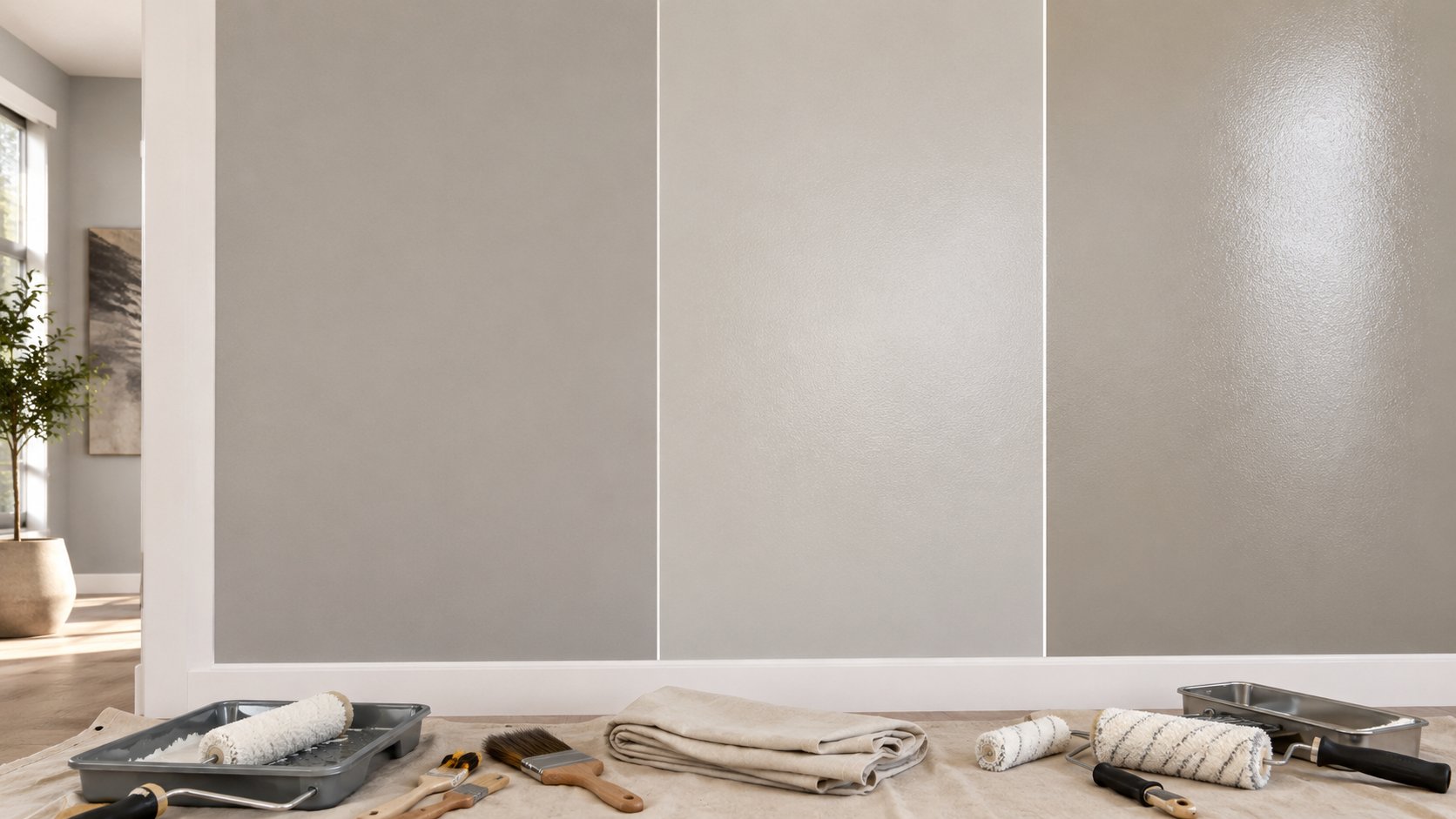
Color and sheen cannot be separated. A modern matte or low-sheen wall can look soft and expensive, but it may not clean well in every product line. Satin or semi-gloss trim can look crisp, but too much shine on imperfect walls can reveal texture and roller marks.
Use durable matte, eggshell, or low-sheen finishes for most walls, depending on the room and product. Kitchens, baths, halls, and kids’ rooms may need more washable paint. Trim, doors, and cabinets usually need a tougher finish than walls.
Coordinate With Cabinets
Cabinets often decide whether a modern wall color feels right. White cabinets may lean warm, cool, creamy, or gray. Wood cabinets can pull orange, red, yellow, or brown. Painted cabinets may already be the strongest color in the room.
Hold samples vertically beside the cabinet face, not flat on a counter. A wall color that looks quiet by itself may turn strange beside the cabinet undertone. In kitchens and baths, paint should support the cabinet and counter combination before it tries to make a statement.
Do Not Forget the Ceiling
Ceilings affect modern paint choices more than many homeowners expect. A bright white ceiling can make a room feel taller and sharper, while a softer white can make warm walls feel more settled. In rooms with angled ceilings, tray ceilings, beams, or low light, ceiling color deserves its own decision.
Using the wall color at a reduced strength, or carrying a soft white through the ceiling and trim, can make a room feel calmer. The wrong ceiling white can make a carefully chosen wall color look dingy or too saturated.
Plan the Painting Order
When several surfaces are being updated, sequence matters. Ceilings usually come before walls. Trim and doors may come before or after walls depending on the painter’s method, but the colors should be chosen together. Cabinets, built-ins, and accent walls need extra time for prep and curing.
A modern paint upgrade looks better when repairs, caulk, sanding, priming, and sample testing happen before the final color goes up. Rushing straight to the finish coat can leave nail pops, old caulk lines, flashing, and patch texture visible under a fresh color.
Test Bigger Than a Paint Chip
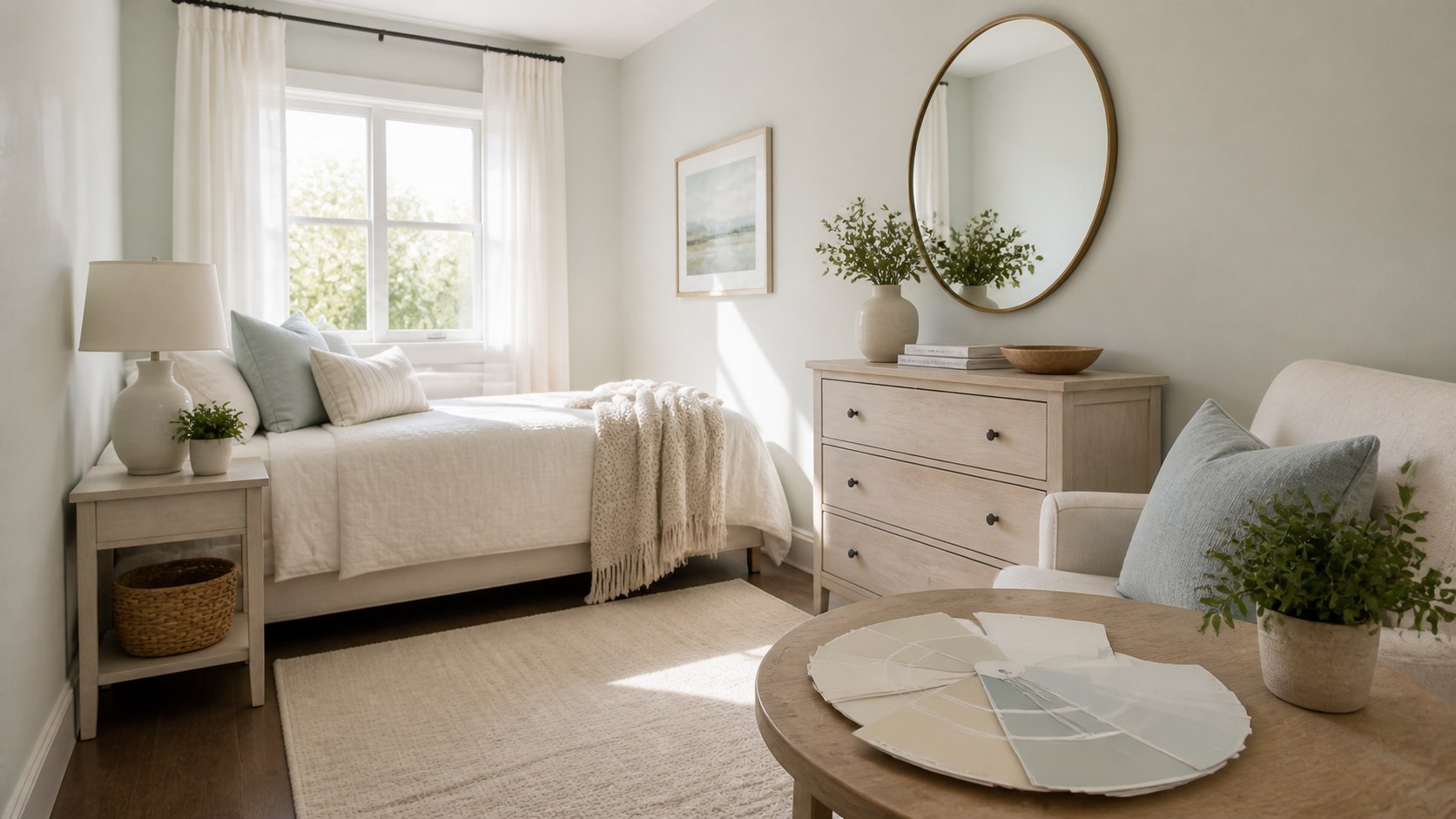
A paint chip is too small to judge a room. Use large sample boards or peel-and-stick samples and move them around the space. Check the color near windows, in corners, beside trim, against flooring, and near the largest furniture pieces.
Look at the samples in morning light, afternoon light, evening light, and artificial light. Modern colors are often subtle, and subtle colors can shift more than expected. A shade that looks perfect at noon may feel cold at night.
Think About Artificial Light
Bulb color temperature changes paint. Warm bulbs can make whites creamier and greens more olive. Cool bulbs can make beige look dull and gray feel sharper. A room with recessed lights, lamps, and under-cabinet lighting may show the same wall color in several ways.
If the paint is part of a larger upgrade, review bulbs and fixtures at the same time. Sometimes the color is fine and the lighting is the reason the room feels off. Modern rooms often benefit from layered lighting that shows color evenly.
Match Color Strength to the Room
Large rooms can usually handle slightly stronger color because the space gives the eye room to rest. Small rooms may need either a soft color that expands the space or a deliberate dark color that makes the room feel cozy. Mid-tone colors can work in both, but they need enough light and contrast.
Bedrooms often benefit from quieter color. Kitchens need colors that work with fixed surfaces. Bathrooms can handle more personality if tile and counters cooperate. Living rooms need flexibility because furniture, rugs, and art bring their own colors.
Build a Simple Whole-Home Palette
A modern home usually feels best with a limited palette. Start with one main neutral, one trim or door color, one or two muted room colors, and one darker contrast color. That is enough variety for interest without making the house feel scattered.
Write down the color names, formulas, sheens, rooms, and product lines. Keep sample boards or labeled swatches. Touch-ups, future rooms, and repairs become easier when the palette is documented instead of recreated from memory.
Avoid Colors That Fight the House
The wrong modern color is often a good color in the wrong house. A cool gray may fight warm floors. A bright white may make cream cabinets look dirty. A trendy green may clash with pink beige tile. A dark accent may expose wall flaws that were barely visible before.
Do not choose color from a social media photo without comparing it to your own finishes. The room in the photo may have different light, flooring, ceiling height, trim, furniture, and editing. Your house gets the final vote.
Final Modern Paint Color Review
The best interior paint colors for a modern home upgrade are flexible, tested, and connected to the finishes already in the house. Warm whites, soft greiges, muted taupes, sage greens, controlled blues, earthy clay tones, and selective dark accents can all look current when they are chosen for the room instead of the trend.
Start with fixed finishes, test large samples, judge color in real light, choose sheen carefully, and keep the whole-home palette limited. A modern paint plan should make the home feel clearer and more cohesive, not just newly painted.