A beginner woodworking project looks professional when the simple parts are handled with care. Straight cuts, square corners, clean edges, balanced proportions, and a finish that suits the wood can make a modest shelf, tray, bench, rack, or planter look intentional instead of improvised.
The goal is not to build the hardest possible piece. It is to choose projects that give beginners a fair path to a clean result. Simple shapes, visible-board selection, patient layout, dry fitting, and a controlled finish matter more than complicated joinery.
A: Simple shape, straight parts, clean edges, calm proportions, good hardware, and careful finish.
A: Not necessarily, but visible pieces should be straight, clean, and pleasant enough to finish well.
A: It is the edge used for repeated measuring so small layout errors do not multiply.
A: Dry fitting reveals gaps, twist, hardware issues, and assembly order before glue or fasteners lock things in.
A: Use screws, dowels, simple rabbets, brads, cleats, or glue joints that fit the project and tools.
A: Yes. Paint can look cleaner than stain when the wood is plain, mismatched, or blotchy.
A: Sand visible surfaces, corners, and touch points until they feel intentional and consistent.
A: Choose hardware that matches the project's scale, color, use, and finish before drilling holes.
A: Repeat the project that taught the clearest lesson and improve one detail the next time.
A: It is finished when it is useful, stable, smooth, proportioned, and not improved by extra decoration.
Choose Projects With Simple Silhouettes
The easiest way for a beginner project to look polished is to start with a clean shape. Picture ledges, wall shelves, coat racks, bath trays, planter boxes, monitor stands, small benches, shoe racks, and tool totes all have straightforward forms that reward careful measuring and assembly.
Simple does not mean plain. A shelf can look refined because the ends line up, the brackets are centered, the corners are softened, and the finish is even. A tray can look expensive because the handles are placed consistently and the boards were chosen thoughtfully. Clean execution gives simple projects their confidence.
Pick Better Boards Than the Project Requires
Beginners often focus on the plan and treat the lumber as an afterthought. The board choice can decide whether the finished piece looks crisp or awkward. Look for straight stock with minimal twist, cup, cracks, and distracting defects on the visible face.
For small projects, it is worth being picky. A short shelf or tray may only need one or two boards, so choosing cleaner material does not add much cost. Set boards on edge at the store, sight down their length, and reject pieces that fight the shape of the project before the first cut is made.
Use the Best Face on Purpose
Most boards have one face that looks better than the other. Decide which side will be seen before cutting and mark it lightly. Grain direction, knots, color shifts, and small dents all matter more on front edges, tops, handles, and exposed sides.
Professional-looking work often comes from arranging imperfect material well. Put calmer grain on the front, hide a knot on the underside, and keep color changes symmetrical when possible. The project will look planned even when the material is not perfect.
Measure From One Reference Edge
Small measuring errors can make a beginner project look sloppy. Pick one reliable reference edge and measure from it consistently. If every shelf support, hook, handle, or leg location is measured from a different side, tiny differences can stack up.
Mark lightly, use a square, and label parts before cutting. On repeated pieces, cut one carefully and use a stop block or matched layout marks so the rest agree with it. Consistency is usually more important than chasing a measurement again and again with a tape.
Cut Fewer Parts More Accurately
Projects with fewer parts are easier to make clean. A tray with four side pieces and a bottom, a ledge with three strips, or a bench with repeated legs gives beginners room to focus on accuracy. A project with many tiny parts, angled cuts, curves, and hardware details can become messy quickly.
Use a square to check the saw setup, support the board so it does not drop at the end of the cut, and mark the waste side. If the cut edge will be visible, slow down and prevent tear-out with painter’s tape, a sharp blade, or a sacrificial backer.
Make Edges Feel Finished
Sharp, splintery edges make a project feel unfinished even if the shape is correct. Break the corners with sandpaper, a block plane, a router roundover, or a small chamfer. Touch points deserve extra care: tray handles, bench edges, shelf fronts, stool tops, and rack pegs.
Do not round everything heavily unless the style calls for it. A small eased edge is often enough. The goal is a piece that feels comfortable in the hand while still keeping crisp lines where they help the design.
Dry Fit Before Glue or Fasteners
A dry fit is a trial assembly without permanent attachment. It shows whether pieces line up, clamps can reach, screws have clearance, and the project sits flat. Beginners should treat this as a normal step, not as extra work.
Lay the parts on a flat surface and check the shape from more than one angle. Measure diagonals on frames, confirm shelves are level, and make sure front edges sit flush. Fixing a mistake now is far easier than pulling apart glued joints or filled screw holes.
Use Forgiving Joinery
Professional-looking beginner projects do not need complicated joints. Screws, glue blocks, pocket holes, dowels, rabbets, simple dados, brad nails, and cleats can all produce clean work when used appropriately. The joinery should match the load and the visibility of the piece.
Hide fasteners on living-room pieces when possible, but do not be ashamed of visible screws in shop racks, planters, rustic shelves, or utility projects. What matters is alignment, spacing, countersinking, and strength. A neat fastener pattern looks deliberate; a random one looks rushed.
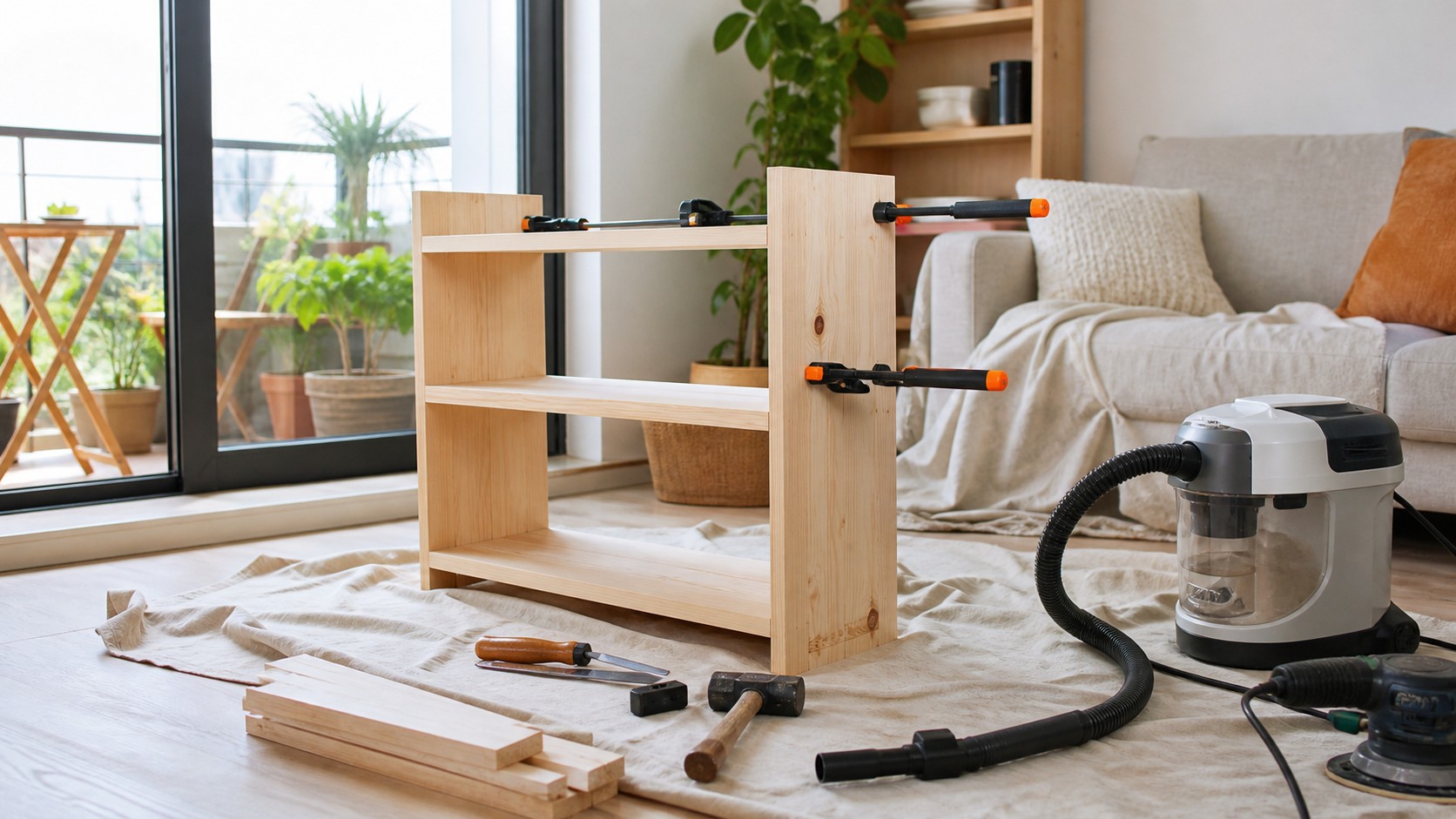
Clamp for Alignment, Not Just Pressure
Clamps do more than squeeze glue. They hold pieces in position while fasteners are driven and while glue sets. Too much pressure can shift parts out of square, bow thin boards, or force glue out unevenly. Use enough pressure to close the joint and keep the project aligned.
Protect visible surfaces with scrap pads. Check that the project is still square after clamping, not only before. A clean assembly usually comes from several small alignment checks rather than one big correction at the end.
Keep Proportions Calm
Many beginner projects look bulky because the parts are thicker, deeper, or wider than the job requires. A small shelf may not need heavy side supports. A planter does not always need chunky trim. A tray can look better with a thinner rim and cleaner handles.
Before cutting, compare the project dimensions to the room and the items it will hold. A monitor stand, coat rack, bath tray, or picture ledge should feel sized for its use. Good proportions make inexpensive wood look more intentional.
Choose Hardware That Matches the Piece
Hooks, pulls, brackets, hinges, casters, and handles can make a simple project look finished, but they can also make it look mismatched. Choose hardware with a scale and finish that fits the project. Small pieces usually need simpler hardware than large furniture.
Lay hardware on the project before drilling. Check spacing from the edges, center lines, and hand clearance. Crooked hardware is one of the fastest ways to make a careful build look careless, so use a template when installing repeated hooks or pulls.
Sand With a Purpose
Sanding should remove pencil marks, smooth rough edges, even out visible surfaces, and prepare the wood for finish. It should not erase the shape of the project. Oversanding corners can make boards look wavy and soften lines that should stay straight.
Work through sensible grits for the material and finish. Vacuum or wipe away dust between stages. Pay special attention to end grain, which can absorb finish differently from face grain. A few extra minutes on end grain can make a small project look much cleaner.
Test the Finish on Scrap
Finish surprises are common. Stain can blotch, paint can show brush marks, oil can darken the wood more than expected, and water-based finish can raise grain. Testing on scrap from the same board gives a preview before the project itself is at risk.
For beginner projects, clear finish, paint, shellac, wipe-on polyurethane, hardwax oil, or simple stain can all work. The best choice depends on the look, use, and exposure. A bath tray or planter needs more moisture thought than a picture ledge.
Paint Can Look More Professional Than Stain
Stain is not automatically more advanced or more attractive. If the wood is inexpensive, mismatched, or full of distracting defects, paint may create a cleaner result. Painted shelves, benches, racks, and organizers can look built-in when the color fits the room.
Good paint work still needs preparation. Fill holes neatly, sand between coats when needed, and avoid heavy brush ridges. A simple painted project with crisp edges can look more finished than a stained project that highlights every flaw.
Try a Picture Ledge
A picture ledge is one of the best professional-looking beginner projects. It usually uses a back strip, a bottom shelf, and a small front lip. The shape is simple, the cuts are straight, and the finished piece can change a room quickly.
The details make it work. Keep the front lip straight, sand the exposed edges, fill fastener holes cleanly, and mount the ledge level. Several short ledges can look more polished than one long shelf if the wall is uneven or the room is small.
Build a Clean Entry Rack
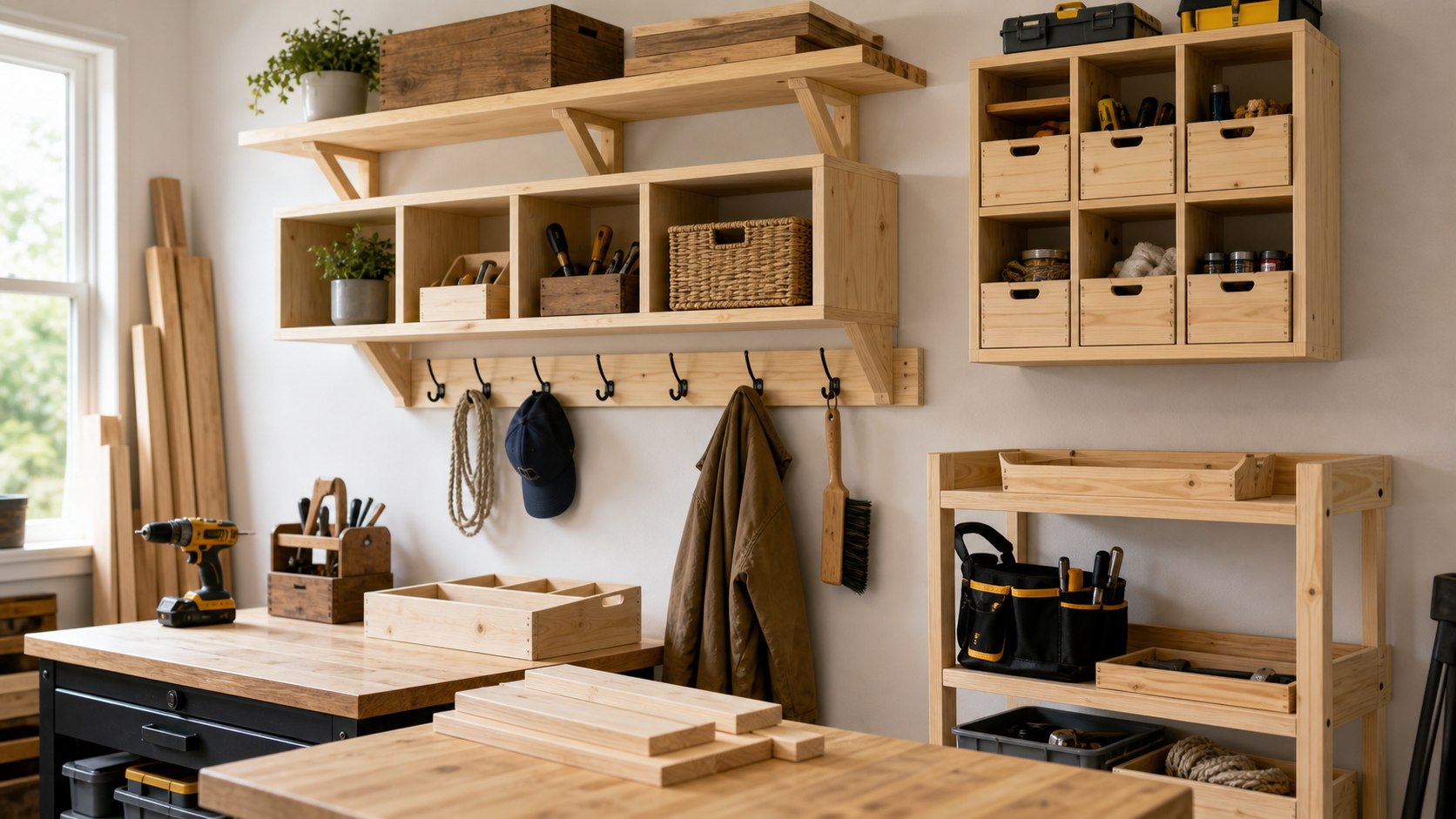
A coat or key rack is useful and manageable. A board, hooks, and a finish can be enough, but the project looks better when the hook spacing is balanced and the board edges are finished. Add a small shelf only if it helps the entry, not just because there is room.
Mounting matters because the rack will be pulled on every day. Hit studs when possible or use anchors rated for the load. A rack that sits level and feels solid will look more professional than one that has fancy hooks but moves on the wall.
Make a Tray That Feels Intentional
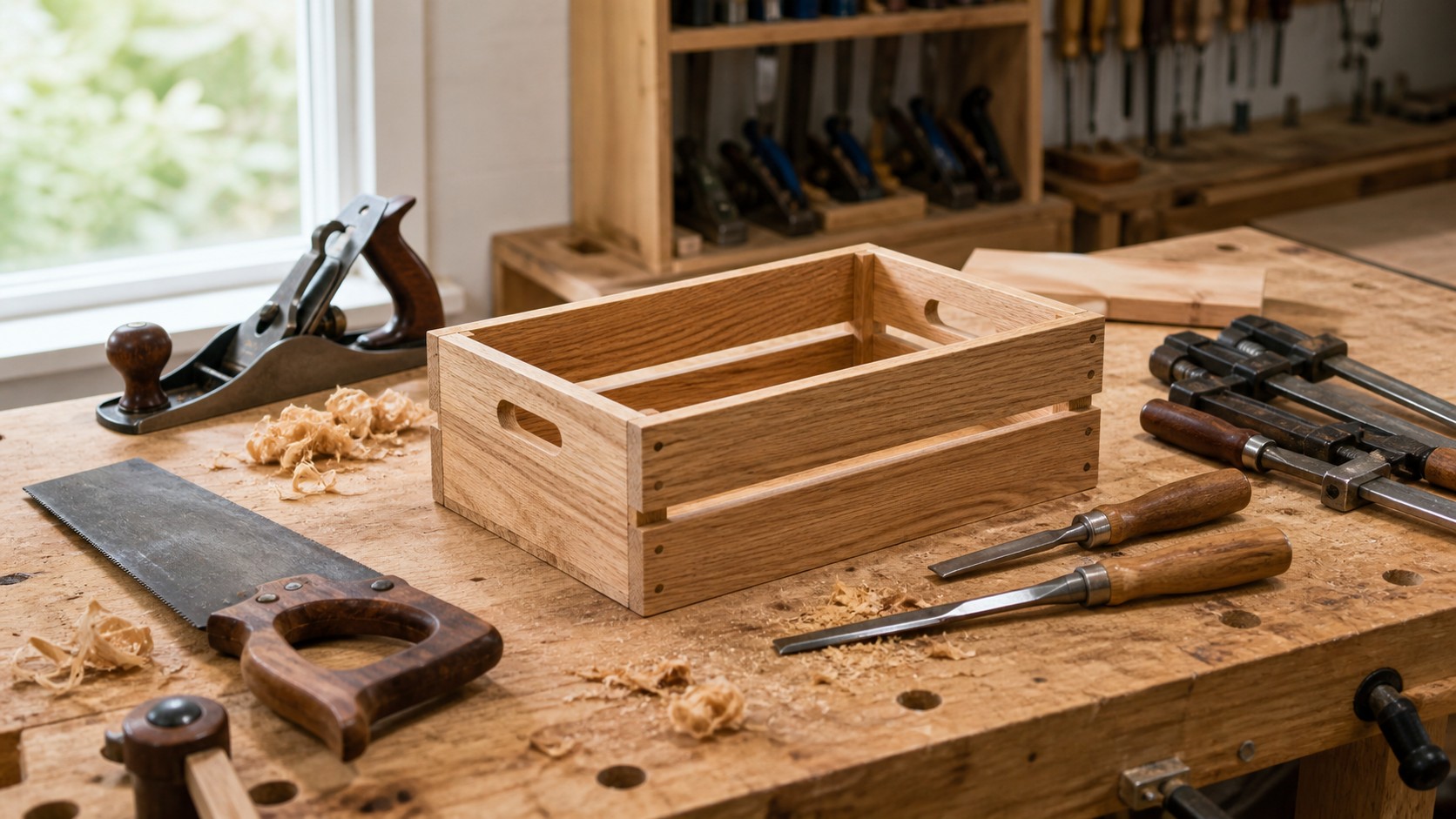
A serving tray, bath tray, or desk tray teaches proportion, sanding, handles, and finish control in a compact project. The bottom must feel supported, the sides should align cleanly, and the handles should be comfortable.
Decide whether the tray should look rustic, modern, painted, or natural before choosing boards. A tray has many visible edges, so sand and finish them carefully. Felt pads, cork strips, or small feet can make the piece feel more complete.
Use a Small Bench to Practice Strength
A small bench can look impressive while staying beginner-friendly. The project introduces load, racking, leg alignment, and surface comfort. Keep the design modest and avoid making the span too long unless the structure supports it.
Because someone may sit on it, do not rely on decorative attachment alone. Use strong joinery, adequate fasteners, and stretchers when needed. Test for wobble before finishing, and add floor pads so the bench sits quietly in the room.
Photograph the Project Before Calling It Done
A quick phone photo can reveal problems that are easy to miss while standing over the bench. Crooked hooks, uneven shelf lips, bulky proportions, visible glue squeeze-out, and sanding scratches often show up clearly in a picture. Look at the project from straight on, from the side, and from the angle people will see it in the room.
This is not about making the build perfect. It is about giving yourself one last calm review before the finish cures or the piece goes on the wall. Small fixes are easier before hardware is loaded, shelves are filled, or the project becomes part of daily life.
Repeat the Best Small Win
One reason beginner projects improve quickly is repetition. If a picture ledge turns out clean, build a second one with slightly better board selection or a cleaner finish schedule. If a tray feels sturdy, make another with better handle placement. Repeating a simple project teaches more than jumping to something complicated too early.
Keep notes on dimensions, hardware, finish, and what you would change. Those notes turn the first successful build into a starting point for better work instead of a one-time accident.
Know When to Stop
Beginner projects often get worse when too many upgrades are added. Extra trim, curves, shelves, contrasting stain, oversized hardware, and decorative cuts can distract from the clean work already done. Restraint is a woodworking skill.
Finish the useful core first. If the project looks balanced, square, and clean, stop there. The next project can try a new detail. A simple piece completed well builds more confidence than an ambitious piece that never looks settled.
Final Beginner Woodworking Review
Beginner woodworking projects look professional when the material, shape, joinery, sanding, hardware, and finish all support the same simple goal. Choose projects with clean silhouettes, pick better boards, measure from one reference edge, dry fit before assembly, and use joinery that is strong without being fussy.
Picture ledges, entry racks, trays, small benches, shelves, planters, and monitor stands can all look polished when the basics are handled patiently. The secret is not complexity. It is choosing a manageable project and giving every visible detail enough attention to look intentional.