DIY Woodworking Projects for Apartment Living Works Best When the Space Leads the Project
DIY Woodworking Projects for Apartment Living becomes far more realistic when the project is chosen for the room, not for an ideal garage workshop. Apartment work rewards small parts, quiet cuts, accurate layout, and a cleanup plan that begins before the first board is touched. This guide explains how to choose projects, tools, and work habits that let renters and small-space homeowners build useful pieces without turning the home into a permanent shop.
Read the Apartment Before Picking a Project
Apartment woodworking has to respect the fact that the workspace disappears when the project is over. That changes the whole approach, because every board, clamp, finish container, and sanding step competes with normal life. The smartest projects are compact enough to control but useful enough to justify the setup time. When the project starts with those limits, small-space building feels focused instead of compromised. The best apartment projects usually solve a storage, display, or comfort problem already present in the home. A shelf for a narrow wall, a plant stand near a window, or a tray for a sofa arm has a clear reason to exist. That clarity keeps the build from growing too large for the room. It also makes design decisions easier because the finished piece has a specific job.
A good way to choose is to imagine both the build day and the finished day. If the project requires tools that cannot be used politely, boards that cannot be stored, or drying space the home cannot spare, it belongs on a later list. If it solves a real annoyance with small parts and simple steps, it is a strong candidate. This kind of screening prevents enthusiasm from becoming clutter.
Choose Projects With Small Parts
A temporary work zone needs more than a table. The floor should be protected, the cutting direction should be safe, and tools should be close enough that the builder is not stepping around boards with a sharp tool in hand. Good setup feels a little fussy at first, but it prevents the project from spreading across the apartment. The less chaos the setup creates, the more likely the hobby lasts.
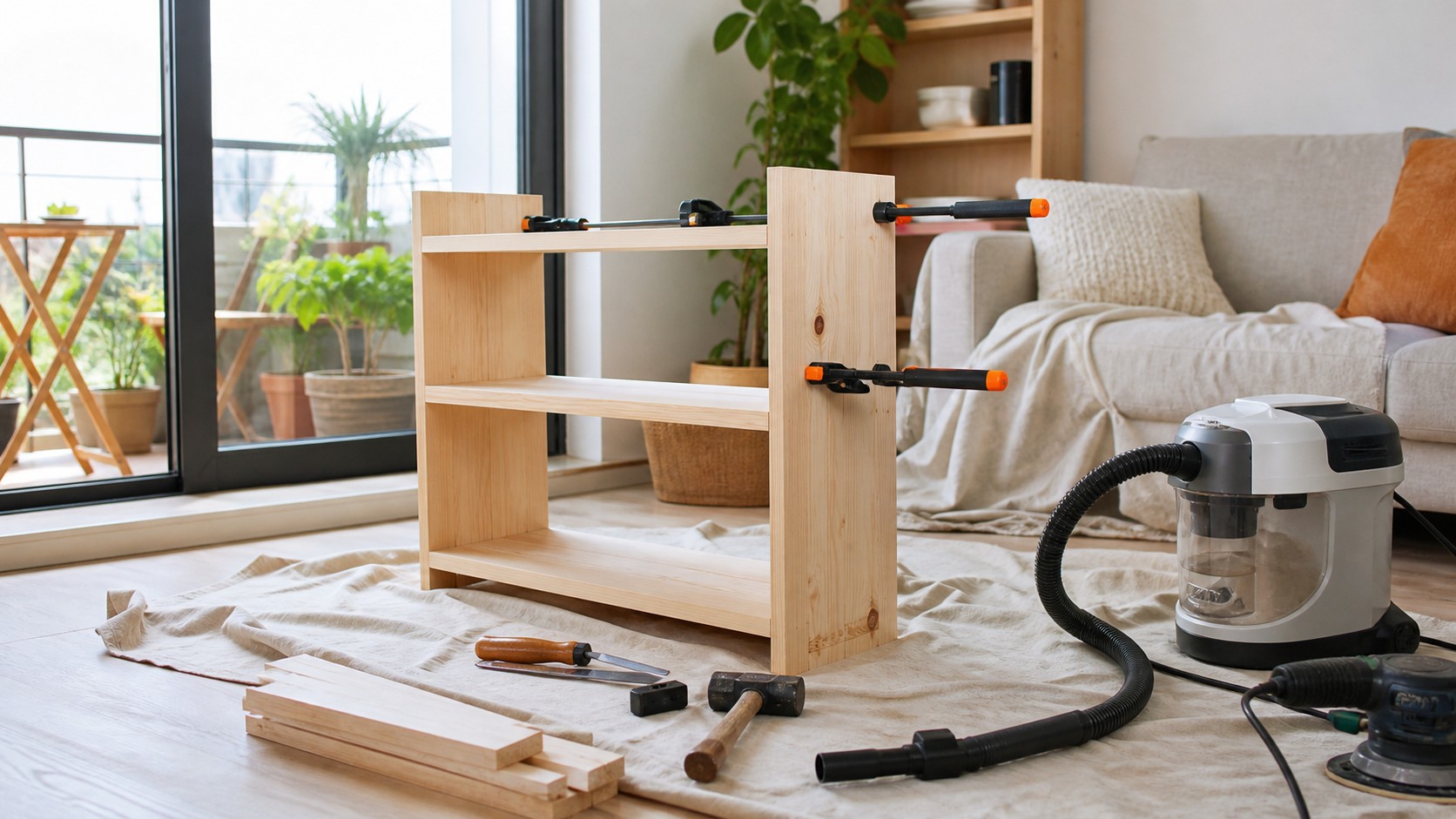
Dust control should be treated as part of the build rather than cleanup after the build. Sanding outdoors may be possible, but many apartment projects still need indoor edge work and finish prep. A vacuum, drop cloth, and smaller sanding sessions make a major difference. It is easier to capture dust near the work than remove it from fabric later.
Noise planning is also a neighborly design choice. Hand tools, pre-cut stock, and short work sessions reduce friction in shared buildings. Even a cordless drill can be annoying through a wall if the work happens late or repeatedly. Planning noisy steps in one short window keeps the project moving without turning it into a building-wide event.
Set Up a Temporary Work Zone
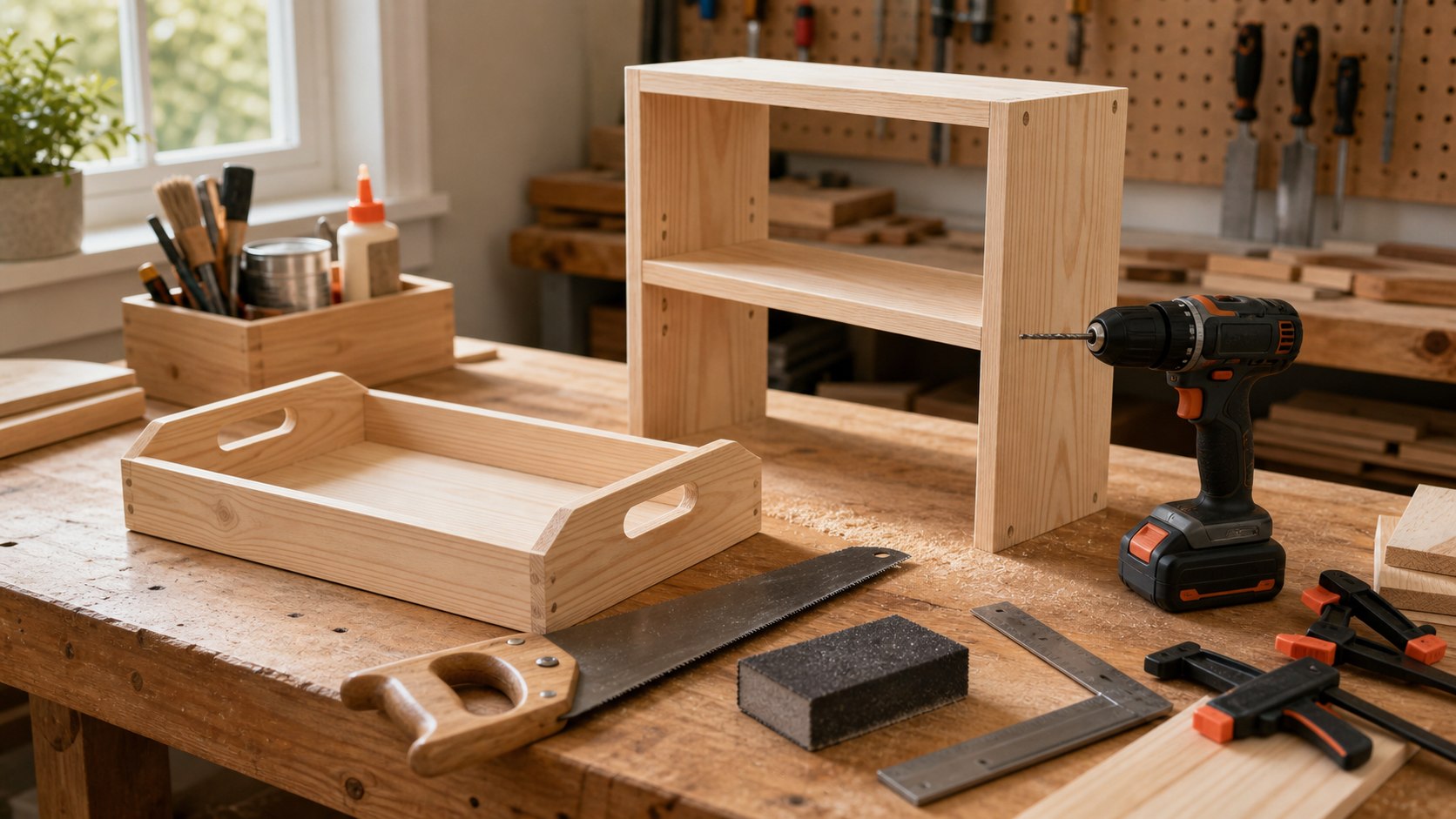
Hand tools are not a lesser option in an apartment. A pull saw, plane, square, clamps, and drill can produce clean work when the project is sized correctly. They also make the builder pay attention to grain, layout, and fit. That attention is exactly what improves future projects. Lumber should be chosen for handling as much as appearance. Long boards, heavy panels, and warped stock are frustrating in hallways and elevators. Shorter boards and project panels may cost more per foot, but they save time and reduce damage risk. Buying wood that reaches the apartment safely is part of buying the right wood.
Lighting and posture matter more than many beginners expect. A small apartment corner can produce careful work if the surface is stable, the board is supported, and shadows do not hide layout marks. Put the work at a comfortable height when possible. Fatigue and awkward reach create mistakes that look like skill problems.
Control Dust Before It Spreads
Assembly should happen in stages that leave the room usable between steps. Glue-ups, finish coats, and clamped parts can block pathways if the builder has not chosen a drying location ahead of time. Small projects are forgiving because they can be moved, turned, and inspected easily. That flexibility is one of the main advantages of apartment-scale work.
Keep Noise Predictable
Finishing indoors calls for restraint. Strong odors, long cure times, and dusty rooms can ruin the pleasure of a good build. Water-based finishes, careful ventilation, and test pieces help prevent surprises. The finish should protect the work without making the home uncomfortable.
Tool storage is the quiet test of whether apartment woodworking is sustainable. If every project requires digging through a closet and rearranging the room for an hour, motivation fades quickly. A compact kit, labeled bins, and a predictable cleanup routine make the next project easier to start. Convenience matters when space is limited.
Some operations belong in a shared shop, driveway, or maker space. Large sheet breakdown, heavy routing, and messy sanding can be outsourced or scheduled elsewhere while the fitting and finishing happen at home. That is not a failure of DIY. It is a practical way to match the work to the available space.
Neighbors usually react better to predictable, limited noise than to surprise bursts throughout the day. Gather noisy steps, complete them during reasonable hours, and save quiet sanding, layout, or finishing for later. This makes progress feel organized. It also protects the builder from stopping halfway through every time the room feels too loud.
Use Hand Tools With Intention
The best apartment woodworking project earns its footprint twice: once while being built and again when it is used. It should fit the room, clean up without drama, and solve a real daily annoyance. That kind of project may be small, but it builds confidence quickly. A useful finished piece is the best reason to set up the tools again.
Accuracy matters more in a small space because there is less room to recover from a bad setup. A crooked shelf, overlong bench, or rough tray does not have a workshop corner to hide in while the builder decides what to do. Measure the intended location, check clearances, and choose projects that can be handled on a protected table. Apartment woodworking improves quickly when each piece is designed around real dimensions.
Buy Lumber the Space Can Handle
Pre-cut services can be useful when the project needs a clean sheet breakdown or long rip cut. The goal is not to avoid skill; it is to remove the operation that does not fit the room. Once the parts are manageable, the builder can still drill, assemble, trim, sand, and finish with care. Smart outsourcing keeps the project apartment-sized without making it less personal.
Assemble in Manageable Stages
Dry fitting is especially helpful where floor space is limited. Lay out the parts, clamps, hardware, and glue before committing to assembly so the sequence is clear. If a clamp cannot reach or a board needs to be turned in a tight corner, it is better to discover that before the glue is open. A smooth dry fit makes the real assembly calmer.
Fasteners should be chosen for the thin stock common in small projects. Screws that are too long can poke through visible faces, while nails without pilot holes can split the end grain. Test on offcuts from the same board whenever possible. That small trial protects the finished piece from avoidable scars.
Modular assembly can keep a project livable. A bench may be built as two side frames and a top instead of one awkward object from the beginning. Shelves can be finished flat before brackets are added. Breaking the work into modules gives a small room a little breathing room.
Glue choice should account for open time and cleanup. A beginner working in a small room may need a few extra minutes to align parts, wipe squeeze-out, and move the project to a drying spot. Rushing with the wrong adhesive can make the whole room feel frantic. The assembly method should match the pace of the builder.
Finish Without Taking Over the Home
Finish choice should match the way the object will be touched. A shelf holding plants needs different protection than a decorative ledge, and a tray that carries drinks needs a finish that tolerates moisture. In an apartment, lower odor and easier cleanup often matter as much as ultimate durability. The best finish is one the builder can apply neatly in the available conditions.
Allowing enough cure time prevents a project from feeling sticky, smelling strong, or collecting dust after it looks done. Small pieces tempt people to put them into service too quickly. Give finish coats space, airflow, and patience. A simple project feels much better when the surface has had time to harden.
Store Tools So the Hobby Survives
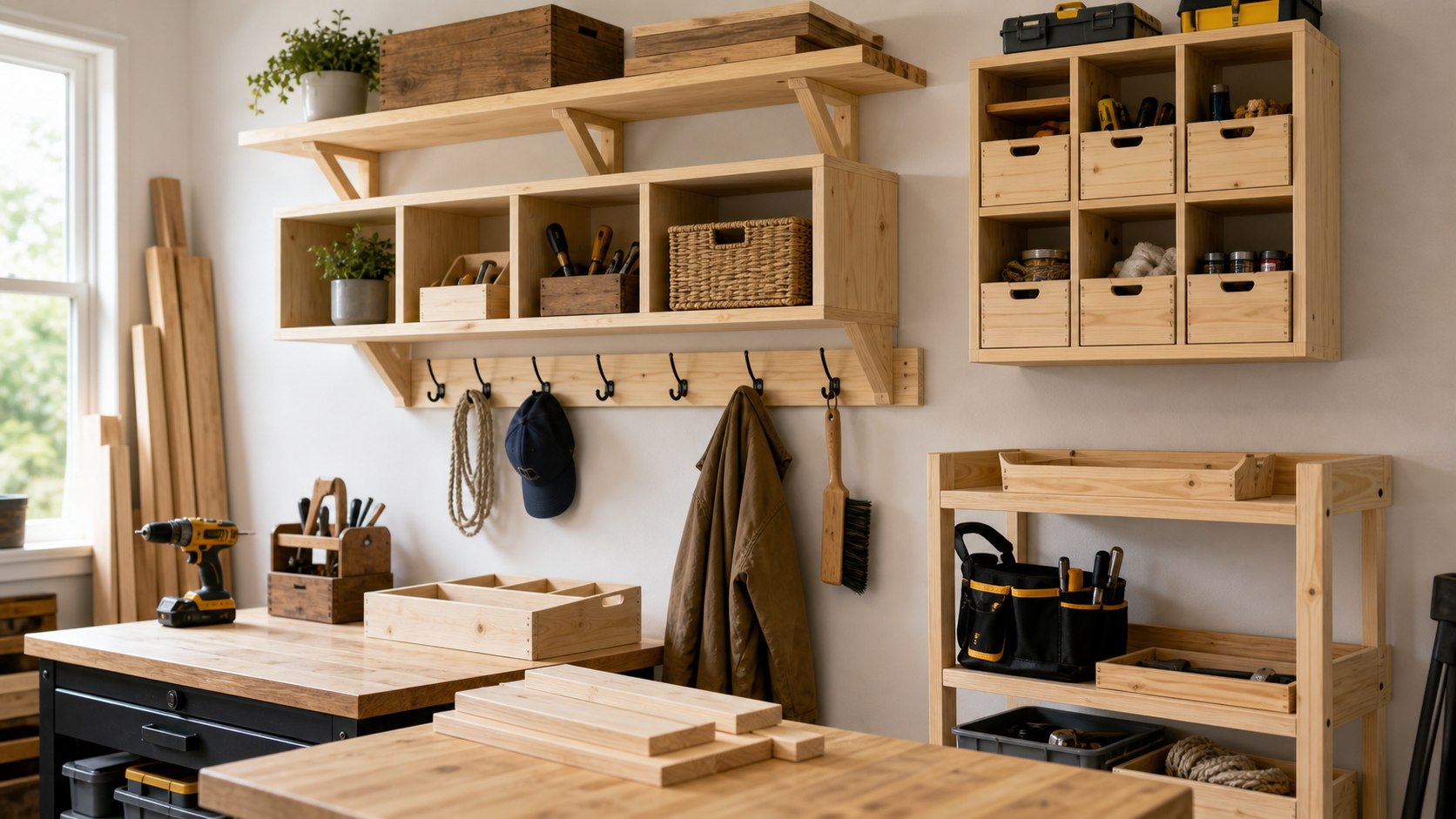
A compact tool kit should be edited after every few projects. Keep the tools that actually get used, store specialty items together, and remove scraps that no longer have a clear purpose. Small-space DIY gets unpleasant when storage becomes a second unfinished project. An organized kit makes the next build feel possible on an ordinary evening.
Know When to Use a Shared Shop
Shared shops are useful for messy or loud preparation, but they still require planning. Bring a cut list, dimensions, and a clear order of operations so rented time is not wasted. Leave final fitting and finish decisions for the apartment if those steps need to respond to the actual room. Combining spaces this way can produce better results than forcing every step into one location.
A shared shop can also teach safer habits. Seeing proper dust collection, bench support, and tool organization gives apartment builders a model to copy at smaller scale. Even one session can clarify which tools are worth owning and which are better borrowed. That keeps the home kit lean.
Tool libraries, community shops, and helpful friends can also keep one-time purchases out of the apartment. Borrowing a larger clamp or using a proper saw station once may be smarter than storing gear for years. The project still belongs to the builder because the planning, fitting, and finishing decisions remain theirs.
Build Pieces That Earn Their Footprint
The strongest small-space projects are useful, modest, and repeatable. A first ledge shelf can become a better second shelf, and a simple crate can teach enough to build a cleaner side table later. Progress comes from finishing real objects and noticing what should change next time. Apartment woodworking is not limited woodworking; it is disciplined woodworking. When the finished piece fits the room and the cleanup fits the day, the project has succeeded. That balance is easy to underestimate because photos tend to show the finished object, not the work habits behind it. The home has to absorb both. Choose projects that make the room better during use and tolerable during the build.
Over time, apartment woodworking teaches restraint in a useful way. It asks the builder to notice what the home actually needs, design around limits, and keep the process clean enough to repeat. Those are not beginner-only skills. They are the same habits that make larger projects better later.