MIG, TIG, stick, and flux-core welding can all join metal, but they solve different problems. The best process depends on what you want to build, where you will weld, how clean the metal is, how thick it is, how much appearance matters, and how much setup you are willing to manage.
A beginner does not need to pick the most advanced process. The better choice is the one that matches the next six months of real projects. A clean shop cart, an outdoor gate repair, an aluminum bracket, and a visible stainless weld all point toward different tools and different practice habits.
A: Gas-shielded MIG often suits that work, provided the machine, shielding, material preparation, and available power match the project.
A: No. Self-shielded and gas-shielded wires have different requirements, so read the exact wire specification before configuring the machine.
A: It offers precise control and can produce refined visible joints, but achieving those results requires preparation and practiced technique.
A: Some electrodes tolerate imperfect surfaces better than other processes, but cleaning and identifying the material remain necessary.
A: Do not assume that it will. Confirm the machine's aluminum capability and required accessories; conventional TIG aluminum commonly uses AC output.
A: Use the gas specified for the material and procedure. A steel MIG mixture is not a universal substitute for TIG shielding.
A: It can when its actual capabilities meet several needs, but compare the complete accessory packages and limitations before deciding.
A: Outdoor location alone does not establish adequate exposure control. Assess the metal, coatings, fumes, airflow, and people nearby.
A: Confined-space welding requires specialized assessment and controls and is not an appropriate casual beginner practice setting.
A: Joint design, material compatibility, procedure, technique, and inspection determine suitability; the process name alone cannot establish strength.
Start With the Project, Not the Process
The easiest way to choose between MIG, TIG, and stick is to describe the work first. Are you building clean mild-steel projects indoors? Repairing thicker steel outside? Welding thin sheet? Working on aluminum? Making visible welds that need to look refined? Each answer changes the best process.
Process choice also depends on the workspace. Shielding gas behaves differently indoors than outdoors. Dirty repair steel behaves differently than new tubing. A machine that is perfect for a garage cart may be a poor fit for a windy fence repair.
MIG Welding in Plain Language
MIG welding feeds wire continuously through a gun while shielding gas protects the weld puddle. For clean mild steel in a garage or shop, it is often the most approachable process. The wire feed makes it easier to run steady beads after the machine is set correctly.
MIG is useful for carts, brackets, furniture frames, fixtures, light fabrication, and many home shop projects. It is not magic, though. It still needs clean metal, good fit-up, shielding gas coverage, correct settings, and inspection.
Where MIG Works Best
MIG shines when the material is clean, the workspace is protected from wind, and speed matters. It can be efficient for repeated joints because the wire is already feeding and slag cleanup is minimal compared with stick or flux-core.
It is a strong choice for beginners who want to build with mild steel in a controlled shop setting. If most projects are brackets, stands, small frames, welding carts, tool racks, or light repairs, MIG is often the practical starting point.
Where MIG Struggles
Gas-shielded MIG does not like wind. A fan, open garage door, or outdoor breeze can disturb shielding gas and cause porosity. MIG also expects reasonably clean material. Paint, rust, oil, and mill scale can create poor weld quality if prep is skipped.
MIG setup includes a gas cylinder, regulator, hose, wire, contact tips, nozzles, and storage space. That is not a problem for a shop, but it matters if portability is the priority.
Flux-Core as the Outdoor Cousin
Flux-core welding also uses a wire-feed machine, but the wire contains flux that helps shield the weld. Self-shielded flux-core can work without a gas bottle, which makes it useful outdoors or in places where wind would make MIG shielding unreliable.
The tradeoff is cleanup. Flux-core usually creates more smoke, spatter, and slag than gas-shielded MIG. It can be excellent for gates, fences, outdoor brackets, quick repairs, and portable steel work, but it is usually less clean-looking than MIG in a protected shop.
TIG Welding in Plain Language
TIG welding uses a non-consumable tungsten electrode to create the arc, and filler metal is added separately when needed. It gives excellent control over heat and filler placement. That control is why TIG is common for thin material, stainless, aluminum, visible welds, and precision fabrication.
The learning curve is steeper because both hands are involved, and many setups use a foot pedal or hand amperage control. TIG rewards patience and clean prep, but it is not usually the fastest way to make rough repairs.
Where TIG Works Best
TIG is strongest when appearance, precision, and heat control matter. It is useful for thin sheet, stainless parts, aluminum work with the right AC-capable machine, small brackets, decorative metalwork, and visible welds that should need little cleanup.
It is also valuable when filler control matters. You can add filler slowly, pause, adjust heat, and keep the weld more refined. That makes TIG appealing for projects where the weld will remain visible.
Where TIG Struggles
TIG is slower than MIG for many ordinary steel projects. It also demands cleaner metal, tighter fit-up, more coordination, and more practice before results become consistent. If the project is heavy, dirty, outdoors, or purely utility-focused, TIG may be the wrong tool for the job.
Costs can rise too. TIG may need argon, tungsten, cups, collets, filler rod, a torch, and sometimes AC capability for aluminum. A machine advertised as TIG-capable may not do every kind of TIG welding a buyer imagines.
Stick Welding in Plain Language
Stick welding uses a flux-coated electrode that carries the arc and adds filler metal. It is rugged, portable, and useful for thicker steel, outdoor work, and repairs where the metal is not perfectly clean. It does not need a wire feeder or shielding gas cylinder.
Stick is common in farm work, structural repair contexts, field repairs, heavy brackets, and outdoor steel projects. It is less friendly on thin material, and it takes practice to manage arc starts, rod angle, travel speed, and slag.
Where Stick Works Best
Stick welding works well when portability, penetration, and ruggedness matter. It handles wind better than gas-shielded MIG and can tolerate less-than-perfect conditions better than TIG. Electrodes are easy to carry, and the setup can be simple.
If your work is mostly thicker steel, outdoor repair, equipment brackets, gates, or heavy utility projects, stick deserves consideration. It may not look as clean as TIG, but it is highly practical in the right setting.
Where Stick Struggles
Stick is not the easiest process for thin sheet metal. Burn-through happens quickly, and the slag cleanup adds time. The rod gets shorter as you weld, so maintaining angle and arc length takes practice.
It also produces slag, smoke, and spatter. That is fine for many utility repairs, but it may not be ideal for clean decorative work or tight indoor projects where cleanup and appearance matter.
Compare Learning Curves
For many beginners, MIG is the easiest to start because wire feeds continuously and the gun is straightforward to hold. Flux-core is similar in handling but messier and more sensitive to setup details like polarity and wire selection.
Stick teaches useful fundamentals but can frustrate beginners with stuck rods, restarts, slag, and arc length. TIG often takes the longest to learn because it asks for torch control, filler control, heat control, and clean prep all at once.
Compare Speed
MIG is usually fastest for repeated clean steel joints. Flux-core can also be fast when portability matters, though cleanup may reduce the time advantage. Stick can be efficient for heavy repair work once the operator is comfortable.
TIG is typically slower. That is not a flaw when precision is the goal, but it matters for production, long welds, or rough utility work. Choose TIG for control, not speed.
Compare Cleanup
MIG generally leaves less slag and can require less cleanup when settings and gas coverage are right. Flux-core and stick create slag that must be removed before inspection or additional passes. TIG can produce very clean welds when prep and technique are good.
Cleanup is not just cosmetic. Slag, spatter, porosity, and poor tie-in affect inspection and future coating. If the project will be painted, every process still needs proper cleaning before primer.
Compare Thin Metal
Thin metal rewards heat control. TIG can be excellent on thin material because the operator can control heat and filler carefully. MIG can work on thin steel when settings are low and the operator practices. Flux-core and stick are harder on thin sheet because heat and burn-through become more difficult to manage.
Auto body-style sheet metal is not the best first welding challenge. If thin metal is the main goal, choose a process and machine that can run low and controllably.
Compare Thick Steel
Thicker steel needs enough amperage, joint prep, and penetration. Stick is often useful here because it is rugged and capable on heavier sections. MIG can also work well when the machine has enough output and the joint is prepared correctly.
TIG can weld thick material, but it may be slower and less practical for heavy utility work. The machine’s output, duty cycle, and power supply matter as much as the process name.
Compare Aluminum
Aluminum changes the decision. TIG aluminum usually requires AC TIG capability, argon, clean prep, and practice. MIG aluminum may require a spool gun or push-pull setup because soft aluminum wire can feed poorly through long leads.
If aluminum is central to your projects, do not assume any MIG or TIG machine will handle it well. Confirm the machine, accessories, gas, filler, and thickness range before buying. If aluminum is only a future possibility, choose for your actual steel projects first.
Compare Outdoor Work
Outdoor work often favors flux-core or stick because wind does not disrupt them the same way it disrupts shielding gas. MIG and TIG can be used outdoors only when shielding is protected well enough for the process.
Outdoor welding also means more fire awareness. Dry grass, siding, leaves, vehicles, and stored materials can all catch sparks. The right process still needs a safe work zone.
Compare Cost Beyond the Machine
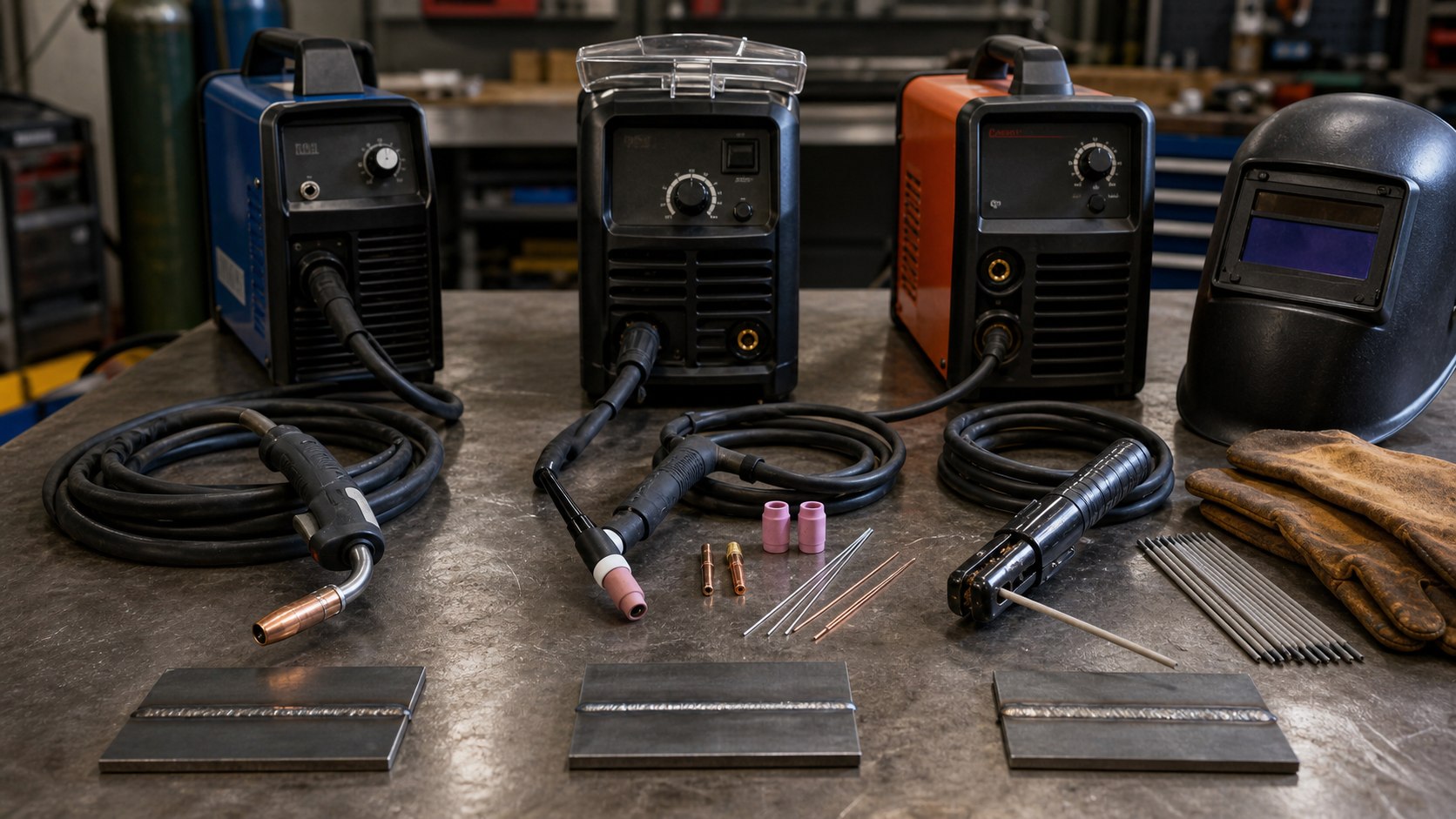
The welder price is only one part of the cost. MIG may need gas, regulator, wire, tips, nozzles, and a cylinder. TIG may need argon, tungsten, cups, collets, filler rods, pedals, and specialty accessories. Stick needs electrodes and basic support gear. Flux-core needs wire, contact tips, and cleanup tools.
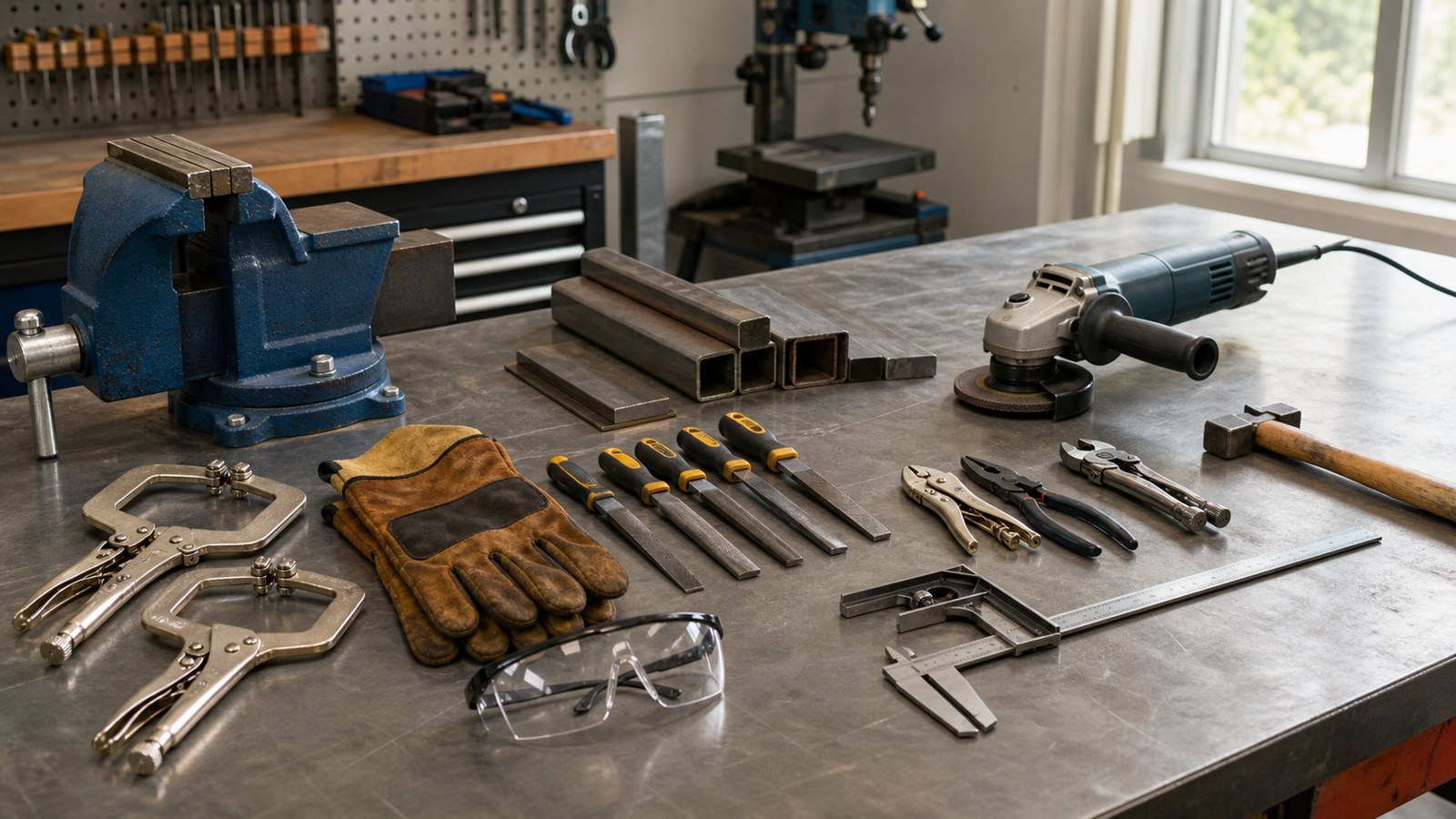
Safety gear, clamps, grinders, practice metal, and fire protection belong in every budget. A cheaper process is not cheaper if it leaves no room for the equipment needed to use it safely.
Think Carefully About Multiprocess Machines
Multiprocess welders can be useful because one machine may support MIG, flux-core, stick, and sometimes TIG. They make sense when you genuinely need more than one process and understand the accessories each one requires.
Read the details closely. Some machines offer only basic DC TIG, some do not support AC TIG for aluminum, and some require extra torches, regulators, spool guns, or leads. A multiprocess label does not mean every process is equally capable.
Match the Process to Inspection Needs
If the weld will be visible but not highly loaded, appearance and cleanup may matter most. If the weld supports weight, holds equipment, or affects safety, penetration, fit-up, and inspection matter more than a pretty bead. The process choice should reflect the consequence of failure.
For practice, cut and bend sample welds when it is safe to do so. Look for fusion, porosity, undercut, and cracks. A process that feels easy is not automatically producing sound welds, and a process that looks rough may still be strong when used correctly.
Know What Not to Weld as a Beginner
No process choice makes a beginner ready for every repair. Vehicle frames, trailer hitches, suspension parts, lifting points, pressure vessels, ladders, railings, and structural supports need skill, procedure, and inspection beyond casual practice.
Start with noncritical projects: carts, practice frames, tabs, brackets, small stands, and shop fixtures. Build judgment before taking on anything that could hurt someone if it fails. Process selection is only part of welding safely.
Pick for the First Six Months
Do not choose based on a fantasy project five years away. Choose based on the work you will actually practice soon. If you want to build mild-steel shop projects indoors, MIG may be right. If you need outdoor repairs, flux-core or stick may fit better. If your goal is visible precision work, TIG may be worth the slower learning curve.
The best process is the one you will use enough to improve. Welding skill comes from practice, inspection, and repetition, not from owning the most versatile machine.
Final Welding Process Review
MIG is approachable and efficient for clean shop steel. Flux-core is useful outdoors and for portable utility work. Stick is rugged for thicker steel and field repairs. TIG is precise, clean, and controlled for thin material, stainless, aluminum, and visible welds.
Match the process to material, thickness, workspace, appearance, speed, cleanup, budget, and learning patience. Then practice on scrap before trusting any weld that carries real load. The right welding process is the one that fits the job and helps you build skill safely.