The Spark That Starts the Craft
Metalworking is one of the oldest and most useful creative skills in human history, yet it feels surprisingly modern every time a fresh piece of steel becomes something functional, beautiful, or strong. For beginners, the craft can look intimidating at first. There are sparks, sharp edges, heavy materials, powerful tools, and a language filled with terms like gauge, bevel, anneal, deburr, weld bead, and heat treatment. But beneath the surface, metalworking is a learnable process built on simple foundations: measure carefully, cut safely, shape patiently, join securely, and finish cleanly. The beauty of metalworking is that it rewards both precision and imagination. You can use it to build shop fixtures, repair broken equipment, make custom brackets, create furniture, design art, restore old parts, or fabricate useful pieces that cannot be found in stores. Unlike many crafts, metalworking gives beginners a direct sense of transformation. A flat sheet, round rod, or square tube can become a tool rack, fire pit, garden trellis, table frame, sculpture, or machine part. Once you understand the basics, every piece of scrap metal starts to look like possibility.
A: It takes patience, but beginners can start with simple measuring, cutting, drilling, and finishing projects.
A: Mild steel is usually the easiest and most affordable starting material.
A: No. Many beginner projects use bolts, screws, rivets, brackets, and simple fasteners.
A: A combination of clamps, a drill, files, and an angle grinder can handle many starter tasks.
A: Yes, if you manage sparks, ventilation, noise, dust, and flammable materials carefully.
A: Clean the surface and apply paint, oil, wax, powder coating, or another protective finish.
A: Try a shelf bracket, tool rack, small stand, simple frame, or metal wall hook.
A: Use sharp bits, a center punch, steady pressure, proper speed, and deburr afterward.
A: Yes, with the right disc, firm grip, guards in place, eye protection, and careful handling.
A: Practice on scrap, build simple projects, study mistakes, and focus on accuracy before speed.
What Metalworking Really Means
Metalworking is the broad craft of cutting, shaping, joining, and finishing metal. It includes many specialized disciplines, such as welding, machining, blacksmithing, sheet metal fabrication, jewelry making, casting, grinding, polishing, and metal art. A beginner does not need to master all of these at once. In fact, the best way to begin is by learning the core operations that appear in almost every project: marking, measuring, cutting, drilling, filing, clamping, bending, fastening, and finishing.
At its most practical level, metalworking is problem solving. You are learning how to turn a design idea into a physical object that holds its shape, fits correctly, and performs the job it was made for. That might mean making a bracket strong enough to support weight, smoothing a sharp edge so it is safe to handle, or drilling holes that align perfectly with another part. The beginner’s goal is not perfection on day one. The goal is control. Each project teaches you how metal behaves under pressure, heat, friction, and force.
Common Metals Beginners Should Know
Steel is usually the best starting point for beginners because it is affordable, widely available, strong, and forgiving. Mild steel, in particular, is easy to cut, drill, grind, weld, and shape compared with many other metals. It is used for furniture frames, brackets, gates, shop projects, and structural pieces. The main drawback is that it can rust if left unprotected, so finishing matters. Aluminum is lightweight, corrosion-resistant, and attractive, but it can be trickier to work with. It clogs some abrasives, transfers heat quickly, and requires different techniques for welding and cutting. Stainless steel is durable and rust-resistant, but it is harder than mild steel and can be less forgiving when drilling or grinding. Brass and copper are softer, decorative, and excellent for detail work, but they can be more expensive. Beginners should start with mild steel, then explore other metals as confidence grows.
Safety Comes Before Skill
Metalworking safety is not optional. It is the foundation of the craft. Metal can cut skin, sparks can burn clothing, grinding dust can irritate lungs, and loud tools can damage hearing. The good news is that safe habits are simple when practiced consistently. Eye protection should be worn whenever cutting, grinding, drilling, hammering, or brushing metal. Gloves help protect hands from sharp edges, but they must be used wisely around rotating machinery where loose material can catch.
A good beginner setup includes safety glasses, hearing protection, work gloves, a face shield for grinding, a respirator or dust mask when needed, and natural-fiber or flame-resistant clothing when sparks are involved. Keep your workspace clean, remove flammable materials, secure your work before cutting, and let hot metal cool before touching it. The best metalworkers are not reckless. They are calm, prepared, observant, and consistent.
The Essential Beginner Tool Kit
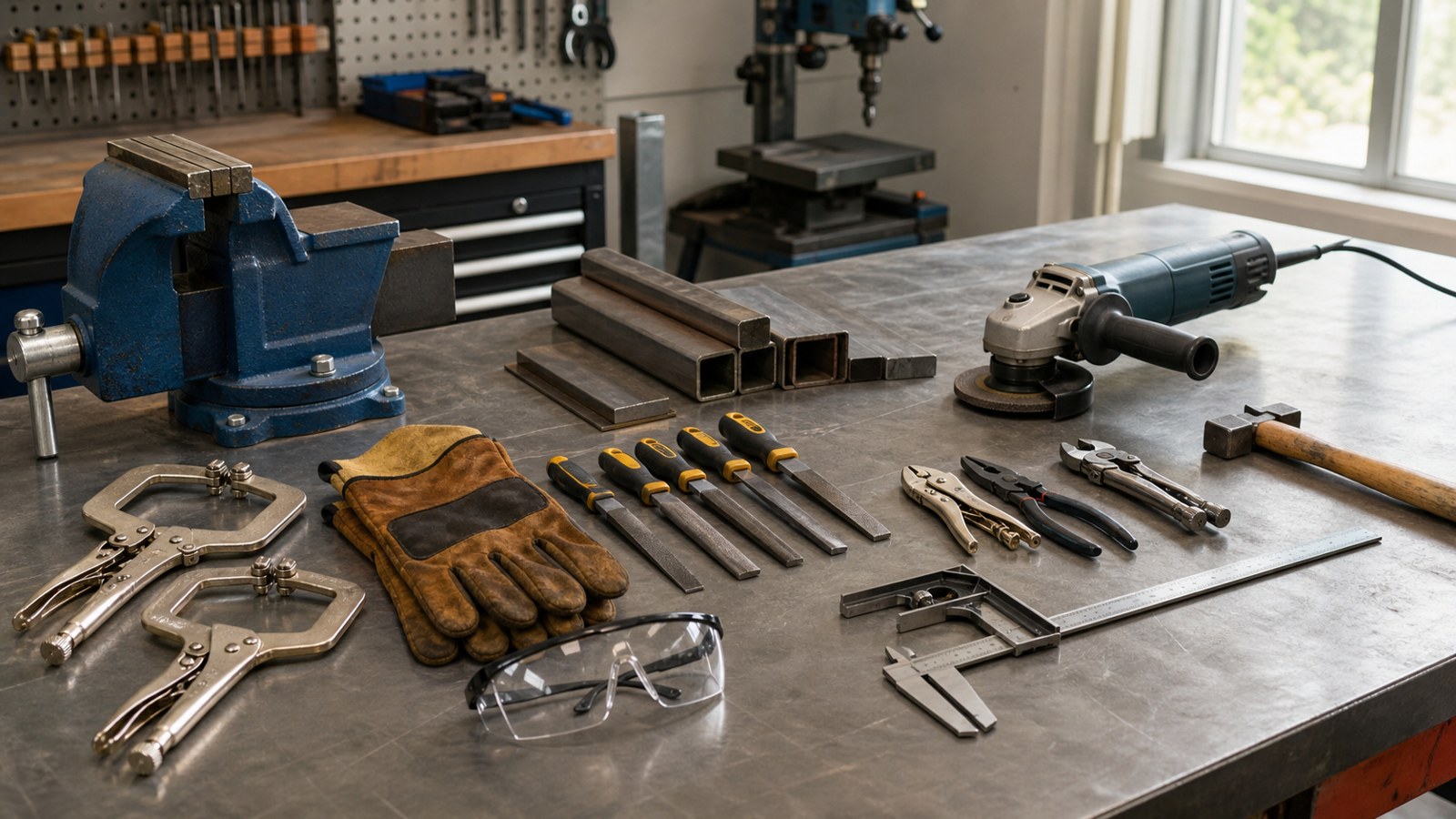
You do not need an industrial shop to start metalworking. Many beginner projects can be completed with a small set of reliable tools. A tape measure, steel ruler, square, marker, center punch, clamps, vise, hacksaw, files, drill, drill bits, and angle grinder can take you surprisingly far. These tools allow you to measure, mark, cut, hold, shape, smooth, and assemble basic metal projects. As you advance, you may add a bench grinder, drill press, metal-cutting saw, welding machine, tap and die set, sheet metal brake, belt grinder, or plasma cutter. The key is to buy tools based on projects, not impulse. Start with hand tools and a few versatile power tools, then upgrade when your work demands it. A beginner who knows how to use simple tools well will outperform someone with expensive equipment and poor technique.
Measuring and Marking Metal Accurately
Good metalworking begins with layout. If your measurements are wrong, every step after that becomes harder. Unlike wood, metal is less forgiving when pieces are miscut or holes are misplaced. Beginners should learn to measure twice, mark clearly, and use reference edges. A combination square is one of the most useful layout tools because it helps mark straight lines, check 90-degree angles, and repeat measurements.
For better accuracy, use a scribe or fine marker instead of thick lines that create guesswork. A center punch is also important because it creates a small dimple that keeps drill bits from wandering. Clean layout work saves time, material, and frustration. It also makes your finished projects look more professional because parts align correctly and edges meet cleanly.
Cutting Metal the Right Way
Cutting is one of the first major skills beginners learn. Thin metal can often be cut with snips, a hacksaw, or a jigsaw with the correct blade. Thicker stock may require an angle grinder, chop saw, band saw, or plasma cutter. Every cutting method has trade-offs. A hacksaw is slow but controlled. An angle grinder is fast and affordable but produces sparks and rougher edges. A metal-cutting saw gives cleaner, straighter cuts but costs more and requires proper setup. The secret to better cuts is preparation. Secure the work firmly, mark the line clearly, let the tool do the work, and avoid forcing the cut. After cutting, always deburr the edge with a file, grinder, or deburring tool. Freshly cut metal can be razor sharp, and a few seconds of edge cleanup can prevent injuries while improving the final appearance.
Drilling, Filing, and Shaping
Drilling metal requires patience and the right technique. Use sharp bits, start with a center punch, apply steady pressure, and use cutting oil when appropriate. Smaller pilot holes can make larger holes easier and more accurate. If a drill bit squeals, overheats, or stops cutting, slow down and check your pressure, speed, and lubrication.
Filing and shaping are quieter but equally important skills. A good file can smooth corners, refine fit, remove burrs, and correct small mistakes. Beginners often underestimate hand tools, but filing teaches control and attention to detail. Metalworking is not only about sparks and machines. Much of the craft happens in the careful finishing steps that make rough parts feel intentional.
Bending and Forming Metal
Bending metal introduces a new kind of thinking. Instead of removing material, you are persuading it to change shape. Sheet metal can be bent with a brake, vise, mallet, or bending jig. Rod and flat bar can be shaped with heat, leverage, or forming tools. The thicker the metal, the more force is required, and the more important it becomes to plan the bend location and angle. Beginners should practice on scrap before bending final pieces. Metal stretches slightly on the outside of a bend and compresses on the inside, which means measurements can shift. Tight bends may crack certain metals if they are too hard or brittle. Learning how metal moves under force helps you design smarter projects and avoid wasted material.
Joining Metal Without Welding
Welding is powerful, but it is not the only way to join metal. Beginners can use bolts, screws, rivets, brackets, tabs, adhesives, and mechanical fasteners. These methods are often easier, safer, and more accessible for early projects. Bolted connections are especially useful because they can be adjusted, repaired, or disassembled later.
Mechanical joining also teaches design discipline. You must think about hole placement, load direction, clearance, and alignment. A clean bolted frame can be just as impressive as a welded one when designed well. Beginners who learn both fastening and welding become more flexible makers because they can choose the best joining method for each project.
When Welding Enters the Picture
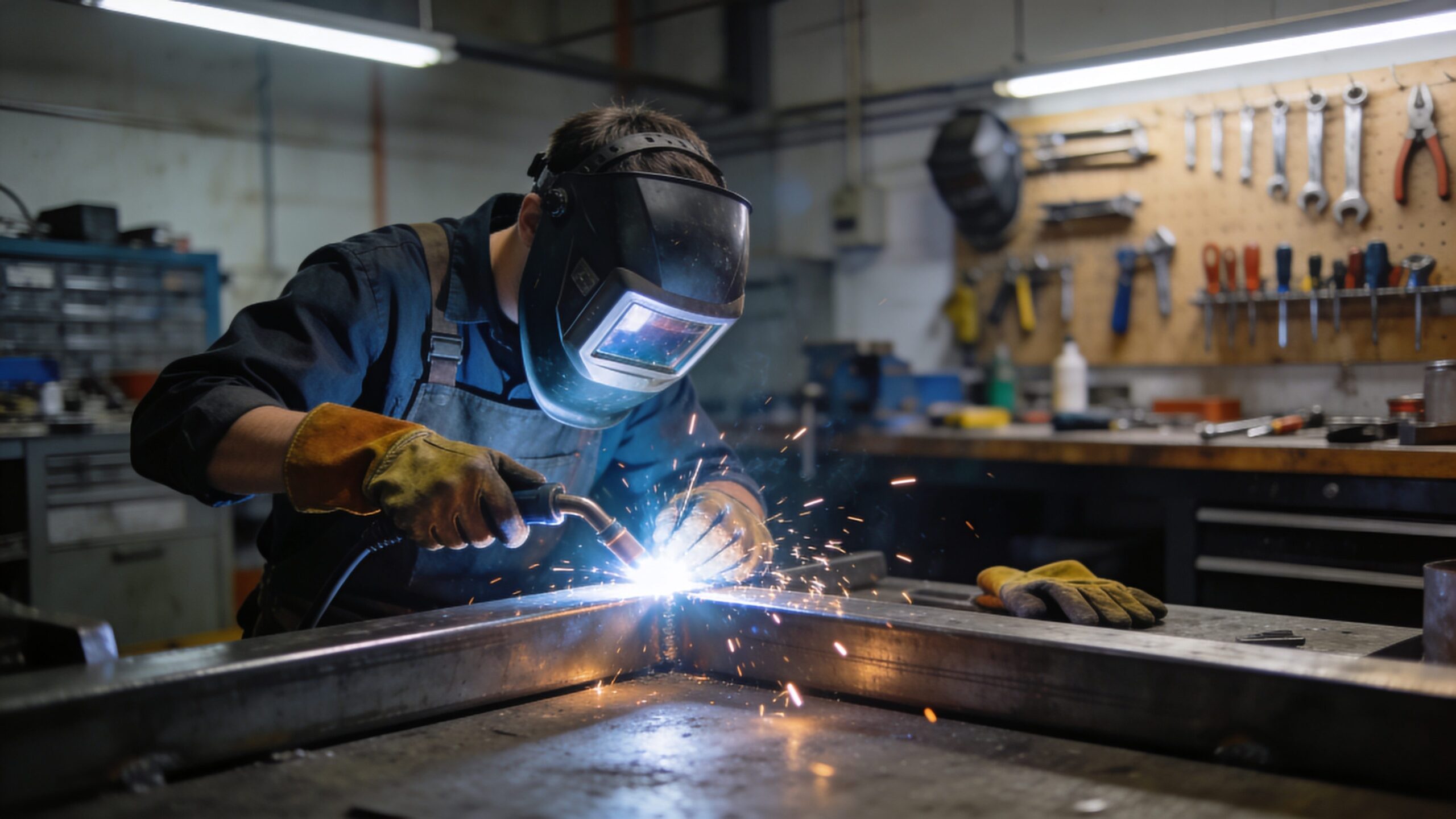
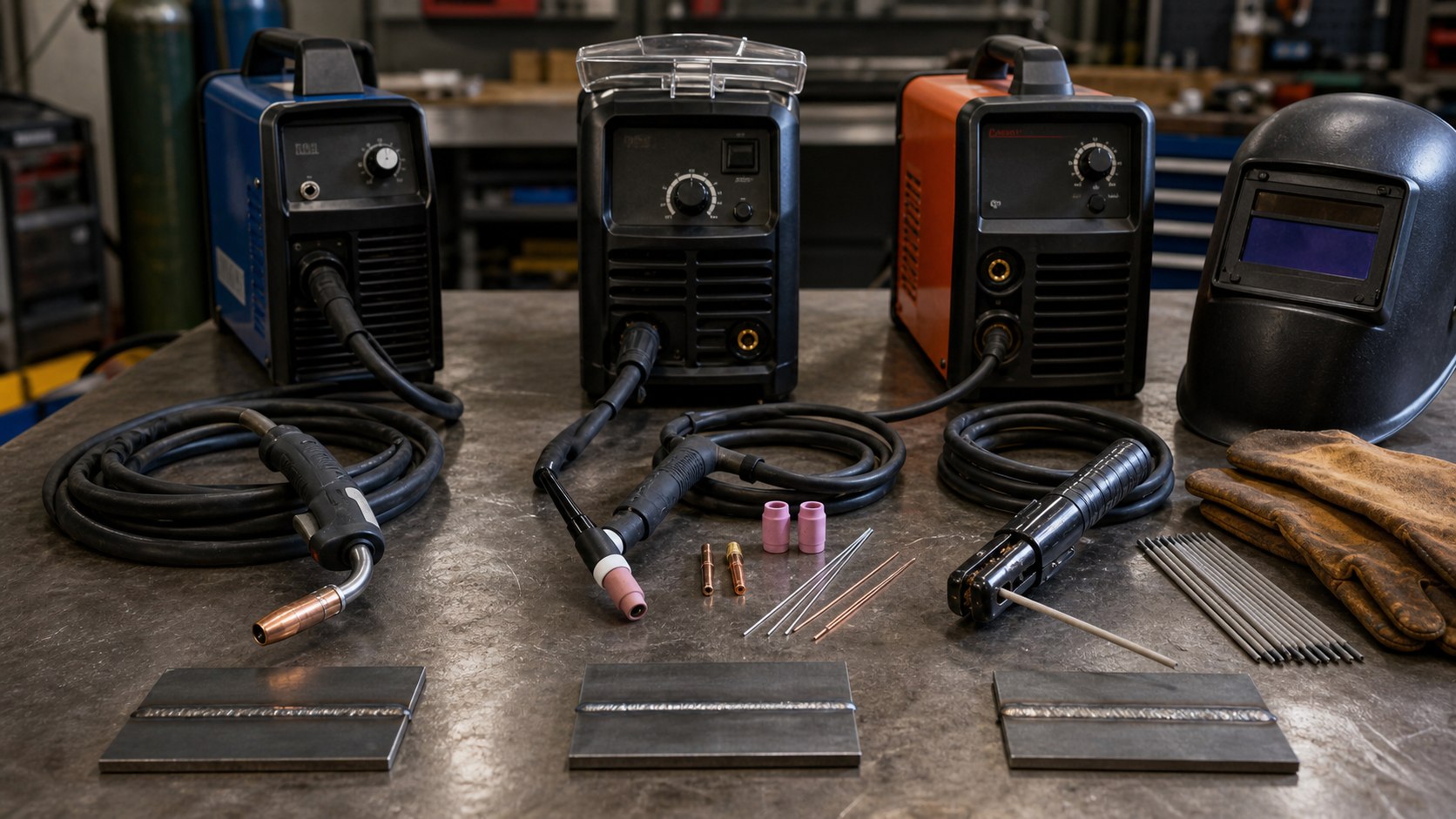
Welding is a major part of metalworking, but it does not have to be your first step. Once you understand measuring, cutting, cleaning, clamping, and fitting metal, welding becomes much easier to learn. MIG welding is often the most beginner-friendly process because it uses a continuously fed wire and is relatively easy to control. Stick welding is rugged and useful outdoors, while TIG welding is precise but requires more coordination. Before welding, metal must be cleaned and properly fitted. Poor fit-up leads to weak joints, messy welds, and extra grinding. Welding also requires serious safety gear, including a welding helmet, gloves, protective clothing, ventilation, and fire awareness. Beginners should practice on scrap steel before building anything structural. Good welding is not just about melting metal. It is about preparation, heat control, movement, and inspection.
Grinding and Finishing Like a Pro
Finishing is where beginner projects begin to look polished. Grinding can smooth welds, remove sharp edges, clean surfaces, and prepare metal for paint or coating. The angle grinder is one of the most useful tools in metalworking, but it demands respect. Use the correct disc for the job, keep both hands on the tool, wear face and eye protection, and let the grinder reach full speed before contacting the metal.
A finished metal project may be brushed, polished, painted, powder coated, oiled, blued, or sealed. The right finish depends on the metal, environment, and style. Outdoor steel needs rust protection, while decorative indoor pieces may benefit from a clear coat or wax. Finishing is not an afterthought. It protects the work and gives it character.
Setting Up a Beginner Metalworking Space
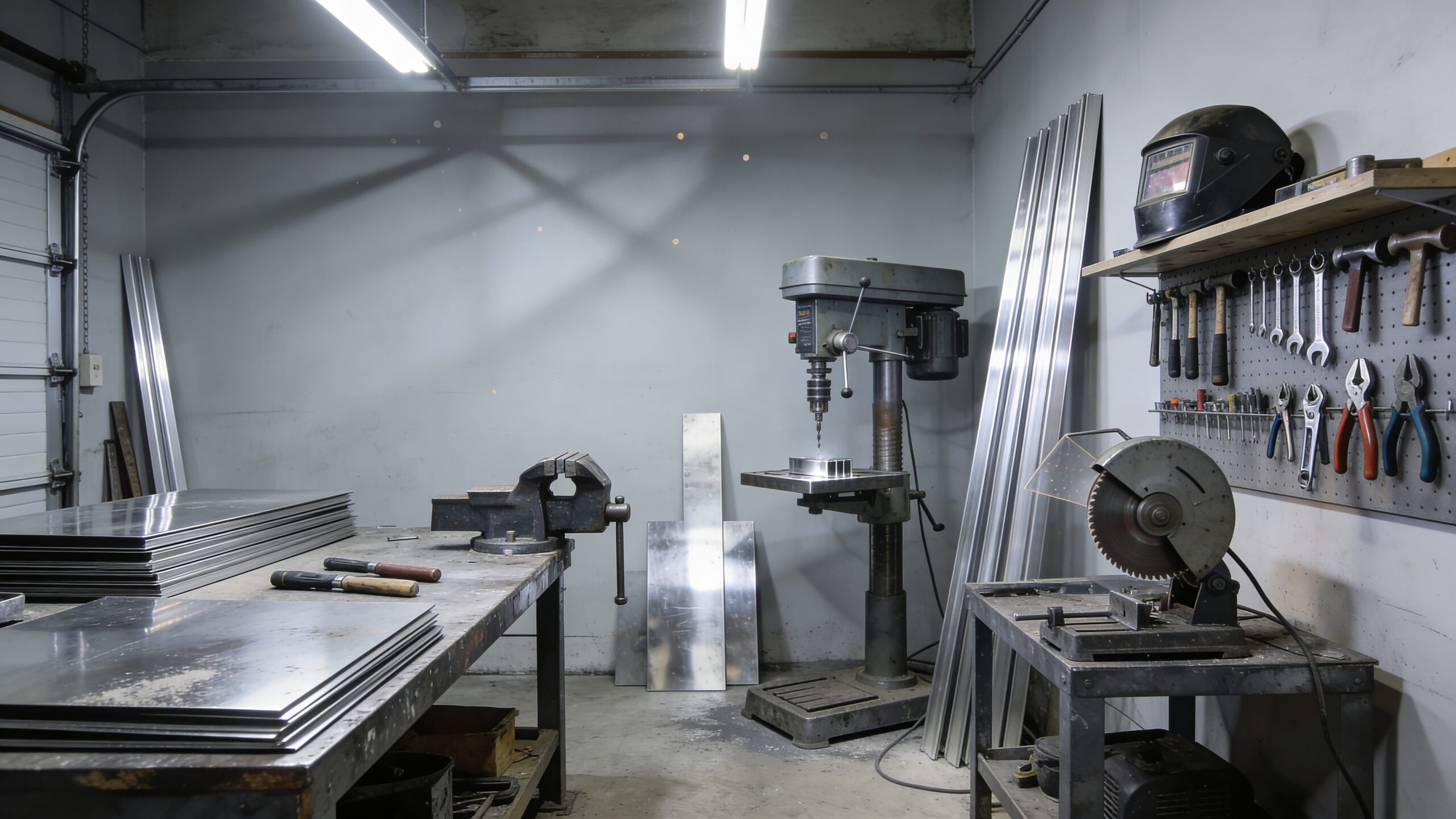
A beginner metalworking space does not need to be large, but it does need to be organized and safe. A sturdy workbench, a vise, good lighting, ventilation, and enough room to move around are essential. Keep sparks away from wood dust, cardboard, solvents, and other flammable materials. Store metal off the floor when possible, and separate clean stock from sharp scrap. Noise and dust control are also important, especially in a garage or shared space. Grinding and cutting can be loud, so hearing protection matters. Metal dust and abrasive particles should be cleaned regularly. A tidy shop is not just nicer to work in; it helps prevent accidents and makes projects more enjoyable.
Beginner Projects That Build Real Skills
The best beginner metalworking projects are simple, useful, and forgiving. A small shelf bracket teaches measuring, cutting, drilling, deburring, and finishing. A tool rack teaches layout and spacing. A simple steel table frame teaches square cuts, clamping, and alignment. A firewood rack, plant stand, or garage organizer can build confidence while creating something practical.
Avoid starting with projects that require perfect tolerances, heavy loads, or complex geometry. Early success matters. Choose projects that let you practice the fundamentals repeatedly. Every cut, hole, bend, and finish teaches your hands and eyes what good work feels like.
Common Beginner Mistakes
One of the biggest beginner mistakes is rushing. Metalworking rewards patience. Cutting too fast, drilling without lubrication, grinding too aggressively, or skipping layout steps can create avoidable problems. Another common mistake is failing to secure the work. Loose metal can shift, vibrate, catch, or become dangerous. Beginners also tend to ignore finishing until the end, only to discover that sharp edges, uneven surfaces, and poor prep make the final result look rough. Good metalworking happens in stages. Clean the material, plan the cuts, secure the piece, work steadily, check fit often, and finish as you go. Small habits create big improvements.
How to Keep Improving
Improvement in metalworking comes from repetition and observation. Save your early projects, even the imperfect ones, because they show progress. Study your cuts, holes, welds, bends, and finishes. Ask what worked, what failed, and what could be cleaner next time. The craft becomes less mysterious when every mistake becomes information.
Learn from makers, fabricators, machinists, welders, and artists, but do not compare your beginning to someone else’s years of experience. Metalworking is a long craft with many paths. You might love fabrication, restoration, sculpture, furniture, knife making, automotive work, or shop-built tools. The more you practice, the more your own direction will become clear.
The First Step Is the Most Important
Metalworking for beginners is not about owning every tool or mastering every process immediately. It is about starting with respect for the material and building confidence one skill at a time. Learn to measure accurately, cut safely, drill cleanly, smooth sharp edges, and finish your work with care. These basics form the foundation for everything else. Once you begin, metal stops feeling like something reserved for factories and professionals. It becomes a creative material you can shape with your own hands. Whether you want to repair, build, invent, decorate, or fabricate, metalworking gives you the power to turn raw material into lasting work. The first project may be simple, but it opens the door to a craft that can grow for a lifetime.