Bookshelf Hidden Door: DIY Plans & Hardware Guide Starts With Weight, Swing, and Clearance
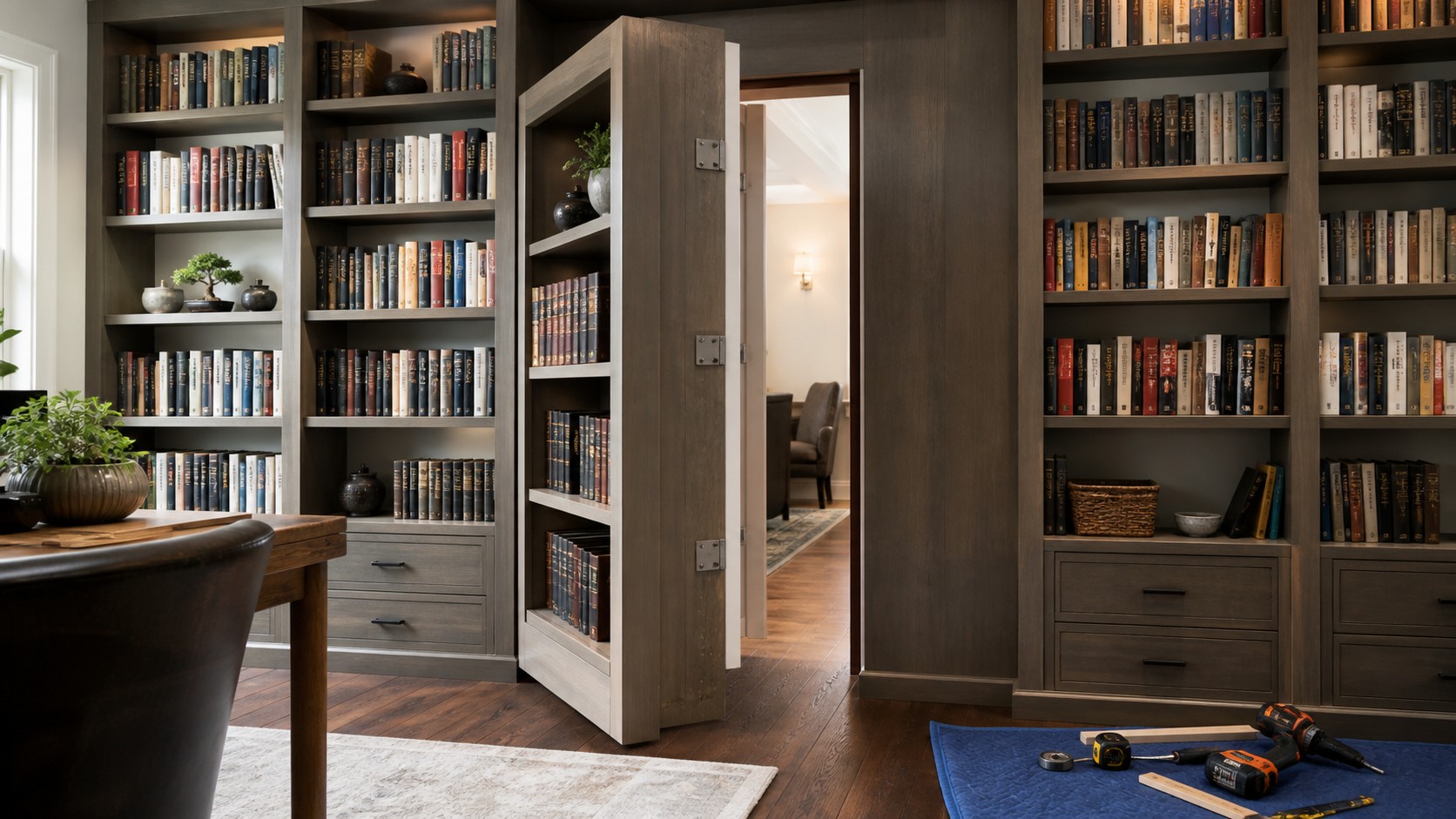
Bookshelf Hidden Door: DIY Plans & Hardware Guide is not just a woodworking idea with a dramatic reveal. A bookcase door is a moving wall, a loaded cabinet, and a doorway at the same time, so the plan has to solve weight, hinge geometry, floor clearance, latch behavior, and everyday access before finish details begin. This guide explains how homeowners can think through the project realistically, from measuring the opening to choosing hardware and avoiding a hidden door that sags after the first few uses.
Start With the Door as a Moving Load
A bookshelf hidden door should be planned as a loaded moving object before it is treated as a design feature. The shelves, face frame, backing, trim, hardware, and books all add weight that ordinary cabinet thinking may underestimate. If the plan begins only with the closed appearance, the door can sag, rub, or become unpleasant to use. A successful project starts by asking how the weight will be carried every time the opening moves. A useful planning trick is to calculate the door as if it were a cabinet first and a secret feature second. That keeps the conversation focused on load paths, stiff parts, and dependable movement before trim and styling distract from the mechanics.
This is why hinge choice belongs at the beginning rather than the shopping stage after the cabinet is built. The hardware determines pivot location, swing path, casing details, floor clearance, and often the thickness of the bookcase itself. Once those numbers are known, the woodworking can support the motion instead of fighting it. Hidden doors fail most often when the moving parts are treated as an afterthought.
Measure the Opening More Than Once
Measurement should include the rough opening, finished opening, floor level, wall plumb, ceiling height, nearby furniture, and the space on both sides of the door. A bookcase that looks perfect in elevation can still collide with a rug, desk, baseboard, or sloped floor during the swing. Marking the path on the floor with tape makes the idea easier to test before money is spent.
The finished doorway matters too. When the bookcase is open, people still need to pass through comfortably without scraping shelves or stepping over awkward thresholds. If the hidden room will be used often, tight passage becomes irritating quickly. Practical access is part of good concealment.
Old houses and remodeled rooms deserve extra caution because walls may not be straight or floors may not be level. A hidden door relies on consistent reveals, so small irregularities become visible. Measure at several heights and compare diagonals where possible. The more accurate the survey, the calmer the build becomes. Those irregularities can sometimes be handled with scribed trim or planned shadow lines, but they should not be discovered after the case is assembled. The measuring stage is where the project earns its clean final fit.
Choose Hardware Before Building the Case
Hardware should be selected from the real door weight, not from a hopeful estimate. Purpose-built hidden-door pivots, heavy hinges, and adjustable systems each have limits that should be respected. Read the specifications before choosing shelf depth or material. The right hardware can make the project feel smooth; the wrong hardware can turn the bookcase into a dragging cabinet. Ask how the hardware is adjusted after installation, what weight it is rated to carry, and how it behaves when the door is thick. Those questions reveal whether the hardware belongs on a loaded bookcase or only on a light panel.
Build the Bookcase for Rigidity
The bookcase needs to resist racking because every open and close tries to twist the case. Plywood, fixed shelves, a strong back, and a well-built face frame can help the door stay square. Decorative trim should not be expected to provide structural strength. The hidden feature depends on the cabinet behaving like a stable door slab.
Shelf depth should be chosen carefully. Deep shelves hold more, but they also increase leverage on the hardware and can make the swing path harder to manage. A shallower, stronger case may be more dependable than a dramatic deep bookcase. The design should carry the load gracefully, not simply maximize storage. Books are dense, and a few shelves can add more load than expected. Designing for a realistic shelf load from the beginning helps prevent a door that works empty and disappoints once it looks finished.
Anchoring also matters. The jamb, surrounding framing, and pivot points must carry repeated movement without loosening. Fastening into finish trim alone is not enough for a heavy moving case. If the existing wall framing is questionable, it should be evaluated before the final cabinet is built.
Think Through the Swing Path
The swing path is where many good-looking plans become impractical. A center pivot may pull part of the case into the room; a side hinge may need more open space; a thick face frame can change clearances unexpectedly. Test the planned motion with full dimensions. A hidden door should open naturally, not require furniture to be moved each time.
Remember that books and decor can change balance. A door that swings smoothly while empty may behave differently when the shelves are loaded unevenly. Plan for realistic use rather than showroom emptiness. Final adjustment should happen with the expected load in place.
Plan Latches and Releases Carefully
A latch should hold the door closed without making it hard to operate. Magnetic catches, touch latches, concealed pulls, and mechanical releases can all work, but each has a different feel. Test whether the door can be opened by the people who actually live in the home. A hidden pull that only one person understands is not a practical household feature.
Emergency release deserves direct attention if the concealed area can be occupied. The goal is not to make the door impossible to find from the inside. It should be discreet from the room side while remaining safe for people using the hidden space. Safety is a design requirement, not a separate concern. This is especially important for families, rentals, or guest spaces where someone unfamiliar with the feature may use the room. A hidden door should never depend on secret knowledge during an urgent moment.
Stops and soft-close control can protect the finish and hardware. A heavy bookcase that swings too far can damage walls, hinges, trim, or flooring. Planned stops make the movement feel intentional. They also keep daily use from slowly damaging the work.
Make the Reveal Lines Believable
Concealment depends on ordinary-looking details. Baseboards, crown, shelf spacing, casing lines, and shadow gaps should continue in a way that makes the wall feel normal when the door is closed. Trying to eliminate every line can backfire because real built-ins often have reveals. The trick is making the reveal look like a design choice rather than a door outline. A reveal that aligns with shelf divisions or trim joints often looks more believable than a reveal that fights the rest of the built-in. The eye accepts patterns when they repeat naturally.
Load Shelves With Movement in Mind
Books are heavy, and they rarely load a shelf evenly. Heavy items should be placed where the hardware can tolerate them, and fragile decor should not sit where movement will rattle it loose. If the door will open often, styling has to be more restrained than a fixed bookcase. A hidden door is furniture in motion.
Shelf lips, museum putty, or more stable decor can help in some designs, but the better answer is thoughtful loading. Keep the heaviest objects low, avoid loose tall items near the swing edge, and test movement after the shelves are arranged. The door should feel dependable after it is decorated, not only before.
If the hidden room is used daily, leave the bookcase easy to reset. Overly fussy styling can make the door annoying to operate and maintain. The best arrangement looks natural while allowing the case to move without drama. Practical styling protects the hardware and the illusion.
Finish After the Door Works
Paint, stain, trim, and final decor should wait until the door moves correctly. Finish coats add thickness, and tight reveals can bind after paint if the clearances were already too aggressive. Make the mechanical adjustments first, then finish with those tolerances in mind. A beautiful surface cannot rescue a door that rubs. Some builders leave a little extra clearance before paint and then tune the stop or latch after final coats. That small allowance can prevent a door from feeling perfect during carpentry and sticky after finishing.
Final finish also highlights alignment. Gloss, side lighting, and continuous trim can reveal small waves or uneven gaps. Take time with sanding, caulking, and touch-ups around the moving edges. The hidden door should look like built-in furniture, not a cabinet struggling to pretend it is a wall.
Know When to Bring in Help
Professional help is sensible when the project touches structural framing, electrical work, HVAC, fire safety, or a heavily loaded opening. A carpenter, contractor, or engineer may see problems that are easy to miss during the design stage. Getting help early can keep the DIY portions clearer and safer. The goal is a working hidden door, not proving that every step had to be solo. Help can also be limited to the parts that truly need it. A professional might frame the opening or specify hardware, while the homeowner handles sanding, finishing, shelf layout, and final styling.
Keep Maintenance Possible
Hidden-door hardware may need adjustment as the house moves, humidity changes, or shelf loads shift. Access to adjustment points should not be buried permanently behind trim. Keep records of hardware model, fastener locations, and finish colors so future tune-ups are easier. A hidden door that can be maintained will stay smooth longer.
Check movement periodically after the first few weeks of use. Look for rubbing, sagging, latch changes, or new marks on flooring and trim. Small adjustments made early can prevent damage. Maintenance is part of owning a moving built-in, not a sign that the project failed. Seasonal movement is another reason to avoid impossibly tight reveals. Wood, trim, and houses move, and a hidden door needs enough tolerance to keep operating through those changes.
A Good Bookshelf Door Feels Ordinary
The best bookshelf hidden door is satisfying because it works quietly. It opens without strain, closes into even reveals, holds its load, and still looks like a normal bookcase when no one is using it. That ordinary feeling takes planning, hardware, and patient adjustment. The reveal is fun, but reliability is what makes the project worth keeping. Visitors may enjoy the surprise, but the homeowner has to live with the alignment, latch, and swing every day. Reliability is the part that keeps the fun from becoming frustration.
When the hidden room is useful and the bookcase behaves well, the project becomes more than a novelty. It adds storage, access, and craft to the home while keeping the surrounding room visually calm. That is the standard to aim for. A hidden door succeeds when it is both surprising and easy to live with.
A final walkthrough should test the door as it will actually be used. Load the shelves, open the door several times, check the latch from both sides, and watch the floor and trim for contact. If the door still moves cleanly and the room remains comfortable, the plan has moved from clever idea to durable improvement.