Best Welding Machines for Beginners in 2026 Depend on the Work You Actually Want to Learn
Best Welding Machines for Beginners in 2026 is a better question when it starts with the metal, power outlet, workspace, and practice goals instead of a flashy product list. A beginner machine should make learning easier, not hide every lesson behind confusing controls or missing accessories. This guide explains the practical features that matter most so a first welder matches the workbench, budget, safety setup, and projects a new welder can reasonably handle.
Start With Projects Before Products
A first welding machine should be chosen around actual projects, not around the biggest number on the box. Thin sheet, small brackets, outdoor repairs, and practice coupons all ask for different strengths. The right machine makes the likely work easier to learn. The wrong one turns every session into a workaround.
A buyer should also decide whether the machine is for learning, occasional repair, or a specific first project. Those are different jobs. A low-cost flux-core unit may be fine for practice and small shop fixtures, while cleaner indoor MIG work may justify gas-ready capability. Naming the job prevents the comparison from drifting.
Choose a Process That Matches the Workspace
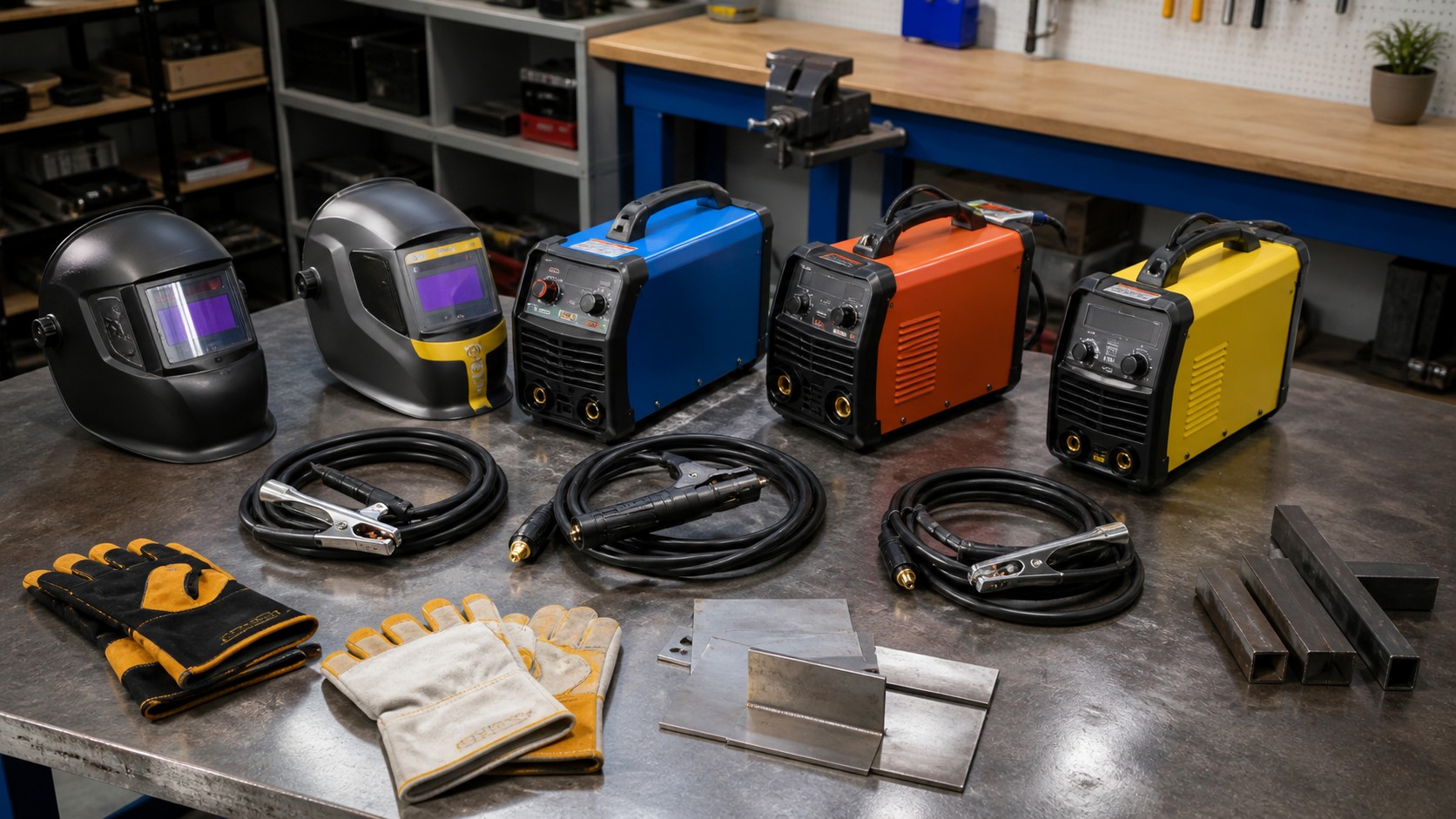
Process choice comes before brand preference. Flux-core can be convenient because it does not require shielding gas, while MIG with gas often gives cleaner indoor results. Stick welding is rugged and useful, but it asks more coordination from a new welder. Multi-process machines can be smart when the beginner will genuinely use the flexibility.
Power limits are easy to overlook until the welder trips a breaker or performs poorly. A small machine may run on a household circuit, but the outlet, breaker, cord, and duty cycle still matter. Dual-voltage machines can be useful if the workspace may improve later. Buying power the garage cannot support is not a bargain.
Controls should help the beginner learn cause and effect. Clear voltage and wire-speed adjustments make bead changes easier to understand. A stable wire feed matters more than decorative features. When every control has a visible purpose, practice feels less random.
Stick welding can be attractive because it needs no shielding gas and handles outdoor work well. It also requires striking and maintaining an arc with a consumable electrode, which can frustrate some beginners. That does not make it a bad choice. It means the learner should choose it because the projects call for it, not because it sounds tougher.
Check Power Before Comparing Prices
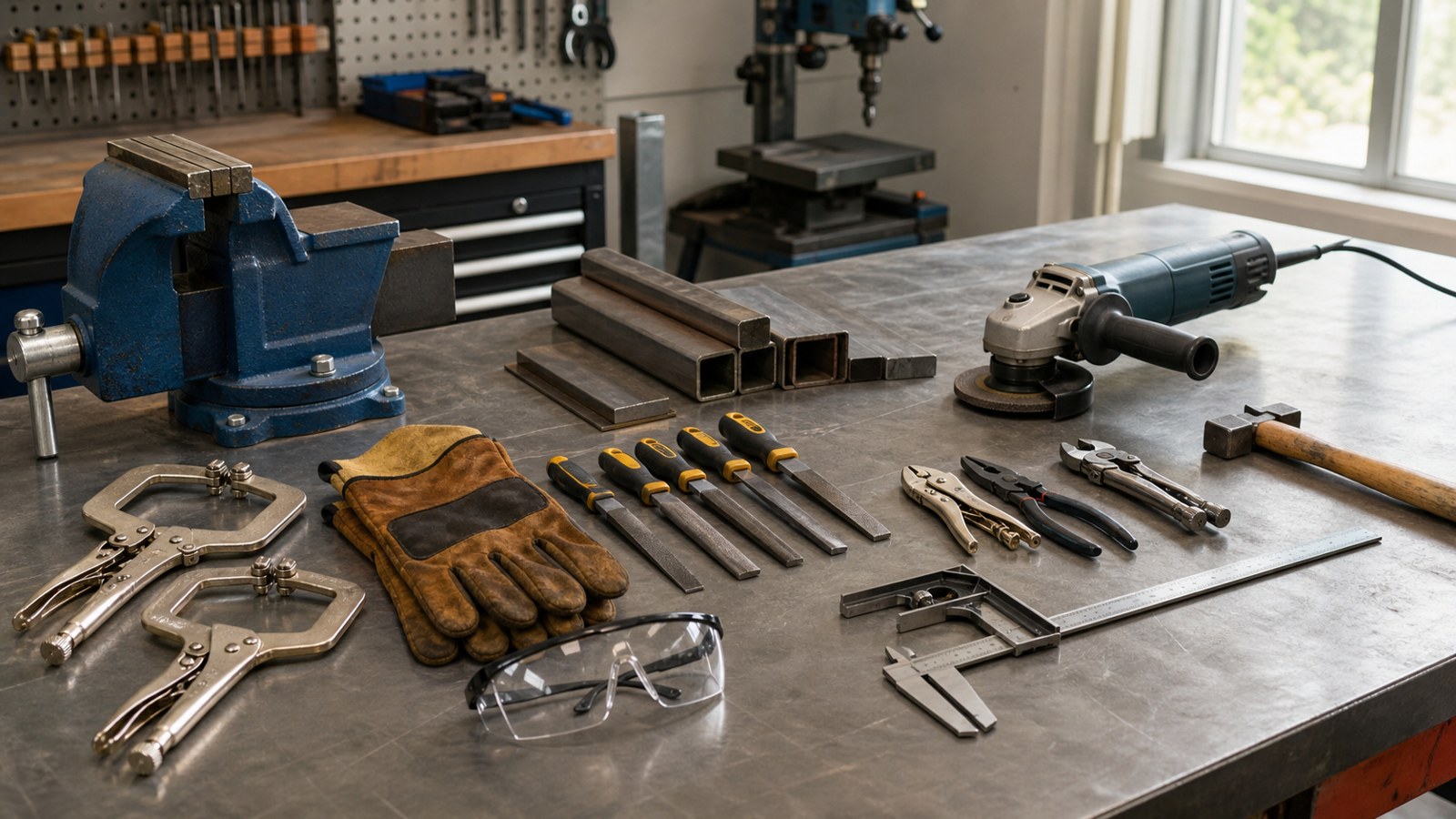
The machine is only part of the first purchase. Helmet, gloves, jacket, clamps, brush, pliers, consumables, practice metal, and fire protection all belong in the budget. A cheap welder paired with poor safety gear is not truly cheap. The whole setup has to be usable from the first session. When in doubt, read the manual before buying if it is available online. The manual often reveals circuit requirements, setup steps, duty-cycle limits, and consumable sizes more clearly than a sales page.
Portability is useful, but stability matters too. A lightweight welder is easier to store and move, yet cables, gas bottles, and metal still need a safe layout. A cart can make a small machine feel much more practical. The setup should encourage practice instead of creating a mess every time.
Look for Controls That Teach Cause and Effect
Consumables and support should be checked before buying. Contact tips, wire, rods, drive rolls, liners, and replacement parts need to be available without a scavenger hunt. Beginner welders learn by repeating, and repetition uses supplies. A machine with common consumables is easier to keep running. Control quality matters most when something goes wrong. If the bead changes after a small adjustment, the beginner can learn from the machine. If the feed surges, the knobs are vague, or the chart is unreliable, practice becomes guesswork. A first welder should make cause and effect easier to see.
Budget for the Gear Around the Machine
Features should not replace practice. Digital displays, synergic settings, and multi-process labels can be helpful, but they cannot teach puddle control by themselves. A beginner still needs clean metal, consistent technique, and honest inspection. The best feature is the one that makes those habits easier. This is also where used gear can become misleading. A low price may look attractive until the missing helmet, bad leads, empty gas bottle, and worn consumables are added back into the total cost.
Output should match material thickness realistically. Too little power makes thicker material frustrating, while too much machine can be harder to control on thin stock. The expected projects should define the range. A first welder does not need to do everything; it needs to do the first year of learning well.
Protective gear should not be squeezed out by buying too much machine. A welder without a comfortable helmet, gloves, clamps, brush, and fire extinguisher is not ready for practice. Budgeting for the whole setup may lead to a smaller machine, but a better first month. Learning depends on being properly equipped.
Compare Portability With Stability
Ventilation and fire control are part of machine selection because they affect where the welder can be used. Gas shielding, flux-core smoke, grinding dust, sparks, and extension cords all shape the workspace. A machine that only works safely in conditions the home cannot provide is the wrong machine. Practical ownership begins with the room. Buying for the first year keeps the decision grounded. Most beginners need a machine that supports practice, simple joints, and noncritical projects before anything ambitious. Upgrade paths are useful, but only after the basics become repeatable. The first machine should remove friction, not create a second hobby of troubleshooting.
The best beginner welding machine is the one that gets used safely and often. It fits the outlet, supports the chosen process, has understandable controls, and leaves enough budget for protective gear. It may not be the most powerful choice. It is the choice that lets learning continue.
Think About Consumables and Support
Parts availability is not exciting, but it affects every practice session. A welder that uses uncommon tips, liners, or drive rolls can become frustrating when a simple consumable wears out. Check what local suppliers and major online stores carry before buying. Beginner momentum depends on being able to fix small problems quickly. Common consumables also make practice cheaper. When tips, nozzles, wire, and liners are easy to replace, the beginner is less tempted to keep using worn parts that make the machine behave poorly.
Do Not Let Features Replace Practice
Helpful features are the ones that reduce confusion while preserving learning. A chart, clear polarity access, stable feed, and predictable arc are more useful than decorative complexity. Automated settings can provide a starting point, but the beginner still needs to understand what changed. A machine should support practice rather than replace attention.
Reviews should be read for patterns, not single dramatic opinions. Repeated complaints about feed jams, poor clamps, overheating, or unavailable parts deserve attention. Repeated praise for clear setup and stable output is more meaningful than one impressive feature. Buyer research should focus on ownership, not just unboxing.
Warranty and support matter because beginners can mistake machine problems for technique problems. A responsive seller or manufacturer helps separate user error from actual defects. That support can save weeks of frustration. It also makes a first purchase feel less risky.
Some automated features can still help when they are transparent. A suggested starting point for voltage and wire speed can save time if the user can then fine-tune manually. The danger is relying on automation without understanding the bead. Beginners should use features as guides, not substitutes for observation.
Match Output to Metal Thickness
Metal thickness should be translated into real projects before comparing output. Thin auto-style sheet, small furniture frames, farm repairs, and practice coupons are not the same workload. A machine that fits one may struggle with another. Honest project planning keeps the purchase grounded. A realistic output range also protects expectations. If a small machine is bought for light practice, it can be excellent within that role even if it is not suited to thick structural work.
Duty cycle should be considered even for learners because practice creates repetition. A beginner may weld short beads, chip or brush, then weld again many times in a session. If the machine overheats constantly, learning rhythm breaks. Enough duty cycle keeps practice steady.
Plan for Ventilation and Fire Control
Ventilation can influence process choice. Flux-core is convenient outdoors or without gas, but it creates smoke and spatter that must be managed. MIG with gas can be cleaner indoors, yet airflow that is too strong can disturb shielding. The workspace should support the process rather than fight it.
Buy for the First Year of Learning
The first year should include practice, small repairs, and noncritical projects. It does not need to include every metal process a person might someday try. Buying for realistic learning keeps the budget available for gear, consumables, and instruction. A balanced setup is more useful than a machine that consumes the whole budget.
Used machines can be worthwhile when they are complete, testable, and supported by available parts. They can also hide worn leads, poor feed systems, or missing accessories. Beginners should be careful because they may not yet know what normal performance feels like. A clean, supported machine is usually worth paying for.
A beginner-friendly machine should make setup repeatable. If every session starts with confusing menus, unstable feed, or improvised power, practice becomes discouraging. The machine should invite short, regular sessions. Consistency builds skill.
Instruction should be part of the budget when possible. A short class can help a beginner understand setup, puddle behavior, and unsafe project choices before bad habits settle in. Even one coached session can make a modest welder more useful. Knowledge often improves results more than a higher price tag.
Choose the Machine You Will Actually Use
The final choice should feel boring in the best way. It should fit the outlet, run the chosen process, accept common consumables, and leave enough money for safety gear and practice metal. A first welder does not need to impress everyone. It needs to help one beginner show up and improve. A machine that supports frequent short sessions will usually teach more than a more powerful unit that feels inconvenient to set up. That clarity matters more than owning extra capacity that never leaves the box.
When two machines look close, choose the one with clearer controls and better support. Beginners need understandable feedback more than theoretical capacity. The welder that makes practice simple will usually teach more than the welder with the longest feature list. Usefulness wins.
A sensible first welder leaves room to grow without demanding advanced skill on day one. It should handle common practice thicknesses, accept ordinary supplies, and make setup repeatable enough for regular use. If the machine encourages steady practice, it has done its job. The best purchase is the one that keeps learning alive.