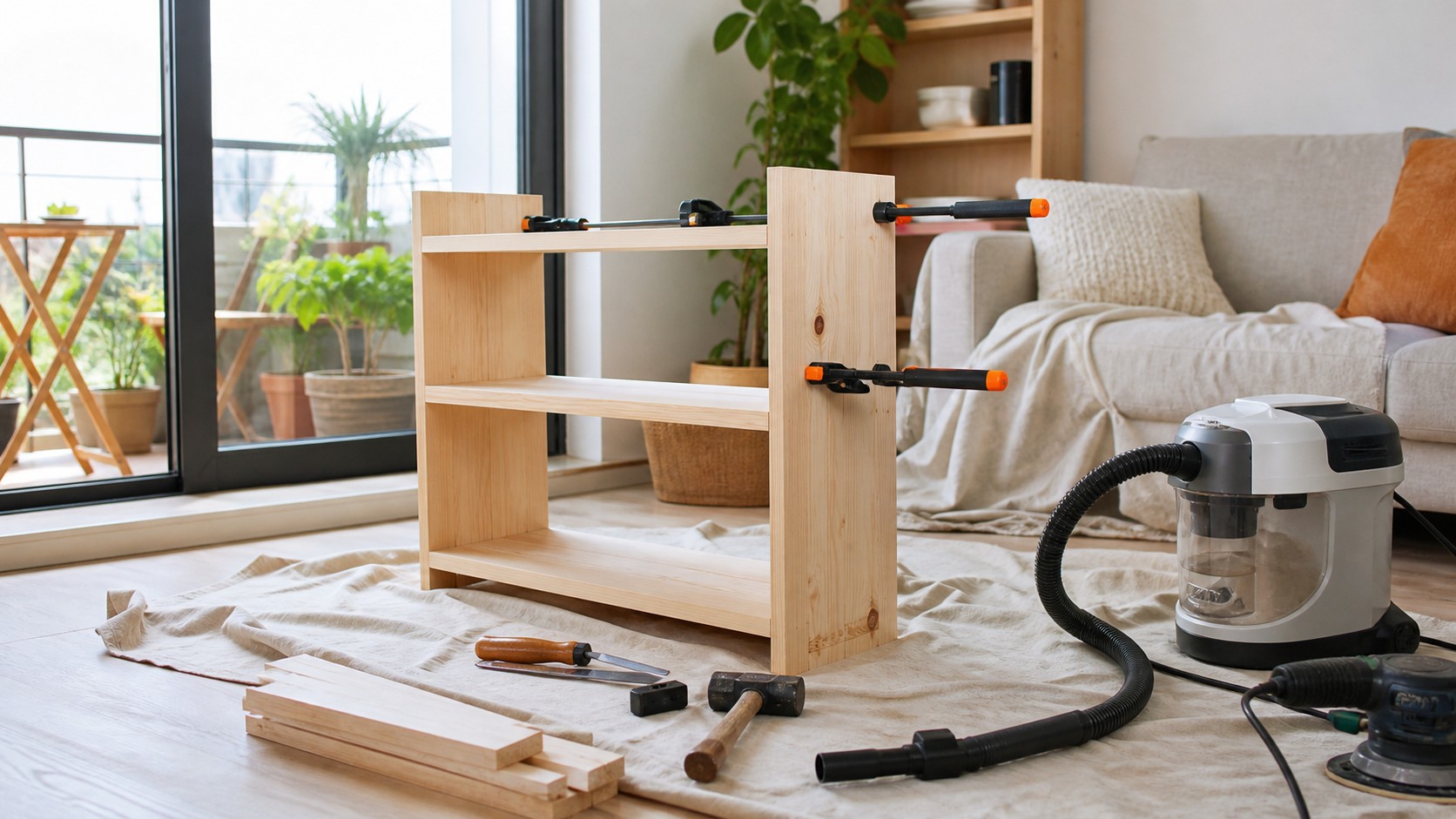
Scrap wood becomes useful when it is treated like material, not clutter. The best offcut projects start by sorting pieces by species, thickness, straightness, grain, and condition, then choosing a project small enough to make the scraps look intentional instead of patched together.
A short board, narrow strip, or leftover plywood panel can become a tray, shelf, hook rail, planter, picture ledge, small stool, cutting board, or shop jig. The difference between charming and messy is usually planning: clean edges, matched thickness, safe joinery, patient sanding, and a finish that fits how the piece will be used.
A: Keep clean, dry, stable pieces with usable length, safe surfaces, and a realistic future purpose.
A: Discard pieces with rot, pests, mystery coatings, loose knots, embedded metal, or severe movement.
A: Let the available size, thickness, species, and condition of the scrap guide the project.
A: Yes, if the contrast is repeated deliberately or unified with paint or a simple finish.
A: Only clean, suitable hardwood pieces with tight joints and a food-safe finish should be used.
A: Fasteners are often too close to the end or installed without a properly sized pilot hole.
A: Coasters, hooks, dividers, risers, ledges, spacers, setup blocks, and small trays.
A: Yes. Small projects are handled closely, so rough edges feel more obvious.
A: Sort by type and size, keep only useful pieces, and set a limit before the pile grows.
A: Check that the piece looks intentional, feels smooth, functions well, and uses safe material.
Sort the Scrap Before Choosing a Project
Start by laying the scraps out where they can be seen. Group solid wood by species if possible, then sort by thickness, width, length, and condition. Plywood, MDF, trim offcuts, framing lumber, and hardwood scraps should not all be treated the same.
This simple sort often suggests the project. Long narrow strips may become a picture ledge or hook rail. Short hardwood blocks may become coasters or a small tray. Flat plywood pieces may become drawer dividers, templates, storage bins, or shop organizers. Let the pile tell you what it can reasonably become.
Reject Unsafe or Unstable Pieces
Not every scrap is worth saving. Wood with rot, mold, insect damage, deep splits, unknown chemical exposure, heavy warping, embedded metal, or serious moisture problems should not become a home project. Reusing material is satisfying, but unsafe material is not a bargain.
Check reclaimed boards carefully before cutting. Old nails, screws, staples, and hidden grit can damage blades and create hazards. If the wood came from pallets, outdoor structures, treated lumber, or unknown sources, be cautious about where it is used and whether it is appropriate for indoor furniture, food contact, or children’s items.
Match the Project to the Wood
Small scraps work best when the project respects their limits. A thin strip should not become a load-bearing bracket. A bowed board should not become a shelf that needs to sit flat against a wall. A pretty hardwood offcut may be perfect for a handle, accent strip, or small box lid.
Think about strength, appearance, and use. Decorative projects can tolerate more variation than functional pieces. A wall hook rail needs dependable fasteners and a sound board. A plant stand needs stability. A tray needs joints that survive being lifted. Matching the job to the scrap keeps the result useful.
Mill Pieces to Consistent Thickness
Scrap projects often fail visually because pieces that almost match are forced together. A slight thickness difference can create awkward ridges, weak glue lines, or sanding problems. If you have access to a planer, jointer, table saw, or sanding setup, bring pieces into the same range before assembly.
If you do not have milling tools, choose projects that forgive variation. A rustic hook rail, plant marker set, wall art panel, or shop organizer can use mixed thickness more naturally than a tabletop. Intentional contrast looks better than accidental unevenness.
Use Grain Direction on Purpose
Grain direction changes how a small project looks. Boards laid randomly can make a piece look busy. Boards arranged with similar grain can make scraps feel like one designed surface. End grain, face grain, and edge grain each catch finish differently.
Before glue-up, rotate pieces and step back. Put dramatic grain where the eye should land. Hide plainer pieces near the edges or underside. If several species are mixed, repeat the colors in a pattern rather than placing one odd strip where it looks accidental.
Make Simple Cutting Boards Carefully
Hardwood scraps can become cutting boards, but only if the material is appropriate. Use clean, food-safe hardwoods, avoid treated or unknown wood, and keep soft, porous, or questionable scraps away from food projects. Glue should be waterproof and food-safe after curing.
Cutting boards need flat surfaces, tight joints, rounded edges, and a finish meant for food contact. They also need enough thickness to stay stable. If the scrap pile cannot provide safe material, make a serving tray, plant stand, or decorative board instead.
Build a Small Wall Shelf
A wall shelf is a good scrap project when you have one straight board and enough material for brackets or supports. Keep the shelf depth reasonable so it does not sag or pull on the wall. Sand the front edge well because that is the part people notice first.
Mounting matters more than the shelf board. Use studs, proper anchors, or suitable brackets for the load. A scrap shelf holding keys is different from one holding books or pottery. Small projects still need honest structure.
Turn Narrow Strips Into Picture Ledges
Picture ledges are forgiving because they use narrow pieces efficiently. A back strip, bottom ledge, and front lip can be made from trim or ripped scraps. The key is keeping the front lip straight and the corners clean.
Dry-fit the pieces before fastening. Pre-drill to avoid splitting thin stock. If the ledge will be painted, mixed species are less important. If it will be stained, test finish on each piece because different woods may absorb color very differently.
Make a Hook Rail or Entry Organizer
A straight board can become a hook rail for keys, hats, bags, aprons, or shop gear. This is one of the most practical scrap projects because the wood does not need to be wide. It does need to be sound, flat enough to mount, and strong enough to hold hardware.
Lay out hook spacing before drilling. Consider where studs are located and whether screws can be hidden behind hooks. A small shelf above the hooks can hold sunglasses or mail if the board is deep enough, but avoid overloading a narrow scrap just because it looks sturdy.
Use Plywood for Drawer Dividers
Small plywood pieces are excellent for drawer dividers, tool trays, craft storage, and cabinet organizers. Plywood is stable, flat, and easy to cut into strips. Even thin plywood can be useful when the dividers are not carrying heavy loads.
Measure the drawer carefully and leave a little clearance so the organizer can be removed. Sand exposed edges or cover them with edge banding if the piece will be seen often. A simple divider can make a drawer feel custom without using expensive material.
Build Coasters and Small Trays
Coasters are good for attractive hardwood scraps that are too short for larger projects. Keep thickness consistent and sand edges smooth. Add cork, felt, or rubber feet underneath so the coaster does not scratch a table.
Small trays can use leftover boards for sides and plywood for the bottom. The tray does not need complicated joinery, but it does need square assembly and comfortable edges. Handles can be cutouts, small pulls, leather strips, or shaped side pieces depending on the scrap available.
Make Plant Stands and Risers
Plant stands, monitor risers, candle platforms, and display blocks can all be made from scraps. These projects work well because they turn small boards into useful height. Stability is the main requirement.
Use wider feet, level surfaces, and strong joints. If the project will hold a plant, plan for water. Use a finish that resists occasional moisture, add a tray under the pot, and avoid placing damp soil directly on unfinished wood.
Save Clean Offcuts for Jigs
Some scrap belongs in the shop, not the living room. Straight plywood strips, square blocks, and hardwood scraps make excellent stop blocks, sanding blocks, drill guides, push sticks, spacers, clamping pads, and setup blocks.
Shop jigs may not be pretty, but they save time and improve accuracy. Label useful pieces with their thickness or purpose. A scrap that helps repeat a measurement can be more valuable than a decorative item made just to avoid throwing it away.
Use Glue-Ups With Restraint
Glue-ups can turn small pieces into larger panels, but they need preparation. Edges should meet cleanly, clamps should apply even pressure, and pieces should be arranged so movement and grain do not fight the project. Too many mismatched scraps can look chaotic.
Dry-clamp before adding glue. Check whether the panel stays flat. Wipe squeeze-out at the right time for the glue and finish you plan to use. A careful glue-up makes scrap look designed; a rushed glue-up makes it look rescued.
Choose Joinery That Fits the Scale
Scrap projects do not always need advanced joinery. Screws, brad nails, dowels, pocket holes, glue, splines, rabbets, and simple dados can all be appropriate depending on the piece. The joint should match the load and visibility.
For decorative items, hidden brads and glue may be enough. For shelves, stools, and organizers that carry weight, stronger joinery and better fastening matter. Do not use a weak joint just because the project is small.
Sand Like the Piece Matters
Sanding is where many scrap projects start to look finished. Remove saw marks, soften sharp edges, and blend glue lines. Work through grits instead of jumping straight to a fine paper that polishes over scratches.
Edges deserve special attention because people touch them first. A small roundover, chamfer, or hand-sanded edge can make a simple scrap project feel intentional. Be careful not to oversand plywood veneer or thin decorative faces.
Test Finish on Matching Scraps
Scrap wood is perfect for finish testing because extra pieces are already available. Try stain, oil, polyurethane, paint, wax, or clear finish on a cutoff before applying it to the project. Different species and grain directions can change color dramatically.
If the project mixes woods, clear finish may look better than stain. Stain can exaggerate differences and make glue marks obvious. Paint can unify mixed scraps, while oil or clear coat can celebrate the variety if the layout is balanced.
Paint When the Wood Is Mixed
Paint is not a defeat. It can turn mismatched scraps into a clean, unified piece. Painted hook rails, shelves, bins, picture ledges, and drawer organizers often look better than stained pieces made from unrelated leftovers.
Fill nail holes, sand edges, prime when needed, and use thin coats. Paint highlights sloppy corners and rough sanding just like clear finish does. A painted scrap project still deserves good prep.
Keep Hardware Proportional
Hardware can make or break a small project. Oversized handles, heavy hooks, bulky screws, or mismatched hinges can make a scrap piece look awkward. Choose hardware that fits the scale and use of the object.
Pre-drill pilot holes, especially near the end of small boards. Thin scraps split easily. If hardware screws are too long, replace them or add backing so they do not poke through the finished face.
Plan Around Wood Movement
Solid wood expands and contracts with humidity. Small projects move less than large tables, but movement still matters when boards are glued cross-grain, trapped in frames, or fastened to plywood. Ignoring movement can cause cracks or cupping.
For simple scrap projects, avoid wide cross-grain glue joints unless the design allows movement. Keep panels modest, use appropriate fasteners, and let wood acclimate if it came from a damp garage or outdoor pile. Stable scraps make better finished pieces.
Make Gifts That Do Not Feel Rushed
Scrap wood can become thoughtful gifts: recipe card holders, phone stands, candle blocks, small trays, ornaments, bookends, plant risers, wall hooks, and keepsake boxes. The trick is editing the idea until the piece can be made cleanly.
A small gift should not look like leftovers glued together at the last minute. Choose the best pieces, align grain, soften edges, and finish all visible surfaces. Personal touches such as engraving, paint color, or custom sizing work best after the basic craftsmanship is solid.
Store Scraps With a Limit
Scrap piles can become overwhelming. Keep pieces that are dry, straight, useful, and large enough for likely projects. Let go of tiny, twisted, dirty, or unknown pieces that only create clutter. A managed scrap bin is inspiring; an uncontrolled pile is a trip hazard.
Sort by size or type so the next project starts quickly. Short hardwoods, plywood panels, trim pieces, and jig material can each have a place. When the bin fills, make something, donate usable pieces, or discard the material that no longer earns storage space.
Final Scrap Wood Project Review
Scrap wood projects work best when the material is selected, not simply rescued. Sort the pile, reject unsafe pieces, match the project to the size and strength of the wood, and use grain, sanding, hardware, and finish to make the result feel intentional.
The goal is not to use every last sliver. The goal is to turn good leftovers into pieces that are useful, attractive, and built well enough to stay in use. When scrap is chosen with care, a small offcut can become one of the most satisfying projects in the shop.