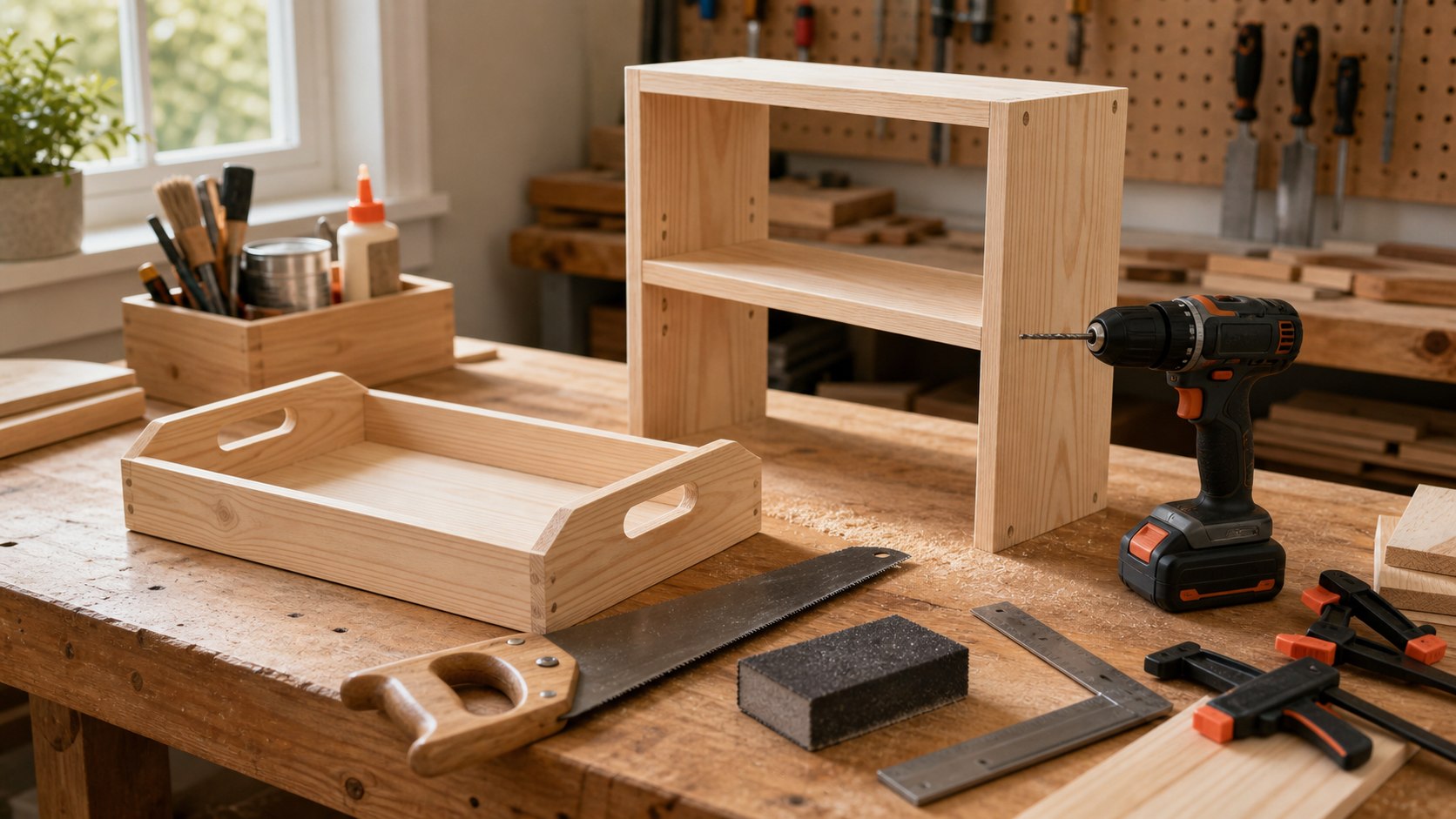
Small-space woodworking works best when the project earns every inch it occupies. In an apartment, compact bedroom, tight entry, narrow kitchen, or shared work area, a good build should add storage, surface area, seating, or organization without making the room harder to move through.
The most useful projects are shallow, vertical, foldable, stackable, movable, or multi-use. A floating nightstand, fold-down desk, under-bed box, slim console, corner shelf, nesting stool, or behind-door organizer can make a room work better without adding visual weight.
A: Measure traffic paths, door swings, furniture clearances, outlets, and the item you need to store.
A: Floating nightstands, corner shelves, sofa trays, under-bed boxes, slim consoles, and wall drop zones.
A: Shallow enough that people can pass comfortably and doors, drawers, and chairs still work.
A: Only if allowed and mounted with fasteners that match the wall, load, and repair expectations.
A: Use thinner profiles, open sides, simple hardware, and finishes that blend with the room.
A: When setup, support, closing, and nearby clearance are easy enough for daily use.
A: Keep it low, smooth, easy to pull, and simple to clean around after it is loaded.
A: Yes, if the scrap size fits the room instead of forcing chunky proportions.
A: Do not build deep storage that fixes clutter but makes the room harder to move through.
A: Walk the room, open doors and drawers, load the piece, and use it for a few days.
Start With the Traffic Path
Before choosing a project, walk through the room and notice where feet, doors, drawers, chairs, cabinet fronts, and closet doors need space. Small rooms often fail because the new piece projects too far into the path. A shelf, bench, rack, or table becomes frustrating if people brush against it every time they pass.
Use painter’s tape, scrap cardboard, or a stack of boxes to mock up the footprint. Check the route with the door open, a chair pulled out, laundry in hand, and bags sitting where they usually land. The project should solve a problem without becoming the next thing everyone has to dodge.
Build Up the Wall First
Vertical storage is usually the easiest win in a small room. Wall shelves, peg rails, shallow cabinets, picture ledges, folding hooks, and hanging organizers use space that would otherwise stay empty. They also keep the floor clear, which helps the room feel less crowded.
Wall pieces need careful mounting. Find studs when possible, choose anchors rated for the wall and load, and be realistic about plaster, hollow doors, tile, and rental restrictions. A narrow shelf loaded with books, tools, or jars can become heavier than it looks.
Keep Projection Depth Shallow
Projection depth is the distance a project sticks out from the wall. In small rooms, that measurement often matters more than total width. A shelf that is thirty inches wide and six inches deep may work better than a smaller cabinet that projects fourteen inches into a walkway.
Shallow designs are especially useful in entries, bathrooms, hallways, kitchens, laundry areas, and bedrooms. Keys, mail, spices, towels, books, plants, charging cords, and grooming supplies rarely need deep furniture. The shallower the piece, the easier it is to live around.
Floating Nightstand
A floating nightstand can free floor space beside a bed and make a small bedroom feel more open. The design can be as simple as a wall-mounted box, a ledge with a small drawer, or a shelf with a raised lip for a phone, glasses, and book.
Mounting height matters. Set the top close to mattress height and leave room for blankets to move. If the nightstand will hold a lamp, water glass, charger, or stack of books, anchor it into studs or use hardware designed for the wall. For rentals, a narrow freestanding nightstand may be a better compromise.
Fold-Down Desk
A fold-down desk is useful in a bedroom, hallway, kitchen nook, or studio apartment. It gives a temporary work surface without leaving a full desk in the room all day. A simple version uses a wall panel, folding brackets, and a shallow ledge for paper or a laptop charger.
The desk must close cleanly and open at a comfortable height. Check knee room, chair clearance, outlet access, and whether the wall can support the load. A fold-down desk should feel stable enough for typing and writing, not just good enough for a photo.
Corner Shelves
Corners often waste space because standard furniture does not fit them well. Simple corner shelves can hold plants, towels, books, small speakers, baskets, or display pieces without taking much floor area. Triangular shelves, rounded shelves, and L-shaped ledges can all work depending on the corner.
Keep the shelf edges friendly. In a narrow room, rounded front corners help the project feel softer and reduce shoulder bumps. Paint shelves close to the wall color when you want them to disappear, or use a warm wood tone when the corner needs a little character.
Behind-Door Organizer
The space behind a door can hold cleaning tools, scarves, hats, pantry overflow, wrapping paper, craft supplies, bathroom extras, or small sports gear. A narrow wooden rack with rails, hooks, pegs, or shallow bins can be built quickly and sized around the door swing.
Measure clearance before cutting. The organizer must not hit trim, switches, towel bars, wall hooks, or furniture when the door opens. If mounting to a hollow-core door, use hardware meant for that material and keep the load light enough that the door still moves smoothly.
Under-Bed Storage Box
Under-bed space is valuable in small bedrooms and apartments. A shallow box on casters or felt glides can store shoes, linens, seasonal clothes, hobby supplies, or extra cables. A plywood box with a low front pull is often all the project needs.
Measure the clear height under the bed before designing the box. Include caster height if using wheels. Smooth edges matter because the box will be pulled in and out often. A lid keeps dust down, but an open box is easier for daily items that need quick access.
Slim Entry Console
A slim entry console creates a landing place for keys, mail, sunglasses, and small bags without crowding the doorway. The design should be narrow, stable, and easy to clean around. In a very tight entry, a wall-mounted ledge may work better than a table with legs.
Keep the top shallow and add hooks, a lower rail, or a small shelf only when those features do not block the path. Entries are high-traffic areas, so rounded edges and solid anchoring are worth the extra effort.
Nesting Stools
Nesting stools provide extra seating or small surfaces without permanently filling the room. They can slide under each other, tuck beneath a console, or move between rooms as needed. The construction can stay simple: square tops, straight legs, and stretchers for stability.
Because people may sit on them, strength matters. Use sound material, secure joinery, and test for wobble before finishing. A nesting stool should feel light enough to move but sturdy enough to trust when someone uses it as a seat.
Rolling Crate or Bin
A rolling crate can store toys, blankets, tools, books, pantry overflow, or craft supplies. It works under benches, beside sofas, inside closets, or below open shelving. Simple side panels, a bottom, handles, and small casters make a practical weekend build.
Choose casters based on the floor and expected weight. Hard wheels can scratch some surfaces, while tiny casters struggle on rugs. If the crate will be moved often, round the handles and soften the corners so daily use feels comfortable.
Small Bathroom Shelf
Bathrooms need storage, but many cannot handle deep cabinets. A narrow shelf over the toilet, beside the mirror, above a towel bar, or near the door can hold folded towels, jars, extra paper, or daily toiletries. Moisture resistance matters more here than it does in a dry bedroom.
Keep shelves easy to wipe and avoid placing unfinished wood where it will be soaked repeatedly. If the room has poor ventilation, choose a finish and material that can handle humidity, and leave enough air around stored items for drying.
Window Ledge Plant Shelf
A plant shelf can turn a bright window into useful vertical space without adding another floor stand. The shelf might sit across brackets, hang from side supports, or fit into the window recess. It is a simple project, but the location adds a few design checks.
Think about water, sunlight, weight, and curtain movement. A shelf full of damp pots is heavier than a shelf with a few small decorations. Use a finish that tolerates moisture, add trays under plants, and make sure the shelf does not block the window from opening when that matters.
Sofa Arm Tray
A sofa arm tray can replace a side table in a room where there is no space for one. It slips over the arm of a couch or chair and creates a small surface for a drink, remote, phone, or book. The best versions fit the actual arm instead of relying on generic dimensions.
Measure the width, height, and shape of the sofa arm. Add felt or cork to protect fabric or leather. Keep the tray stable without making it hard to remove. If the arm is rounded or soft, a flat tray may need a wider base or underside cleats to stay in place.
Wall-Mounted Drop Zone
A drop zone collects the small things that otherwise scatter across a counter. It can include a mail slot, key hooks, a small shelf, a charging notch, or a pocket for sunglasses. In a small home, the drop zone should be compact enough to live near the door without turning into clutter storage.
Design it around actual habits. If mail piles up, add one vertical slot rather than a deep bin. If keys disappear, give them a hook that is visible from the doorway. If devices charge there, plan cable routes before mounting the piece.
Choose Visual Lightness
In a small room, the project should not feel heavier than the problem it solves. Open sides, slim legs, raised bases, wall color paint, rounded corners, and simple hardware can help a wooden piece feel lighter. Dark bulky boxes can make a tight room feel smaller.
Visual lightness does not mean weakness. The structure still needs to support its load. The goal is to hide mass where it is not needed and keep the shape easy for the eye to move past.
Build for More Than One Use
Small-space projects become more valuable when they do two jobs. A bench can include shoe storage. A tray can become a small table. A shelf can include hooks. A fold-down desk can hide paper storage inside. Multi-use design reduces the number of separate pieces the room needs.
Do not add features just because they fit on paper. Each function should be easy to reach, easy to clean, and easy to understand. A multi-use piece that is awkward in every mode is not a space saver.
Think About Moving and Rentals
Small-space living often means apartments, rentals, shared rooms, or future moves. Projects that can be removed, disassembled, or patched cleanly may be more useful than permanent built-ins. Knockdown hardware, screws instead of glue in selected places, and modular dimensions can help.
For rentals, avoid relying on heavy wall loads unless the lease and wall construction allow it. Freestanding slim pieces, over-door racks, light wall shelves, and furniture that anchors discreetly may be safer choices.
Use Scraps Carefully
Small projects are good candidates for scrap wood, but the pieces still need to be straight, dry, and appropriate for the use. Warped scraps can make a tiny shelf or stool harder than it needs to be. Mismatched thicknesses can also make a simple project look messy.
Sort the scrap pile before designing around it. Use the best faces where they will be seen, and save rough pieces for spacers, hidden cleats, or shop projects. A small build gives every flaw a bigger stage, so material selection still matters.
Finish to Blend, Not Shout
Finish can make a compact project feel larger or smaller. Paint that matches the wall can make shelves recede. A light stain can keep wood warm without looking heavy. A soft sheen usually hides small wear better than high gloss.
Hardware should be simple and proportional. Oversized handles, thick brackets, and high-contrast details can make a small project look heavier. The best finish lets the piece help the room without demanding all the attention.
Final Small-Space Woodworking Review
Easy woodworking projects for small spaces should add function without stealing movement. Start with the traffic path, use walls and corners, keep depth shallow, and choose builds that store, fold, nest, roll, or serve more than one purpose.
Floating nightstands, fold-down desks, corner shelves, behind-door organizers, under-bed boxes, slim consoles, nesting stools, rolling crates, sofa trays, and bathroom shelves all work because they respect the room. Build light, anchor safely, finish simply, and let the project make the space easier to live in.