Hidden doors and secret rooms work best when the design feels natural from the visible side and safe from the hidden side. A bookcase, mirror, wall panel, cabinet face, or slat wall can create the surprise, but the project still depends on structure, hardware, clearance, ventilation, lighting, and an exit that makes sense.
The best build starts with the purpose of the room. A hidden office, storage room, wine room, play space, media closet, reading nook, or secure storage area will each need a different door weight, latch style, access plan, and finish detail.
A: Establish the space's purpose, users, and nonnegotiable functions before selecting its visual disguise.
A: No. Kit suitability is only one issue alongside structure, services, access, and applicable requirements.
A: Record rough framing, finished jambs, moving-face dimensions, operating travel, and actual clear passage separately.
A: Yes when it changes mass, thickness, projection, attachment, or operating clearances.
A: Do not create that risk. Obtain the required safe-exit design and local review for the actual use.
A: Coordinate them with appropriate design rather than closing required air paths to make the room quieter.
A: No. Security, storm, or other protective performance needs its own qualified specification and verification.
A: Preserve the prescribed access to adjustments, service components, and equipment that may need inspection or replacement.
A: Check intended-load movement, release, usable access, lighting, environmental provisions, service routes, and required closeout information.
A: New contents, furnishings, controls, or room use can affect earlier checks and should not silently invalidate the working design.
Start With the Room’s Purpose
The hidden room should have a clear job before the door design is chosen. A storage room needs easy access and sturdy shelving. A home office needs lighting, outlets, ventilation, and enough privacy to work. A playroom needs child-safe hardware and a simple way out. A wine room needs climate control and moisture planning.
Purpose controls the rest of the project. A rarely used storage space can tolerate a slower latch or heavier disguise. A daily office or pantry needs a door that opens easily and reliably. Design the secret around real use, not only the reveal moment.
Choose a Disguise That Belongs
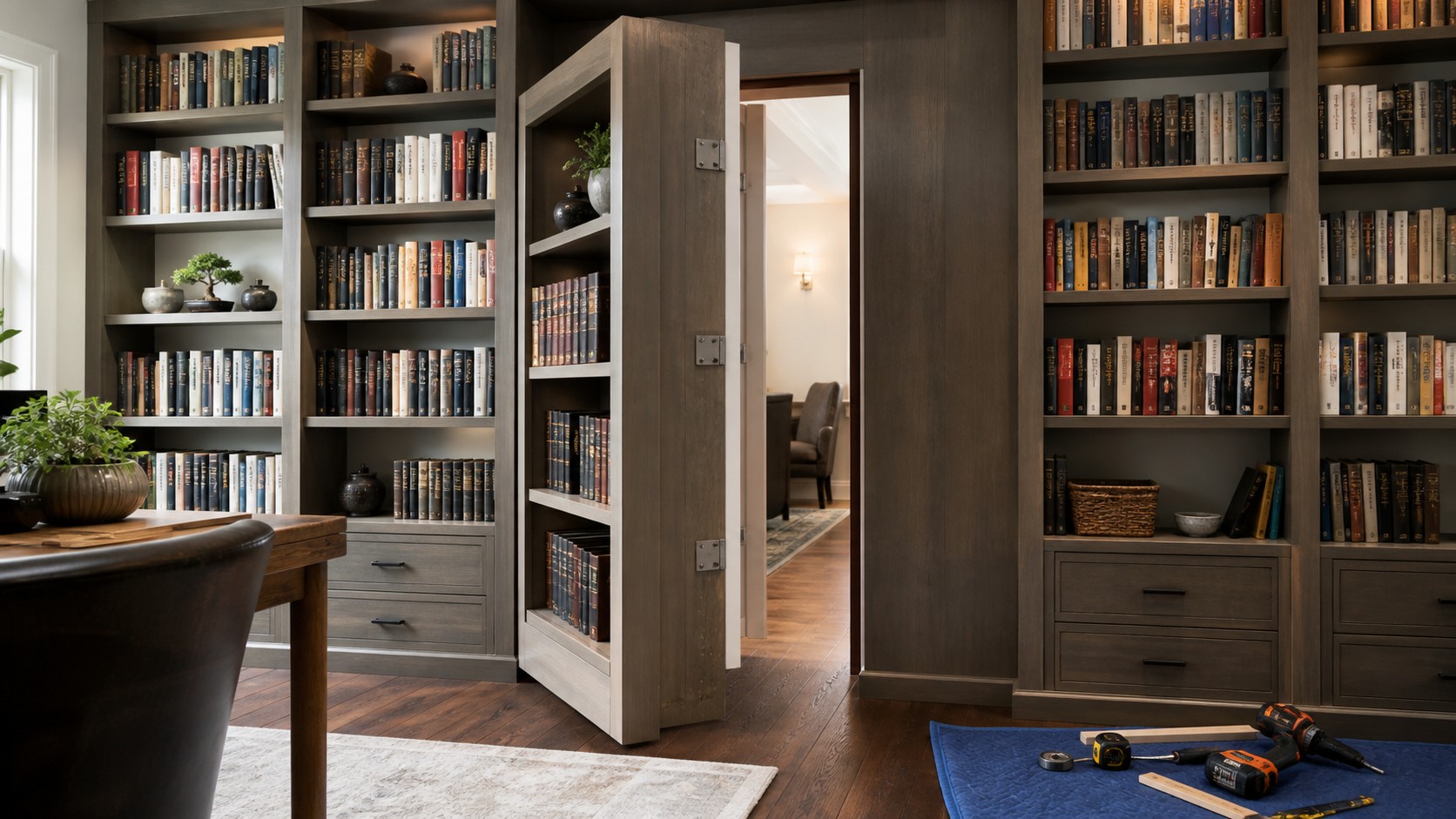
The most convincing hidden doors look like they were always supposed to be there. Bookcases fit libraries, offices, dens, and hallways. Cabinet faces fit kitchens, mudrooms, laundry rooms, and built-ins. Mirrors fit bedrooms, gyms, and dressing areas. Wall panels fit modern rooms and formal halls.
A disguise that does not belong can draw attention. A random bookcase on an otherwise empty wall may look suspicious. A panel door in a room with no other paneling may feel forced. Let the existing architecture suggest the disguise.
Confirm the Wall and Opening
Measure the opening, wall thickness, floor level, ceiling height, trim layout, and nearby obstacles. Check whether the wall is load-bearing or contains utilities. A hidden door is still a doorway, and the opening needs proper framing and support.
If the wall is structural, get the replacement support designed before removing framing. If plumbing, wiring, ducts, or low-voltage cables run through the area, plan relocations before finish carpentry begins. Hidden doors become expensive when hidden systems are discovered late.
Estimate the Finished Door Weight
Hidden doors can become heavy quickly. Shelves, books, mirrors, trim, cabinet fronts, tile, slats, and hardware all add load. Estimate the finished weight, not the empty panel. The hardware and framing must support the real finished door.
Heavy doors may need pivot hardware, specialty hidden-door kits, reinforced framing, or floor-supported systems. Ordinary hinges that work on a bedroom door may sag under a loaded bookcase or mirrored panel.
Select Hardware Early
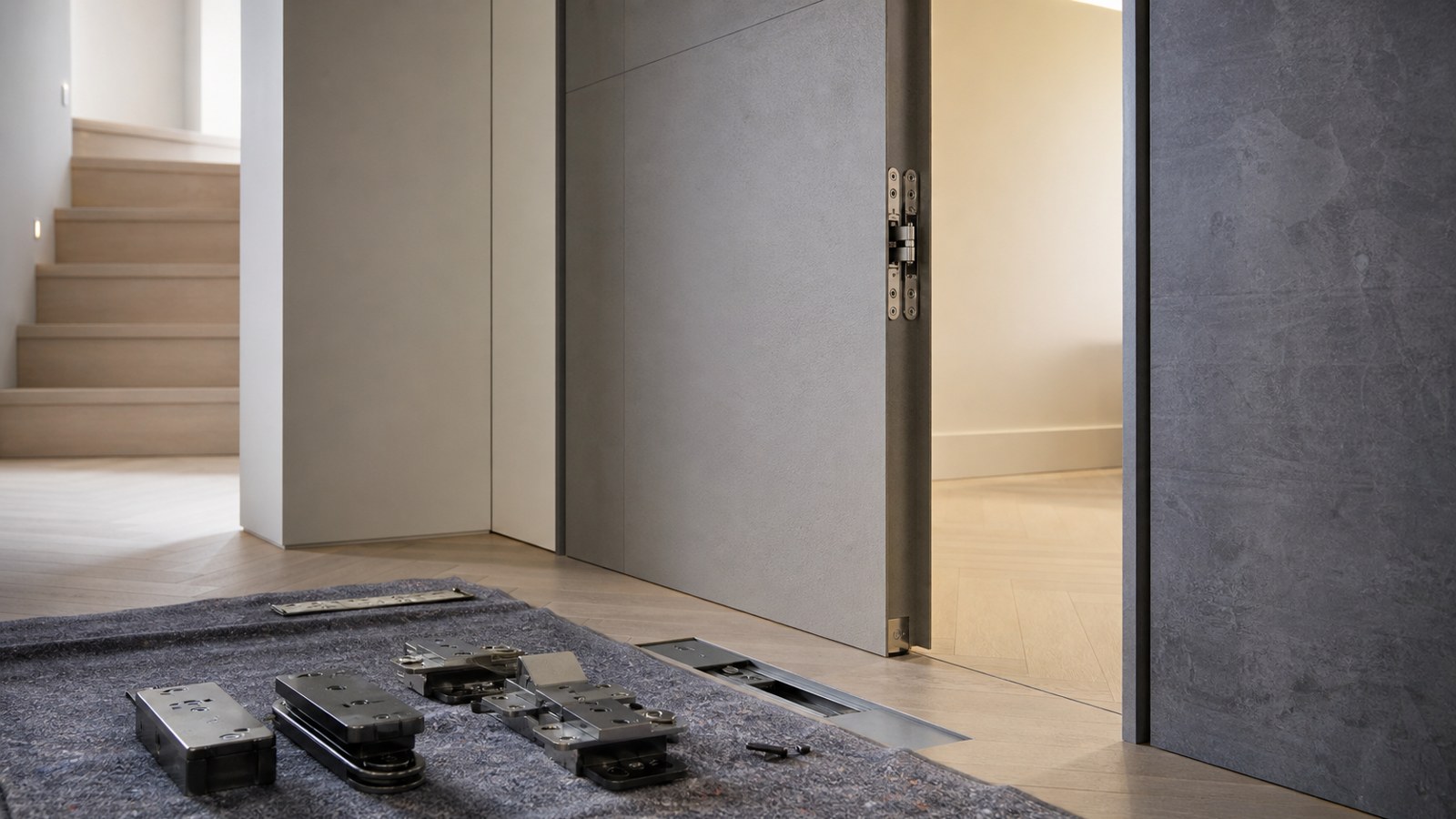
Hardware should be chosen before the door is built. Pivot hinges, offset pivots, concealed hinges, bookcase-door kits, sliding tracks, and latch systems all have different geometry and clearance needs. The hardware controls the swing path and reveal gaps.
Use templates and follow the manufacturer’s instructions. Small layout errors can create rubbing, sagging, noisy latches, or a door that will not close flush. Good hardware makes the hidden part feel effortless instead of fragile.
Plan the Swing Path
Draw the door swing on the floor with tape. Include furniture, rugs, baseboards, nearby doors, switches, outlets, and traffic paths. A hidden door that cannot open fully will frustrate anyone using the room behind it.
In-swing and out-swing designs each have tradeoffs. An out-swing bookcase may be easier to hide from the main room, while an in-swing door may protect the visible side. Sliding systems can save swing space, but they need wall room and track support.
Make the Hidden Room Safe
The hidden room needs a reliable way out. A clever latch is not enough if someone can get stuck inside. Interior releases, simple handles, magnetic catches, or accessible mechanical latches may be needed depending on the room’s use.
Safety is especially important for children’s spaces, closets, secure rooms, and any room without another exit. The door should open from inside without secret knowledge, excessive force, or special tools.
Think About Ventilation
Secret rooms can become stale, humid, hot, or uncomfortable if airflow is ignored. Storage rooms may need only basic air movement, but offices, play spaces, wine rooms, and media rooms require more thought. Electronics and people both create heat.
Ventilation can be handled through existing HVAC, transfer grilles, return paths, dedicated fans, or climate systems depending on the space. Do not seal a room so tightly that it becomes uncomfortable or unsafe.
Plan Lighting and Power
A hidden room should not feel like an afterthought once the door opens. Plan lights, switches, outlets, charging locations, equipment power, and any low-voltage wiring before walls close. Battery lights may work for occasional storage, but daily rooms need proper lighting.
Switch placement matters. The room should be easy to light from the entry, and the door area should be safe to use in the dark. If the hidden room contains equipment, plan cable routing and service access too.
Control the Reveal Lines
Reveals are the small gaps around the moving door. Hidden doors need gaps wide enough to prevent rubbing but planned well enough to look intentional. Align reveals with shelf edges, cabinet lines, trim joints, slats, panel grooves, wallpaper seams, or shadow lines.
A random crack around a door gives away the opening. A reveal that belongs to the room’s pattern disappears more easily. Plan the visual lines before cutting trim or building the door face.
Use Built-Ins When Depth Allows
Built-ins are one of the most natural ways to hide a door. Bookcases, pantry cabinets, wardrobes, lockers, media walls, and storage panels can all disguise openings. They also add function to the visible room.
The challenge is depth and weight. Built-ins need enough room to look believable and enough support to move safely. Keep shelves realistic and avoid loading a moving door like a permanent wall cabinet unless the hardware is rated for it.
Use Flat Panels in Tight Spaces
Flat hidden doors work well where depth is limited. A flush panel, wallpapered door, mirror, art panel, or wainscot section can hide an opening without projecting into the room. These designs are useful in halls, bedrooms, powder rooms, and modern spaces.
Flat designs require clean alignment. Uneven drywall, crooked trim, or thick paint buildup can make the door obvious. The simpler the disguise, the more careful the execution needs to be.
Design the Latch Around Daily Use
A latch should fit how often the room is used. A rarely used storage room can have a concealed push latch or hidden pull. A daily office, pantry, or closet needs a latch that opens quickly without turning every trip into a puzzle.
Test the latch before final trim. Try it with one hand, from both sides, and in low light. A hidden door should feel smooth and intentional, not like something that might trap or annoy the user.
Do Not Hide Required Access
Some walls and rooms contain service panels, valves, cleanouts, HVAC equipment, electrical panels, network gear, or plumbing access. These can be hidden visually, but they must remain reachable and code-compliant.
Do not bury service access behind a door that needs tools, heavy unloading, or secret knowledge to open. Future repairs should still be possible. Hidden should not mean inaccessible.
Match the Finish to the Room
The moving door and surrounding fixed surfaces should share the same finish logic. Paint sheen, stain color, trim profile, hardware color, and texture should match or intentionally coordinate. A hidden door often fails visually because the moving section is finished differently from the wall around it.
Finish buildup can affect clearance. Primer, paint, stain, edge banding, and trim thickness can turn a clean reveal into a rub point. Test movement after finish coats before loading shelves or attaching delicate details.
Use Mockups Before Final Building
Mock up the opening, swing, reveal lines, and latch location before committing. Painter’s tape, cardboard, scrap trim, and temporary blocks can answer questions quickly. This is especially useful for bookcases, slat walls, and cabinet-face doors.
Mockups reveal problems that drawings miss. You may discover that a sofa blocks the swing, a baseboard needs a break, a latch is too low, or the reveal line looks awkward from the main seating area.
Plan for Maintenance
Hidden doors may need future adjustment. Seasonal movement, settling, hinge wear, shelf loading, and finish buildup can change the way the door closes. Keep access to adjustment screws and save hardware instructions.
Document the hardware model, paint colors, stain, latch type, and any hidden blocking. A secret door should not become a secret from the person who has to repair it later.
Budget for the Whole System
The cost of a hidden door includes more than the face material. Hardware, framing, trim, finish work, electrical, ventilation, lighting, latch hardware, and repair work can all add up. The more invisible the door needs to be, the more precision it usually requires.
Spend money where it affects function: rated hardware, straight material, proper framing, safe latches, and clean finish work. Decorative features can be simplified, but the door must move well and stay safe.
Design Storage Rooms for Access
Storage is one of the most common uses for a secret room, but hidden storage still needs practical access. Shelves should not block the door swing, stored items should not bury the release, and the room should have enough light to find things without dragging everything into the hall.
If the room stores seasonal items, tools, documents, or valuables, plan the shelf depth and walking space before building the door. A secret storage room that is too cramped becomes a place where things disappear rather than a useful part of the house.
Design Offices for Comfort
A hidden office needs more than a clever entrance. It needs comfortable lighting, outlets, ventilation, internet access, desk clearance, and enough sound control to work. If the door is used several times a day, prioritize smooth hardware and a simple latch.
Think about video calls, background noise, and how the door looks from inside the room. A hidden office should feel like a real workspace, not a closet with a desk squeezed into it.
Design Play Spaces With Extra Safety
Secret playrooms can be delightful, but child safety should lead the design. Avoid pinch points, heavy doors that swing too quickly, complicated latches, and doors that cannot be opened from inside. Lighting and ventilation should be obvious, not optional.
Use durable finishes and hardware because children will test every part of the space. If the room is under stairs or in a tight area, check headroom, floor transitions, and emergency access carefully.
Design Media Rooms and Equipment Closets for Heat
Media gear, routers, game consoles, amplifiers, and servers can create heat inside a hidden room or cabinet. A secret media closet needs airflow, cable routing, and service access. Hiding equipment is useful only if the equipment can keep working safely.
Leave room behind components, avoid sealed boxes around hot electronics, and plan how cables will be changed later. A hidden equipment room should make the house cleaner, not make every repair harder.
Coordinate With Security Carefully
Some homeowners want hidden rooms for valuables or privacy. If security matters, the door design should be paired with realistic expectations. A hidden entrance can delay discovery, but it is not the same as a rated safe, vault, or code-designed safe room.
For serious security, talk with qualified professionals about reinforced construction, locks, alarms, ventilation, communication, and emergency exit. A decorative hidden door and a true secure room are different projects.
Final Hidden Door and Secret Room Review
A successful hidden door starts with the room behind it, then chooses a disguise that belongs in the visible room. Structure, hardware, swing path, reveal lines, ventilation, lighting, latch access, and future service all need to work together.
The best secret rooms are not only surprising; they are comfortable, safe, maintainable, and easy to use. Build the hidden entrance like a real door first, then make the disguise convincing.