The Modern Secret Room Isn’t a Gimmick—It’s a Lifestyle Feature
Secret rooms used to belong to old mansions and mystery novels, hidden behind fireplaces or trapped beneath creaky floorboards. In modern homes, the concept has evolved. Today’s secret rooms are sleek, intentional, and often surprisingly practical. They can be a private office that disappears behind a paneled wall, a quiet reading retreat inside a library built-in, a secure storage room hidden behind cabinetry, or a sound-treated media lounge tucked behind a sliding panel. The “secret” part is still fun, but the modern version is less about theatrics and more about intelligent space planning. In a world of open floor plans, glass walls, and constant visual exposure, concealed spaces feel refreshing. They offer a sense of control. They give you somewhere to focus, decompress, store valuables, or simply keep a part of your home off-stage. And because modern design already favors clean lines, flush surfaces, and minimal trim, it’s easier than ever to integrate hidden doors and discreet entries in ways that look like high-end architecture rather than a novelty build. This guide is both inspiration and blueprint thinking. You’ll see the most compelling modern secret room concepts, the layout strategies designers use to hide them, and the planning details that turn “cool idea” into a space that feels real, comfortable, and durable.
The Core Design Principle: Make the Secret Room Belong
The quickest way to make a hidden room feel fake is to place it where it doesn’t belong. Modern secret rooms work best when they feel like a natural extension of the home’s architecture. That starts with purpose. A hidden office makes sense in a home where the main living areas are open and noisy. A concealed pantry entry works in a kitchen that prioritizes clean lines. A secret lounge fits beautifully when entertaining is a priority and you want one room that transforms the vibe.
Once you define the room’s purpose, you can design the disguise. Modern design gives you multiple disguises that feel “normal” to the eye: full-height panel walls, slatted wood features, built-in shelving, cabinet runs, and minimalist trim systems. The goal is not invisibility at all costs. The goal is plausibility. When the hidden door seam reads like a panel joint, a cabinet line, or a shadow-gap detail, the brain stops looking for a door.
Modern Entry Styles That Actually Look High-End
In contemporary homes, the hidden entry is often cleaner than the hidden room itself. Designers lean into minimalism because it hides the evidence. Flush walls, consistent materials, and repeated geometry all help conceal a door perimeter.
A full-height paneled wall is one of the most popular modern approaches. The hidden door becomes a single panel in a grid of panels, or a section within a continuous slat wall. The seam is there, but it’s visually expected.
Another modern favorite is the concealed cabinet wall. A pantry or storage room can hide behind tall cabinetry where one “cabinet” is actually a door. This works especially well in kitchens and mudrooms because cabinet reveals already exist, and hardware can be minimized or completely removed with push-to-open systems.
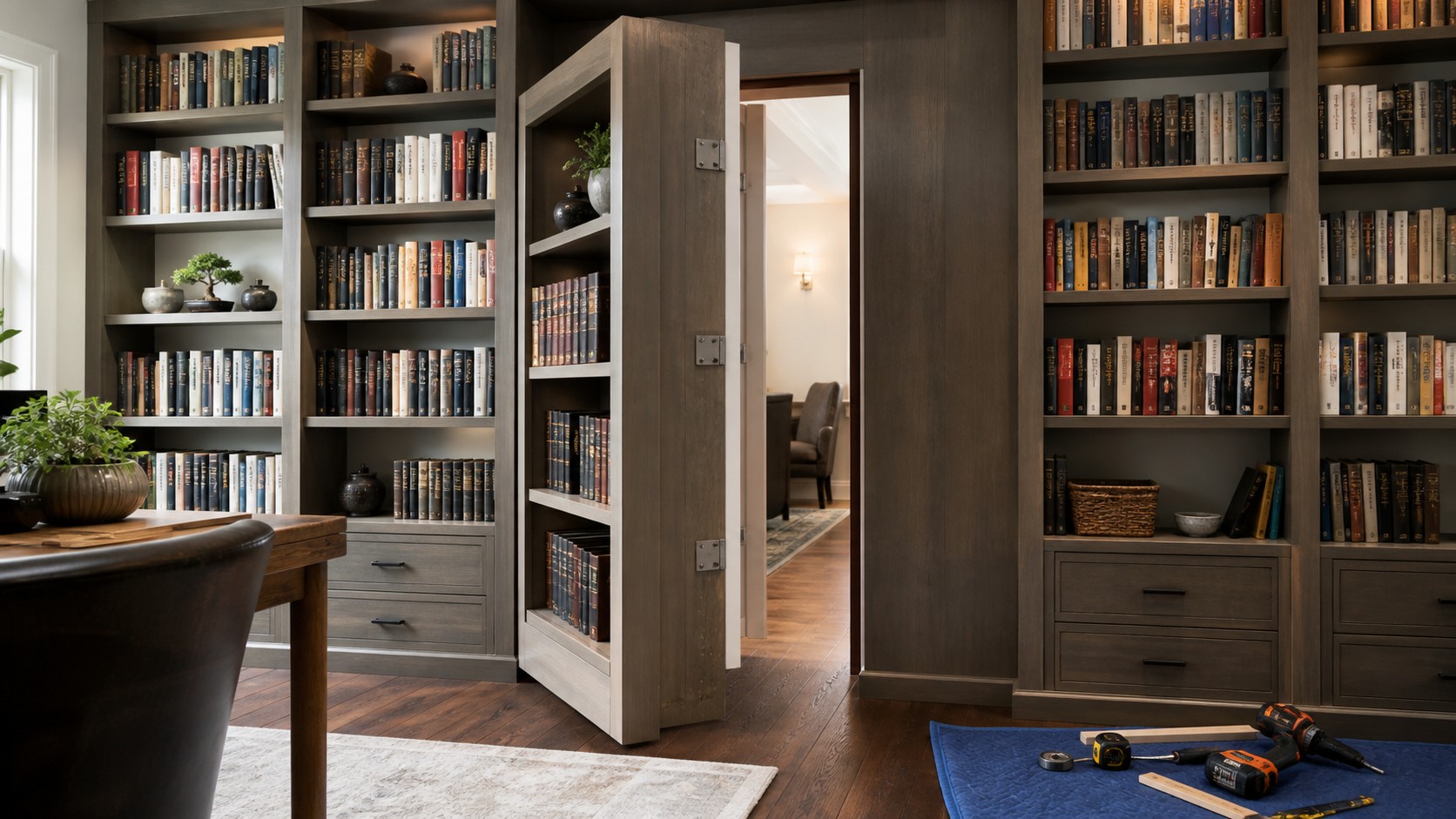
Bookshelf doors still thrive in modern homes too, but the styling has changed. Instead of ornate libraries, modern bookshelf doors often live in clean built-ins: floating shelves, matte finishes, and a single shelf bay that swings. The disguise works because it feels like a design feature, not a set piece.
Sliding panels are also increasingly common. A large wall panel can slide aside to reveal a concealed space. In the right layout, this can feel effortless and architectural, especially when the track is hidden and the panel aligns perfectly when closed.
Layout Plans: Where Secret Rooms Hide Best in Modern Floor Plans
Modern homes have predictable “service zones” and “quiet zones,” and those are where secret rooms usually work best. Designers often hide rooms behind spaces that already have thick walls, built-ins, or utility transitions.
Under-stair zones are a classic because they create leftover volume that begs for a creative solution. In modern builds, a hidden door under the stairs can be disguised as a continuation of a hallway wall or integrated into cabinetry. The resulting room might become storage, a compact office, or even a mini wine room with controlled lighting.
Behind-the-garage and mudroom adjacency is another common plan. Many homes have a laundry, mechanical area, or storage corridor near the garage. If you can hide a door within a cabinet wall or a utility-looking panel, the secret room becomes extremely believable. This is where secure storage rooms often live because the structure tends to be more robust and the area is already practical.
Primary suite adjacency can create the most luxurious results. A secret dressing room behind a feature wall, a private office hidden behind a closet built-in, or a concealed meditation room can become a signature “owners-only” experience. The key is sound control and lighting, since these rooms usually share walls with sleeping areas.
Basements offer the most freedom because you can build larger concealed spaces, soundproof them more effectively, and create dramatic lounges or theaters without compromising the home’s main living areas. But basements also require careful attention to ventilation, moisture control, and code compliance for finished rooms.
The Best Modern Secret Room Concepts (And Why They Work)
A concealed home office is arguably the most modern “must-have” secret room. Work-from-home has made private focus space valuable, but many homes weren’t designed with separate offices. A hidden office behind a paneled wall solves that problem while keeping the public-facing home feeling uncluttered. The entry can disappear into a wall of slats, a cabinet run, or a flush panel system, leaving the main living space clean.
A secret lounge is the most entertaining concept—literally. Think low lighting, acoustic panels, a small bar, and comfortable seating that feels like a different world. Modern lounges often use layered lighting and darker finishes to create contrast with the brighter public areas of the home. The hidden entry makes the transition more dramatic and satisfying.
A concealed storage room is the most practical. It can hide valuables, seasonal items, or equipment without adding visible doors or closets. In modern homes where clean lines matter, turning one cabinet bay into an entry can remove the “utility clutter” from view without losing access.
A hidden reading room is a softer, more personal approach. It might be small—a chair, a shelf, a lamp—but the privacy changes the experience. Reading behind a hidden door feels like a ritual. In modern design, these spaces often use warm wood tones, soft textiles, and controlled lighting for a cocoon effect.
A secret kid’s hideout can be surprisingly elegant in modern homes, especially when it’s integrated into built-ins rather than feeling like a cartoon clubhouse. A hidden door behind a shelf bay or panel wall becomes a magical entry, but the room can still be finished with thoughtful lighting and safe ventilation so it feels cozy and secure.
Planning the “Secret” Without Creating Problems
The difference between a cool hidden door and a frustrating one is planning. Modern builds rely on tight tolerances and clean finishes, which means your structure has to be precise. A hidden door that rubs or binds becomes annoying quickly, especially if it’s used daily.
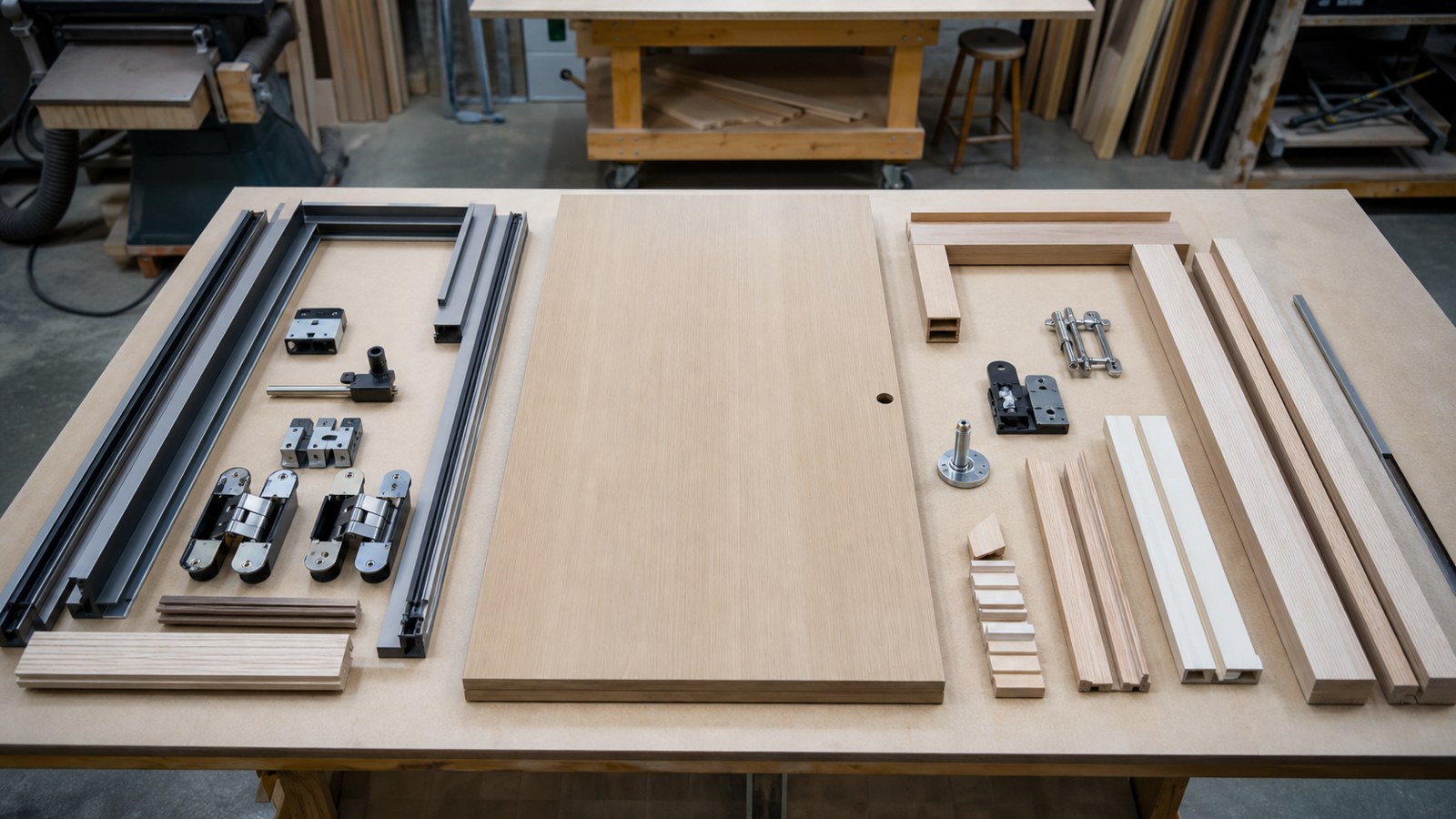
Start by planning the door operation. Will it swing, pivot, or slide? Each choice changes how you design the room around it. Swing doors need clearance arcs. Pivot doors need stable anchoring and careful alignment. Sliding doors need track solutions and wall cavities or pocket zones. Then plan how the room will breathe. Even a small room needs airflow. If the hidden room is occupied, ventilation isn’t a bonus feature—it’s essential for comfort and safety. Modern designers often integrate ventilation discreetly through adjacent spaces, soffits, or hidden grilles that blend into architectural details.
Lighting is another big one. A hidden room with harsh overhead lighting feels like a closet. A modern secret room should feel like a destination, which means layered light: soft ambient, task lighting where needed, and accent lighting to add depth. It also means managing light bleed. If bright light leaks around the hidden door perimeter, it can outline the entry from the outside and ruin the illusion. Electrical planning matters too. Outlets, smart controls, and low-voltage lighting should be designed early so you’re not cutting finished walls later. If you want the room to feel modern, consider silent switches, dimmers, and smart integration that doesn’t add visual clutter.
Materials and Finishes That Make Modern Secret Rooms Feel Expensive
Modern design is ruthless about imperfections. If seams don’t align, the eye finds them. If paint sheen changes, light reveals it. If trim is inconsistent, the secret looks forced.
That’s why modern secret rooms often use continuous materials. A wood slat wall can hide a door because the slats continue across the seam. A paneled wall hides a door because the panel grid looks consistent. A cabinet wall hides a door because cabinet reveals already exist.
Finishing strategies matter just as much as materials. Match paint sheen exactly on door and wall surfaces. Maintain consistent grain direction in wood veneers. Keep gaps uniform so the door seam looks intentional rather than “off.” Inside the room, modern finishes often shift slightly to signal a change in atmosphere. Many designers go warmer, darker, or moodier behind the hidden door. That contrast makes the hidden room feel like a separate world while still remaining cohesive with the home’s overall style.
Sound, Privacy, and the Modern Need for Quiet
One reason secret rooms are trending in modern homes is that quiet is harder to find. Open plans look great, but they amplify sound and reduce privacy. A concealed room can become an acoustic refuge. Sound control starts with the door. Solid-core doors, seals around the perimeter, and careful latching reduce sound leakage. Inside the room, insulation in walls and ceilings can help, and acoustic panels can be both functional and stylish. In modern secret lounges, acoustic treatments often look like design elements: textured walls, slatted panels with backing, or fabric-wrapped surfaces. Privacy isn’t only about sound. It’s also about the psychological feeling of being “off-stage.” A hidden door creates that feeling instantly. When you step behind it, the outside world fades, and the room feels like yours.
Budget Reality: Where to Spend for the Biggest Impact
Secret rooms can range from surprisingly affordable to luxury-level investments. In modern builds, the most important spending decisions are structural and mechanical. Hardware is worth investing in because cheap mechanisms create sagging, misalignment, and unreliable operation. Lighting and ventilation are worth planning because they determine whether the room is comfortable.
Finish work is where you can scale. A concealed storage room can be finished simply, while a secret lounge can become a full showpiece. The trick is to prioritize what the room is for. If it’s daily-use, prioritize smooth operation and comfort. If it’s a once-in-a-while reveal, prioritize the illusion and the atmosphere.
Common Mistakes That Break the Illusion
The most common mistake in modern secret room design is a seam that doesn’t match the architecture. A door line that cuts through a panel grid or interrupts slat spacing draws attention. Another common issue is mismatched finishes. Even if the color is identical, sheen differences reveal edges under sunlight.
Operational flaws also break the magic. If the door sticks, squeaks, or requires awkward pressure, it signals that something unusual is happening. A secret door should behave like a luxury door: quiet, smooth, confident.
Finally, skipping ventilation is a comfort killer. The room might look amazing, but if it feels stale or hot, it won’t be used. Modern secret rooms should be livable, not just impressive.
The Future of Secret Rooms: Modern Homes as Transformable Spaces
Secret rooms are part of a broader modern design trend: transformable homes. People want spaces that can switch modes. A wall can become a door. A cabinet can become an entry. A quiet office can appear and vanish. This isn’t about hiding things in a suspicious way; it’s about making homes flexible and tailored to real life. When designed well, a secret room becomes a signature feature that feels integrated, not added on. It raises the home’s sense of craftsmanship. It creates delight. And it provides something rare: a space that feels private, intentional, and truly yours.