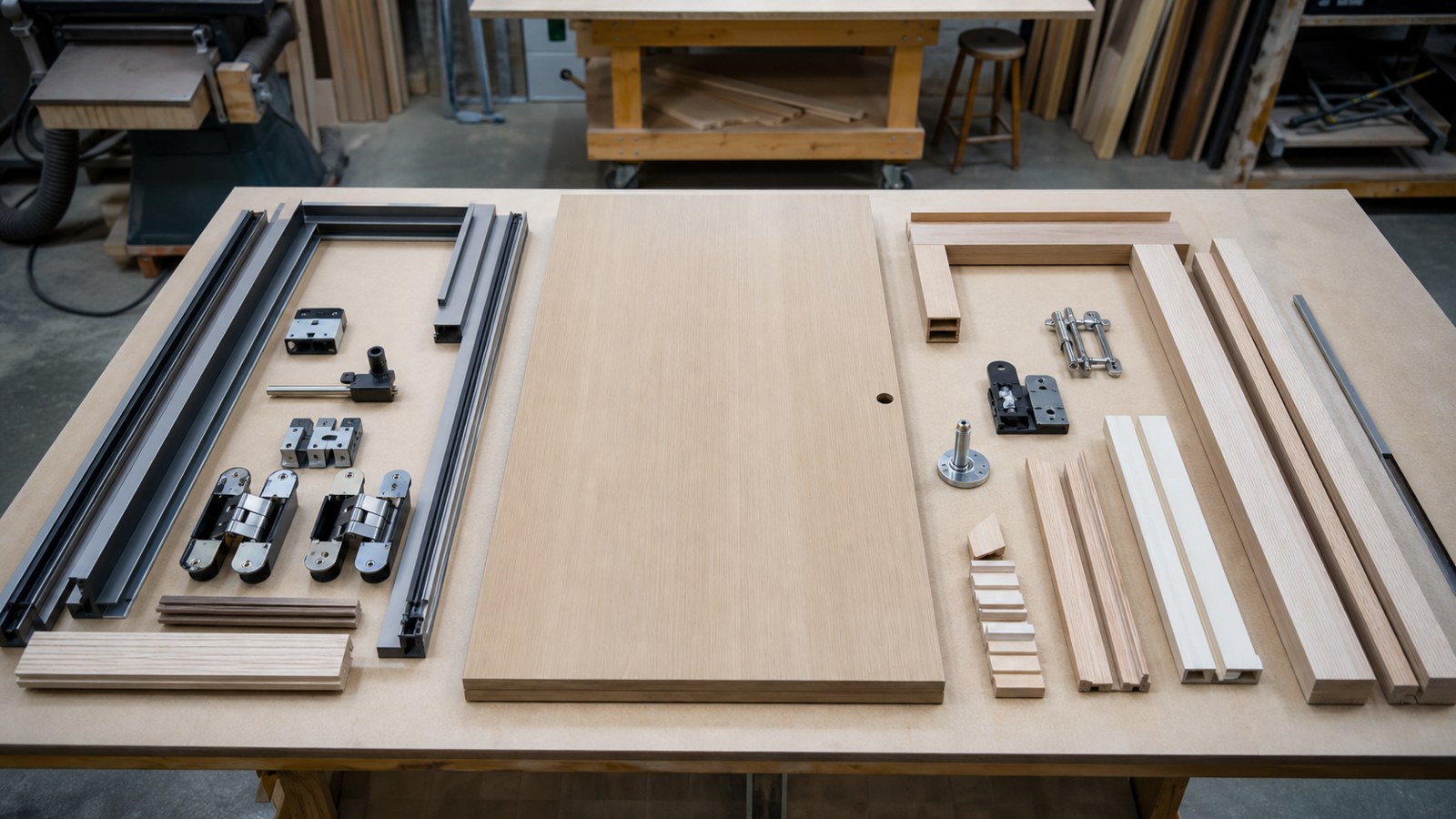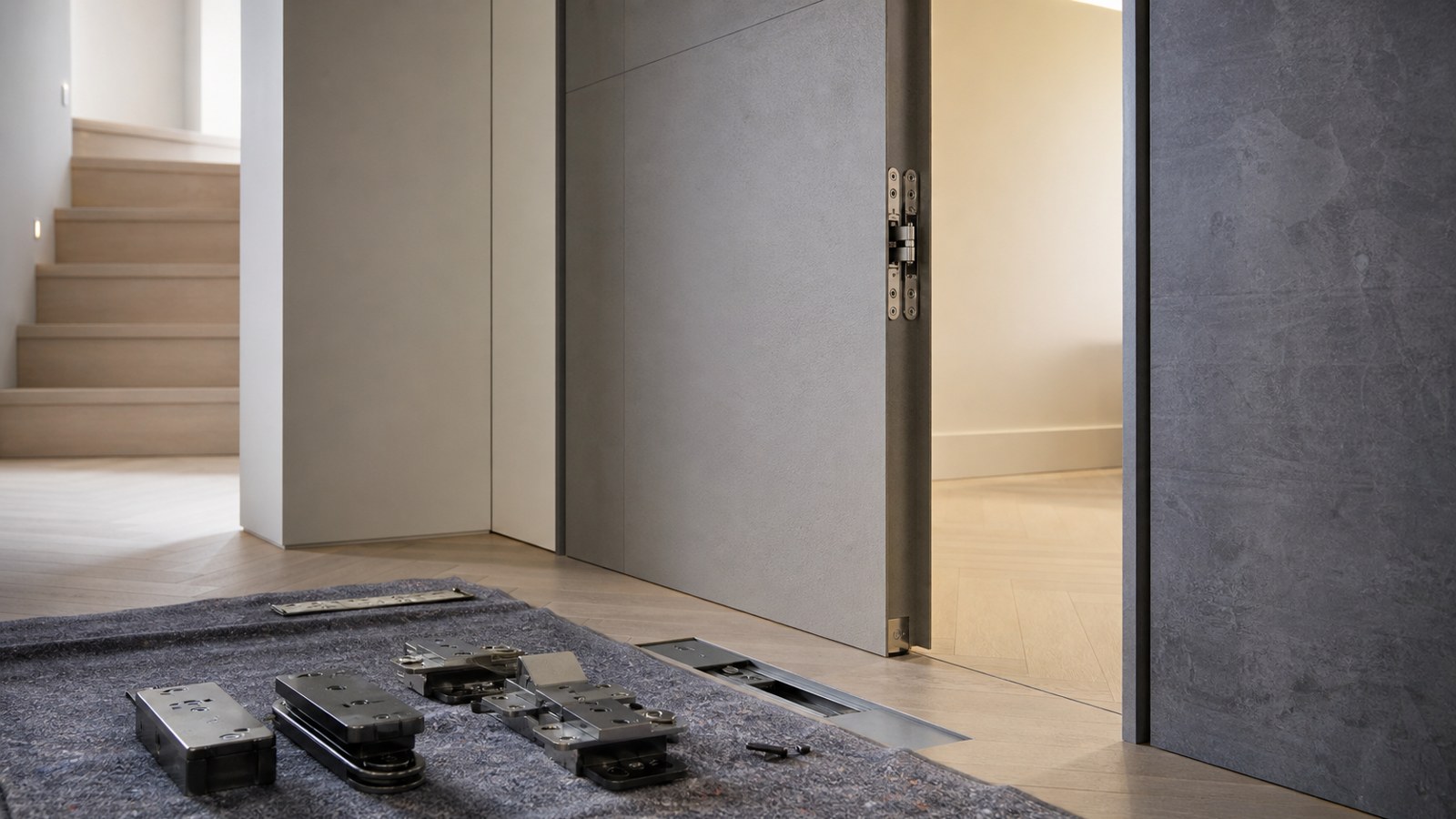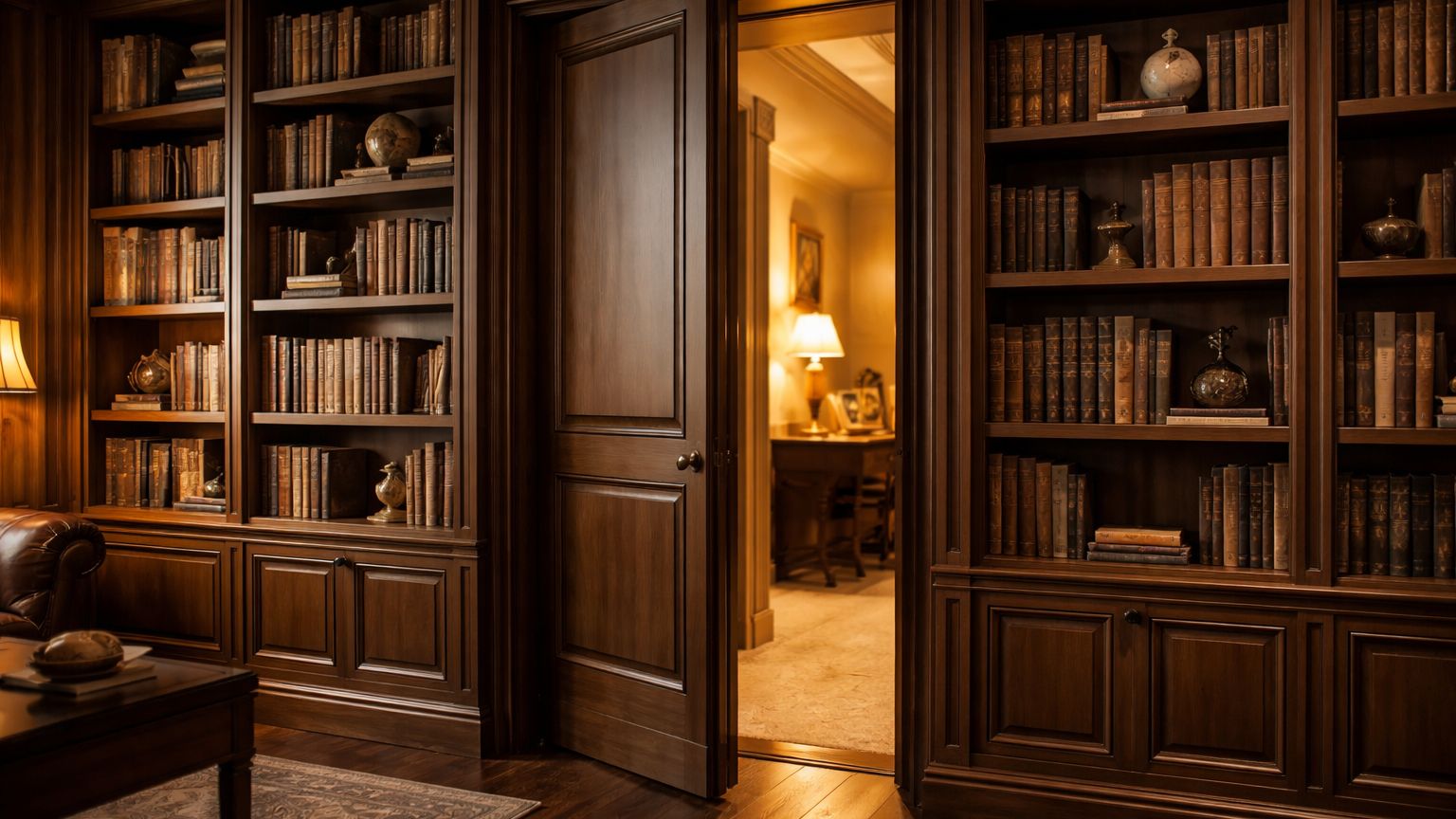
A hidden door works best when it feels like it belongs to the room before anyone knows it opens. The disguise might be a bookcase, mirror, wall panel, cabinet face, slat wall, artwork, or trim pattern, but the opening still needs safe access, reliable hardware, and enough clearance to move smoothly.
The right idea depends on the room, the wall depth, the traffic path, the weight of the moving panel, and what sits behind the door. A dramatic secret entrance is fun, but the best designs hide in plain sight because they follow the architecture already in the house.
A: Compare shallow panel, trim, or wallpaper concepts before assuming a projecting bookcase is practical.
A: No. Cabinetry, mirrors, paneling, artwork, and other appropriate architectural treatments can supply the disguise.
A: Compare the whole room, open-position clearance, frequency of use, load feasibility, and maintenance rather than only a closed-door photograph.
A: Preserve the working separation and detail the paper edges so opening does not tear a continuous covering.
A: Only if its full travel and parking area are available without blocking other functions.
A: Verify the selected system's depth and load allowances before treating the moving case like ordinary fixed shelving.
A: Account for the glass and complete assembly, with appropriate mounting and hardware rather than assuming equivalent construction.
A: Clear access, convenient safe release, predictable movement, and durable contact surfaces deserve priority over novelty.
A: No. Preserve required access, clearances, labels, and ventilation and verify the specific equipment requirements.
A: Coordinate panel or shelf rhythm, material, finish, and trim while retaining the mechanical separation the moving bay needs.
1. Classic Bookcase Door
A bookcase door is the hidden-door idea most people picture first. It works well in libraries, offices, dens, hallways, and finished basements where built-in shelving already makes sense. The shelves help disguise the opening and make the wall useful.
The challenge is weight. Books are heavy, and a deep case puts leverage on the hardware. Keep shelf depth reasonable, choose hardware rated for the finished load, and test the swing before loading the shelves.
2. Shallow Display Shelf Door
A shallow display shelf gives the look of a bookcase without the same weight. It can hold framed art, small decor, plants, or a few books while staying easier to move. This idea works well in narrow halls or rooms where a full bookcase would feel bulky.
Use rails, lips, or stable styling so objects do not slide when the door moves. The shallower the shelf, the easier it is to hide the reveal and protect the hardware.
3. Mirror Hidden Door
A mirror door can hide a closet, dressing room, bathroom, gym, or storage area. Mirrors feel natural in bedrooms, entries, and hallways, so the disguise does not call much attention to itself. A large mirror also makes the room feel brighter.
The mirror must be mounted safely and supported by hardware that can carry the full weight. Plan the latch carefully so the mirror does not need an obvious handle unless the style supports it.
4. Flush Wall Panel Door
A flush panel door works well in modern rooms with simple walls and clean lines. The door face sits nearly even with the wall and uses a minimal reveal, push latch, or concealed pull. It can hide a closet, utility space, pantry, or office.
This idea needs very clean framing and drywall work. Any uneven gap, proud edge, or shadow line will be visible. It looks simple, but it requires careful alignment.
5. Wainscoting Door
Wainscoting can hide a door by continuing the rail, stile, and panel pattern across the opening. This works especially well in dining rooms, halls, stair landings, and traditional homes where millwork already belongs.
The panel layout should be planned around the opening. If the hidden door interrupts the rhythm awkwardly, the disguise will look forced. Match rail heights, reveal widths, and trim profiles closely.
6. Vertical Slat Wall Door
Vertical wood slats can hide a door by turning the wall into a repeating pattern. The door disappears because its edges align with the same vertical rhythm. This idea suits modern entries, media rooms, offices, and bedrooms.
Slats add weight and thickness, so hardware selection matters. Keep the latch accessible and make sure slat edges do not scrape the fixed wall as the door opens.
7. Cabinet Face Door
A hidden door can look like a tall cabinet, wardrobe, pantry unit, mudroom locker, or built-in storage panel. This is a strong choice near kitchens, laundry rooms, garages, and entries because cabinet doors already belong there.
Decide which cabinet parts are real and which are only disguise. Fake drawers, false doors, and dummy pulls can work, but they should line up with the rest of the cabinetry so the opening looks intentional.
8. Pantry Hidden Door
A pantry entrance can disappear inside kitchen cabinetry or a tall built-in wall. The door might look like a cabinet bank, appliance panel, or full-height pantry front. This creates a clean kitchen while keeping walk-in storage accessible.
Because pantries are used often, the latch and swing need to be convenient. A hidden pantry that is annoying to open will lose its charm quickly.
9. Wallpapered Door
Wallpaper can hide a door by carrying the pattern across the wall and opening. This works well in powder rooms, bedrooms, nurseries, halls, and small accent spaces. Bold patterns are often better at hiding reveals than plain paint.
The repeat must be aligned carefully across the door edges. Use durable paper or protect vulnerable edges where hands and hardware will touch.
10. Art Panel Door
A large art panel can disguise a door to a closet, storage room, office, or mechanical area. The panel may swing, slide, or pivot depending on the space. This idea is useful when shelving or trim would not suit the room.
Keep the art believable in scale and placement. If the panel looks oddly large or sits where art would never normally hang, it may draw more attention than the door did.
11. Gallery Wall Door
A gallery wall can hide a door by spreading attention across several frames. The door becomes one section of the composition rather than a single disguised panel. This works in halls, stair landings, family rooms, and home offices.
Use lightweight frames and secure them well. Loose frames can rattle or shift when the door moves, which gives away the opening and risks damage.
12. Under-Stair Hidden Door
The area under stairs often hides storage, utility access, or a small room. A hidden door can follow the stair trim, paneling, or wall finish so the access point looks built in instead of like an afterthought.
Under-stair spaces can be tight, so confirm headroom, lighting, and safe access. If the space contains utilities, keep service clearance and ventilation in mind.
13. Fireplace Wall Hidden Door
A fireplace wall with built-ins, panels, or shelving can hide a side door or storage opening. This works because the eye already expects symmetrical detail around a fireplace. The hidden door may be one cabinet bay or one panel section.
Heat, clearances, and code requirements matter near fireplaces. Do not place combustible hidden-door materials too close to heat sources, and preserve any service access the fireplace requires.
14. Media Wall Door
A media wall can hide equipment closets, game storage, theater rooms, or wiring access. The door may look like a cabinet, acoustic panel, slat section, or matching wall panel. This is useful when technology needs to disappear.
Plan airflow for electronics. A hidden equipment space that traps heat can shorten equipment life or create safety issues.
15. Mudroom Locker Door
Mudroom lockers can hide a closet, garage entry, cleaning storage, or utility space. The door blends into hooks, cubbies, bench panels, and tall cabinet fronts. This idea works well because mudrooms already have a lot of vertical storage.
The door must stand up to heavy use. Shoes, bags, coats, and daily traffic can damage weak trim or loose hardware quickly.
16. Bedroom Wardrobe Door
A wardrobe-style hidden door can lead to a closet, dressing room, bathroom, or private office. It works well when the wall already supports built-in closets or full-height cabinetry.
Use proportions that match the room. If the wardrobe face is too shallow or too narrow to look believable, the disguise may feel like a prop instead of furniture.
17. Laundry Room Cabinet Door
Cabinetry around a laundry room can hide a storage closet, mechanical access, or utility room. A tall cabinet face, broom closet panel, or appliance surround can become the hidden door.
Because laundry rooms deal with moisture, vibration, and cleaning products, choose durable finishes and hardware. Keep shutoffs and service panels easy to reach.
18. Tile Pattern Door
Tile can disguise access panels or small doors in bathrooms, wet bars, and spa spaces. Continuing the grout lines across the opening makes the door less obvious. This idea is best for smaller, lighter panels rather than large heavy doors.
Tile adds weight and can crack if the door flexes. Use the right backer, hardware, and movement allowances before committing to a tiled hidden door.
19. Hallway Panel Door
A long hallway can hide a door through repeated wall panels or trim bays. The opening becomes one panel among many. This is a strong choice for storage, mechanical closets, and rooms that do not need a visible doorway.
Consistency matters. Panel spacing, baseboard treatment, and top rail height should continue smoothly so the hidden door does not look like a patched section.
20. Sliding Hidden Door
A sliding hidden door can work where a swing door would block furniture or traffic. It might look like a wall panel, barn-style feature, art wall, or shelving section. Sliding systems are useful in tight rooms, but they need wall space beside the opening.
The track and guides must be hidden or integrated into the design. A visible track may still look good, but it changes the effect from secret to decorative.
21. Pivot Panel Door
A pivot panel can create a sleek hidden entrance with less visible side hardware. It works with modern walls, slat panels, mirrors, and flush finishes. Pivot systems can handle certain loads well when installed correctly.
Pivot placement affects how the panel moves through the room. Mock up the swing arc and check both sides before choosing furniture placement or trim.
22. Kids’ Playroom Secret Door
A hidden door to a playroom, reading nook, or under-stair hideout can be playful without being unsafe. Bookcase fronts, small panels, chalkboard doors, and painted murals can all work.
Safety matters more than mystery. Children should be able to open the door from inside, fingers should be protected from pinch points, and the space should have lighting and ventilation.
23. Home Office Hidden Door
A hidden office door can help a work area disappear after hours. It may look like shelving, a paneled wall, a cabinet bank, or an art feature. This is useful in bedrooms, living rooms, and multipurpose spaces.
Think about sound, privacy, and daily use. If the office is entered often, the door should open easily and quietly rather than relying on a fussy secret latch.
24. Mechanical Access Door
Not every hidden door is glamorous. Some hide electrical panels, plumbing manifolds, HVAC access, water heaters, or low-voltage equipment. A clean panel or cabinet door can make these areas look finished while keeping service possible.
Never hide mechanical access so well that repairs become difficult. Keep clearances, labels, ventilation, and code requirements intact.
25. Full Built-In Wall Door
A full built-in wall can hide a doorway inside shelving, cabinets, panels, and trim. This is the most integrated option and can completely transform a room when planned well. It is also one of the most demanding because the hidden door must align with the entire wall design.
Plan the wall as one system. Hardware, lighting, shelves, trim, electrical, reveal lines, and the hidden room all need to work together. This idea rewards careful design more than improvisation.
Choosing the Right Hidden Door Idea
The best hidden door idea is the one that fits the room naturally. Built-ins work where depth exists. Flat panels work in tight rooms. Wallpaper and trim patterns work where the wall already has a strong surface rhythm. Mirrors, art, and gallery walls work where those objects make sense.
Before committing, check swing clearance, hardware load, latch access, floor clearance, trim alignment, and whether the hidden space remains safe. A hidden door should make the home more interesting without making daily use harder.
Final Hidden Door Idea Review
Hidden doors can transform a home when the disguise and mechanics are designed together. Bookcases, mirrors, cabinets, slat walls, wallpaper, paneling, tile, and built-ins can all work, but each idea has its own limits.
Choose the idea that belongs to the room, then build around weight, movement, safety, and access. The most convincing hidden doors are not the loudest ones; they are the ones that look like they were always part of the house.