A hidden door only works when it behaves like a real door first. The disguise can be a bookcase, flush panel, mirror, cabinet face, slat wall, or wainscot section, but the build still needs a square opening, supported hardware, predictable swing, safe release, and enough clearance to move without rubbing.
The best step-by-step plan starts with the room, not the secret. Decide what the door should look like when closed, how it opens, what weight it will carry, and whether someone can exit easily from the hidden side. Then build the disguise around those requirements instead of forcing hardware into a finished idea.
A: Choose the intended system first so dimensions, load limits, anchorage, and clearances inform the leaf construction.
A: No. Verify the system's actual installation limits for the complete door and intended contents.
A: Use the required structural substrate and anchorage; a finished wall surface alone does not establish adequate support.
A: Preserve required operating clearances and integrate their appearance into the wall design rather than eliminating them.
A: No. Recheck after trim and finish and under the permitted intended load and room conditions.
A: No. Investigate support, leaf geometry, load, and adjustment instead of making the latch carry a mechanical fault.
A: Do not create a trapping risk; design safe release and confirm applicable requirements before occupancy.
A: Test the moving and fixed trim throughout the swing, including floor covering and nearby furniture clearances.
A: Retain the access needed for prescribed adjustments, inspection, and component replacement.
A: Seek it for uncertain framing, heavy custom loads, concealed utilities, required egress or fire performance, and installations outside the hardware instructions.
Step 1: Choose the Disguise
Start by deciding what the closed door should appear to be. A bookcase door works well in libraries, offices, dens, and hallways where shelving feels natural. A flush panel works in modern rooms with simple trim. A mirror door can fit a closet or dressing area. Wainscot, slat walls, and cabinet-style faces can hide an opening inside a broader wall pattern.
The disguise should belong in the room. If a random bookcase appears on the only blank wall, it may attract attention instead of hiding the opening. The best hidden doors look like a normal part of the design: one more shelf run, one more panel bay, or one more trim rhythm.
Step 2: Confirm the Opening and Wall
Measure the rough opening, finished opening, wall thickness, floor level, ceiling height, and trim layout. Check whether the wall is load-bearing, whether utilities run nearby, and whether the space behind the door has ventilation, lighting, and safe access. A hidden door should not create a trapped or unsafe room.
If the opening is crooked, undersized, or weakly framed, fix that before thinking about the disguise. Hidden doors are less forgiving than normal doors because gaps and rubbing give away the secret. A square, plumb, supported opening makes every later step easier.
Step 3: Decide How the Door Will Move
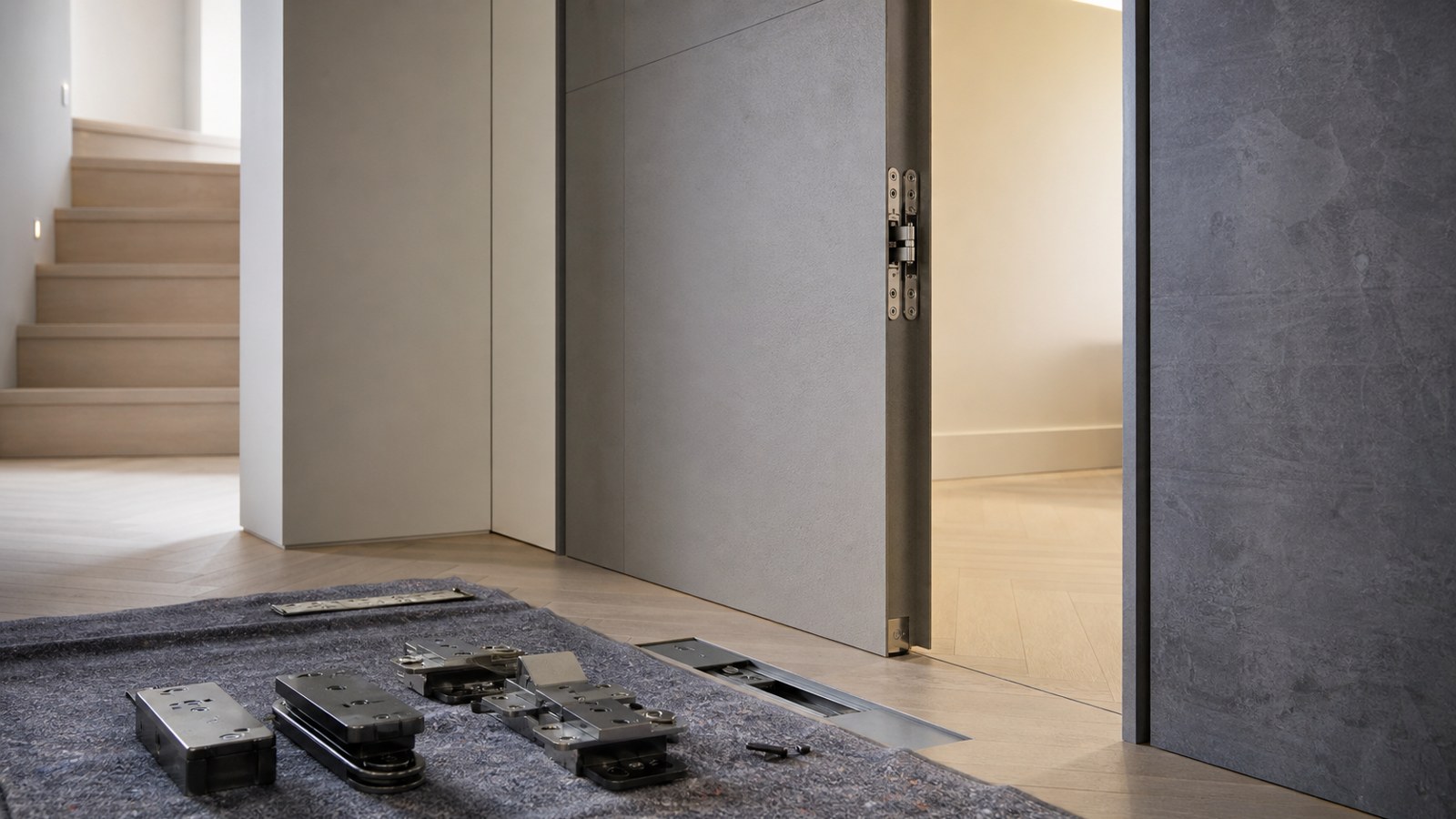
Most hidden doors swing on pivots, concealed hinges, heavy-duty hinges, or specialty hidden-door hardware. A lightweight panel can use different hardware than a full bookcase loaded with books. A door that swings inward may need different clearance than one that swings outward.
Draw the swing on the floor with tape before buying hardware. Include furniture, rugs, baseboards, flooring transitions, nearby doors, and light switches. The door has to open fully enough to use the space behind it, and it should not scrape a rug or block a walkway.
Step 4: Pick Hardware for the Weight
Hardware choice should be based on the finished weight, not the empty frame. A bookcase door becomes much heavier once shelves, trim, books, and finish material are added. A mirror or panel door may be lighter, but it still needs stable support and adjustment.
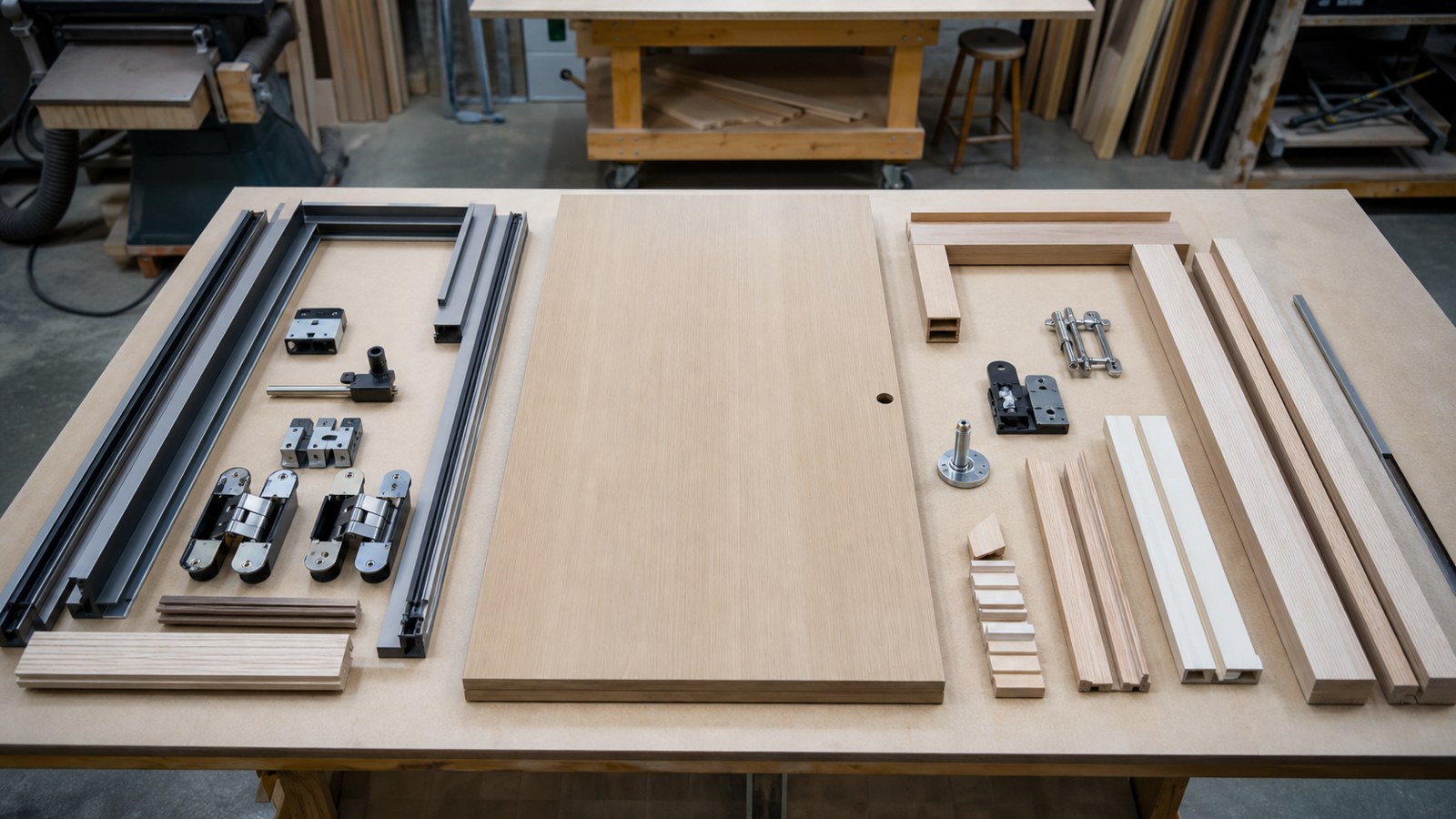
Use hardware with a rating that fits the real load and follow the manufacturer’s template. Do not guess at pivot placement or screw locations. Hidden-door hardware usually depends on precise geometry, and small layout errors can create sag, rubbing, or a door that will not close flush.
Step 5: Reinforce the Framing
Hidden doors put unusual loads on framing. The hinge side, pivot point, header, jamb area, and floor connection may need blocking or reinforcement. If the door is a bookcase, the framing must handle both door weight and the leverage created as it swings.
Add solid backing where hardware fastens. Make sure screws reach framing, not just drywall or thin trim. If the wall is old, out of plumb, or weak, correct it while everything is open. A hidden door that sags after a month is much harder to tune once finished trim and paint are complete.
Step 6: Build the Door Frame Light and Square
The moving panel should be as light as the design allows while still staying rigid. Use straight material, square corners, and bracing that prevents twist. A door that racks out of square will show uneven reveals and may bind at the top or latch side.
For a bookcase door, keep shelf depth realistic. Deep shelves add weight and move that weight away from the pivot, which increases stress. For a panel door, keep the face flat and stable so seasonal movement does not create obvious seams.
Step 7: Test the Bare Door Before Finishing
Hang the door before adding final trim, paint, stain, shelves, or heavy decorative parts. Open and close it many times while it is still easy to adjust. Check the top gap, bottom clearance, latch side, hinge side, and the way the panel passes the floor and baseboard.
This is the stage to fix rubs and alignment issues. If the bare door does not move smoothly, the finished door will be worse. Adjust hardware, shim framing, correct twist, and confirm the swing before the disguise is built out.
Step 8: Control the Reveals
Reveals are the small gaps around the moving door. On a hidden door, they have to be consistent enough to look intentional while wide enough to avoid rubbing. Too tight and the door binds. Too wide and the opening becomes obvious.
Use the room’s design to hide necessary gaps. Align reveals with panel lines, shelf edges, trim joints, vertical battens, or shadow lines. The gap should look like part of the wall pattern, not like an accidental crack around a door.
Step 9: Blend Baseboards and Trim
Baseboards are one of the hardest parts of a hidden door. If the baseboard crosses the moving panel, it needs clearance to swing. If it stops abruptly, it may reveal the opening. Some designs use a broken baseboard line, a small return, flexible alignment, or a panel layout that makes the break look natural.
Door casing has the same challenge. A normal doorway with normal casing usually reads as a doorway. To hide it, the trim may need to become panel molding, shelving, slats, or a flush edge that belongs to the room’s broader design.
Step 10: Add the Latch and Release
A hidden door needs a way to stay closed and a way to open from both sides when required. Magnetic catches, touch latches, concealed pulls, cabinet hardware, or specialty latches can work depending on the door. The latch should hold the door flush without making it hard to open.
Do not create a lock-in risk. If a person can enter the hidden room, that person should be able to get out easily without knowing a trick. Bedrooms, mechanical rooms, closets, and storage spaces may have safety or code concerns that matter more than the hidden effect.
Step 11: Finish the Surface Pattern
Once the door swings correctly, finish the disguise. Continue shelf lines, panel spacing, slat rhythm, paint color, stain tone, or wall texture across the moving section. The goal is for the closed door to read as part of the room before anyone thinks about an opening.
Use consistent sheen and clean edges. A slight paint mismatch, different caulk line, or odd shadow can reveal the door faster than the hardware does. Stand at the main room entrance and look at the closed door the way a visitor would.
Step 12: Load the Door Gradually
If the hidden door is a bookcase or cabinet face, do not load it fully all at once. Add weight gradually and keep testing the swing. Books, decor, and stored items can change the way the door hangs. Heavy objects should sit low and close to the pivot where possible.
After loading, check reveal gaps again. Look for sag at the latch side, rubbing at the floor, clicking hardware, or a latch that no longer lines up. Adjust while the changes are small instead of waiting for the door to damage trim.
Step 13: Test in Real Conditions
Open the door with the room furnished, rugs in place, lights on, and the hidden room being used normally. Make sure furniture does not block the swing, the latch can be found, and the inside release works. Check whether the door makes noise that gives away the opening.
Also test after a few days. Wood movement, carpet compression, humidity, and weight can change the fit. A hidden door often needs small tuning after the first real use.
Common Hidden Door Mistakes
The biggest mistake is building the disguise before solving the door. Another is underestimating weight, especially on bookcase doors. Tight reveals, weak framing, skipped templates, poor latch access, and trim that rubs are also common problems.
Do not sacrifice safety for concealment. A door that traps someone, blocks ventilation, hides a required egress path, or prevents access to mechanical equipment is not a good project. A hidden door should be clever, not risky.
Best Rooms for a Hidden Door
Hidden doors work best where the disguise makes sense: offices, libraries, dens, media rooms, playrooms, closets, pantries, wine rooms, storage areas, and finished basements. These rooms can support shelving, paneling, or cabinetry without looking strange.
They are harder in tight hallways, uneven old openings, damp spaces, or rooms where the door must meet strict egress or accessibility requirements. The more important the doorway is for daily movement, the more carefully the hardware and release should be planned.
Bookcase Doors Need Depth Discipline
A bookcase door is the classic hidden-door idea, but it is also the easiest one to overload. Deep shelves, heavy books, thick face frames, and decorative trim all add weight away from the pivot. That extra leverage can make the latch side sag or make the door feel awkward to start moving.
Keep shelves shallower than a normal built-in unless the hardware is designed for the extra load. Use lightweight backing, secure shelf joinery, and a face frame that stays square. If the bookcase is mostly for disguise, do not treat it like full-depth storage.
Flush Panel Doors Need Better Wall Prep
A flush hidden door has fewer decorative details to hide behind. That means the wall plane, paint sheen, reveal lines, and latch side must be very clean. Any bow, uneven drywall texture, proud edge, or inconsistent caulk line can make the door visible.
For this style, spend extra time on the surrounding wall. Skim rough patches, sand raised edges, and use consistent primer and paint. A flush hidden door can look very refined, but it is less forgiving than a bookcase or paneled design.
Pivot and Hinge Choices Change the Build
Center pivots, offset pivots, concealed hinges, and heavy-duty butt hinges all move differently. A pivot may carry weight better but needs exact placement and floor or header support. Concealed hinges may look cleaner but can have tighter weight and adjustment limits.
Choose the hardware before building the moving panel. The pivot point affects the swing arc, reveal, baseboard detail, and usable opening width. Changing hardware after the door is built can force a redesign of the entire disguise.
Plan for Maintenance Access
A hidden door should be adjustable after installation. Screws, hinge adjustments, pivot hardware, latch parts, and touch-up areas should not be buried permanently behind trim. Seasonal movement, settling, and normal use may require small changes later.
Keep the hardware model number, adjustment instructions, paint colors, and finish products documented. If a latch starts clicking or a reveal tightens, those notes make repair much easier. A hidden door is a moving finish feature, not a set-it-and-forget-it wall panel.
Also leave enough clearance to clean around the door. Dust, grit, and loose carpet fibers can collect near tight pivots and bottom reveals, causing noise or rub marks that slowly reveal the opening.
Final Hidden Door Build Review
To build a hidden door, choose a disguise that belongs in the room, confirm the opening, plan the swing, select hardware for the finished weight, reinforce the framing, build a square moving panel, and test the bare door before final trim. Then blend the reveals, baseboards, latch, and surface pattern so the opening disappears naturally.
The best hidden doors are not magic tricks pasted onto a wall. They are well-built doors with careful finish work. When the hardware, safety, movement, and disguise all work together, the door stays useful, adjustable, and convincing long after the first reveal.