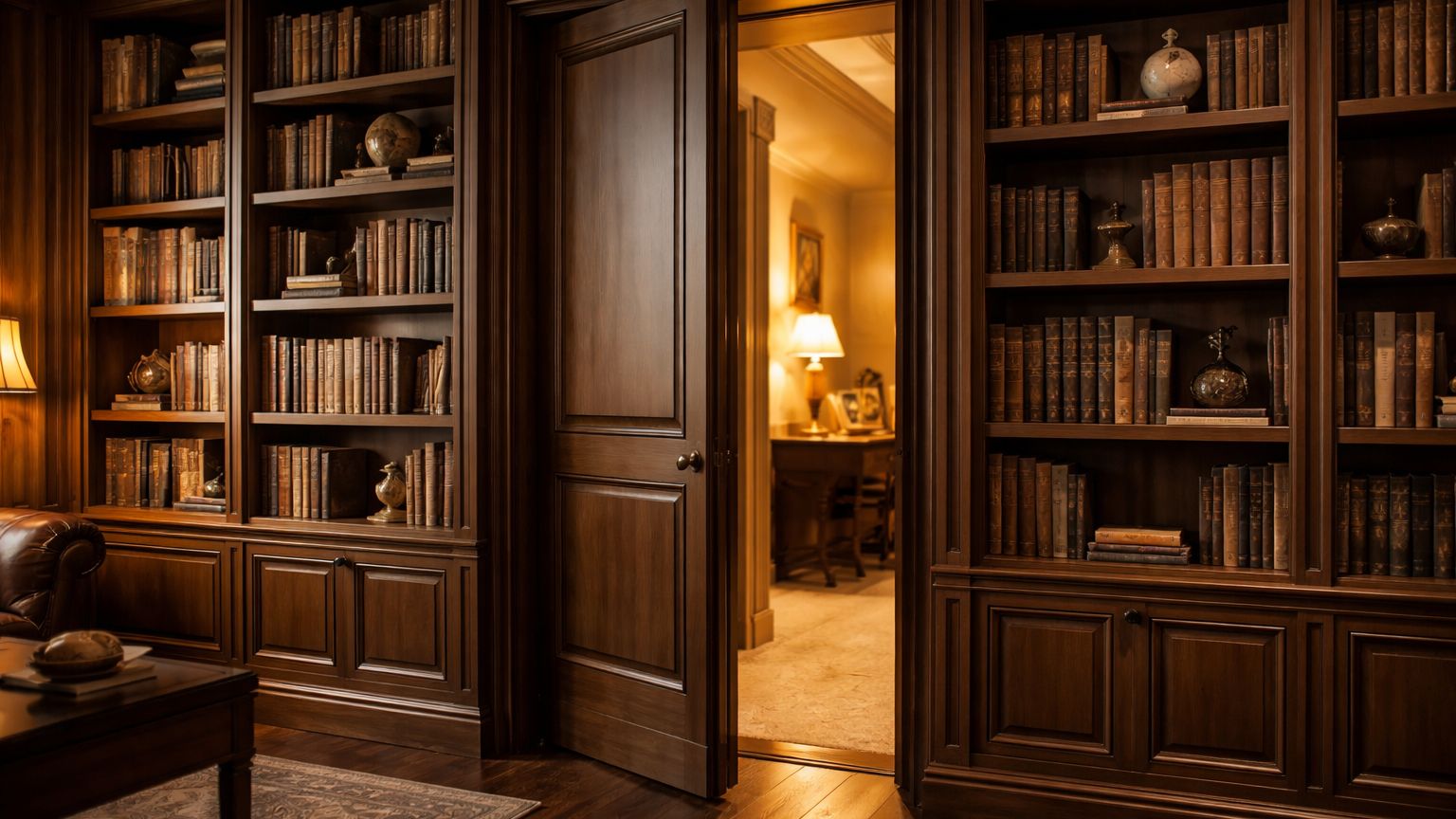
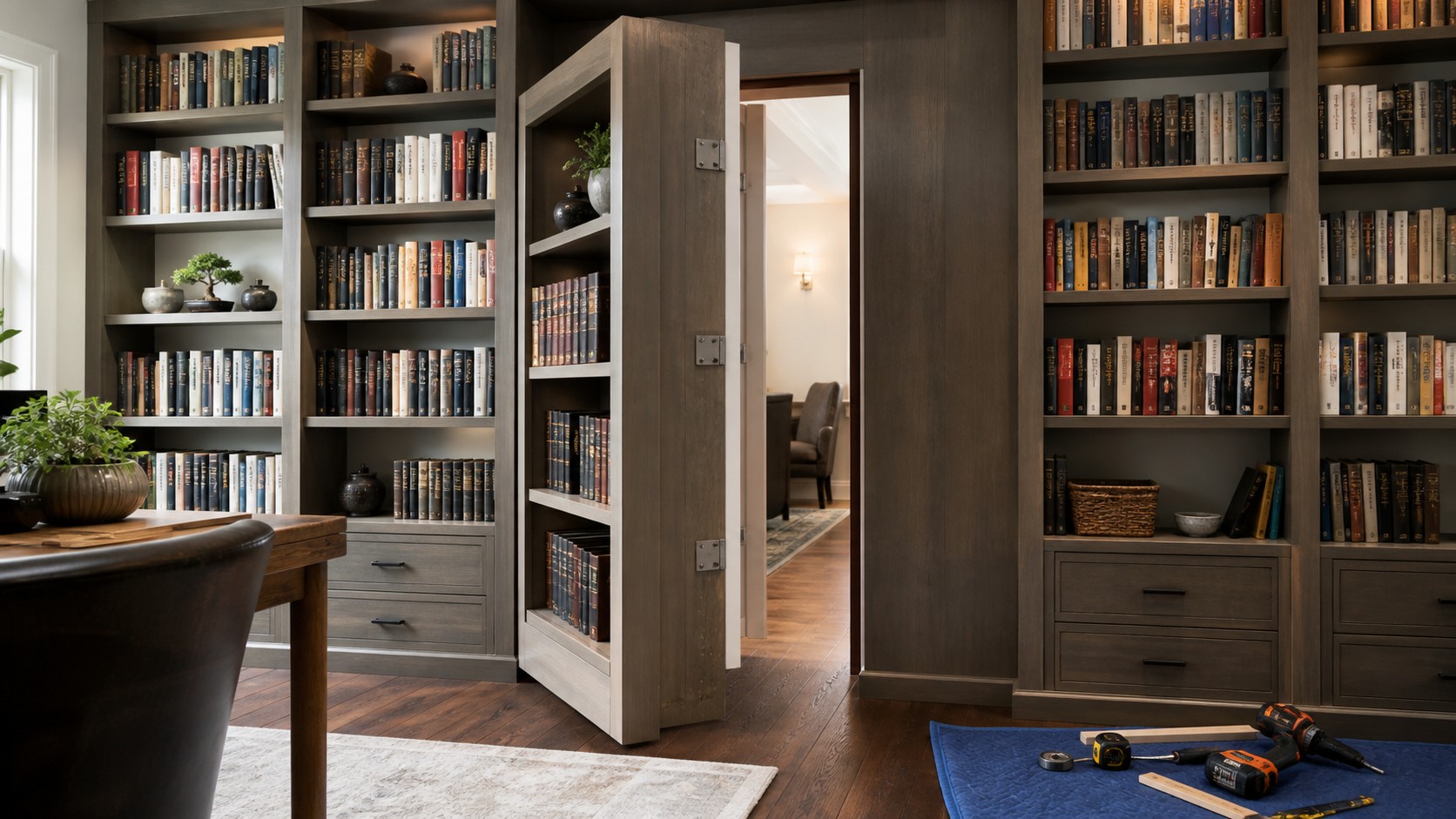
A bookshelf hidden door has to work as both furniture and a doorway. It needs to look like a built-in bookcase when closed, swing without dragging, carry the weight of shelves and books, latch cleanly, and leave the room behind it safe to enter and exit.
The best plan starts with the opening, the wall framing, the finished floor, and the hardware, not with the trim design. Once the swing path, weight, pivot point, and clearances are understood, the bookcase can be built to hide the doorway instead of fighting it.
A: No. Its structure and connections must suit the selected moving-door system and intended load.
A: Describe the complete case, finish, attachments, and intended contents, distinguishing storage load from the cabinet itself.
A: Compare storage needs with added mass, leverage, sweep, and clear-passage loss before increasing depth.
A: No. Shelf supports and the cabinet structure have their own capacity requirements.
A: Use the exact instructions for the intended orientation rather than assuming a mirror image is sufficient.
A: Not when the design relies on it for racking resistance or other structural work.
A: Do not improvise a new load path; identify the cause and use the selected system's permitted repair or redesign.
A: Recheck case alignment, reveals, movement, release, contents retention, and any specified inspection points under the permitted load.
A: Coordinate shelf spacing, face details, finish, and base treatment while preserving the moving assembly's required construction and gaps.
A: Keep the plan, hardware model, permitted load conditions, shelf details, release instructions, and maintenance access recorded.
Plan the Opening Before the Bookcase
Measure the finished doorway in several places before designing the case. Check width at the top, middle, and bottom. Check height on both sides. Look at the floor slope, wall plumb, baseboard line, ceiling clearance, and whether the opening is square enough for a swinging cabinet.
A hidden door is less forgiving than a normal bookshelf because small errors show as uneven reveals, rubbing trim, or a latch that refuses to land. The bookcase may be beautiful, but if the opening is out of square and the plan ignores it, the movement will expose the problem.
Also decide what the room behind the door needs. A storage room, office, closet, safe room, playroom, or utility space may have different needs for light, ventilation, emergency exit, and privacy. The hidden feature should not make the space awkward or unsafe.
Choose the Swing Direction
Decide whether the bookcase swings in, swings out, or pivots around a concealed point. An out-swing may be easier to access from the main room, but it needs floor and furniture clearance. An in-swing may hide better from the main room, but it takes space inside the concealed room.
Draw the swing arc on the floor with tape before building. Include the depth of the bookcase, trim, loaded shelves, handle or latch hardware, rug thickness, nearby furniture, and anything stored behind the door.
Check the path at the top and bottom. A floor that slopes or a ceiling that dips can make the case clear in one position and scrape in another. The swing should be proven before paint, stain, and final trim.
Understand the Weight
A hidden bookcase door is heavy before anything is placed on the shelves. Plywood, face frames, trim, backing, hardware, and finish all add weight. Books, decor, and stored items add even more. The hardware must be rated for the real loaded door, not the empty frame.
Be honest about shelf use. A shallow display case is different from a working bookshelf full of hardbacks. Deeper shelves create more leverage, which makes sag and hinge stress more likely.
If the hardware manufacturer lists weight limits, stay below them with margin. A hidden door that works perfectly empty may sag after a month of loaded shelves.
Build the Case Like a Door
The bookcase needs the stiffness of a cabinet and the behavior of a door. It should resist racking, stay square, and transfer load to the hardware without twisting. Thin, flexible construction is one of the fastest ways to create rubbing reveals and uneven gaps.
Use a strong box, secure back panel, square assembly, and shelves that do not make the case bow. Face frames can help stiffen the front when designed correctly. The back should be more than decoration if it contributes to keeping the case square.
Dry-fit the case before finish. Check diagonals, shelf alignment, and whether the structure stays square when lifted or moved. If it flexes in the shop, it will not behave better once it becomes a door.
Select the Right Hardware
Hidden bookcase doors commonly use pivot hinge kits, heavy-duty concealed hinges, specialty bookcase-door hardware, or custom jamb-mounted systems. The right choice depends on weight, swing direction, reveal design, opening size, and whether the case rests on a threshold, caster, or full hanging hardware.
Follow the hardware template closely. Pivot locations, screw placement, blocking, clearances, and maximum dimensions are not suggestions. A small layout error can shift the entire swing and make the bookcase rub the jamb or miss the latch.
Do not use ordinary cabinet hinges for a loaded doorway unless the design and rating genuinely support it. A hidden door asks far more from hardware than a cabinet door.
Mock Up the Hardware Location
Before drilling permanent holes, transfer the hardware layout to the opening with tape, pencil marks, or a scrap template. Mark the pivot center, hinge line, latch height, expected reveal, and the edge of the swinging case. This quick mockup catches conflicts before the expensive parts are committed.
Pay attention to trim thickness and face-frame projection. Hardware that clears a bare plywood box may not clear once casing, backband, crown, shelf nosing, or decorative side trim is added.
If the hardware kit includes a template, keep it clean and flat. A template that shifts during layout can create a door that is technically built to plan but wrong in the opening.
Strengthen the Framing
The wall opening must support the hidden door hardware. Screws need solid framing, not only drywall or thin trim. If the pivot or hinge side lacks blocking, add it before the case is hung.
Check the header, jambs, and side framing. A sagging or poorly framed opening will make adjustment difficult. If the wall carries structural load, do not remove or modify framing without understanding what it supports.
For heavy doors, think about the load path. The weight has to go somewhere: into a pivot, floor support, jamb, header, or combination. The hidden feature should not depend on finish trim to carry structural work.
Keep Shelf Depth Realistic
Shelf depth affects appearance, storage, weight, and swing clearance. Deep shelves make the bookcase look useful, but they increase leverage and make the door harder to hide near walls, baseboards, and adjacent furniture.
Shallow shelves are easier to move and conceal, but they may look less convincing if nearby built-ins are deeper. Match the design to the room. A hallway bookcase may need to stay slim, while a larger den can often handle more depth.
Plan what will actually sit on the shelves. Lightweight decor and paperbacks are one thing. Dense books, speakers, tools, or storage bins are another.
Hang It Empty First
Install and adjust the bookcase while it is empty. This makes it easier to lift, shim, tune, and test without fighting extra weight. Check the swing, reveal, latch position, and clearance before loading shelves.
Open and close the door several times. Watch the top corner, bottom corner, hinge side, latch side, floor clearance, and trim line. Rubbing often appears at only one point in the travel.
Once the empty case works, add weight gradually. Load a few shelves, test again, then continue. If the door drops under load, adjust before the finish trim hides the problem.
Tune Reveals and Trim
The disguise depends on controlled gaps. Too tight, and the door rubs when humidity changes or weight shifts. Too wide, and the opening announces itself. Trim should hide the door without trapping it.
Use consistent shadow lines where possible. A reveal that matches nearby cabinet gaps, panel lines, or built-in trim looks intentional. Random gaps around one side of the bookcase look suspicious.
Do final trim after the door has been adjusted under realistic load. Painting or staining too early can lead to touchups when hardware tuning changes the position.
Make the Surrounding Built-In Believable
A hidden bookcase door works better when it belongs to a larger visual story. Side panels, matching shelves, crown, base, adjacent trim, or a framed opening can make the moving section look like one part of a normal built-in wall.
If the bookcase is the only built-in in the room, the proportions need extra care. Shelf spacing, stile widths, casing size, and finish color should look deliberate rather than like a door wearing a bookshelf costume.
Lighting can also reveal the trick. Harsh side light across uneven gaps makes the opening easier to see. Consistent paint sheen, straight trim, and even shadow lines help the door disappear.
Plan the Latch and Release
A hidden door needs a latch that holds the case closed without making it difficult to open. Options include magnetic catches, mechanical latches, touch latches, concealed pulls, book-trigger releases, or ordinary hardware disguised within the shelving.
Choose a release that is reliable, not just clever. A latch that looks fun but sticks under seasonal movement will become irritating. A latch inside the hidden room should allow easy exit, especially if someone might close the door behind them.
Test the latch with the bookcase loaded. Weight can shift alignment enough to change how the latch lands.
Hide the Door Without Blocking Safety
A hidden door should never trap someone or hide a hazardous space. If the room behind it is occupied, used by children, or part of an emergency path, plan lighting, ventilation, exit access, and an obvious way to open the door from the concealed side.
Do not block electrical panels, mechanical equipment, gas shutoffs, or required access points with a hidden door that is hard to open. Mystery is fun until service or emergency access is needed.
Local code may apply depending on the space and use. Bedrooms, habitable rooms, mechanical rooms, and egress paths have rules that matter more than the hidden-door effect.
Handle Baseboards and Flooring
Baseboards can make or break the illusion. A bookcase door that interrupts the base line awkwardly will stand out. Decide whether the baseboard continues across the face, stops at the case, or becomes part of the movable assembly.
Floor clearance matters too. Rugs, thresholds, uneven flooring, and seasonal wood movement can all create scraping. Leave enough room for the door to move after the room is furnished, not just on a bare floor.
If a wheel or caster is part of the design, make sure it rolls on a stable surface and does not leave a track that gives away the opening.
Finish the Shelves Thoughtfully
The shelves are part of the disguise, but they should not overload the door. Use adjustable shelves carefully; extra holes and heavy shelf pins may affect appearance and capacity. Fixed shelves can strengthen the case when placed well.
Secure items that could slide when the door moves. Tall decor, glass, loose books, and framed objects can shift as the case opens. A hidden door should not dump shelf contents every time it is used.
Consider a small lip, book rail, or thoughtful shelf arrangement if the door will be opened often. The more frequently the door moves, the more practical the shelf contents need to be.
Test the Door in Real Use
After installation, test the door the way people will actually use it. Open it from both sides. Close it gently and firmly. Load the shelves. Turn lights on and off. Walk through with hands full. Check whether the latch can be found without explaining the trick every time.
Listen for scraping, clicking, hinge strain, or latch noise. Watch the reveal while the door moves. If a gap changes dramatically during the swing, the case may be flexing or the hardware may need adjustment.
Retest after a few days and again after seasonal humidity changes. Hidden doors often need small tuneups after the wood and hardware settle.
Plan for Adjustment Later
A hidden door should be serviceable. Keep access to hinge or pivot adjustments, latch screws, stop blocks, and any caster or floor guide. If every adjustment point is buried behind glued trim, a small future problem becomes destructive work.
Save the hardware instructions, model numbers, screw sizes, and finish notes. A hidden door is a custom assembly, and future maintenance is much easier when the next person can understand how it was built.
Expect minor seasonal movement. Wood, flooring, and framing can move with humidity. A little planned adjustability is what keeps the door reliable after the first perfect test.
Common Build Mistakes
The biggest mistakes are building the case too heavy, choosing hardware too late, skipping blocking, making reveals too tight, finishing before adjustment, and loading shelves before testing the swing. Each mistake is easier to prevent than fix.
Another common mistake is copying a photo without understanding the room. A design that works in a wide, level, new opening may not work in an older hallway with sloped floors and uneven trim.
The hidden-door effect should grow from the conditions of the room. When the hardware, trim, and case all respect those conditions, the finished door feels intentional instead of forced.
Final Bookshelf Hidden Door Review
A successful bookshelf hidden door starts with measurement, hardware planning, framing support, realistic weight, and a rigid case. The trim and finish create the illusion, but the movement depends on swing clearance, reveal control, latch alignment, and loaded adjustment.
Build the bookcase like a moving cabinet, hang it empty, tune it under load, and keep safety in the plan. A hidden door is at its best when it disappears visually but still works every day like a dependable doorway.