The Magic Trick That Lives in Your Wall
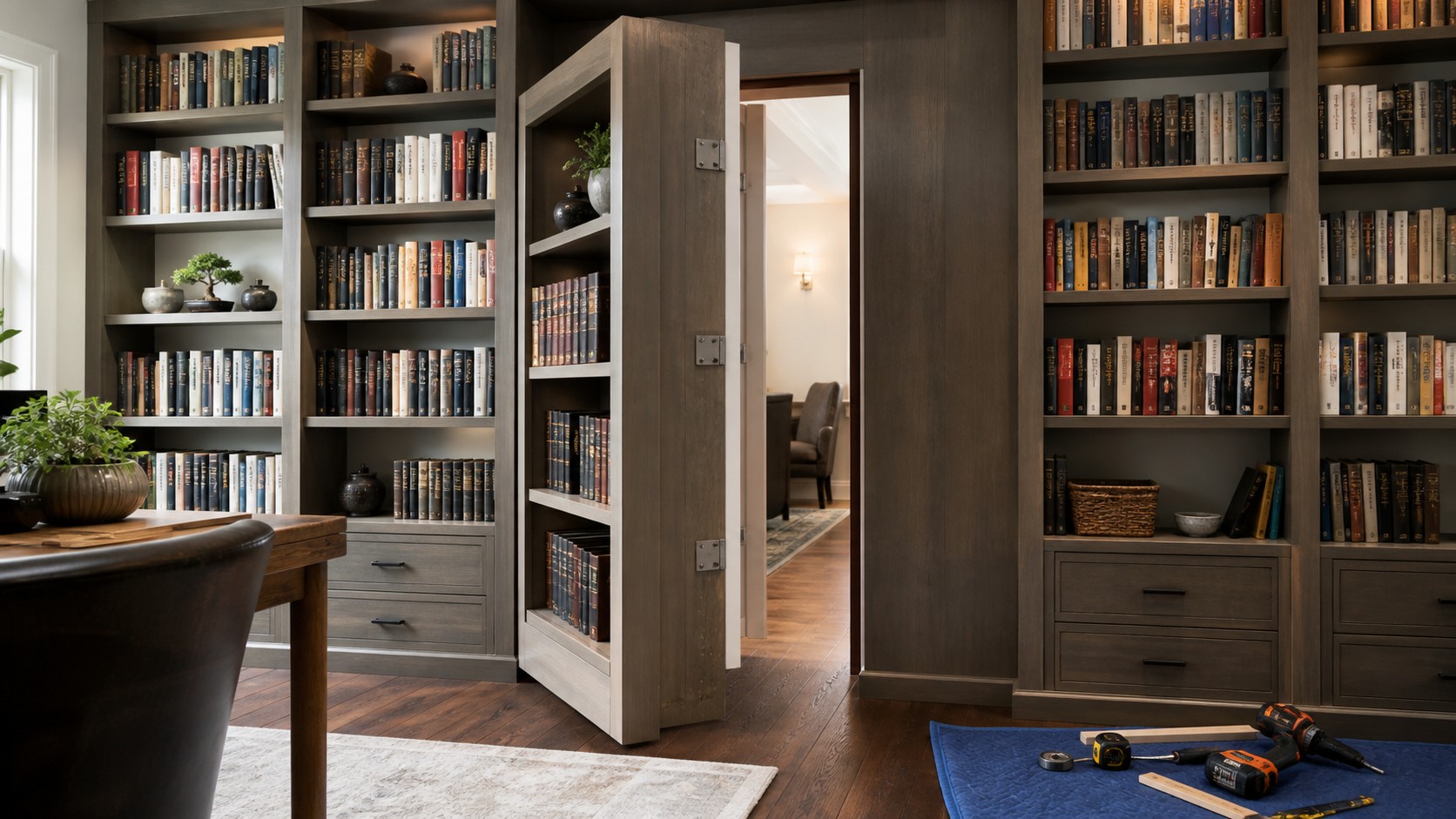
There are home projects that make a space nicer, and then there are showpiece builds that change how a space feels. A secret room behind a bookcase is the rare upgrade that delivers both. It adds usable square footage, boosts privacy, and brings a cinematic “wait—what?” moment into everyday life. The best part is that the reveal doesn’t have to look like a theme-park prop. With the right planning, a bookcase door can read as legitimate built-in millwork while hiding a smooth-swinging entry to an entirely separate room. This guide breaks down the full process: choosing the right wall, framing the opening, selecting the hardware that can handle real weight, building a bookcase that won’t sag, hiding the seams, and finishing the space behind the door so it feels intentional—not like an unfinished closet. Whether your secret room becomes a home office, speakeasy lounge, gear vault, or quiet reading den, the steps are the same: structure first, precision second, style last.
Step One: Decide What the Secret Room Is For
Before you design the door, define the room. A secret storage room only needs enough space to step inside and access shelves. A secret office needs lighting, outlets, ventilation, and possibly sound control. A lounge needs comfort, ambience, and a layout that doesn’t feel cramped once the door swings open. Function dictates everything: door size, swing direction, hardware rating, framing reinforcement, and how much “bookcase depth” you can afford to give up in the main room.
This is also the moment to think about access frequency. If you’re opening the bookcase daily, the mechanism should be effortless and durable. If it’s a true occasional-use hideaway, you can prioritize concealment over convenience. The best builds balance both: the bookcase operates like a normal door—quiet, smooth, predictable—while the outside still reads as a solid, permanent built-in.
Step Two: Pick the Right Wall and the Right Illusion
The easiest hidden door to spot is the one placed where it doesn’t belong. A bookcase door works best when bookshelves already make sense in the space—off a living room, in a hallway library niche, inside a home office, or as part of a media-wall system. If your room doesn’t naturally call for a full-height built-in, you can still make it work by designing the bookcase wall as a broader feature: multiple shelf bays with one bay becoming the door. When the door is only one panel inside a larger arrangement, it becomes much harder to detect. From a practical standpoint, you’ll want a wall that allows a clean rough opening and enough clearance for the swing. Measure the footprint of the door path and make sure it won’t crash into furniture, light switches, or adjacent walls. Pay attention to sightlines too. If the door seam faces a bright window at an angle, shifting shadows can give it away. Flat, even lighting is your friend on the “public” side.
Step Three: Confirm Structure and Code Reality Before You Cut
Every dream build meets reality inside the studs. The biggest early question is whether the wall is load-bearing. If it is, you may still be able to create the opening, but the framing plan becomes more serious and sometimes requires engineering guidance. Even in non-load-bearing walls, you’ll need to reroute electrical lines, relocate outlets, or adjust HVAC returns. A stud finder helps, but the real truth comes from carefully opening a small inspection section and verifying what’s inside.
Also consider egress and safety. If the secret room will be occupied for long periods, it needs safe airflow and appropriate electrical planning. If it’s a finished habitable space, local code may treat it differently than simple storage. The goal isn’t to “make it secret from inspectors,” but to build it responsibly so it stays comfortable and safe.
Step Four: Understand the Core Challenge—Weight and Leverage
A bookshelf door isn’t a normal door. It’s a lever. Every inch of bookcase depth adds torque, and torque punishes hardware and framing if you underbuild. Even when the shelves aren’t packed with hardcovers, a full-height bookcase panel is heavy—especially if you use solid wood, thick plywood, or decorative face frames. Add books, and you’re in a different league. This is why most “it worked on YouTube” failures come down to the same problem: the door sags. Once it sags, the bottom drags, the seams widen, the latch misaligns, and your secret becomes obvious. The solution is straightforward, but it requires respect for physics: build the door rigid, distribute weight, reinforce the opening, and choose hardware engineered for heavy panels.
Step Five: Choose a Door System That Fits Your Space
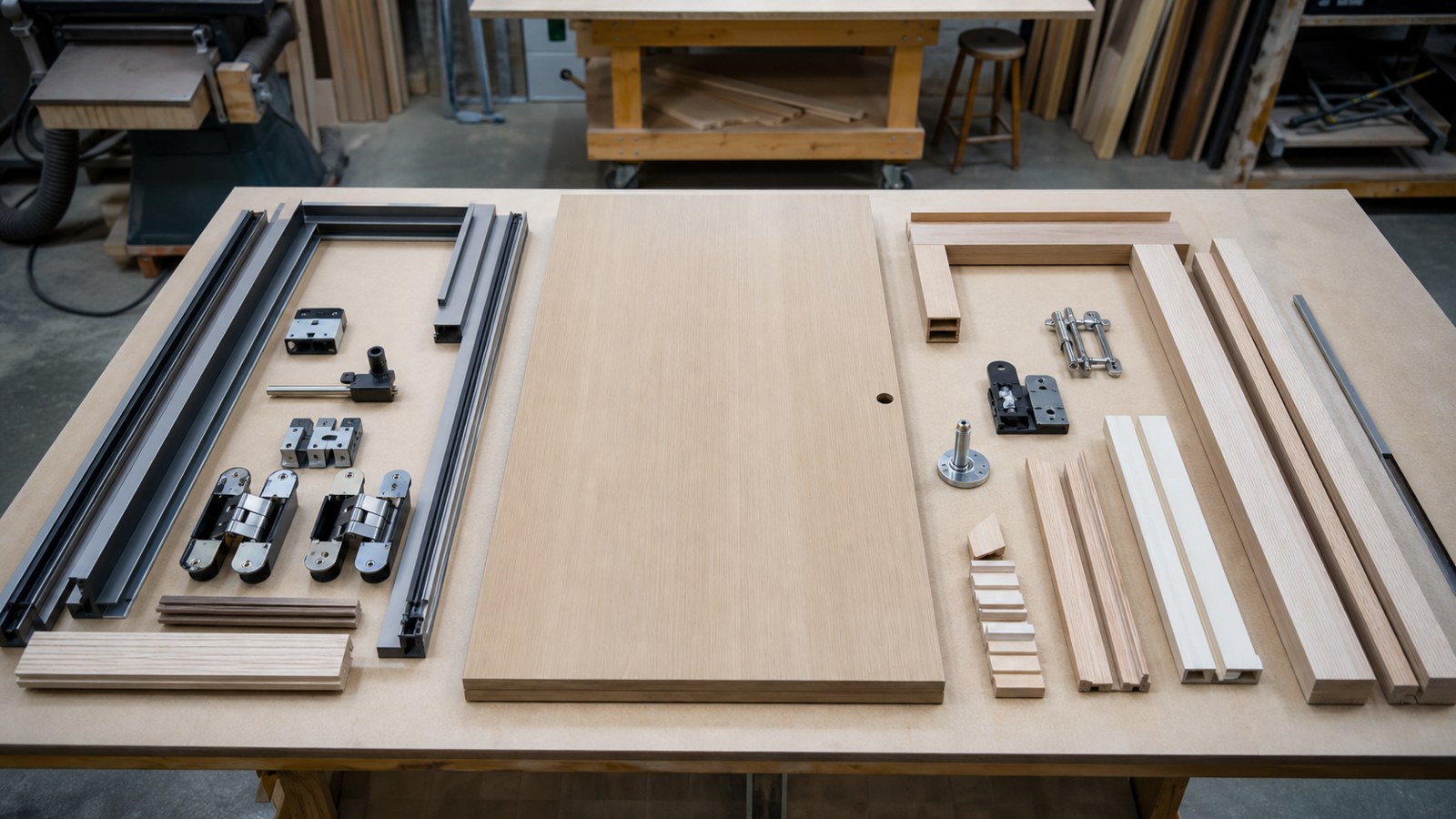
There are two common approaches: a hinge-based bookcase door or a pivot-based system. A hinge-based system feels familiar and can be easier to integrate with standard door concepts, but it places more stress on the hinge-side framing. Pivot systems carry weight differently. A well-chosen pivot hinge system can make a heavy door feel surprisingly light because the load transfers into the floor and ceiling rather than hanging entirely off the jamb.
Your choice depends on your build constraints. If your floor is solid and level and you want a premium feel, pivot hardware is often the cleaner solution. If your wall framing is robust and you want simpler carpentry, heavy-duty concealed hinges can work well. Either way, the hardware must be rated for the full weight of the bookcase door—door plus shelves plus contents—without running at its absolute limit. When hardware runs near its max, it works fine… until it doesn’t.
Step Six: Frame the Rough Opening Like You Mean It
Hidden doors reward tight tolerances, but tight tolerances only work if the opening stays square over time. Reinforce the rough opening with doubled studs where needed, and ensure the header (if used) is appropriately sized for the span and load conditions. Even if the wall isn’t load-bearing, you want the opening stiff so the door gaps don’t change with seasonal movement. You’ll also want to plan how the bookcase face aligns with the finished wall plane. In most convincing builds, the “front” of the bookcase sits flush with surrounding trim lines or adjacent built-in sections. This is easier when you plan the finish thickness early: drywall, paneling, baseboard height, crown molding, and any applied wall details.
Step Seven: Build a Bookcase Door That Won’t Rack
A bookshelf door must behave like a door slab: rigid, square, and resistant to twisting. The biggest enemy is racking—where the rectangle becomes a parallelogram under load. You fight racking with structure: a strong back panel, solid joinery, and a frame that acts like a single unit.
Many builders use high-quality plywood for the carcass because it’s stable, strong, and resists warping better than many solid woods. A full back panel, properly fastened, turns the shelf box into a structural diaphragm. Face frames add stiffness too, but they should complement the carcass rather than substitute for it.
Shelf design matters as well. Deep shelves hold more weight farther from the hinge or pivot, increasing torque. If the “door” shelf depth is more about the illusion than actual storage, shallow shelves can still look full with carefully chosen decor items while keeping weight closer to the axis.
Step Eight: Plan the Book Layout Like an Engineer, Not a Librarian
If you plan to store real books on the moving shelves, distribute weight strategically. Keep heavier books lower and closer to the hinge or pivot side. Avoid loading the outer edge with dense hardcovers. If you want the look of a fully packed shelf without the weight, mix in lighter props: decorative boxes, faux book sets, framed photos, or sculptural objects. The illusion doesn’t require every inch to be paper.
Also consider how items behave during movement. Loose decor can shift or fall when the door swings. A subtle lip at the shelf edge, museum putty, or discreet retainers can keep things stable without making the shelves look “secured.”
Step Nine: Conceal the Seam Without Creating a Telltale Pattern
The best hidden doors aren’t perfectly invisible; they’re visually logical. You don’t want the seam to look like you tried to hide a seam. That means avoiding a lone, suspicious vertical line in the middle of a blank wall. Instead, make the seam part of a bigger story: multiple shelf bays, panel rhythms, consistent vertical stiles, or repeating trim details. On the floor, make sure baseboards align and returns are clean. At the top, crown molding continuity can sell the illusion, but it must be installed in a way that doesn’t bind the door. If you’re using a modern style, a shadow gap can be your best friend, making the reveal line look like a design choice rather than a door perimeter.
Step Ten: Latches, Releases, and the “How Do You Open It?” Question
A secret room isn’t very secret if there’s a big handle. Most bookcase doors use concealed latching methods: magnetic push latches, touch releases, or hidden pulls integrated into the shelf design. The goal is to keep the face clean while still making access practical.
If you want extra theater, you can create a disguised trigger: a specific book that acts as a pull, a hidden lever behind a decor piece, or a mechanical release concealed in trim. The key is reliability. A clever mechanism that fails turns into a frustration fast. Build the “secret” flourish on top of a dependable core latch so the door still opens when you need it to.
Always include an interior release. Even if the room is mostly for storage, you never want a situation where someone can’t exit easily from inside.
Step Eleven: Light, Sound, and Air—What Makes the Secret Room Feel Real
The secret room is where the magic becomes a place. Lighting should feel purposeful, not like a utility closet. Soft wall sconces, hidden LED strips, or dimmable overhead lighting create an atmosphere that matches the reveal moment. If you want the room to feel high-end, hide the light sources and let the surfaces glow.
Ventilation is the practical side of comfort. A sealed hidden room gets stuffy quickly. Integrate airflow discreetly, whether through HVAC planning, a passive vent strategy, or a quiet fan system designed to keep the room usable for long stretches. Sound control is optional but powerful. If your secret room is a work zone or entertainment space, insulated walls and door seals can dramatically improve privacy. Even basic weather seals around the door perimeter can reduce sound leaks and also help prevent light bleed that might reveal the door outline.
Step Twelve: Finish Work That Makes or Breaks the Illusion
A bookcase door can be structurally perfect and still look wrong if the finishes don’t match. Paint sheen mismatches are notorious for exposing hidden features. If the surrounding built-ins are satin and the door is eggshell, the light will betray you. The same goes for wood stain tone and clearcoat gloss.
Take the time to finish the entire wall system as one cohesive unit. If possible, build and finish the bookcase door and adjacent shelves together, using the same materials and finish schedule. When everything shares the same grain direction, edge profile, and color depth, the eye stops hunting for differences.
Then test it in real lighting. Morning light, afternoon glare, and evening lamps all reveal different truths. Adjust where needed before calling it done.
Step Thirteen: Testing, Tuning, and Long-Term Maintenance
Hidden doors live and die by alignment. Test the door’s swing repeatedly before final trim and paint. Listen for rubbing, watch for shelf vibration, and check that the latch catches cleanly every time. If you’re using concealed hinges, dial them in. If you’re using pivots, ensure the anchors are tight and the door hangs true.
Over time, houses move. Seasonal humidity changes wood, and floors settle. Plan for future micro-adjustments. Choose hardware that allows tuning, and keep access to adjustment points. A quick annual check can keep the door feeling like a premium mechanism instead of a finicky novelty.
Final Thoughts: Build the Secret Like a Pro
Creating a secret room behind a bookcase is one of the most satisfying builds you can tackle because it blends storytelling with real craftsmanship. Done right, it’s not just a hidden entry—it’s a showpiece feature that looks intentional from every angle, operates smoothly, and keeps its mystery without sacrificing safety or comfort. Treat the project like a door build first and a magic trick second. Reinforce the structure, respect weight and leverage, choose hardware that belongs in the heavy-duty world, and sweat the finishing details until the seam stops announcing itself. When you get it right, the room doesn’t just hide behind a bookcase. It waits there—quietly—until someone earns the reveal.