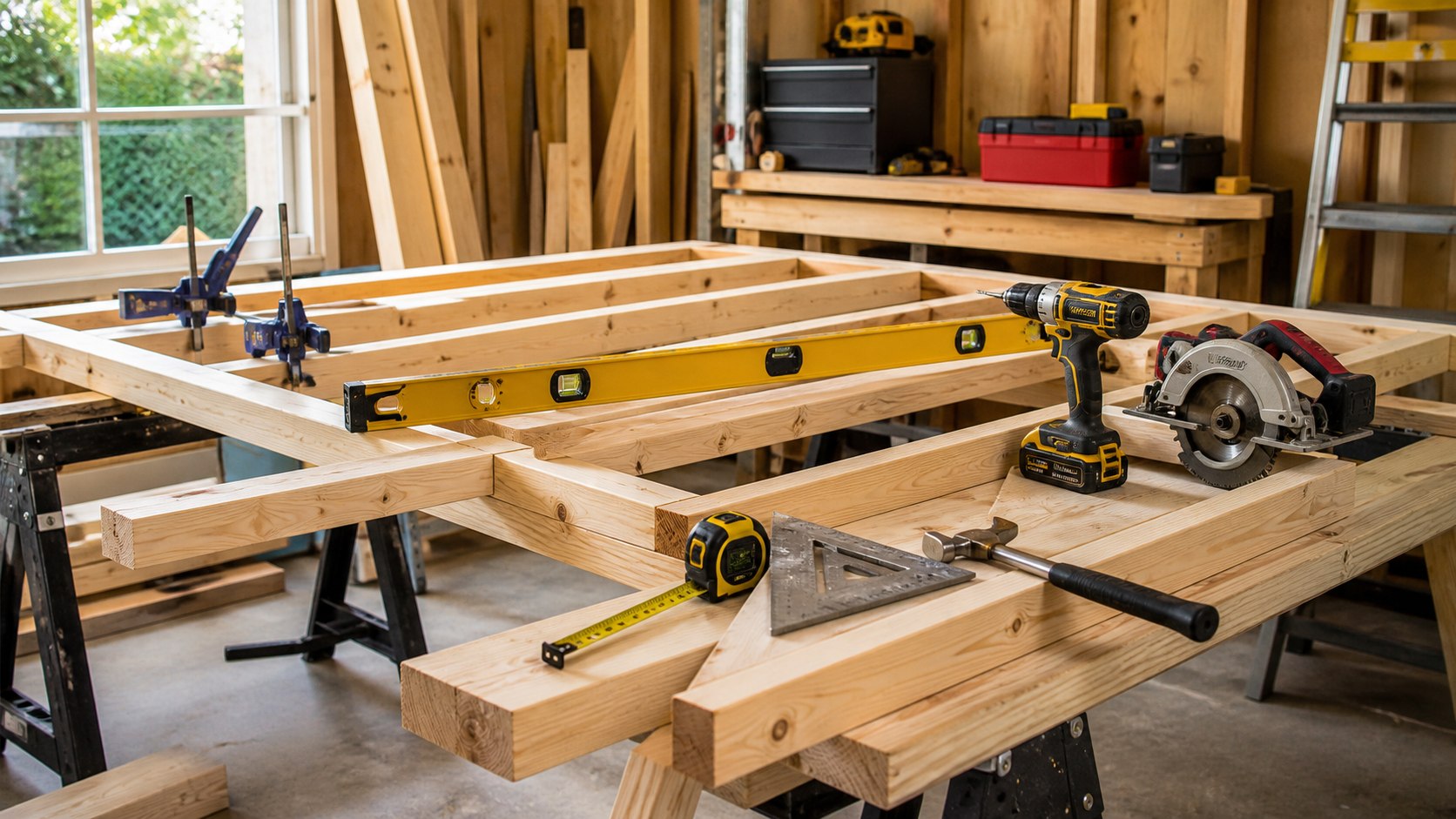
Wood and metal studs both make walls, but they do not create the same kind of wall. Wood is easier to cut, easier to fasten into, and familiar on most residential jobs. Metal is lighter, straighter, and useful for non-load-bearing partitions where rot, insects, or warped lumber are part of the concern.
The better choice comes from the room itself. A basement divider, bathroom chase, garage partition, closet wall, cabinet run, or structural remodel will not all reward the same material. Before buying studs, decide what the wall must support, what utilities will pass through it, how much moisture risk exists, and what a future repair will require.
A: Not automatically. They are best for straight, light partitions with planned backing and correct fasteners.
A: Some systems can be engineered for loads, but do not assume ordinary light-gauge studs are structural.
A: Choose wood for easy fastening, flexible repairs, heavy mounting, and familiar residential trim work.
A: Choose metal for non-load-bearing partitions where straight stock, low weight, and clean layout matter.
A: Address moisture, air gaps, slab contact, insulation, and wall covering before trusting either material.
A: Yes. Plan backing anywhere cabinets, rails, shelves, doors, or heavy hardware will attach.
A: Yes. Use approved holes, bushings, protection, and routing methods for sharp metal edges.
A: Compare the whole job, including tools, fasteners, blocking, labor, waste, and future repairs.
A: Wood is often simpler for small residential projects because cutting, fastening, and backing are familiar.
A: Confirm backing, door support, utilities, moisture details, sound goals, fire requirements, and photos.
Start With the Wall’s Real Job
The material choice should follow the wall’s job, not the other way around. A short partition that only divides a laundry area is different from a kitchen wall that will carry cabinets, a bathroom wall full of plumbing, or a remodel opening that may affect structure. Wood and metal studs both look simple before drywall goes up, but they ask for different fastening, backing, cutting, and inspection habits.
Begin by listing what the wall has to do. Will it carry load? Will it hold a door? Will it support shelves, handrails, grab bars, cabinets, or a television? Will plumbing or electrical runs pass through it? Will one side face a damp basement, garage, bath, or utility space? Those questions usually narrow the choice faster than a broad debate about which stud is better.
Do Not Treat Structural Walls Casually
Most light-gauge metal studs sold for interior partitions are not a direct substitute for residential load-bearing lumber. Structural steel framing exists, but it is a different design category with different gauges, connectors, engineering, and inspection expectations. For a homeowner comparing ordinary wall studs, metal usually belongs in the non-load-bearing conversation unless a professional design says otherwise.
Wood is common in residential structural framing, but that does not make every wood wall simple. Load paths, headers, bearing points, bracing, fasteners, lumber size, span, and local code still matter. If a wall supports joists, rafters, beams, or another wall above, the material decision should come after the structure is understood.
Where Wood Studs Make the Most Sense
Wood studs are still the natural fit for many house projects because they match the way most residential walls are already built. They tie easily into existing wood framing, accept common nails and screws, and can be cut, shimmed, planed, notched, or blocked with familiar tools. For a small remodel, that flexibility can matter more than the theoretical straightness of metal.
Wood also gives the finished room practical fastening strength. Trim, jambs, blocking, shelving, cabinet rails, stair parts, and hardware often have an easier time finding bite in wood. A wall with many future attachments is usually friendlier when solid backing can be installed and modified without special hardware.
Where Metal Studs Earn Their Keep
Metal studs are useful when the wall is a non-load-bearing partition and straightness, light handling, and resistance to rot or insects are important. They are common in commercial interiors, basement partitions, office buildouts, utility rooms, and long divider walls where bowed lumber would make drywall finishing more frustrating.
The appeal is not just weight. Metal studs are manufactured consistently, so they are less likely to crown, twist, or shrink after installation. They can be carried through tight hallways without the same bulk as lumber, and they are easy to store flat. Those benefits are real, but they only help when the wall design also handles backing, utilities, fastening, and corrosion risk.
Basement Walls Need Their Own Decision
Basements are one of the places where the comparison becomes practical. Wood can work well in a basement when water is controlled, the bottom plate is treated or properly separated from concrete, and the wall assembly allows drying. Metal can be appealing because it will not rot the way wood can, but metal can still corrode and does not solve foundation moisture by itself.
Before choosing either material, inspect the foundation area. Look for damp slab edges, water stains, efflorescence, musty odors, peeling paint, rusted mechanical parts, or old patch lines. A stud material cannot compensate for a basement that still leaks. Fix water entry, drainage, vapor issues, and ventilation before framing traps the problem behind a new wall.
Moisture Resistance Is Not Moisture Permission
Metal’s resistance to rot is often misunderstood. It is better than untreated wood in some damp-risk situations, but it is not permission to frame against wet concrete or ignore condensation. Damaged galvanizing, harsh environments, and persistent moisture can still lead to corrosion. The bottom track and fasteners are especially worth thinking about because they sit closest to the slab or floor.
Wood has its own moisture rules. Untreated lumber should not sit directly on concrete, and damp cavities can lead to swelling, mold, stains, and decay. Pressure-treated plates, capillary breaks, foam separation, drainage details, and approved wall assemblies may be required depending on the room. Moisture planning is part of framing, not a separate detail to worry about later.
Think About Doors Before Choosing
Door openings are where a weak material plan shows up quickly. A door needs a square rough opening, solid jamb support, stable fastening, and framing that can handle repeated movement. Wood makes many residential door openings straightforward because king studs, jack studs, headers, trimmers, and blocking create familiar fastening surfaces.
Metal-framed openings can also work, but they should be detailed for the door. The track, studs, clips, reinforcement, and screws have to match the door weight and use. Pocket doors, barn doors, heavy solid-core doors, and high-traffic openings deserve extra planning. If the wall’s most important feature is a door, choose the framing method around that opening first.
Plan Backing Before Drywall
The easiest wall to live with is the wall that has backing exactly where it will be needed. Wood studs make that simple because blocking can be installed between studs with ordinary lumber. Cabinet rails, grab bars, shelving, handrails, mirrors, hooks, and wall-mounted televisions all benefit from solid support hidden behind the finish.
Metal walls can support loads too, but the backing must be planned. That may mean plywood strips, wood blocking, specialty backing, heavier-gauge members, or rated anchors. The mistake is building a metal stud wall as if heavy items will fasten into it later the same way they would fasten into lumber. Decide what the wall will carry before the drywall crew closes it.
Compare Cutting and Jobsite Cleanup
Wood cutting creates sawdust, offcuts, and the usual noise of saw work. Most homeowners already understand the tools: circular saw, miter saw, drill, driver, square, level, and hammer or nailer. Wood pieces are easy to mark, trim, and recut when the room is a little out of square.
Metal cutting is different. Aviation snips, locking pliers, a screw gun, and sometimes a metal-cutting blade may be needed. Cut edges can be sharp, scraps are uncomfortable underfoot, and metal cutting can be loud. Gloves, eye protection, and careful cleanup matter because the material is less forgiving when handled casually.
Fasteners Change the Workflow
Wood framing is forgiving because nails and screws bite into solid material. That does not mean any fastener will do, especially near treated lumber, connectors, structural details, or masonry. Still, wood gives the installer many familiar fastening options, and small adjustments are usually simple.
Metal framing relies on screws made for the gauge and task. Framing screws, drywall screws, track fasteners, anchors, and backing fasteners may all be different. Overdriven screws can strip thin metal, and underdriven screws can leave proud heads that interfere with drywall. A clean metal wall often comes from good screw control as much as good layout.
Utility Runs Require Different Protection
Electrical and plumbing work should be planned before framing is covered. In wood, holes and notches must follow rules that protect the strength of the stud and keep cables or pipes away from future screws. Where utilities pass close to the face, protection plates may be needed.
Metal studs may have factory knockouts, but sharp edges still matter. Grommets, bushings, sleeves, or other protection may be needed so wiring does not rub against metal. Plumbing runs can transmit sound or vibration if they are not isolated well. The wall material changes the details, but the goal is the same: utilities should be protected, inspectable, and not improvised through the weakest part of the frame.
Sound Control Depends on the Whole Wall
Stud material can influence sound, but it is rarely the whole answer. A quiet wall depends on insulation, drywall layers, sealing, penetrations, outlets, ducts, doors, and sometimes resilient channels or sound isolation clips. A poorly sealed wall with good studs will still leak sound.
Wood walls often feel solid because the framing is stiff and easy to fasten into. Metal walls can perform well in certain sound assemblies, but they need the right drywall, spacing, insulation, and sealing details. For bedrooms, offices, media rooms, and shared walls, choose the full assembly rather than assuming one stud type will fix noise by itself.
Drywall Finish Quality Starts With Straight Framing
Metal studs can make long walls easier to finish because they tend to be straight and consistent. That helps drywall seams, corners, and skim work look cleaner. The benefit is most obvious on long, open walls where a bowed stud would telegraph through paint under side light.
Wood can finish beautifully too, but the installer has to select lumber carefully. Crowns should face consistently, twisted pieces should be rejected for visible areas, and bad studs should not be saved for door openings or tile walls. Whether the frame is wood or metal, drywall finish quality starts before the first sheet goes up.
Fire Performance Comes From the Assembly
Metal does not burn, which can make it attractive in certain walls. Wood is combustible, but it is allowed in many residential assemblies when built correctly. The important point is that fire performance is not decided by one stud alone. Drywall type, layers, penetrations, blocking, sealants, insulation, doors, and connections all affect the wall’s rating or required separation.
Garages, mechanical rooms, multi-family buildings, basements, and utility areas may have specific rules. Do not assume metal automatically satisfies them, and do not assume wood automatically fails. Build the approved assembly for the location.
Cost Is More Than the Price Per Stud
The cheapest material on the shelf is not always the cheapest wall. Wood prices move with lumber markets. Metal prices vary with gauge, track, screws, accessories, and availability. Either option can look cheaper until the project needs tools, backing, anchors, special fasteners, delivery, or extra labor.
Compare the wall as a system. Count studs or track, plates, blocking, anchors, screws, protective plates, utility accessories, waste, and time. Also account for mistakes. A material that saves money at purchase can cost more if the installer has to redo stripped screws, missing backing, warped lumber, or unsupported openings.
Future Repairs Should Influence the Choice
Wood walls are usually easy to modify later. A homeowner can open a small area, add blocking, adjust trim backing, or repair a section with common tools. That makes wood appealing in rooms that may change: kitchens, workshops, storage rooms, closets, garages, and utility spaces.
Metal walls can be modified, but the work is different. Adding backing after drywall can be more involved, cut edges are sharp, and fastener choices matter more. If the wall is likely to receive new hardware, shelves, rails, or mechanical changes later, future access should be part of the original decision.
Choose Wood When Fastening and Flexibility Matter
Wood is usually the better residential choice when the wall needs strong attachment points, door-heavy framing, cabinet support, simple future modifications, or compatibility with existing wood structure. It is also easier for many DIYers because the tools, fasteners, and repair habits are familiar.
That does not mean wood is automatically better. Poor lumber selection, damp bottom plates, missing blocking, crooked openings, and careless utility holes can ruin a wood wall. Choose wood when its strengths match the wall, then build it carefully enough for those strengths to matter.
Choose Metal When Straight, Light Partitions Matter
Metal is often the better fit for straight non-load-bearing partitions, basement layouts with moisture-aware assemblies, commercial-style interiors, and projects where carrying light materials through tight spaces matters. It can make clean lines easier when the installer understands track layout, screw control, backing, and utility protection.
Metal is not automatically simpler. It asks for different tools, different fasteners, careful handling, and planned support for anything heavy. It works best when the wall will mainly divide space, carry drywall, and avoid complicated mounted loads unless backing has been designed.
Final Wood vs. Metal Stud Review
Wood studs are familiar, flexible, and strong for many residential walls. Metal studs are straight, light, and useful for many non-load-bearing partitions. The right answer depends on structure, moisture, openings, mounted loads, utility paths, finish quality, and the skill of the person building the wall.
Choose wood when the wall needs solid fastening, structural compatibility, door strength, heavy backing, or easy future changes. Choose metal when the wall is a non-load-bearing partition where straightness, light handling, and resistance to rot or insects are more valuable than fastening into solid lumber. The best wall is not the one made from the trendier material; it is the one designed for how the room will actually be used.