Framing a door opening is one of those jobs where the rough lumber disappears, but every small choice keeps showing up after the wall is finished. A door that swings cleanly, latches without rubbing, and takes trim neatly usually starts with a rough opening that is plumb, square, level, and sized for the actual door unit rather than a guess.
The safest approach is to treat the opening as a complete assembly: king studs, jack studs, header, cripple studs, plate cuts, flooring height, casing space, door swing, and any load above the wall. When those pieces are planned together, the door installer has room to shim and adjust instead of forcing the jamb into framing that should have been corrected earlier.
A: Obtain the complete unit's required rough opening and installation details before laying out the framing.
A: No. Have the structural role determined from the relevant construction and load paths before alteration.
A: Not reliably. The span, loads, materials, supports, and applicable design requirements may differ.
A: Bowing or misalignment can make the available clearance vary between the head, middle, and base.
A: Also check the required dimensions, straight framing faces, side plumb, head level, and relevant support details.
A: Coordinate the intended finished floor and threshold with the door's installation requirements early.
A: Have the services and framing coordinated by appropriate qualified trades rather than burying or damaging the cable.
A: It may conceal a visual gap but cannot make distorted framing a suitable base for correct jamb alignment.
A: Coordinate structural support, threshold geometry, flashing, drainage, weather layers, and the exact unit's installation system.
A: Verify approved framing and support, opening geometry, safely coordinated services, floor/trim relationships, and required inspections.
Start With the Actual Door
The rough opening should be based on the door unit that will be installed, not only on the name of the door. A prehung bedroom door, a slab for a custom jamb, a pocket door, a bifold closet door, a cased opening, and an exterior door all ask for different framing details. The manufacturer instructions or the actual jamb size should settle the final width and height.
For many prehung interior doors, the rough opening is wider and taller than the door slab because the jamb needs space for shims. That space is intentional. It allows the hinge side to be brought plumb, the head jamb to be leveled, and the reveal around the slab to be adjusted after the wall is closed.
Decide Whether the Wall Carries Load
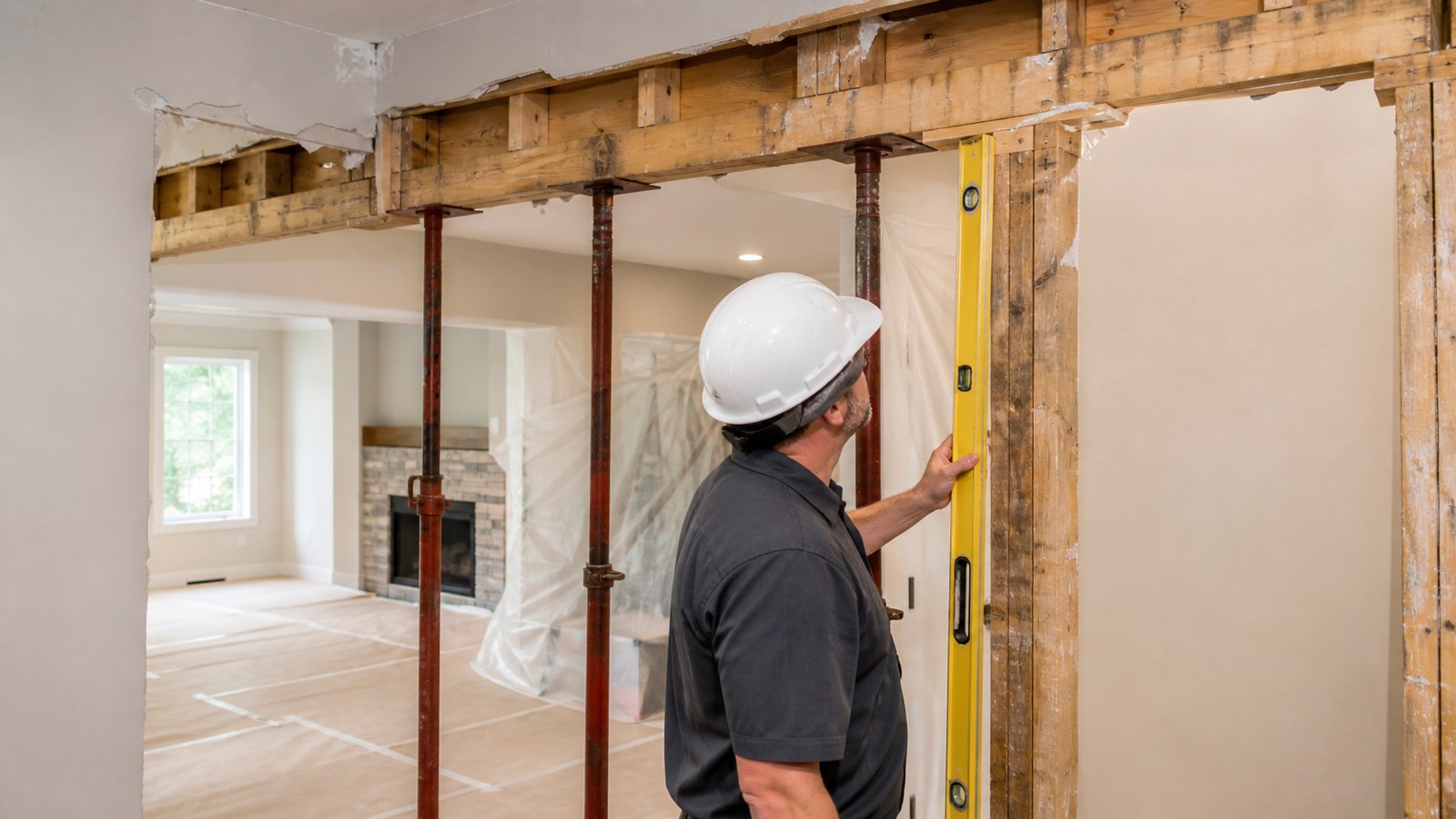
Before cutting an opening into an existing wall, determine whether the wall is load-bearing. A partition wall may only need ordinary doorway framing. A load-bearing wall needs a header sized for the span and the load above it, plus solid support at both ends so weight can move around the opening safely.
Do not rely on one clue. Joist direction, attic framing, basement beams, stacked walls, roof loads, and original house plans can all matter. If there is any doubt, pause and get qualified guidance. Removing studs from a bearing wall without temporary support can turn a door project into a structural repair.
Check Both Sides of the Wall
A doorway affects more than the room where the cut begins. Look at the opposite side of the wall for switches, outlets, baseboards, cabinets, plumbing fixtures, vents, tile edges, stair trim, or built-ins. The opening may be perfectly centered from one side and awkward from the other.
Existing walls may also hide electrical cable, plumbing, HVAC, low-voltage wiring, blocking, old patches, or abandoned lines. Open enough wall to see what is actually there before framing is treated as simple. Cutting around a hidden utility is slower than laying the door out correctly in the first place.
Plan the Finished Floor Height
Door height is tied to the finished floor, not just the subfloor. Carpet, hardwood, tile, underlayment, thresholds, transition strips, and future flooring changes can all affect clearance below the door. If the rough opening ignores the finished floor, the slab may rub, drag, or sit with an awkward gap.
Exterior doors need extra attention because the sill, threshold, flashing, slope, and weather protection are part of the installation. Interior bathroom and laundry doors also deserve a floor-height check because tile and underlayment can raise the finished surface more than expected.
Lay Out the Opening on the Plates
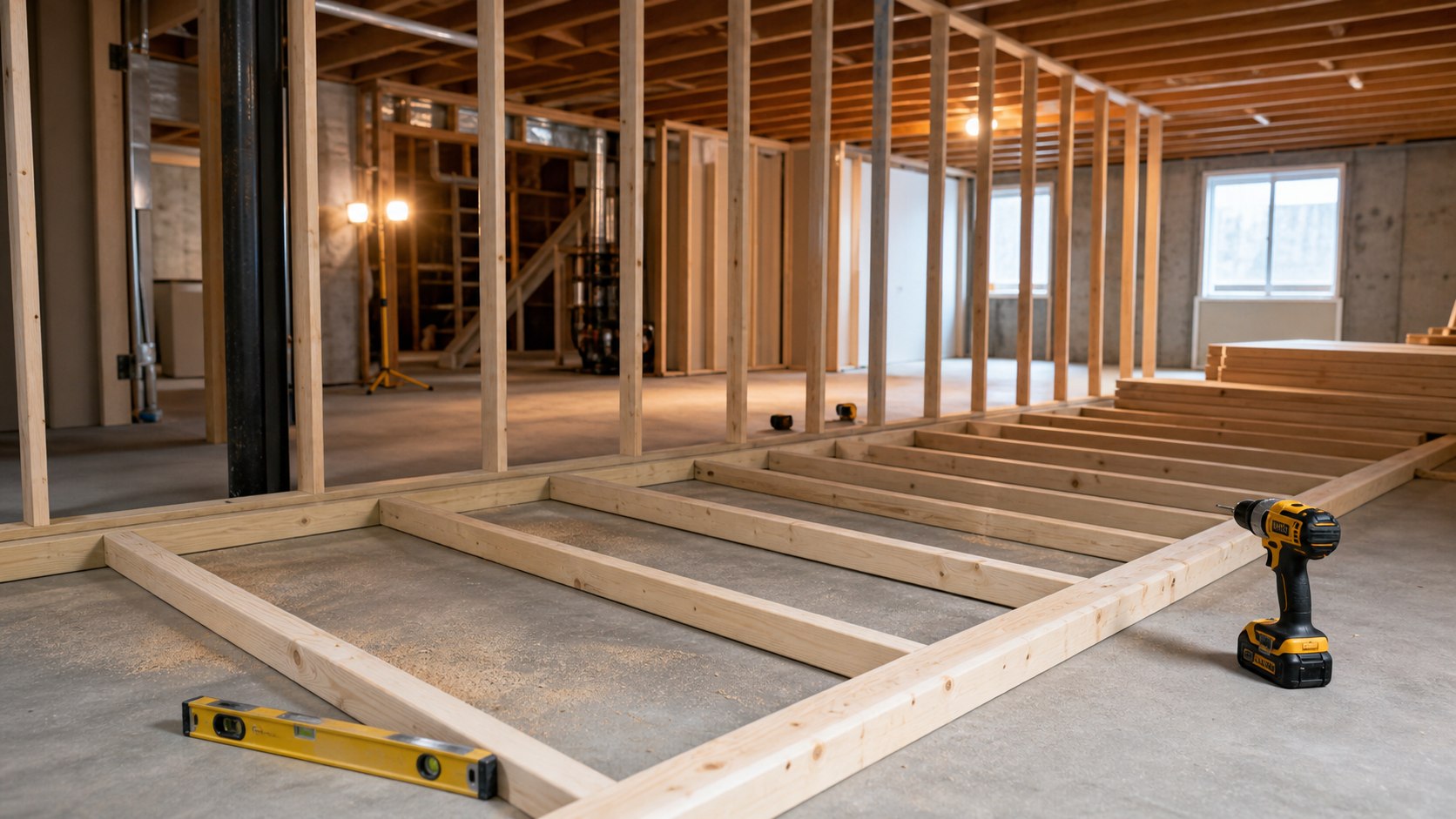
For a new wall, mark the rough opening on the top and bottom plates before studs are installed. Mark the king stud locations, jack stud locations, door centerline if needed, and the section of bottom plate that will later be cut out. Clear plate marks keep the opening from shrinking as parts are added.
For an existing wall, transfer the layout from floor to wall with a level. Do not trust a single tape mark across drywall if the floor is uneven or the wall is out of plumb. Mark the intended rough opening, then mark the framing members that will create it so the cut lines and stud lines do not get confused.
Use Straight Lumber Around the Door
The studs that frame the opening should be some of the straightest pieces in the stack. A bowed king stud, twisted jack stud, or crowned header may not look terrible before drywall, but it can make the jamb hard to set and the reveal hard to even out.
Sight down each piece before it goes into the doorway. Put questionable material in a less critical part of the wall or replace it. Doors are unforgiving because the slab moves through the opening every day and shows small errors repeatedly.
Understand King Studs and Jack Studs
King studs run from the bottom plate to the top plate and form the outside edges of the doorway assembly. Jack studs, sometimes called trimmer studs, sit inside the king studs and support the header. The header bears on the jack studs, and the jack studs carry that load down to the floor system.
This bearing path matters even on simple jobs. A header should not hang from nails alone, and scrap blocks should not replace proper support when the wall carries load. The framing should make it obvious how weight travels around the opening.
Size the Header for the Situation
Header size depends on the opening width, wall type, load above, lumber species, local code, and whether the door is interior or exterior. A non-bearing closet doorway may not need the same header as a wider opening in a bearing wall. A wide exterior door may need engineered lumber or a specific assembly.
Guessing header size is a poor shortcut. If the wall supports anything above it, confirm the required header before cutting. Local code tables, approved plans, an engineer, or an experienced carpenter can prevent a hidden framing mistake from becoming a sagging wall or cracked finish later.
Build New Walls Flat When Possible
If the door is going into a new partition, assembling the wall flat on the floor often makes the opening easier to control. The plates can be marked, the king studs and jack studs can be fastened squarely, the header can be installed, and cripple studs can be aligned before the wall is raised.
After the wall is lifted, check the opening again. Raising a wall can rack the assembly slightly, and fastening it to the floor and ceiling can change alignment. A doorway that was square on the floor still deserves a second check once it is standing.
Frame Existing Walls With More Patience
Adding a door to an existing wall is slower because the wall already has finishes, utilities, old stud spacing, and unknown conditions. Remove enough drywall or plaster to work cleanly. Trying to frame a precise opening through a tiny hole often leads to weak fastening and missed problems.
If the wall might be bearing, temporary support may be needed before studs are cut. That support has to carry the load while the new header and jack studs are installed. This is not a cosmetic step, and it is not the part to improvise if the structure is unclear.
Keep the Sides Plumb
The hinge side of a door opening needs special attention because the door slab hangs from that side. If the rough opening is badly out of plumb, the jamb may require excessive shimming, the reveal may wander, and the door may swing open or closed on its own.
Use a level on the king and jack studs before fastening them permanently. If the surrounding wall is out of plumb, decide whether the doorway can be framed plumb inside that wall or whether the wall itself needs correction. Do this while framing is exposed, not after casing is being installed.
Keep the Header Level
The header sets the top of the rough opening. A header that is out of level can make the head jamb crooked and force trim to cover a mistake it cannot really hide. Check the header before fastening it fully, then check again after the assembly is tied together.
If the header is made from multiple pieces, keep crowns consistent and fasten the assembly so it acts as one unit. For a load-bearing opening, follow the fastening and spacing requirements that apply to the header type. A header should be both level and properly built.
Leave Consistent Shim Space
A tight rough opening is not a quality opening. The jamb needs room for shims on the hinge side, latch side, and head. Without that room, the door installer may have to plane the slab, force the jamb, or accept uneven reveals.
Too much space is also a problem because the jamb needs solid backing behind shim points. The goal is a consistent rough opening that matches the door manufacturer guidance. Measure at the top, middle, and bottom so one bowed stud does not quietly steal the shim space.
Cut the Bottom Plate at the Right Time
When framing a new wall, it is often helpful to leave the bottom plate continuous through the doorway while the wall is assembled and raised. The plate keeps the wall section aligned during construction. Once the wall is secured, the plate can be cut out of the doorway.
Make those cuts cleanly. A ragged plate cut can interfere with flooring transitions, jamb legs, or threshold installation. If finished flooring is already in place, protect it before cutting so the doorway starts with a neat base.
Frame Cripple Studs Above the Header
Cripple studs above the header continue the wall layout and support drywall or other finish material. They should line up with the regular stud spacing where possible. This gives drywall edges and future fasteners predictable backing.
Do not leave a weak area above the doorway just because the header feels solid. Door openings can concentrate movement, and unsupported drywall above doors is prone to cracks. Clean cripple framing helps the finished wall behave like the rest of the room.
Check the Opening for Square
Measure the rough opening width at the top, middle, and bottom. Then measure diagonally from corner to corner. Matching diagonal measurements show that the rectangle is square; different diagonal measurements show that the opening is racked.
This check is quick, and it catches problems that a simple width measurement can miss. A racked opening can still be the right width and height while making the door hard to install. Correct the frame before drywall locks the shape in place.
Think About Door Swing Early
Door swing affects how the room works. Mark the swing on the floor before framing is final. Check nearby light switches, furniture, cabinets, stairs, fixtures, appliances, closet shelves, and other doors. A door that fits the opening can still be annoying if it opens into the wrong space.
For small rooms, closets, bathrooms, and utility areas, stand in the room and imagine using it with the door open. Sometimes a left-hand versus right-hand swing matters as much as the rough opening itself.
Leave Room for Casing
The finished doorway needs casing or another trim detail around the jamb. If the opening is too close to a corner, cabinet, tile edge, window, or built-in, the trim may have to be ripped narrow or awkwardly notched. That can make a well-framed door look like an afterthought.
Lay out the casing width before committing to the opening. If a small shift gives the trim a cleaner landing, it is usually easier to make that decision before studs are cut and drywall is patched.
Coordinate Switches and Outlets
Doors often collide with electrical planning. A new opening can remove the wall space where a switch used to live, or the swing can cover a switch when the door is open. Existing cables may also pass through the area where king studs, jack studs, or a header need to go.
Electrical work should be handled safely and legally. Shut off power before inspection or demolition, verify circuits, and use a qualified electrician when rerouting is outside your skill set. Do not bury junctions or notch framing carelessly to avoid moving a cable.
Watch Exterior Door Details
Exterior door framing has to handle structure, weather, security, and water management. The sill needs proper support. The opening needs room for flashing and insulation. The threshold should work with the finished floor and exterior surface so water is directed away from the house.
If an exterior wall is load-bearing, the structural and weather details should be planned together. Installing the door into a poorly supported or poorly flashed opening can lead to sticking, leaks, rot, and finish damage that is much harder to fix later.
Inspect Before Drywall
Before closing the wall, check width, height, plumb, level, square, header bearing, fasteners, cripple studs, utility clearances, and backing near the opening. This is the best time to correct small errors because the framing is still visible and reachable.
Take photos before the wall is covered. Photos of header size, stud layout, wiring routes, blocking, and fasteners can help later when trim, hardware, or future renovation work raises questions about what is behind the finished surface.
Use the Door Fit as the Real Test
A good rough opening makes door installation feel controlled. The jamb should fit with steady shim space, the hinge side should come plumb without forcing, the head should sit level, and the slab should have an even reveal. The latch should meet the strike area without heroic adjustment.
If the installer has to twist the jamb, bury one side in shims, plane heavily, or hide large gaps with casing, the framing probably needed more attention. Trim can cover small visual gaps, but it cannot make a bad opening swing correctly.
Fix Problems Before Trim
When an opening is too narrow, too wide, racked, unsupported, or badly out of plumb, fix the framing before trim goes on. Pushing ahead may feel faster, but a sticking or drifting door is noticed every day. The rough work deserves correction while correction is still practical.
Small repairs at this stage can include replacing a bowed stud, adding solid backing, resetting a jack stud, trimming a plate more cleanly, or correcting a header that moved during fastening. Once paint and casing are finished, the same repair becomes more disruptive.
Final Door Opening Review
A door opening is successful when the structure, dimensions, and finished use all agree. Start with the actual door unit, confirm the wall type, plan the finished floor height, use straight stock, size the header correctly, and keep the sides plumb and the header level.
Before the wall is closed, measure the opening in several places, check diagonals, confirm casing space, photograph hidden work, and make sure utilities are safely routed. The final goal is simple: a door that installs without a fight, swings naturally, latches cleanly, and looks intentional after the framing disappears.