Wall framing is the skeleton of a room. For a beginner, the job becomes much easier when it is treated as a sequence of decisions instead of one big carpentry mystery. You are locating the wall, choosing the right plates and studs, marking a layout, fastening pieces securely, and checking the frame before the surface gets covered.
A good first wall does not need fancy tricks. It needs a clear plan, straight lumber, careful measurements, safe cutting, and enough patience to check plumb, level, square, and spacing more than once. Learn the parts of the wall first, then build in an order that keeps mistakes visible.
A: Learn the wall parts, layout sequence, and how to check plumb, level, and straightness.
A: Beginners should stay with non-load-bearing walls unless qualified help handles structural questions.
A: A sketch catches openings, blocking, corners, utilities, and finished-face decisions before lumber is cut.
A: Rushing layout and then trying to correct crooked marks with cutting or fastening.
A: Yes. Matching plate marks keep studs and openings aligned from top to bottom.
A: Follow the plan, code, drywall needs, and opening layout rather than guessing from memory.
A: Build flat when there is room to raise the wall safely and the ceiling height allows it.
A: Check backing, utilities, fireblocking, anchors, straightness, openings, and photos of hidden details.
A: Prioritize measuring, marking, square cuts, levels, clamps, safe cutting support, and good lighting.
A: Stop for structural uncertainty, permits, electrical work, plumbing, egress, or conflicting field conditions.
What Wall Framing Actually Does
Wall framing gives shape, support, and attachment points to a finished room. Studs hold drywall, trim, cabinets, shelving, and sometimes structural loads. Plates connect the studs to the floor and ceiling. Blocking gives extra support where hardware, fixtures, or finishes need something solid behind them.
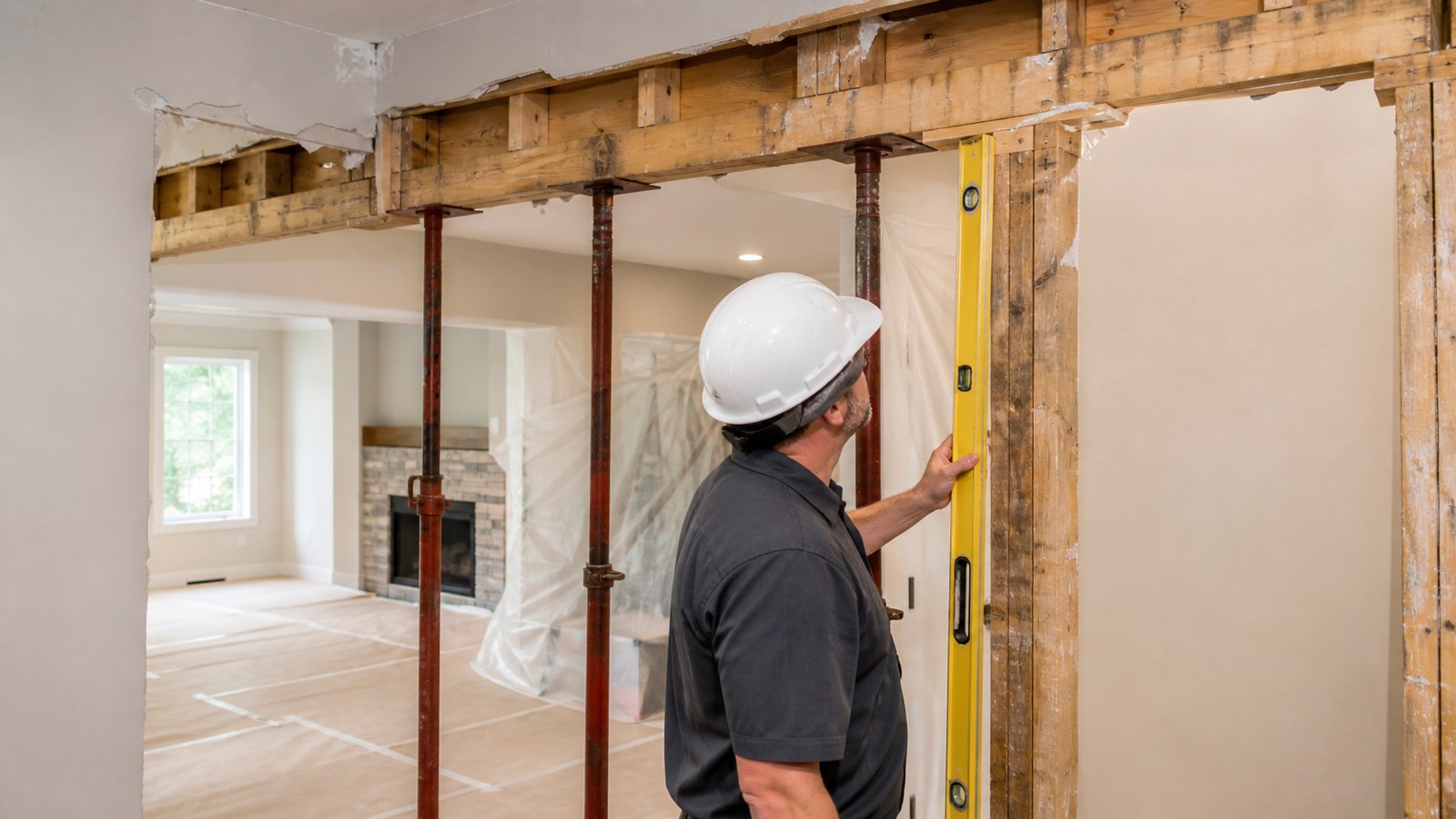
Some walls divide space without carrying major loads. Other walls help support floors, ceilings, roofs, or openings above them. A beginner should know the difference before cutting, moving, or removing any existing wall. Building a simple partition is very different from changing a load-bearing wall.
Learn the Main Parts of a Framed Wall
The bottom plate sits along the floor. The top plate runs along the ceiling or top of the wall. Studs stand vertically between those plates. Blocking runs horizontally between studs when the wall needs backing or bracing. Headers span over openings such as doors or windows.
Openings have their own vocabulary. King studs run full height beside the opening. Jack studs support the header. Cripple studs fill short spaces above or below openings. Once those pieces make sense, a framing diagram becomes much less intimidating.
Decide Whether the Wall Is Structural
Before building into an existing house, think about structure. A new non-load-bearing partition usually adds separation, privacy, storage, or a finished surface. A load-bearing wall affects the path that weight takes through the house.
If you are unsure whether an existing wall carries load, do not guess. Look at joist direction, beams, posts, attic framing, basement supports, and original plans if they are available. When the answer is unclear, ask a qualified pro before removing framing or changing support.
Check Permits and Code Requirements
Wall framing can trigger permit requirements, especially when the project adds rooms, changes egress, alters electrical or plumbing, finishes a basement, or affects structural framing. Local rules matter because they define stud size, fireblocking, pressure-treated lumber needs, fastening, insulation, and inspection points.
Checking early prevents rework. A wall that looks fine visually may still fail inspection if it blocks access, lacks fireblocking, uses the wrong bottom plate, or hides utilities without approval. Beginners save time by learning the local expectations before lumber comes home.
Sketch the Wall Before Buying Lumber
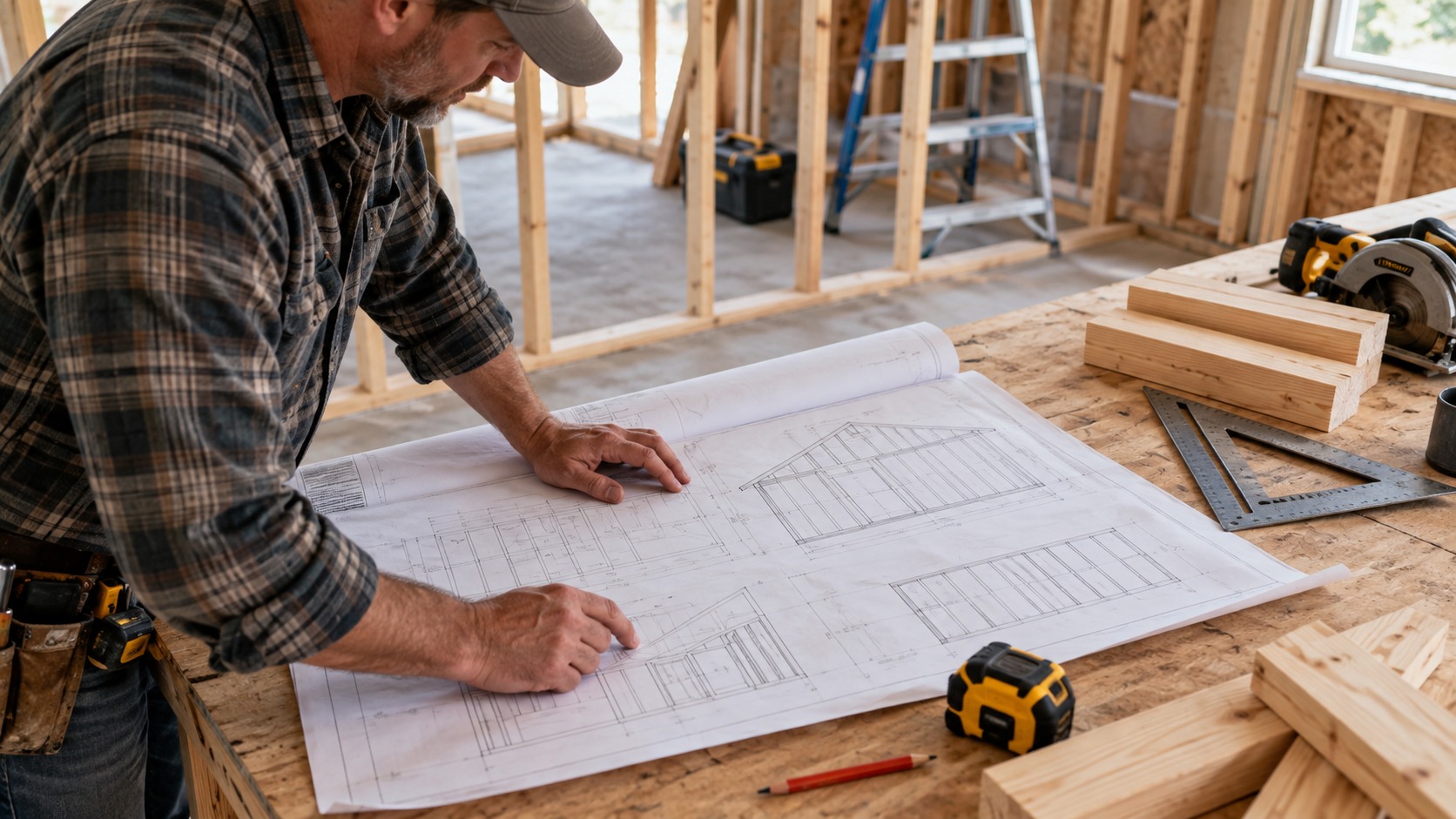
A simple sketch helps turn a room idea into a buildable wall. Draw the wall length, door or window openings, corners, existing walls, ceiling height, and any places that need backing. Add notes for outlets, switches, plumbing, vents, cabinets, grab bars, shelving, or trim.
The sketch does not need to be artistic. It needs to answer practical questions: how long are the plates, how many studs are needed, where do openings land, and what materials are special. A sketch also helps you explain the work if you need help at the lumberyard or during inspection.
Set Up Basic Tools Before Cutting
A beginner wall-framing kit should include a tape measure, pencil, chalk line, square, level, saw, drill or driver, clamps, eye protection, hearing protection, and enough light to see layout marks clearly. The tools do not need to be expensive, but they need to be reliable and close at hand.
Set up a cutting area before lumber is scattered across the room. Support boards on sawhorses or a stable surface, keep cords out of the walking path, and make a place for pieces that have already been cut. Organization prevents many beginner mistakes before they happen.
Choose Straight Lumber
Framing lumber is not always straight. Sight down each stud before buying or cutting. Look for bows, twists, cracks, large knots, and damaged edges. A badly twisted stud can make the wall harder to plumb and can create waves in drywall later.
Some minor movement is normal, but beginners should not make the job harder with poor material. Use the straightest pieces for door openings, corners, and visible wall runs. Slightly imperfect pieces may still work as blocking or short fillers if they are safe and sound.
Understand Plate Material
The bottom plate and top plate are the rails that hold the wall together. In dry interior spaces, ordinary framing lumber may be appropriate. On concrete slabs or basement floors, the bottom plate may need to be pressure-treated or separated from moisture according to local requirements.
Plate choice matters because the bottom of the wall is often where moisture problems begin. If the wall sits on concrete, check for dampness and use the correct fastening method. A wall that starts with the wrong plate can create problems after the room looks finished.
Lay Out the Wall Location
Mark the wall location on the floor before cutting pieces. Use a tape measure, chalk line, square, and level or laser as needed. Confirm that the wall location works with doors, furniture, walkways, ceiling fixtures, vents, windows, and existing trim.
Measure from more than one reference point if the room is out of square. Existing houses are rarely perfect. The new wall should solve the room layout, not blindly follow one crooked surface. Once the line is right, label which side is the finished face or wall edge.
Avoid Measuring From a Moving Target
Loose trim, uneven drywall, bowed baseboard, carpet edge, and damaged corners can all create bad measurements. Choose stable references such as a known wall face, structural opening, snapped line, or carefully checked corner. If the reference is questionable, mark that uncertainty before cutting.
Use the same reference throughout a layout whenever possible. Switching between different reference points can slowly build error into the wall. Beginners often measure accurately but from inconsistent places, which creates confusing results.
Transfer Layout to the Plates
Cut the top and bottom plates to length, place them together, and mark stud locations across both pieces at the same time. This keeps the studs aligned when the wall is assembled. Mark the side of each line where the stud belongs so spacing does not drift.
Common stud spacing is 16 inches on center, but the layout must account for wall ends, corners, openings, and drywall edges. The first stud layout mark is often adjusted so sheet goods land correctly. A beginner should slow down here because bad layout follows the wall all the way to finishing.
Mark Doors and Openings Clearly
Openings need more than a rough gap. Mark the rough opening width, the king studs, the jack studs, and the header location. Check the door or window manufacturer’s rough opening instructions when available. Do not rely only on the finished size printed on a product label.
Door openings also need floor clearance, jamb space, and enough room for trim. If the wall is part of a remodel, think about swing direction, nearby switches, hallway width, and flooring transitions before fastening the frame permanently.
Cut Studs to a Consistent Length
Stud length depends on the wall height, plate thickness, and how the wall will be raised or built in place. For a simple interior partition, the studs are usually cut shorter than the finished ceiling height because the plates add thickness.
Measure the actual space instead of assuming the ceiling is level. In basements and older rooms, height can change from one end of the wall to the other. If the wall must be built in place, each stud may need to be measured and cut for its exact location.
Build Flat When the Space Allows
Many framed walls are assembled flat on the floor, then lifted into position. This makes it easier to align studs with plate marks and fasten through the plates. It also lets you check the wall shape before it is standing.
Make sure there is enough ceiling clearance to raise the wall. A tall wall built flat may bind against the ceiling before it reaches vertical. If space is tight, build the wall in place by attaching plates first and then installing individual studs.
Know When to Frame in Place
Framing in place is slower, but it can be the better method in basements, closets, rooms with low ceilings, or spaces crowded with ducts and pipes. The bottom plate and top plate are installed first, then each stud is cut to fit and fastened between them.
This method helps when the ceiling height changes along the wall. It also avoids the awkward moment when a prebuilt wall will not stand up. Beginners should choose the method that fits the room, not the one that looks fastest in a video.
Fasten Studs Square to the Plates
Each stud should sit on its mark with the end tight to the plate. Fasten through the plate into the stud or use an approved fastening method for the application. Keep the stud face aligned with the plate edge so the wall surface stays flat.
Check pieces as you go. A stud that is twisted during fastening can create a high spot in the wall. It is easier to correct alignment while the frame is open than after drywall or paneling has been installed.
Stand the Wall Safely
Raising a wall can be awkward, especially if it is long or heavy. Clear the floor, watch overhead lights and wiring, and have help if the frame is too large to control alone. Temporary braces can keep the wall from tipping while you adjust it.
Once standing, align the bottom plate with the layout line and check the top plate. Do not permanently fasten everything until the wall has been checked for plumb, straightness, and fit against nearby surfaces.
Use Temporary Bracing Without Guesswork
A wall that is standing but not fully fastened can tip, drift, or bow while you are checking it. Temporary braces hold the frame in position while you align plates, check plumb, and confirm the wall is straight. This is especially helpful when working with a helper who is new to framing.
Fasten braces only where they are secure and easy to remove later. Do not rely on a loose board leaning against the wall as support. A brace should make the work calmer, not create another hazard in the room.
Check Plumb, Level, and Straightness
A framed wall should be plumb from bottom to top, straight along its length, and level where the project requires it. Use a level on studs, a string line or straightedge along the wall face, and a tape measure to compare key points.
Make small corrections before final fastening. Shim where appropriate, pull bowed pieces into line, or replace a problem stud if needed. Beginners sometimes rush this step because the wall already looks like a wall, but this is when quality is decided.
Add Blocking Where Future Fasteners Need Support
Blocking is one of the easiest upgrades to add before the wall is covered. Install it where cabinets, shelves, towel bars, grab bars, handrails, television mounts, hooks, or trim will need strong attachment. It is much easier to add blocking now than to hunt for studs later.
Label or photograph blocking before drywall. Measurements from the floor and nearby corners help future work. A few minutes of documentation can save hours when the finished room needs hardware installed.
Plan Around Utilities
Walls often share space with electrical cable, plumbing, HVAC, low-voltage lines, and insulation. A beginner should plan these systems before closing the wall. Drilled holes, notches, protective plates, box locations, and clearances all have rules.
If electrical or plumbing work is part of the project, coordinate the framing with the trade requirements. Do not weaken studs with careless cuts. Do not hide unsafe wiring or pipes. The frame should make utility work possible without compromising the wall.
Include Fireblocking When Required
Fireblocking helps slow the movement of fire and smoke through hidden wall cavities. It is commonly required in basement framing, tall cavities, soffits, chases, and other concealed spaces. The exact locations depend on the project and local code.
This is a common beginner miss because fireblocking may not be visible in finished inspiration photos. Check before inspection, not after. Adding small pieces now is much easier than opening a finished wall later.
Inspect Before Covering the Wall
Before drywall, paneling, or another finish goes on, pause for a full inspection. Check that studs are secure, openings are sized correctly, blocking is installed, plates are fastened, utilities are protected, and the wall face is reasonably flat.
Take photos of the open wall. Include wide shots that show the room and close shots that show important blocking, wiring routes, or plumbing. The photos become a map when you need to mount something or troubleshoot later.
Common Beginner Mistakes
Many framing problems start with assumptions. Assuming the room is square, assuming lumber is straight, assuming stud spacing is automatic, or assuming an existing wall is not structural can all create expensive corrections. The best beginner habit is to verify before the next step hides the last one.
Other common mistakes include forgetting backing, using the wrong fasteners, skipping moisture checks on concrete, building a wall too tall to raise, or fastening before checking plumb. None of these mistakes require advanced skill to avoid; they require a slower sequence.
Final Beginner Framing Review
A first wall-framing project should end with a frame that is straight, secure, understandable, and ready for inspection or finishing. The plates should follow the planned layout, studs should land on their marks, openings should match the rough sizes needed, and backing should be where future hardware belongs.
Wall framing becomes less intimidating once each part has a job. Plan the wall, choose sound lumber, mark both plates, build carefully, check alignment, add blocking, protect utilities, and inspect before covering. That process gives a beginner a wall that is easier to finish and easier to trust, especially when each correction is made while the frame is still open.