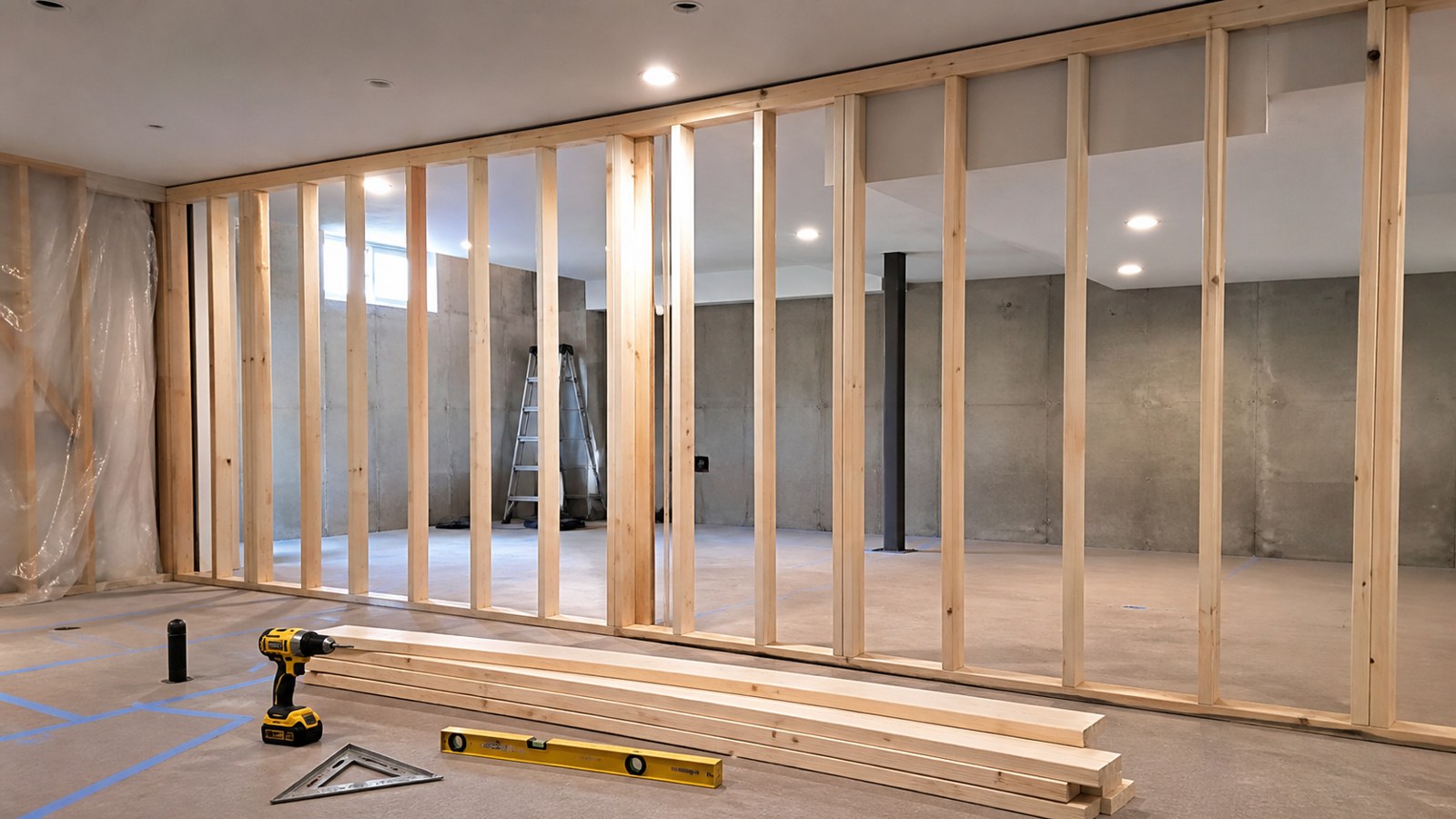
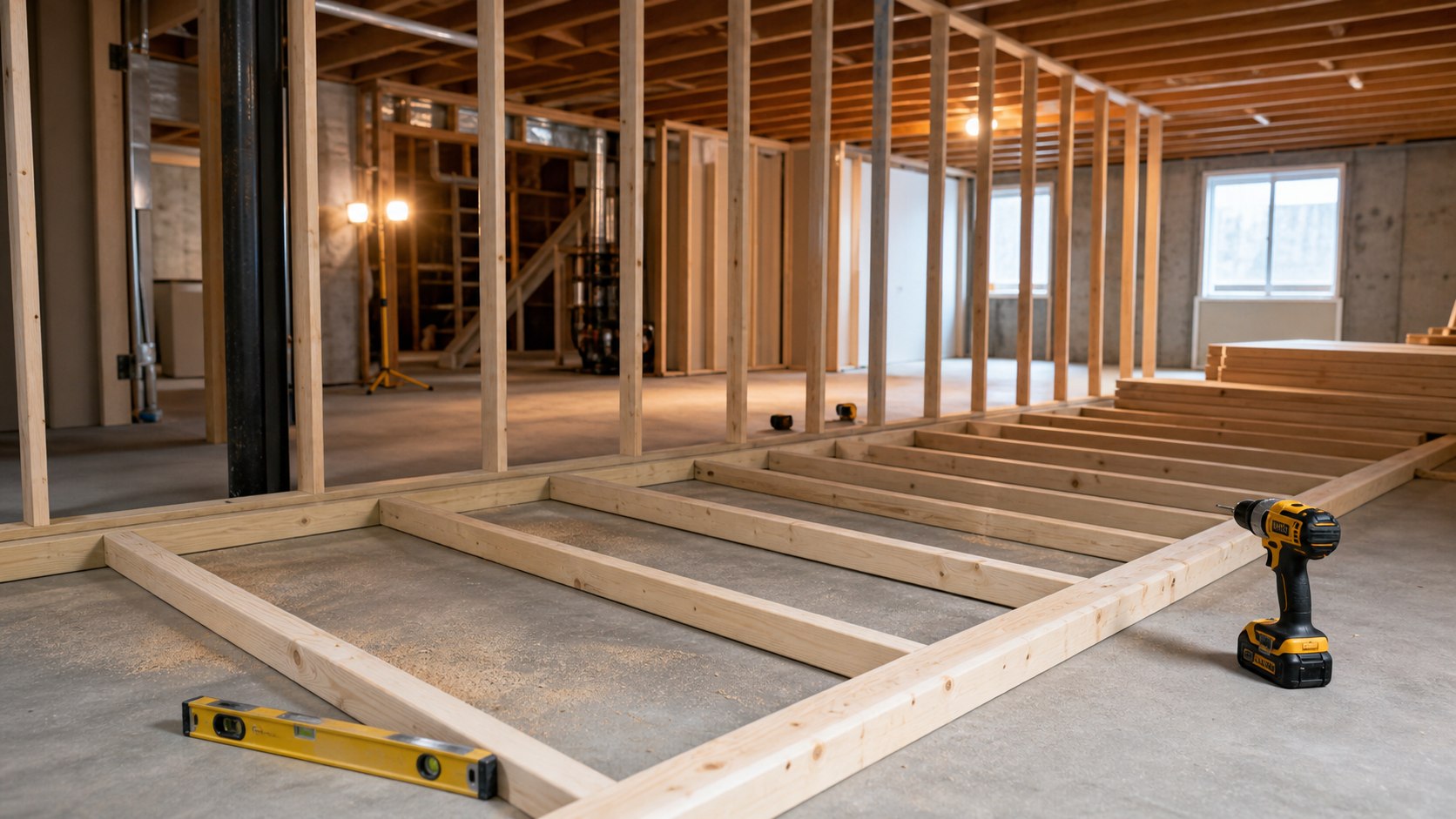
A stud wall looks simple once drywall covers it, but the open frame is doing several jobs at the same time. It locates the room, supports the finished surface, carries or transfers load when required, gives doors and windows shape, creates paths for utilities, and provides hidden backing for everything that will be mounted later.
Understanding wall anatomy is not about memorizing carpentry words for trivia. It is about knowing what should be in the wall before it disappears behind drywall, tile, cabinets, paneling, or trim. When the parts make sense, missing backing, crooked openings, weak connections, and utility conflicts are easier to catch while they are still fixable.
A: Plates, studs, opening framing, blocking, fireblocking, fasteners, and utility paths are the main parts.
A: Plates tie studs together and connect the wall to the floor, ceiling, or surrounding framing.
A: A common stud is a regular vertical member placed at the wall's normal spacing.
A: King studs run full height beside openings, while jack studs support the header.
A: A header carries load or framing across an opening and transfers it to supports at the sides.
A: Blocking provides backing for drywall, trim, cabinets, rails, shelves, TVs, and future hardware.
A: Fireblocking interrupts concealed cavities so air and fire cannot travel freely through the wall.
A: They protect hidden pipes or wires where fasteners could otherwise reach them.
A: Trace loads above and below, check joist direction, and get qualified help when uncertain.
A: Photograph framing, blocking, utilities, fireblocking, protection plates, and any unusual wall details.
What a Stud Wall Has to Do
A stud wall creates the skeleton behind the finished room. In a simple partition, it divides space and supports drywall, trim, and doors. In a structural wall, it may also carry weight from above and transfer that load down to the floor system, beam, foundation, or another support.
The finished work depends on the hidden frame. Drywall needs straight backing. Tile needs stiffness and the right substrate. Doors need square openings. Cabinets, shelves, grab bars, televisions, and handrails need solid support where fasteners will land.
That is why a stud wall should be inspected before it is covered. Once drywall goes on, missing blocking, poor utility protection, crooked studs, and weak opening details become harder to correct.
Start With the Plates
The bottom plate is the horizontal board at the floor. It locates the wall and ties the studs together at the base. The top plate does the same job at the ceiling or upper part of the wall. Together, the plates define the wall line and give the vertical studs a place to land.
On a wood subfloor, the bottom plate usually fastens into framing below. On concrete, it may require treated lumber, masonry anchors, and moisture protection depending on the location. The top plate needs to align with the bottom plate so the wall is plumb instead of leaning.
If the plates are crooked, loose, poorly fastened, or installed over damp material, every part above them inherits the problem. Good wall anatomy starts with a straight, sound layout.
Understand Stud Layout
Common studs are the vertical members between the plates. They support the wall finish and create the predictable framing pattern most sheet goods depend on. Many residential walls use 16 inches on center, though 24-inch spacing and other layouts appear depending on design, material, and local requirements.
On-center means the measurement runs from the center of one stud to the center of the next. This matters because drywall and sheathing edges need backing. If the layout drifts, sheet edges can miss studs, seams can become weak, and finish work becomes awkward.
Mark the plates clearly before installing studs. A clean layout line tells each stud which side of the mark it belongs on and keeps small spacing errors from accumulating across the wall.
Straight Studs Make Finishing Easier
A wall can be technically framed and still be difficult to finish if the studs are bowed, twisted, crowned in different directions, or set proud of each other. Drywall will follow those errors, and the finished wall may show waves, gaps, cracked seams, or trim that refuses to sit flat.
Before the wall is covered, sight down the studs and check for obvious bows. Replace bad lumber where it matters, especially around door openings, long visible walls, tile areas, and cabinet runs. Minor irregularities can sometimes be corrected with planing, shims, or careful layout, but severe twist should not be hidden behind drywall.
Do not save the worst studs for the most visible parts of the room. A straight frame is one of the quiet reasons a finished wall looks professional.
Know the Parts Around Openings
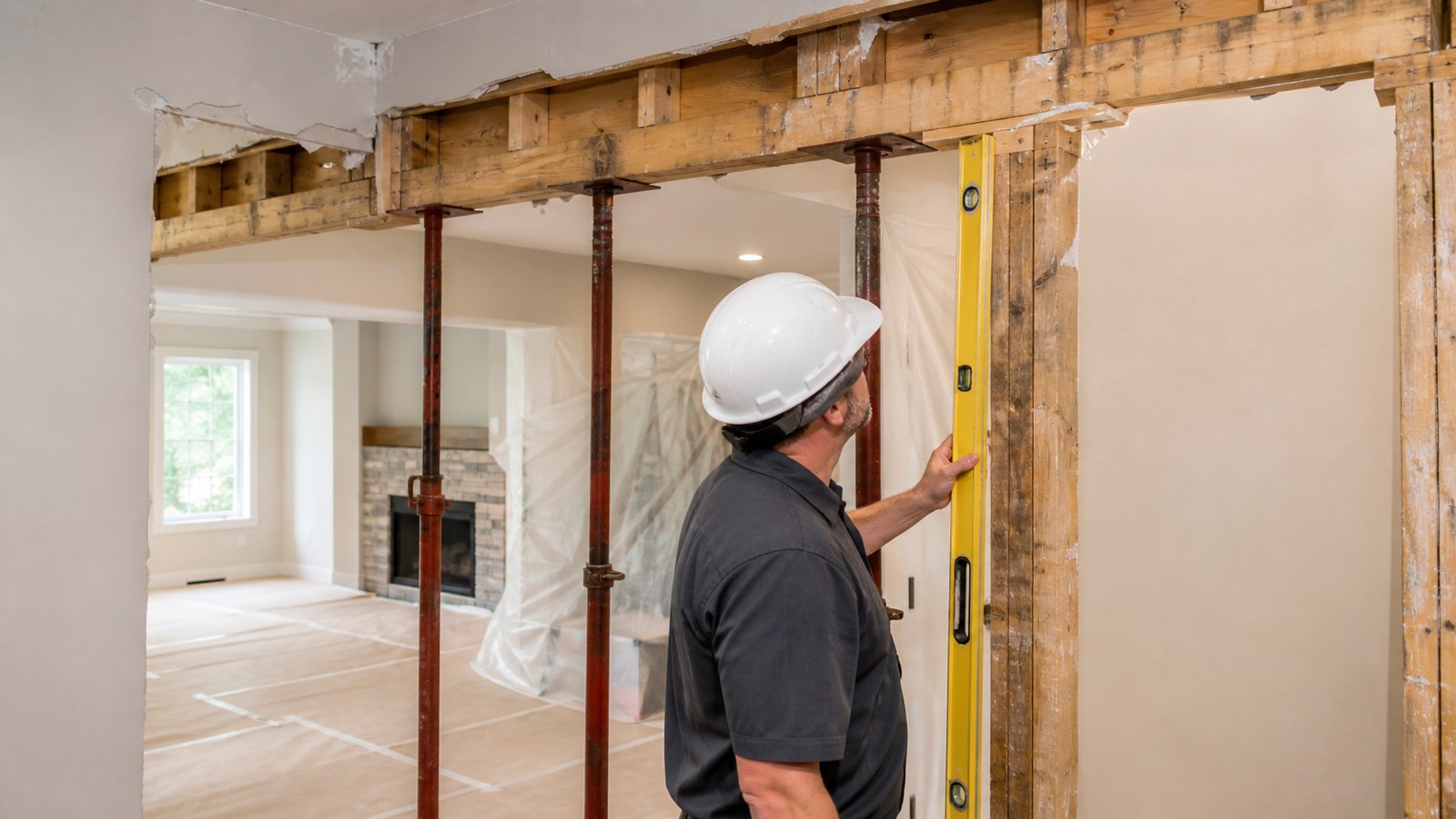
Doors and windows interrupt the regular stud pattern, so they need their own framing. A king stud runs full height beside the opening. A jack stud sits inside the king stud and supports the header. The header spans the opening. Cripple studs fill the short spaces above headers or below window sills.
Each piece has a job. King studs tie the opening into the wall. Jack studs provide bearing. Headers transfer load or stabilize the opening, depending on the wall. Cripple studs support the wall finish and keep layout consistent where full studs cannot fit.
Openings should be square, plumb, and sized for the door or window’s rough-opening requirements. A sloppy rough opening makes every later step harder: shimming, fastening, casing, drywall, and trim.
Treat Headers With Respect
A header is not just a board above a hole. In a load-bearing wall, it carries weight around the opening and transfers that load to the supporting studs on each side. Header size depends on span, load, wall type, lumber, and local requirements.
In a non-load-bearing interior partition, the header may be simpler, but the opening still has to remain stable and square. Do not guess when the wall might be structural. A small-looking opening can still matter if it interrupts a load path.
When a door or window is in an important wall, use approved plans, code guidance, or professional help. Guessing with headers is one of the places where beginner framing can create real risk.
Frame Corners and Intersections for Finish
Corners need backing for drywall on both sides. A corner that looks framed from one direction may leave the other drywall edge unsupported. Several corner-framing methods can work, but the goal is the same: secure fastening, a straight corner, and enough space for insulation where required.
Wall intersections need the same planning. When a new partition meets an existing wall, the joint needs a stud, ladder blocking, or another backing method so drywall and trim have something solid behind them. Drywall alone should not be asked to anchor a new wall.
Plan these intersections before fastening the wall. It is much easier to add backing while the framing is open than to repair cracks and loose corners later.
Add Blocking Where Life Will Happen
Blocking is short framing installed between studs. It can brace the wall, support sheet edges, create backing for fixtures, or meet specific code requirements. In everyday remodeling, blocking is one of the most useful additions a homeowner can make before closing a wall.
Add blocking for cabinets, shelves, towel bars, grab bars, handrails, hooks, wall-mounted televisions, curtain rods, heavy mirrors, stair rails, and future trim details. If someone may someday need to fasten something there, blocking can turn a frustrating wall into a prepared one.
Photograph and measure blocking before drywall. A simple photo with a tape measure in view can save hours years later when you need to find the hidden support.
Do Not Ignore Fireblocking
Fireblocking helps slow the movement of fire and smoke through concealed spaces. It may be required at floor and ceiling transitions, soffits, chases, basement walls, vertical cavities, and other hidden pathways depending on the design and local rules.
Because fireblocking is not decorative, beginners sometimes overlook it. Inspectors do not. If the wall is part of permitted work, these details usually need to be visible before the wall is covered.
Fireblocking is part of wall anatomy because a wall is not only a surface holder. It is also part of the way the house manages hidden cavities and safety requirements.
Plan Utility Paths Before Cutting Studs
Stud walls often carry electrical cable, plumbing, low-voltage wire, venting, insulation, or sometimes ductwork. Holes and notches need to be located so the studs are not weakened and the utilities are protected from future nails or screws.
Random notching can turn a sound wall into a weak one. Large pipes, vents, or ducts may require a different framing plan rather than a quick cut through whatever is in the way. Electrical and plumbing work also have spacing, protection, and code requirements.
Plan utilities while the wall is open. If a pipe or wire passes too close to the stud face, protection plates may be needed before drywall, trim, or cabinets are installed.
Understand Protection Plates
Protection plates are metal plates installed over areas where pipes or wires are close enough to the face of framing that future fasteners could hit them. They are a warning and a shield at the same time.
When you see a protection plate, do not remove it because it is in the way of an easy screw location. Move the fastener, change the mounting plan, or add blocking somewhere else. The plate usually means something important is behind that spot.
Protection plates are small, but they prevent expensive damage. A drywall screw into a wire or pipe can create a hidden problem that appears much later.
Separate Partition Walls From Load-Bearing Walls
A partition wall mainly divides rooms and supports finishes. A load-bearing wall carries weight from above. The parts may look similar, but the consequences of changing them are very different.
Never assume a wall is non-load-bearing because it is short, inconvenient, or not made from large lumber. Load paths depend on what sits above and below: joists, rafters, beams, posts, foundations, and other walls. Direction matters, but it is not the only clue.
If you are cutting openings, moving walls, changing headers, or removing studs in a wall that might carry load, stop and verify the structure first. This is a place for plans, code guidance, or professional review.
Use Fasteners That Match the Job
A stud wall depends on its connections. Studs need secure attachment to plates. Plates need proper attachment to floors, ceilings, or adjoining framing. Headers, blocking, corners, and intersections need fasteners that match the material and the load.
Do not use random leftover screws for every framing task. Fastener choice changes with untreated lumber, treated lumber, concrete, metal connectors, structural framing, and finish backing. Some screws are brittle, some nails are required by connectors, and some anchors are not appropriate for the material.
The wall should not merely stand while you are working on it. It should remain sound after drywall, trim, doors, cabinets, and daily use are added.
Inspect the Wall Before Covering It
Before drywall or paneling goes up, walk the wall slowly. Check the bottom plate, top plate, stud spacing, plumb, bowed studs, corners, intersections, openings, headers, jack studs, blocking, fireblocking, utility paths, protection plates, and fastening.
Think like the next trades. Will drywall edges have backing? Will trim have a solid edge? Will the cabinet installer find blocking? Will the electrician’s wires be protected? Will the plumber’s pipe be safe from fasteners? Will the door opening accept a square jamb?
This inspection is where a little extra time saves repair work. Once the wall is covered, every missing piece becomes more expensive to fix.
Document Hidden Details
Use a phone camera before insulation or drywall hides the frame. Photograph walls straight on, then take closer shots of blocking, utility runs, protection plates, openings, and unusual details. Include a tape measure in key photos so locations are easier to find later.
Documentation helps with future shelves, repairs, leaks, electrical changes, and remodels. It also helps if someone needs to understand why a plate, block, or wire path was placed where it was.
A framed wall that can be explained clearly is usually a better wall. The act of documenting often reveals details that should be corrected before the surface goes on.
Final Stud Wall Review
A stud wall is a system of simple pieces working together. Plates locate the wall. Studs support the finish. Openings need king studs, jack studs, headers, sills, and cripple studs. Corners and intersections need backing. Blocking, fireblocking, utility protection, and proper fasteners make the wall safer and more useful.
The best time to understand the anatomy is while the wall is open. Check each part by its job, not only by its name. If a future finish has no support, add support. If a utility path is exposed to fasteners, protect it. If an opening is out of square, fix it before casing and drywall make the problem visible.
Good framing is quiet work. When it is done well, the finished wall looks straight, doors fit, trim lands cleanly, mounted items hold securely, and nobody has to think about the hidden structure doing its job.