An air conditioner that runs but does not cool can fail in several different ways. Sometimes the indoor fan is moving room-temperature air because the outdoor unit is not running. Sometimes airflow is choked by a dirty filter or frozen coil. Sometimes the equipment is cooling, but duct leakage, humidity, attic heat, or a thermostat issue makes the house feel like nothing is improving.
The useful first step is to separate safe homeowner checks from problems that require HVAC tools and training. Thermostat settings, filters, blocked returns, outdoor clearance, ice, drain switches, and breaker status can be checked carefully. Refrigerant, burned wiring, compressor faults, capacitors, sealed-system leaks, and repeated breaker trips should be handled by a qualified technician.
A: An unusually low target does not repair a fault. Observe whether the system responds and whether room temperature is actually declining.
A: Visible icing calls for stopping cooling and assessing the cause with appropriate service; do not continue running against the ice.
A: Thawing removes the ice, but any airflow, refrigerant, or control fault that caused it still needs correction.
A: It confirms air circulation only. The outdoor equipment and refrigeration process may still be inactive or malfunctioning.
A: Keep overflow protection functional; bypassing it can allow water damage while leaving the drainage problem unresolved.
A: No. Airflow, controls, coil condition, duct losses, heat gain, and electrical faults can produce similar complaints.
A: That reading can help describe a symptom, but charge assessment requires system-specific professional measurements.
A: Compare its airflow, return path, duct condition, and sun exposure with other rooms before attributing the difference to the whole AC system.
A: Stop resetting it, leave the affected equipment off, and obtain qualified diagnosis of the electrical or equipment fault.
A: Provide the failure timeline, indoor and outdoor operation, temperature and humidity observations, icing or water, and recent changes or maintenance.
Define the Cooling Complaint
Before touching the equipment, name the exact problem. Is the system not turning on at all, blowing warm air, cooling only at night, running constantly, short cycling, freezing, leaking water, or leaving one part of the house hot? Those are different clues. A clear description keeps troubleshooting from becoming a random tour through every possible HVAC problem.
Also note when the issue started. A problem after a filter change may point to fit, airflow direction, or filter restriction. A problem after yard work may involve the outdoor condenser. A problem after a storm may involve power, breaker, or controls. A problem that has slowly worsened may point toward maintenance, airflow, refrigerant, or age.
Verify Thermostat Behavior
Confirm that the thermostat is set to cool and that the set temperature is below the room temperature. If the fan is set to on, the blower may continue moving air between cooling cycles, which can make the vents feel warm even when the cooling equipment is not actively running. Set the fan to auto while troubleshooting so airflow lines up with cooling calls.
For programmable and smart thermostats, check schedules, away mode, eco settings, utility demand programs, room sensors, and dead batteries. A thermostat can follow a schedule the homeowner forgot about. If the screen is blank, dim, or flickering, the issue may be thermostat power, batteries, low-voltage wiring, a float switch, or equipment power.
Confirm Both Indoor and Outdoor Operation
A central air conditioner has an indoor side and an outdoor side. The indoor blower moves air through the house. The outdoor condenser rejects heat. If the indoor fan runs but the outdoor unit is silent, the vents may blow air that never gets cooled. If the outdoor unit runs but the indoor blower does not, the coil can freeze and little air may reach the rooms.
Stand near the outdoor unit while the thermostat is calling for cooling. Listen for the fan and compressor, but do not remove panels. A unit that clicks, hums, buzzes, smells hot, or tries to start repeatedly should be shut off and serviced. Those symptoms can involve capacitors, motors, controls, compressor trouble, or wiring, none of which are casual homeowner repairs.
Inspect the Filter and Return Path
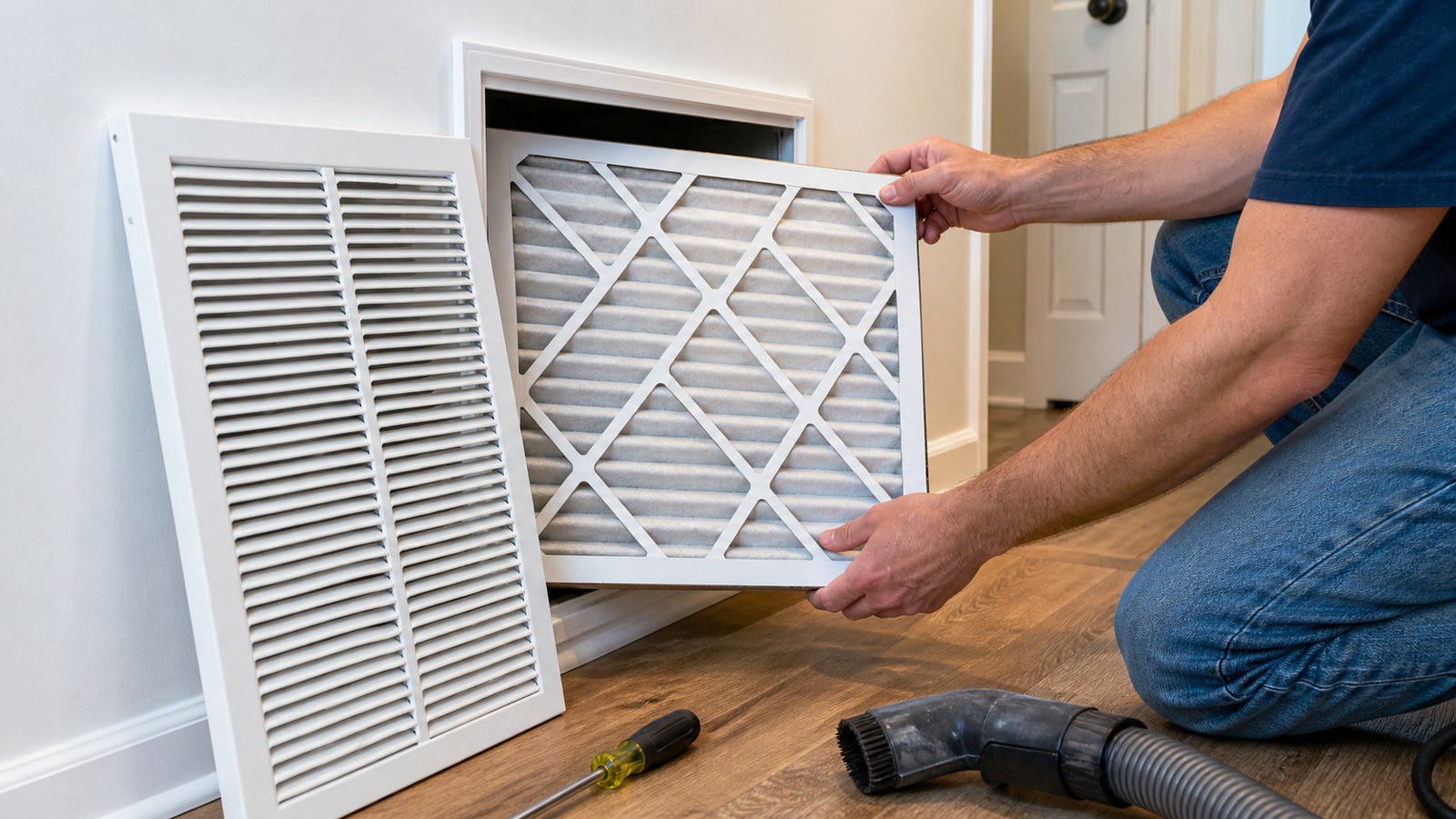
A clogged filter can reduce airflow enough to weaken cooling or freeze the indoor coil. Pull the filter and look for matted dust, pet hair, construction debris, bowed pleats, moisture, or a frame that was sucked out of shape. Replace it with the correct size and a filter type the system can handle.
Then look at the return path. Return grilles blocked by furniture, rugs, curtains, boxes, or pet beds can starve the system before air reaches the filter. Closed interior doors can also affect airflow if the house has poor return paths. Cooling depends on moving warm indoor air back to the equipment, not just pushing cold air out of the vents.
Compare Airflow Room by Room
Walk through the house and feel several supply vents. Weak airflow everywhere points toward filter restriction, blower trouble, a dirty coil, a closed damper, duct restriction, or ice. Weak airflow in only one room may point to a closed register, a crushed duct, a disconnected duct, a balancing issue, or a room with unusual heat gain.
Do not close many vents in an attempt to force cold air elsewhere. That can increase duct pressure and reduce system performance. Open registers, clear returns, and note which rooms are different. A room-by-room pattern gives an HVAC technician better information than simply saying the air conditioner is bad.
Look for Ice Before Running Longer
Ice on the refrigerant line, indoor coil area, or outdoor unit is a major clue. It can develop from low airflow, a clogged filter, dirty coil, blower trouble, refrigerant problems, metering device issues, or abnormal operation. A frozen system cannot cool correctly because ice blocks heat transfer and airflow.
If you see ice, switch cooling off. Do not chip at the coil or line. Let the system thaw fully and watch for water as the ice melts, especially if the air handler is in an attic, closet, or finished area. After thawing, correct obvious airflow issues such as a dirty filter or blocked return. If ice returns, the system needs professional diagnosis.
Check the Outdoor Condenser Area
The outdoor unit needs room to breathe. Leaves, weeds, cottonwood, grass clippings, mulch, fencing, stored items, and dirty fins can prevent the unit from rejecting heat. When the condenser cannot shed heat, the system may run but deliver weak cooling inside.
Clear loose debris around the unit and trim vegetation so air can move freely. Be gentle around the fins because they bend easily. Do not remove panels or spray into electrical sections. If the coil is packed with debris or the fins are badly flattened, professional cleaning is safer and usually more effective.
Treat Breaker Trips as Warnings
Air conditioners may have separate breakers or disconnects for indoor and outdoor equipment. If a breaker is tripped, it is reasonable to reset it once after checking that the area is dry and safe. If it trips again, stop. Repeated breaker trips are not a nuisance; they are a warning.
Possible causes include shorted wiring, failed capacitors, locked motors, compressor problems, damaged contactors, or other electrical faults. Keep forcing the breaker and you can make the repair more expensive or unsafe. Shut the system off and call a qualified HVAC technician or electrician depending on what is happening.
Notice Condensate Shutdown Clues
Many systems have a float switch that shuts cooling down when condensate water backs up. This prevents water damage when the drain clogs or the pan fills. If the thermostat calls for cooling but the system refuses to run, look for water in the emergency pan, a lifted float switch, algae in the drain line, or wet flooring near the air handler.
Clearing a simple drain may be manageable if the system is set up for homeowner maintenance, but recurring condensate trouble needs a real fix. A drain that keeps backing up may have poor slope, algae growth, a trap issue, a dirty coil, or a pan problem. Do not keep bypassing or ignoring the safety switch; it is protecting the house.
Understand Refrigerant Symptoms
Low refrigerant is a common guess, but refrigerant is not a fuel that gets used up during normal operation. If the system is low, there is usually a leak or a sealed-system problem. Symptoms can include poor cooling, long run times, ice, hissing, oily residue, or technician readings that show abnormal pressure and temperature relationships.
Adding refrigerant without finding the cause is not a lasting repair. Refrigerant work requires proper tools, certification, and leak handling. A homeowner can observe symptoms and protect the equipment by shutting it down when it freezes, but the sealed system should be diagnosed and repaired by a professional.
Consider Indoor Coil Condition
The indoor evaporator coil removes heat and moisture from the air. If it is coated with dust, pet hair, drywall powder, nicotine residue, or biological buildup, the system may move less air and transfer less heat. A dirty coil can also contribute to freezing, odors, high humidity, and long run times.
Coils are often hidden inside a furnace plenum or air handler cabinet. If inspection requires removing service panels, working near wiring, or opening sealed ductwork, schedule service. Coil fins and drain pans are easy to damage, and careless cleaning can create leaks or push debris deeper into the equipment.
Check Duct Losses and Return Problems
An air conditioner can make cold air and still fail to cool the house if that air leaks into an attic, crawlspace, garage, or wall cavity. Disconnected ducts, crushed flex duct, poor insulation, open seams, and return leaks can waste cooling before it reaches the room.
Uneven rooms, dusty registers, hot attic smells, whistling returns, or one area that never catches up may point to duct trouble. Look only where access is safe. Duct repairs in hot attics or tight crawlspaces can be difficult, and sealing the wrong thing casually may not solve the actual airflow problem.
Notice Sun and Attic Heat
Sometimes the air conditioner is doing its job but the house is gaining heat faster than the system can remove it. West-facing glass, unshaded rooms, hot attic spaces, weak attic ventilation, missing insulation, and leaky ceiling penetrations can all make late-day cooling feel worse than morning cooling. The pattern matters because the equipment may not be the only problem.
Close blinds on hard sun, check that attic access panels are sealed, and notice whether upstairs rooms or vaulted ceilings are the worst areas. If the system cools one part of the house but loses ground in sun-exposed rooms, the repair plan may include building-shell improvements along with HVAC service.
Separate Load Problems From Equipment Failure
Extreme heat can expose weaknesses in the house and the system. A properly working air conditioner may run longer during a heat wave, especially in homes with poor attic insulation, leaky ducts, sunny windows, or high indoor humidity. Longer run time alone is not proof of failure.
The question is whether the system is still making progress. If it cools well in the morning but falls behind in late afternoon, check sun exposure, attic heat, outdoor condenser airflow, filter condition, duct insulation, and equipment capacity. If it cannot cool during mild weather either, a mechanical or airflow problem becomes more likely.
Measure Temperature Difference Carefully
A simple supply-and-return temperature comparison can help describe the issue. With the system running for several minutes, measure the temperature at a return grille and at a nearby supply vent. The exact target depends on equipment and conditions, but the comparison can show whether the system is producing a meaningful cooling drop.
Use this as a clue, not a final diagnosis. A normal-looking temperature drop with poor room comfort may point to airflow quantity, duct leakage, insulation, or humidity. A very small drop may point toward refrigerant, compressor, coil, airflow, or control issues. Write down the measurements and where you took them.
Pay Attention to Humidity
A house can feel warm even when the thermostat number is close if humidity stays high. Air conditioning should remove moisture while it cools. Oversized equipment, short cycling, dirty coils, poor airflow, duct leakage, ventilation problems, or thermostat settings can leave the house clammy.
A small humidity gauge can be useful during cooling season. If indoor humidity stays high while the system runs, note whether the system cycles quickly or runs for long stretches without comfort improving. Humidity clues help separate temperature problems from comfort problems.
Watch for Short Cycling
Short cycling means the system starts and stops too frequently. It may happen from thermostat placement, oversized equipment, dirty coils, refrigerant problems, electrical faults, clogged filters, condensate switches, or control issues. Short cycles reduce comfort because the system may not run long enough to remove heat and moisture evenly.
Count how long the system runs before shutting off and how soon it restarts. Do not keep changing thermostat settings every few minutes; that makes the pattern harder to read. A steady record of cycle behavior is more useful than guesses made while the house is uncomfortable.
Consider Thermostat Location
A thermostat reads the temperature where it is installed, not the temperature in every room. If it sits near a sunny window, exterior door, supply vent, kitchen, hallway dead zone, or electronics that give off heat, it may start or stop cooling at odd times. That can make the air conditioner look unreliable even when the equipment responds correctly.
Smart thermostat sensors can help only if they are placed thoughtfully. A sensor in a hot bedroom may make the system run longer, while a sensor near a draft may end cycles too soon. When cooling complaints are room-specific, thermostat location and sensor priority belong in the diagnosis.
Look for Recent Changes
Cooling problems often follow a change. New filters, closed vents, moved furniture, landscaping around the condenser, a thermostat replacement, insulation work, duct work, a clogged drain repair, or recent construction dust can all affect performance. Think through what changed in the last few days or weeks.
Recent changes do not prove the cause, but they give you a starting point. If the problem appeared right after installing a more restrictive filter, check airflow. If it appeared after shrubs grew around the condenser, check outdoor clearance. If it appeared after a smart thermostat update, check schedules and equipment settings.
Know What Not to DIY
Homeowners can safely check thermostat settings, filters, airflow obstructions, visible ice, outdoor clearance, obvious water in a pan, and whether breakers have tripped once. That is already enough to solve or clarify many cooling complaints. Beyond that, the risk and tool requirements rise quickly.
Do not open refrigerant lines, add refrigerant, replace capacitors unless qualified, bypass safety switches, keep resetting breakers, or work around burned wiring. Do not run a system that is frozen, smoking, buzzing, or repeatedly failing to start. The line between maintenance and repair matters with cooling equipment.
Prepare Useful Service Notes
If the system needs a technician, gather details that make the visit more productive. Write down the thermostat setting, indoor temperature, outdoor temperature, whether the indoor blower runs, whether the outdoor unit runs, filter condition, visible ice, water near the air handler, breaker behavior, humidity, and any error codes.
Photos help too. Photograph the thermostat, filter, outdoor unit clearance, ice, drain pan, equipment model plate, and any visible water or damage. Clear notes make it easier for the technician to confirm the cause instead of starting from a vague complaint that the house is hot.
Keep Cooling Reliable After the Repair
Once the problem is corrected, build a simple maintenance rhythm. Replace filters based on condition, keep return grilles open, trim around the outdoor unit, keep drain lines maintained, and schedule professional service before the hottest part of the season. Cooling failures feel sudden, but many are built from small neglected airflow or maintenance issues.
Also keep a record of recurring symptoms. If the system freezes every summer, trips a breaker under heavy load, or struggles only in one part of the house, that pattern matters. A clean record turns an uncomfortable day into useful evidence instead of another round of guessing.