DIY drain cleaning works best when the method matches the material causing the slowdown. Hair, grease, soap film, food scraps, lint, mineral scale, and foreign objects do not clear the same way. A plunger, trap cleaning, hand auger, drain screen, or maintenance cleaner can each be useful, but none of them is the right answer every time.
The safest plan is to start with the least risky mechanical steps before reaching for harsh chemicals or forcing a cable. A homeowner can solve many local clogs by removing visible debris, plunging with a seal, cleaning the trap, and recognizing when the problem is no longer local.
A: Remove visible debris, clean the stopper or screen, and identify the likely clog material.
A: Use it when water can cover the cup and nearby openings can be sealed for pressure.
A: Usually, if the trap is accessible, supported, and not brittle, corroded, or full of cleaner.
A: Sometimes, but they can damage parts and create hazards if the clog remains.
A: They are gentler for maintenance but too slow for many active blockages.
A: Use it for clogs beyond the stopper or trap when the fixture piping can handle it.
A: Multiple slow drains, gurgling, backups in low fixtures, or toilet-sink interaction are warning signs.
A: Scrape grease into the trash, wipe pans before washing, and avoid relying on hot water.
A: Retest, note what changed, and suspect remaining buildup or a deeper obstruction.
A: Stop when multiple fixtures back up, chemicals are trapped, pipes are fragile, or the auger cannot pass safely.
Identify the Clog Material
Bathroom drains usually slow from hair, soap film, toothpaste residue, shaving debris, and buildup around stoppers. Kitchen drains usually slow from grease, food particles, coffee grounds, rice, pasta, and disposer sludge. Laundry drains may collect lint, detergent film, and debris from clothing.
Knowing the material keeps the repair practical. Hair needs removal. Grease needs prevention and physical cleaning when it has built up. A toy, cap, or hard object needs retrieval, not dissolving. If the method does not match the material, the clog often returns.
Use Screens Before Trouble Starts
Drain screens are boring and effective. A bathroom screen catches hair before it wraps around the stopper or drops into the trap. A kitchen strainer keeps food scraps from entering the drain. These small barriers reduce how often cleaning is needed.
Clean screens often enough that water still moves freely. A neglected screen can make the sink seem clogged even when the pipe is fine. The goal is to catch debris without turning the screen itself into the obstruction.
Remove Visible Debris First
Before using tools, remove what you can reach. Pull hair from a shower cover, clean the bathroom sink stopper, empty the kitchen strainer, and clear food from the disposer throat with power safely off. The simplest material is often sitting at the opening.
Do not push visible debris deeper just to make the basin look clean. If it can be lifted out, lift it out. Pushing the clog into the wall makes the next step harder.
Plunge With Technique
Plunging works when pressure moves water against the obstruction. Use enough water to cover the plunger cup. Cover overflow openings on bathroom sinks and tubs. On a two-bowl kitchen sink, block the other drain so pressure does not escape sideways. Start gently, then use steady pressure once the seal is set.
Wild plunging often moves air, splashes dirty water, and accomplishes little. Controlled plunging can break up a local clog or pull it back toward the fixture. If plunging affects another fixture, stop and reassess the drain pattern.
Clean the Trap When It Makes Sense
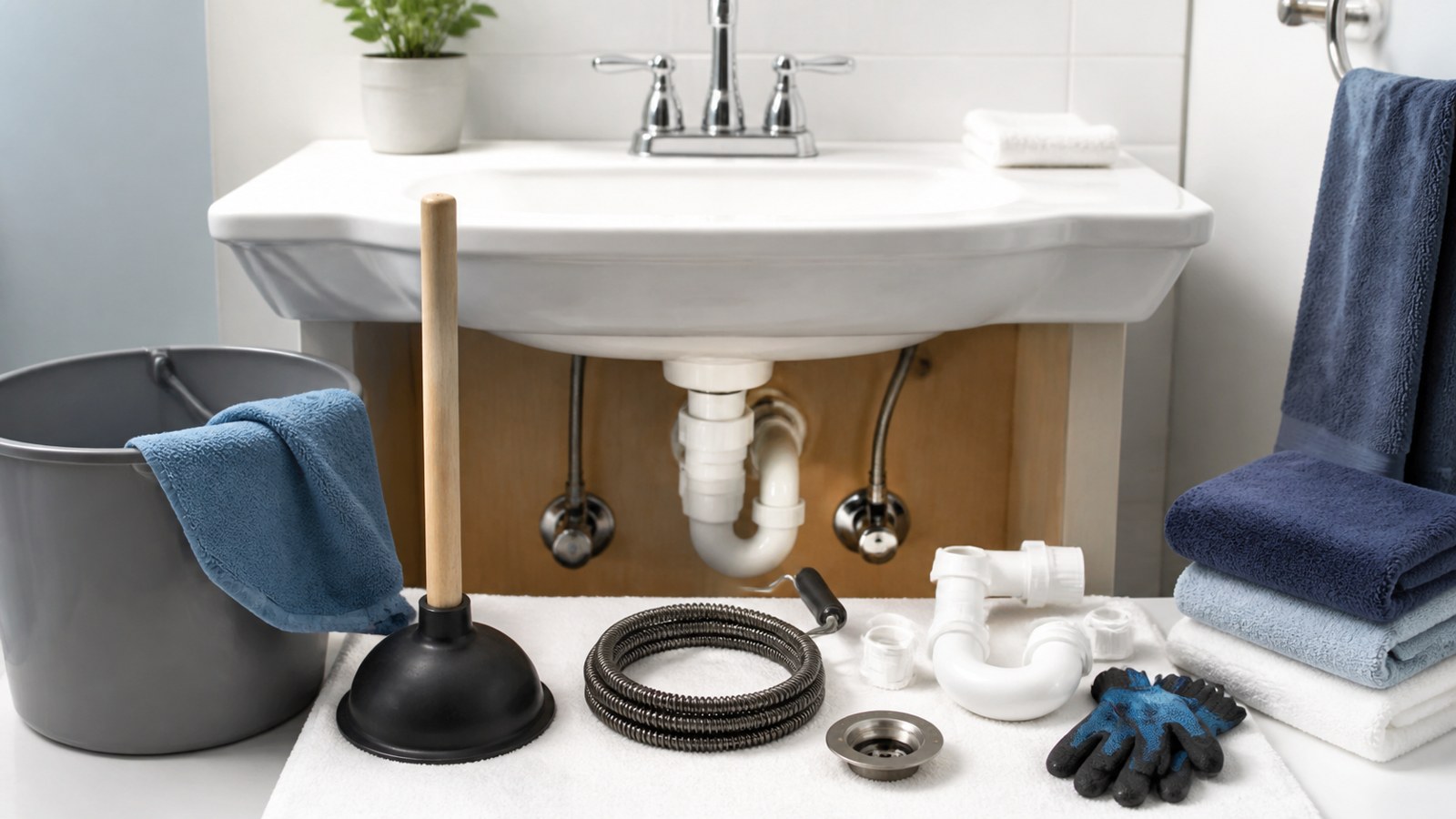
A sink trap is often the best next step when a clog appears local. Put a bucket underneath, photograph the trap, loosen the slip nuts, and remove the curved section. Expect dirty water and sludge. Clean the trap outside the cabinet if possible.
Pay attention to washer direction and pipe alignment during reassembly. A drain that flows again but leaks into the cabinet is not a finished repair. Fill the basin and release it to test the trap under real flow.
Use a Hand Auger Patiently
A hand auger can help when the trap is clear but the branch is restricted. Feed the cable slowly and rotate gently. The goal is to retrieve or break the obstruction, not to force the cable through every bend at any cost.
Stop if the cable hits hard resistance, comes back with roots, will not pass safely, or changes symptoms in other fixtures. Those are signs the clog may be beyond a simple DIY branch cleaning.
Be Careful With Chemical Cleaners
Harsh drain chemicals can sit in standing water, splash during later disassembly, damage some pipe materials, and create a hazard for anyone who opens the trap afterward. They are especially risky when the drain is fully blocked and the product has nowhere to go.
Chemicals also hide the diagnosis. If they partly open the drain without removing the cause, the clog may return quickly. Mechanical cleaning gives you more information and usually creates less risk.
Understand Enzyme Cleaners
Enzyme cleaners are maintenance products, not instant rescue tools. They may help reduce organic buildup over time when used according to directions. They do not remove a toy, heavy grease plug, root intrusion, collapsed pipe, or packed trap.
Use them only when the drain is still moving and the product fits the material. If the sink is full of standing water, an enzyme cleaner is not the fastest or most useful next step.
Treat Grease as a Prevention Problem
Kitchen grease cools, clings to pipe walls, and catches crumbs. Hot water may move it farther for a while, but it can harden downstream. The better habit is to wipe pans into the trash and keep heavy oils out of the sink.
If grease has already built up, cleaning may require trap removal, branch cleaning, or professional equipment. The lasting fix is changing what enters the drain after the clog is cleared.
Recognize Main-Line Symptoms
DIY drain cleaning should stop when multiple fixtures are involved. Toilets bubbling, tubs backing up, floor drains overflowing, or lower-level fixtures reacting to upstairs water can point to a branch or main line issue.
At that point, more plunging at one sink may make the mess worse. Stop using water and call a plumber with a clear description of which fixtures are affected and what happened first.
Flush After Clearing
After a clog clears, run water long enough to move loosened debris through the fixture branch. For sinks, a full-basin drain test is more useful than a quick trickle. For tubs or showers, watch whether water keeps up with normal flow.
If the drain slows again during the flush, the clog may only be partly cleared. Repeat safe mechanical steps or stop before forcing debris deeper.
Protect Old Plumbing
Older metal drains, brittle plastic, and corroded slip nuts deserve a lighter touch. A method that is fine on newer pipe can crack, loosen, or collapse tired parts. Look for rust, pitting, stains, sagging pipe, or previous patchwork before applying force.
If the piping looks fragile, call for help or plan part replacement. Clearing a clog should not destroy the drain assembly.
Clean Tub and Shower Drains Differently
Tub and shower drains usually slow because hair catches below the cover, around the stopper, or in the first bend. Remove the cover or stopper if the design allows it, then pull out reachable hair before using a plunger or cable. A shallow hair mat can make the whole drain seem blocked.
Cover the overflow when plunging a tub so pressure moves through the drain. If the tub still drains slowly after surface cleaning, a hand auger may help, but it should be fed gently. Scratching the tub finish or jamming the cable creates a new problem.
Handle Bathroom Sink Pop-Ups
Bathroom sink pop-ups are common clog collectors. Hair wraps around the stopper and pivot rod, then soap film hardens around it. If the stopper does not lift out from above, loosen the pivot rod nut under the sink and remove the stopper carefully.
Clean the stopper and rod, then reassemble the linkage so the stopper opens and closes correctly. Test both drainage and stopper function. A sink that drains well but cannot hold water is only half repaired.
Do Not Mix Cleaners
Never mix drain products, and never add a second chemical because the first one failed. Chemical reactions can release heat, fumes, or splashes. If a chemical has already been used, tell anyone who works on the drain afterward.
This matters for safety. A plumber opening a trap or running a cable needs to know whether caustic liquid may still be sitting in the line. Mechanical work after chemicals can be dangerous without that warning.
Know Tool Limits
A small hand auger is not a sewer machine. A cup plunger is not meant for a toilet. A drain zipper is useful for shallow hair but weak against grease or a hard object beyond the trap. Each tool has a range where it works and a point where it can cause damage.
Match the tool to the fixture and stop when the tool stops making sense. If the cable kinks, the pipe rattles, or the fixture finish is at risk, the next move should be better access or professional equipment.
Clean Up Like the Job Matters
Drain cleaning spreads dirty water, sludge, and bacteria around the work area. Wipe the cabinet floor, disinfect surfaces as appropriate, rinse tools, and dry the area before putting supplies back. Wash gloves or throw away disposable ones.
Cleanup is not cosmetic. It helps reveal leaks, removes odor sources, and keeps the next inspection clear. A clean cabinet makes fresh moisture easy to spot.
Build Better Drain Habits
The best DIY drain cleaning plan is mostly prevention. Use screens, keep grease out, scrape plates, clean stoppers, avoid rinsing construction debris into drains, and pay attention when a fixture starts draining slower than usual.
Small changes keep clogs from becoming emergencies. They also make real problems easier to spot because the drain is not constantly fighting preventable debris.
Make a Simple Drain Kit
Keep a cup plunger, flange plunger, drain screen, bucket, gloves, flashlight, hand auger, old toothbrush, and towels in one place. Add a small trash bag for hair and sludge. The right tools make a local clog less messy and reduce the temptation to pour something harsh into the pipe.
Store the kit away from food-prep items and label plungers if you use separate ones for toilets and sinks. Clean and dry tools after use so the kit is ready next time.
Check the Result Tomorrow
A drain that works right after cleaning should still work the next day. Use the fixture normally and watch whether the slowdown returns. If the drain slips back quickly, the cleaning probably reached only part of the restriction.
That next-day check is also a leak check. Look under the sink or around the cleaned fixture for moisture, loose parts, or odor. The best drain cleaning leaves the fixture both clear and dry.
Document What Came Out
It may sound fussy, but noting what came out of the drain helps prevent the next clog. Hair, grease, sand, food scraps, lint, and black sludge all point to different habits or fixtures. A quick note in your phone is enough.
If the same material keeps coming back, the fix is not another round of cleaning. The fix is changing what enters the drain or improving the part of the system where that material catches.
Retest With Normal Use
A drain should be tested the way it normally works, not only with a short faucet trickle. Fill the sink, run the shower for several minutes, or watch the dishwasher discharge if that is when the problem appeared.
Normal-use testing shows whether the branch is truly open or only partly improved. Stop if water rises in another fixture, because that pattern suggests the restriction is beyond the simple surface cleaning stage.
Keep Chemicals Out of the Next Step
If a mechanical cleaning attempt does not work, resist the urge to add a chemical cleaner right before opening the trap or calling for service. Chemical liquid left in the line can splash during the next repair and make the job more dangerous.
Tell anyone helping what products have already been used. That warning protects hands, eyes, finishes, and tools, and it helps the next person choose a safer method.
Know When DIY Has Done Enough
Call a plumber when the clog returns immediately, several fixtures are affected, sewage appears, a cable will not pass, the pipe is corroded, or you smell sewer gas that does not go away after cleaning and refilling traps.
DIY drain cleaning is useful when the problem is local and visible. Once the pattern points deeper, the best move is to stop before the repair becomes larger than the clog.
Share what you already tried, including whether the trap was cleaned, whether plunging changed anything, and whether other fixtures reacted. That information helps the next repair start beyond the basics and avoids paying someone to repeat steps that already gave a clear answer. It also makes the service call more useful if the clog is intermittent.
Keep the area ready for that visit. Clear the cabinet, move stored items, and leave the fixture unused if using it makes the symptom worse. A clean access point saves time and keeps dirty water from spreading farther.