A good home plumbing kit is not about owning every specialty tool in the aisle. It is about being able to stop water, protect the cabinet or floor, open common fittings without damage, clear simple clogs, and recognize the point where a licensed plumber is the safer choice.
Build the kit around the jobs homeowners actually face: a dripping supply line, a slow bathroom sink, a clogged toilet, a loose faucet, a leaking trap, or a valve that needs to be checked before a repair begins. The right tools make those moments calmer and keep small problems from turning into water damage.
A: Start with shutoff knowledge, cleanup supplies, light, and basic wrenches.
A: Yes, a flange plunger works better for toilets and a cup plunger suits flat drains.
A: It is worth it if you expect to replace faucets or work behind sinks.
A: Yes, they can crush plastic or mar finishes if used carelessly.
A: Keep washers, flappers, supply lines, trap washers, aerators, and common toilet parts.
A: Use it only on threaded connections where the fitting type calls for it.
A: Treat them cautiously; plungers, trap cleaning, and proper augers are usually safer first steps.
A: Use dry paper towels, a flashlight, repeated water use, and a follow-up check later.
A: Skip specialty cutters, torches, and powered drain tools until the job truly requires them.
A: Stop for failed shutoffs, sewer backups, hidden leaks, corroded pipes, or active flooding.
Start With Shutoff Control
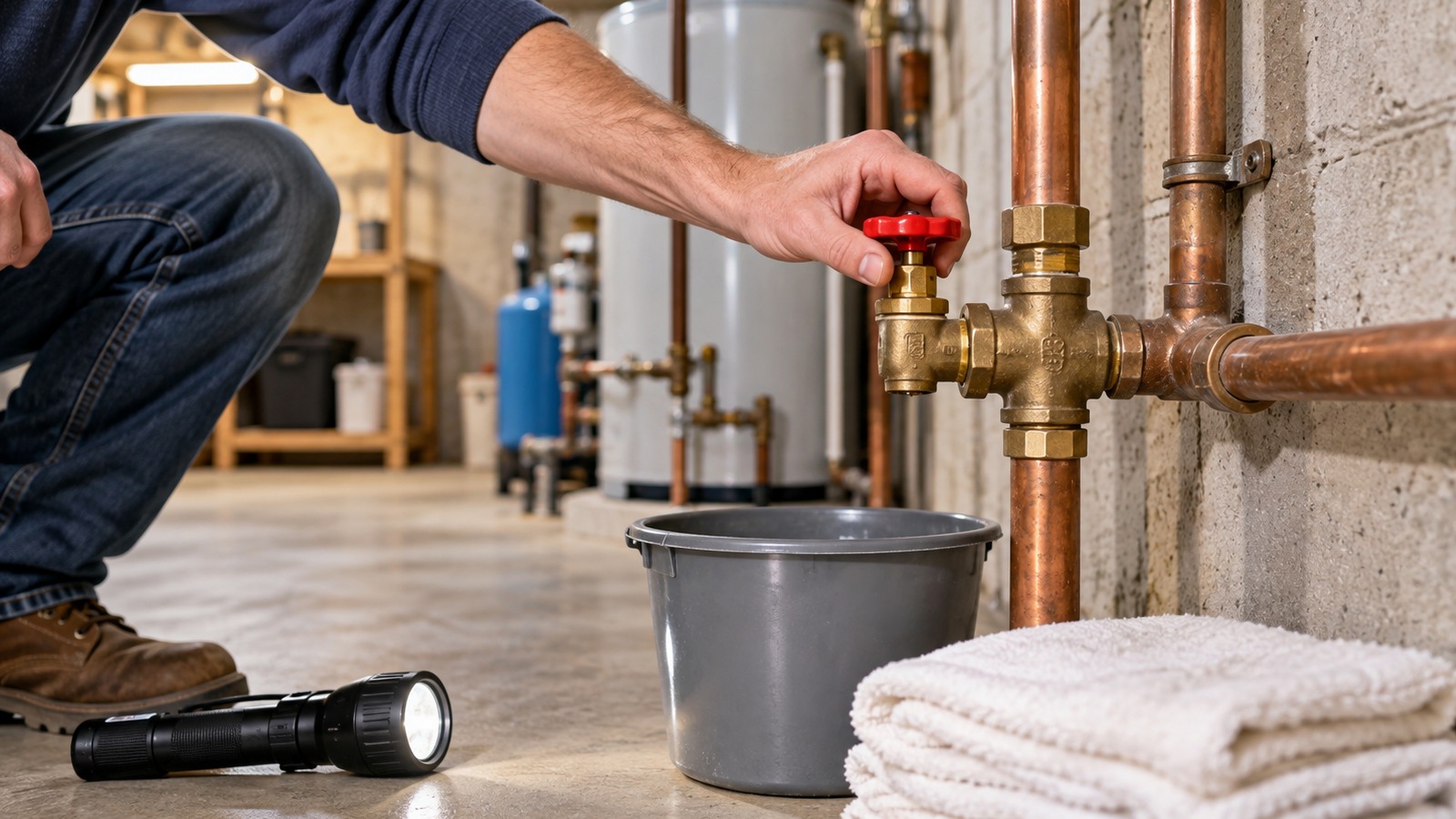
The most important plumbing tool is not in a toolbox. It is knowing where the water shutoffs are and whether they work. Find the main shutoff, the water heater shutoff, toilet stops, sink stops, laundry valves, refrigerator supply valve, and exterior hose shutoffs.
Label the main valve and make sure responsible people in the house can reach it. A wrench, plunger, or replacement washer does not matter much if water is spraying and nobody knows how to stop it.
Test valves gently before a repair, not during a panic. If a valve is frozen, crusted with corrosion, or leaking from the stem, do not force it. That is a warning sign that the first repair may need to be the valve itself.
Keep Damage-Control Supplies Together
Every plumbing kit needs a low bucket, absorbent towels, disposable gloves, a trash bag, and a small tray or cup for parts. These items sound basic, but they are what keep a simple trap cleaning from soaking the vanity base.
A low, wide container is better than a tall bucket under many sinks because cabinet space is cramped. Old towels catch drips, protect finishes, and give you time to inspect a leak without rushing.
Store these supplies together. When water is moving, you do not want to search through laundry, garage shelves, and kitchen drawers before you can start controlling the mess.
Use Light Before You Use Force
A flashlight, headlamp, or compact work light belongs in the kit because plumbing failures often hide in dark places. Small drips show up as shine, mineral tracks, swollen cabinet material, rust staining, or a clean line through dust.
Good lighting prevents overreacting. A wet supply line, a leaking drain nut, and condensation on a cold pipe can look similar at first glance. Light helps you identify where the water begins instead of tightening every fitting in reach.
A headlamp is especially useful under sinks and behind toilets because both hands stay free. Choose one with enough battery life to inspect slowly.
Adjustable Wrench
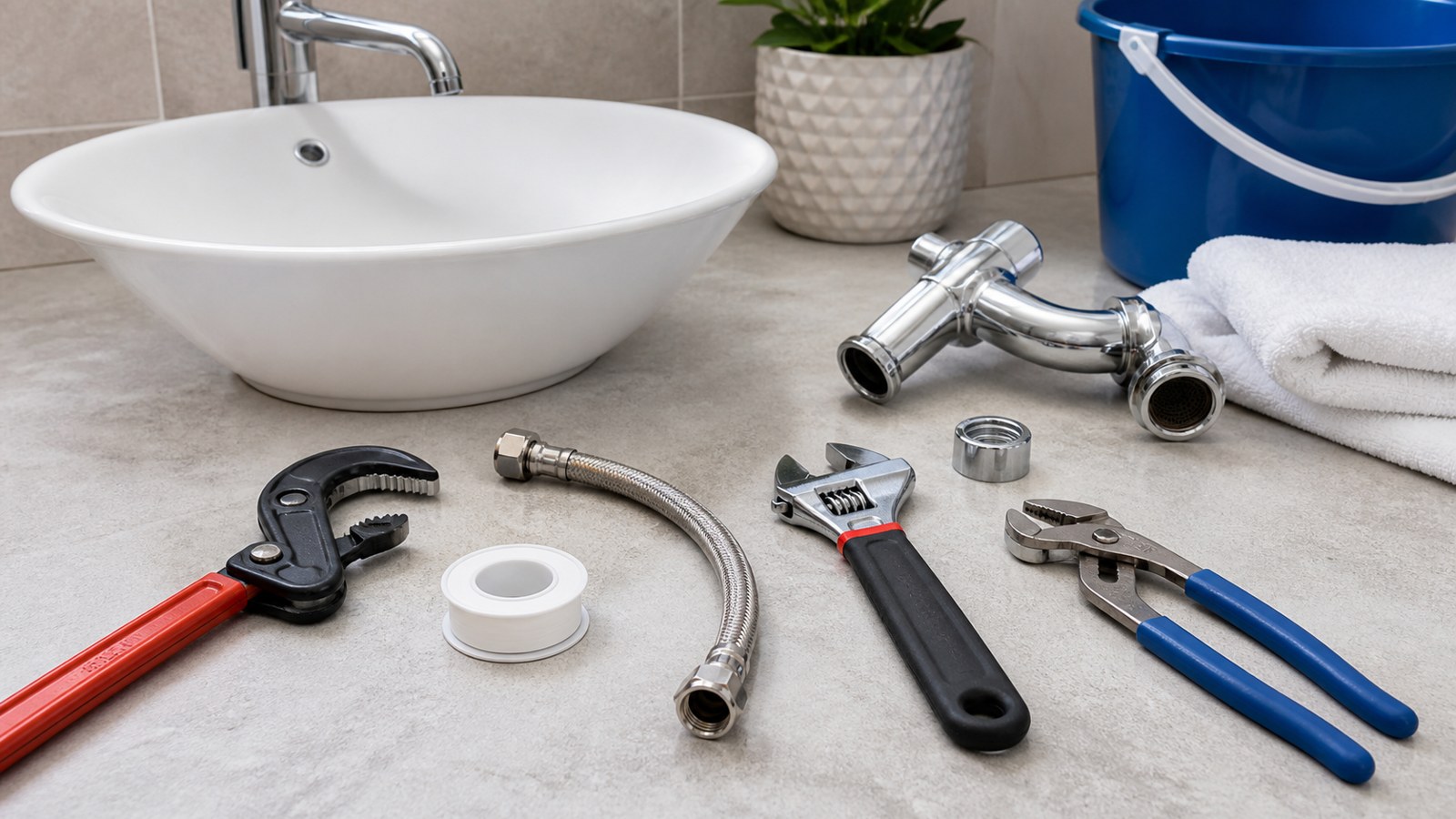
An adjustable wrench handles many supply-line nuts, compression connections, faucet hardware, and small valve fittings. Pick one that adjusts smoothly and has a jaw size suited to tight cabinets.
The trick is controlled contact. Plumbing fittings can deform when crushed. Chrome finishes can scar. Thin nuts can round off if the jaw is loose. Seat the wrench fully, pull steadily, and stop if the fitting starts to twist the pipe behind it.
A short adjustable wrench is useful under sinks, while a larger one helps at water heaters, hose bibbs, and bigger unions. Most homeowners do not need a giant wrench for everyday fixture work.
Tongue-and-Groove Pliers
Tongue-and-groove pliers are useful for larger slip nuts, stubborn fittings, and parts that need more jaw range than a wrench. They are one of the most useful plumbing tools in a home kit, but they can also cause damage quickly.
Protect finished surfaces with a cloth or strap when appearance matters. Use less squeeze on plastic trap nuts than you think you need. If a fitting is supposed to seal with a washer, crushing it tighter may make the leak worse rather than better.
Keep two sizes if possible. A compact pair works inside cabinets, while a larger pair helps when parts are bigger or access is better.
Small Fixed Wrenches
A small set of open-end or combination wrenches helps where an adjustable wrench is too bulky. Toilet bolts, faucet hardware, supply stops, and narrow cabinet spaces often reward a thinner tool.
Use the wrench that fits snugly. A loose fit rounds soft metal and turns a ten-minute repair into a replacement job. If the nut is corroded or crumbling, slow down and decide whether the part should be replaced instead of forced.
These wrenches are inexpensive, easy to store, and useful beyond plumbing, so they earn their place in a homeowner kit.
Basin Wrench
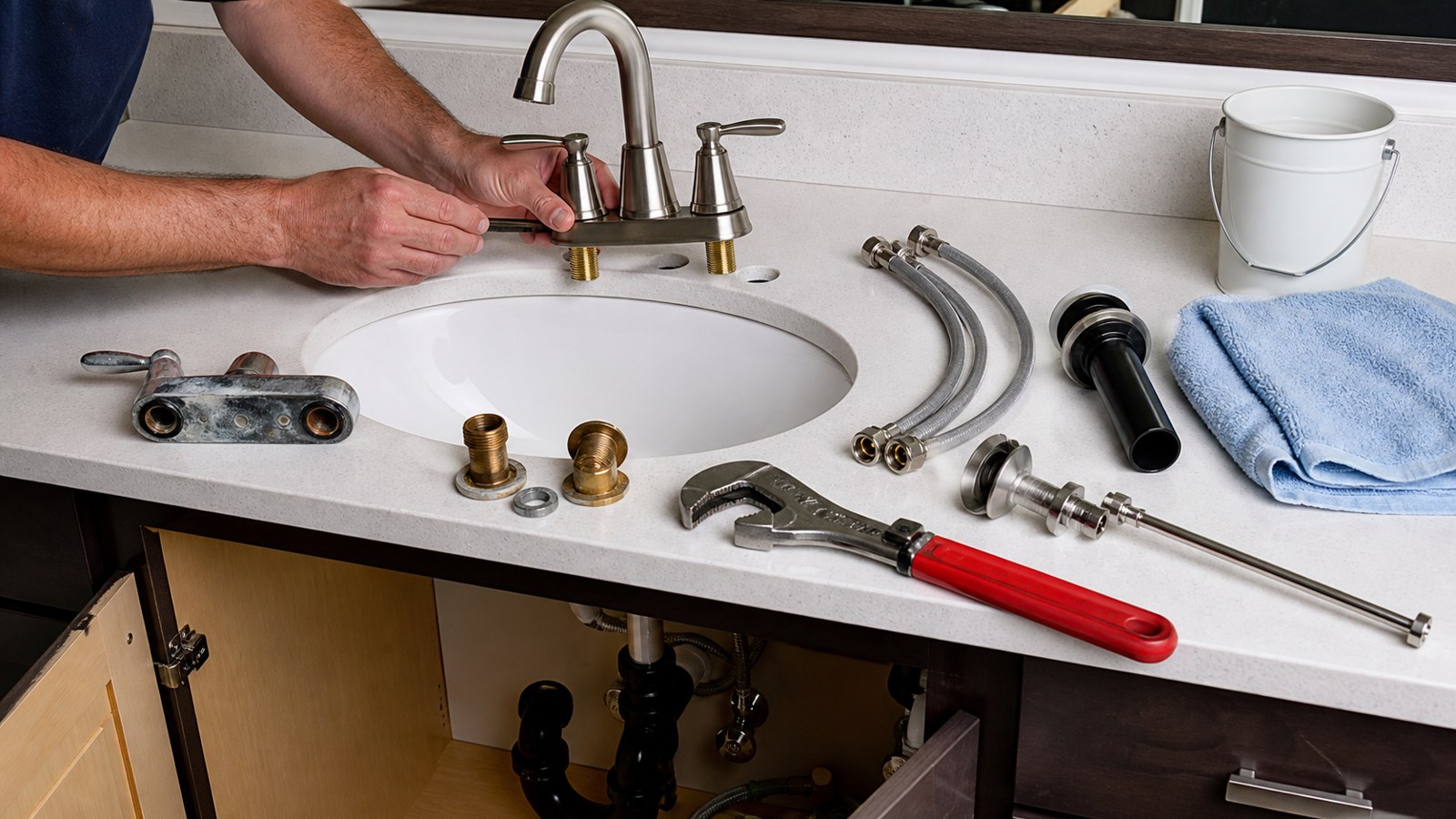
A basin wrench is the awkward-looking tool that reaches faucet mounting nuts behind a sink. It is not needed for every repair, but it can save a lot of frustration when replacing a faucet or tightening hardware in a deep vanity.
Learn how the pivoting head grips before you are lying on your back under a cabinet. The tool feels backward at first. Practicing above the sink for a minute makes the real job much easier.
A basin wrench is especially worth owning if your sinks have tight clearances, deep bowls, or faucets with mounting nuts tucked behind supply lines.
Plungers for the Right Fixture
Use a flange plunger for toilets and a cup plunger for sinks, tubs, and flat drains. The shapes are different because the drains are different. A toilet plunger needs to seal inside the bowl outlet, while a cup plunger needs a flat surface and enough water to cover the cup.
Good plunging is about sealing and controlled pressure, not splashing. If the plunger is not sealed, most of the force escapes into the air. Add water if needed, cover overflow openings on sinks or tubs, and use steady strokes.
Keep toilet and sink plungers separate if you can. Store them where they can dry, and clean them before putting them away.
Hand Augers and Drain Tools
A toilet auger and a sink auger are different tools. A toilet auger has a shape that protects the bowl and guides the cable into the trapway. A sink auger or small drum cable is meant for fixture drains after the stopper or trap access is handled correctly.
Do not force an auger. If the cable stops hard, twists violently, or feels like it is scraping a fixture surface, pause. The goal is to break up or retrieve a clog, not damage porcelain, puncture a trap, or push the blockage deeper.
For hair clogs near the top of a bathroom drain, a simple plastic zip tool may be safer and faster than a cable. Wear gloves and expect the result to be unpleasant but effective.
Trap Tools for Sink Work
Many sink leaks and clogs involve the P-trap. A strap wrench, trap wrench, or gentle use of pliers can loosen slip nuts without gouging everything in sight. Plastic trap parts are not built for brute force.
Put a bucket under the trap before loosening anything. Take a photo first so the parts go back in the same orientation. Check washers and tapered seals as the trap comes apart, because a missing or reversed washer can cause a leak even when the nut feels tight.
If trap parts are brittle, mismatched, glued incorrectly, or patched with old sealant, replacement may be cleaner than fighting the old assembly.
Thread Tape, Putty, and Silicone
Thread seal tape is useful on certain tapered pipe threads, but it does not belong on every connection. Many faucet supplies, compression fittings, and flexible hoses seal with washers, gaskets, ferrules, or machined surfaces instead of thread tape.
Plumber’s putty and silicone also serve different purposes. Putty is commonly used under some drain flanges, while silicone may be specified for certain materials, wet locations, or manufacturer instructions. Putty can stain some stone surfaces, and silicone can make future service harder when used casually.
The safest habit is to identify how the connection seals before adding product. Sealant is not a substitute for the right washer, correct alignment, or an undamaged fitting.
Replacement Parts Worth Keeping
A small organizer of common washers, O-rings, faucet screws, aerator washers, toilet flapper options, and supply-line gaskets can save a late-night store run. Keep parts clean, labeled, and separated by type.
Do not assume every washer in the box fits every job. A washer that is too small, too hard, or the wrong shape may leak immediately or fail after a few uses. Compare old and new parts carefully.
For toilets, a spare flapper that matches your common toilet type is often worth keeping. For sinks, spare aerator washers and trap washers are practical. For supply lines, it is usually better to replace the whole connector if it is old, kinked, or corroded.
Leak-Checking Tools
Paper towels, dry tissue, a small mirror, and a phone camera are surprisingly useful leak-checking tools. Wipe the area dry, run water, then touch suspected joints with tissue. Even a slow drip will show up quickly on clean paper.
A mirror helps inspect the back side of a faucet, trap, shutoff, or toilet connection. A phone photo lets you zoom in after you crawl out of the cabinet. These simple checks prevent guessing at leaks you cannot see directly.
After any repair, check immediately, then again after several minutes, and again after normal use. Some leaks only show after the cabinet contents are back, the drain is full, or hot water expands parts.
Safety Gear for Plumbing Repairs
Gloves, eye protection, and a dust mask or respirator for dirty cleanup deserve a spot near the plumbing kit. Drain work can expose hair, sludge, bacteria, sharp metal, old sealant, and cleaning chemical residue.
Avoid chemical drain cleaners when you plan to open a trap or use a cable. Chemicals can remain in the line and splash back during mechanical work. If chemicals were already used, treat the drain with extra caution and consider calling help.
For water heater, gas, sewer, or pressurized line problems, safety gear does not make the job automatically appropriate for DIY. Those systems carry risks that go beyond a basic tool kit.
Tools to Skip at First
Most homeowners do not need to start with pipe-threading tools, large drain machines, press tools, torch setups, sewer cameras, or specialty pullers. Those tools can be expensive, and using them incorrectly can create bigger problems than the original leak.
Renting or calling a plumber often makes more sense for rare jobs. A powered drain machine can injure hands, damage fixtures, or get stuck in a line. Soldering near finished surfaces or old framing carries fire risk. Cutting into hidden piping without a plan can turn one repair into several.
Buy specialty tools when a specific job justifies them and you understand the system. A focused kit is easier to maintain than a pile of rarely used tools with missing parts.
Build a Sink Repair Kit
For under-sink work, keep a flashlight, low bucket, towels, adjustable wrench, tongue-and-groove pliers, small wrenches, strap wrench, replacement trap washers, and a phone for photos. That group handles many trap leaks, loose supply connections, aerator problems, and faucet access issues.
Before loosening anything, clear the cabinet and dry the area. Photograph the connections. Turn off the fixture stops if the work touches supply lines. Open the faucet to relieve pressure. Then work one connection at a time.
After the repair, run water with the cabinet still empty. Fill the sink, drain it, operate the faucet, and check the supply side and drain side separately. Keeping the kit nearby until the next-day check is smart.
Build a Toilet Repair Kit
For toilets, keep a flange plunger, toilet auger, adjustable wrench, small wrench, gloves, towels, replacement flapper, and a sponge or cup for tank water. Many running toilets, weak flushes, loose seats, and simple clogs can be handled with this small group.
Be careful with porcelain. Overtightened bolts can crack a tank or bowl. If the toilet rocks, leaks at the base, or smells like sewer gas, the issue may involve the wax seal, flange, floor, or drain line rather than a simple tool adjustment.
Stop if the shutoff valve leaks or will not close. A toilet repair is much less stressful when the water supply can be controlled first.
Know When the Kit Is Not Enough
Call a plumber for active leaks you cannot stop, failed shutoff valves, water heater problems, sewer backups, gas lines, hidden pipe leaks, frozen pipes, major corrosion, repeated clogs, or anything that requires cutting into walls without a clear plan.
Also call when a repair touches code-sensitive work, permits, fixture relocation, main lines, pressure regulators, or old piping that may break as soon as it is disturbed. A good DIY kit is meant to control manageable problems, not replace professional judgment.
The win is knowing the difference. Good tools help you inspect, stabilize, and fix simple issues. Good judgment keeps you from making the expensive ones worse.
Final Plumbing Tool Review
Every homeowner should have the tools to stop water, protect surfaces, see the problem clearly, loosen common fittings, clear simple clogs, and check for leaks afterward. Start with shutoff knowledge, a bucket, towels, light, adjustable wrench, pliers, plungers, basic drain tools, seal materials, and a few common replacement parts.
The best plumbing kit is practical, organized, and matched to the repairs you are willing to do. Keep it where you can find it, replace missing parts after each job, and use the tools to slow the situation down. Calm plumbing work usually starts before the wrench ever touches the fitting.