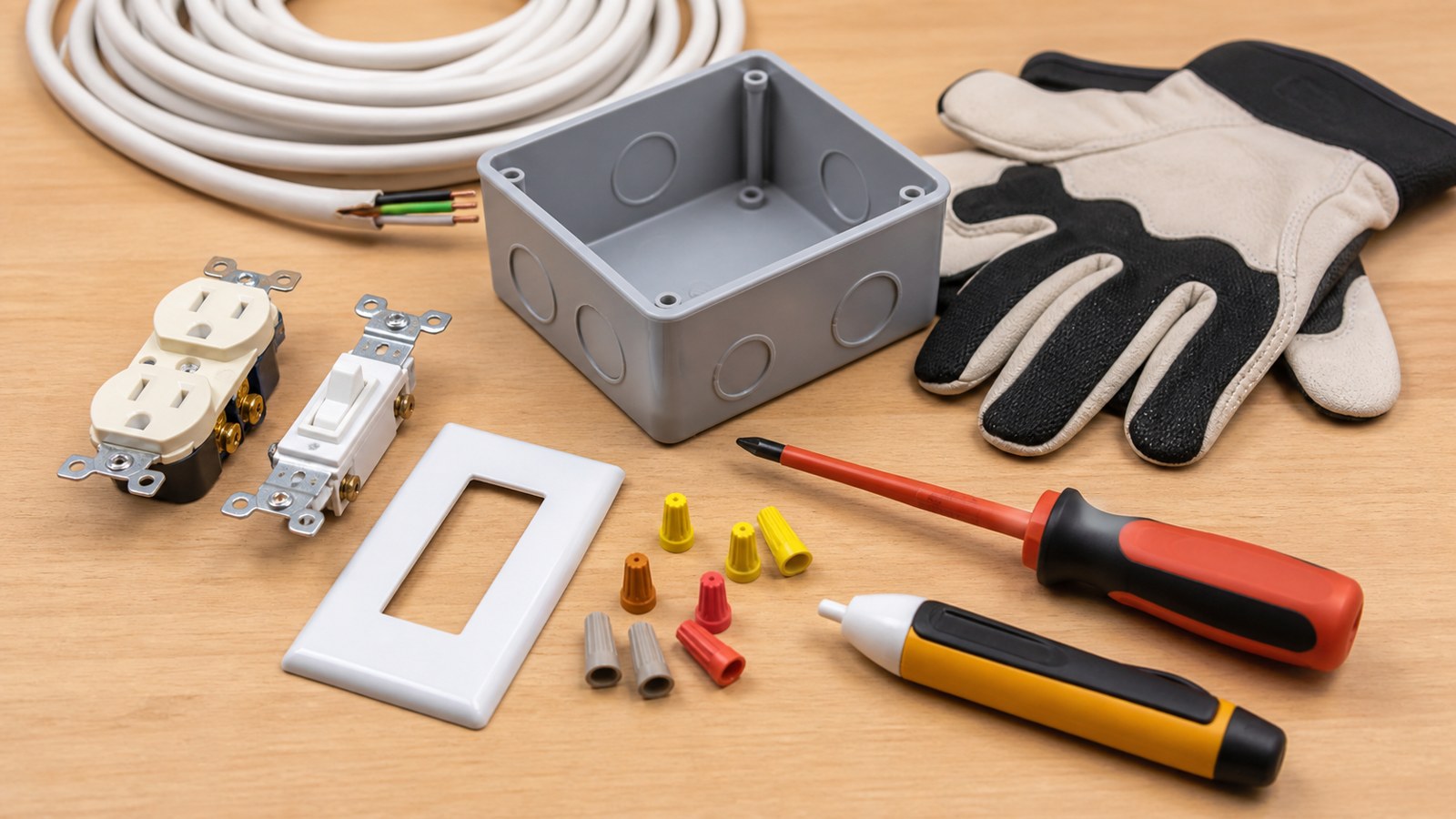
Home wiring is easy to underestimate because most of it is hidden behind finished walls. A switch, outlet, light, or breaker can look ordinary from the room side while the real safety work happens inside boxes, cables, grounding paths, protective devices, and code rules.
A homeowner does not need to become an electrician to make better decisions. The useful goal is to understand what each part is supposed to do, recognize warning signs, keep simple checks organized, and stop before a small observation turns into unsafe electrical work.
A: Simple device replacement may be reasonable when power is verified off and the existing wiring is sound.
A: Learn shutoff, breaker mapping, tester use, wire terms, grounding, and when to stop.
A: Use colors as clues, but verify function because old work and switch wiring can be misleading.
A: Crowded boxes can pinch wires, overheat connections, and make devices hard to install safely.
A: Grounding helps fault current travel a safer path so protection can operate.
A: GFCI protection helps reduce shock risk near water, outdoors, garages, basements, and other required areas.
A: AFCI protection helps address certain arc-fault hazards in required living areas.
A: One trip may be explainable, but repeated trips need diagnosis rather than repeated resets.
A: No. Permanent cord use usually means the room needs a better outlet or circuit plan.
A: Call for panel work, new circuits, old or damaged wiring, uncertain grounding, heat, odor, buzzing, or permits.
Think of Wiring as a System
A home circuit is not just one outlet or one light. Power leaves the panel, travels through cable, passes through boxes and devices, and returns by a controlled path. The breaker protects the circuit, the grounding path helps faults clear, and devices must match the circuit they are connected to.
When one part is changed without understanding the rest, the visible repair may look successful while the circuit becomes harder to troubleshoot later. Good electrical decisions start with identification before replacement.
Know the Limits of DIY Work
Replacing a cover plate, labeling a panel, resetting a breaker, testing a GFCI, or noticing a loose plug is different from altering wiring. Adding circuits, opening the service panel, repairing damaged cable, changing breaker sizes, working on aluminum wiring, and modifying wet-location or exterior wiring should be handled by a licensed electrician.
Permits and local rules matter. Some areas allow homeowners to do limited work on their own home, while others require licensed help for almost any wiring change. Before a project moves beyond observation or a simple like-for-like device replacement, check what is allowed where the house is located.
Start With the Panel Directory
The panel directory is the map for the house. If it says bedrooms when only one outlet is actually controlled, the label is not useful enough. Walk the house with another person, test lights and receptacles, and update labels in plain language.
Good labels should describe real locations, not guesses. Front bedroom east wall and hall light is more useful than upstairs. Clear labeling reduces panic during outages and helps a professional understand the layout faster.
Understand Breakers Without Opening the Panel
A breaker is designed to open the circuit when current or a protected fault condition becomes unsafe. Standard breakers respond to overloads and short circuits. GFCI breakers respond to current leakage that can shock people. AFCI breakers respond to arcing patterns that can indicate damaged wiring or bad connections.
If a breaker trips once because too many portable loads were running, the lesson may be load management. If it trips repeatedly, feels loose, will not reset, or trips with everything unplugged, stop treating it as an inconvenience. That pattern deserves professional diagnosis.
Learn What Cable and Wire Terms Mean
Homeowners often hear words such as hot, neutral, ground, gauge, cable, conductor, and box fill. The hot conductor carries power to the load, the neutral completes the normal circuit path, and the equipment grounding conductor provides a safety path during faults. Those roles should never be casually swapped.
Wire size matters because it must match the circuit protection. A breaker is not a volume knob that can be increased to stop nuisance trips. If a circuit trips because the load is too high, the answer is to reduce the load or have the circuit properly evaluated, not install a larger breaker.
Respect Color but Verify Function
Modern wiring often uses black or red for hot conductors, white for neutrals, and bare copper or green for grounding. Older homes, switch loops, multi-wire circuits, reidentified conductors, and previous repairs can complicate that pattern. Color is a clue, not proof.
Before any device is handled, power should be confirmed off with a reliable tester. Even then, confusing wiring should pause the project. A box that does not match expectations is information, not an invitation to guess.
Use Testers Carefully
A plug-in receptacle tester can reveal missing grounds, reversed hot and neutral, and some obvious outlet problems. A non-contact voltage tester can help screen for energized conductors, but it is not perfect. A multimeter gives more information in trained hands, but it can also mislead someone who does not know what they are measuring.
The safest habit is to use the tester as one layer of confirmation. Test it on a known live source, check the work area, then test it again on the live source so you know the tool still responds. If readings conflict, stop.
Pay Attention to Boxes
Electrical boxes protect splices, support devices, and keep connections accessible. A loose box, overcrowded box, missing clamp, broken cover, buried junction, or device hanging only by the cover plate is not a neatness issue. It can create heat, movement, and exposed connections.
Do not bury splices behind drywall, cabinets, tile, or paneling. Junctions must remain accessible. If a renovation uncovers hidden splices or unsupported cable, that discovery should be corrected before the wall is closed again.
Grounding Is Not Decoration
The grounding path helps protective devices respond when a fault energizes metal parts. A three-slot receptacle should not be installed on an ungrounded circuit just to accept modern plugs unless the installation is handled in a code-compliant way, such as proper GFCI protection and required labeling where allowed.
Never cut off a plug ground pin, use adapters as a permanent solution, or assume that a metal box is grounded. Grounding needs to be verified, not hoped for.
GFCI Protection Belongs Near Shock Risk
GFCI protection is common in bathrooms, kitchens, garages, basements, laundry areas, exterior locations, and other places where people and moisture may be close to electricity. A GFCI device may protect other outlets downstream, so one reset button can affect more than one location.
Test GFCI devices with their test and reset buttons. If a GFCI will not reset, trips immediately, controls outdoor loads after rain, or protects equipment that keeps failing, do not keep forcing it back on. Find the cause.
AFCI Protection Points to Arc Risk
AFCI protection is used on many modern living-area circuits because damaged cords, loose terminals, or compromised wiring can arc before a standard breaker sees a simple overload. Frequent AFCI trips should not be dismissed as the breaker being picky.
Unplug portable items first and look for damaged cords or failing equipment. If the breaker trips with the load removed, the circuit needs deeper inspection by someone qualified to evaluate wiring and devices.
Do Not Overload Convenience Outlets
Power strips, cube taps, and extension cords make it tempting to treat one receptacle as many. They do not increase the circuit capacity. A space heater, microwave, toaster oven, hair dryer, portable air conditioner, or large tool may use most of the available capacity by itself.
If a room always needs extension cords, the room may need more outlets or a better circuit plan. Permanent dependence on temporary cords is a sign that the electrical layout no longer fits the way the space is used.
Keep Extension Cords Temporary
Extension cords should be visible, correctly rated, and used only for short-term needs. Running them under rugs, through doors, behind furniture, across sharp edges, or into damp areas creates risk. A cord that feels warm is giving feedback that should not be ignored.
Outdoor cords must be rated for outdoor use and plugged into protected receptacles. Indoor cords should not be used outside for convenience. Weather, sunlight, and moisture are hard on insulation and connections.
Watch for Heat, Odor, and Sound
Electrical problems often announce themselves before they fail completely. A warm switch, buzzing dimmer, flickering light, burning smell, discolored receptacle, loose plug, crackling sound, or breaker that trips again after reset should be treated as a warning sign.
Do not keep using the device to see whether the symptom gets worse. Unplug loads, turn off the circuit if it is safe to identify, and call for help when heat, odor, smoke, sparks, or repeated trips are involved.
Match Devices to the Circuit
Receptacles, switches, dimmers, timers, smart controls, and fixtures have ratings. Those ratings are not decorative numbers. A dimmer must match the fixture type and load. A receptacle must match the circuit and location. Outdoor devices need weather-appropriate covers and ratings.
When a device fails early, the problem may be mismatch rather than bad luck. Check the load type, wattage, location, enclosure, and manufacturer instructions before installing the same replacement again.
Older Homes Need Extra Caution
Older homes may include ungrounded circuits, cloth-covered cable, knob-and-tube remnants, aluminum branch wiring, crowded boxes, brittle insulation, or many generations of repairs. The house may still function, but the wiring may not support modern loads or modern assumptions.
If a project exposes old wiring, take photos and pause. Insulation that cracks when moved, unknown splices, or unusual cable should be evaluated before it is disturbed further. Sometimes the safest DIY decision is to stop before a hidden system is damaged.
Plan Before Opening Anything
Before removing a device cover or fixture canopy, know which breaker controls it, what the replacement part is rated for, what tools are needed, and what would make you stop. Good planning includes having light from another circuit, labels, a phone photo, and enough time to avoid rushing.
Rushed electrical work creates mistakes that are hard to see after the cover goes back on. Give yourself enough daylight, room, and attention to document what was there before anything changes.
Document the Original Setup
Photos are useful when taken before wires move. Capture the whole box, each device terminal, cable entry points, labels, and any unusual details. Do not rely on memory once several conductors are present.
Documentation is not a license to handle confusing wiring. It is a way to preserve information for a qualified person and to avoid creating a mystery during a straightforward replacement.
Use the Right Materials
Electrical parts should be listed for the purpose, rated for the environment, and installed according to instructions. Random screws, undersized boxes, mismatched connectors, indoor covers outdoors, and bargain devices in high-use locations can create trouble even when the circuit itself is sound.
Keep packaging until the project is finished. The rating, wiring diagram, compatibility notes, and warning language can matter during installation and later troubleshooting.
Do Not Hide Problems With Finish Work
Paint, tile, cabinets, shelving, insulation, and drywall can conceal electrical mistakes. A junction box should not be covered because it ruins a clean wall. An outlet should not be forced crooked to make a cover plate fit. A cable should not be pinched to finish a cabinet install.
Finish work should wait until the electrical condition is correct. Once the wall is closed, every hidden shortcut becomes more expensive to fix.
Build a Household Electrical Log
Keep a simple note with breaker labels, GFCI locations, recurring trip patterns, outlet repairs, fixture changes, and professional service visits. Include photos of panel labels and any manufacturer information for smart devices or specialty controls.
This log helps when selling the home, planning renovations, or calling an electrician. It also prevents the same mystery from being solved again every few months.
Know When the Answer Is a New Circuit
Sometimes a circuit is not broken; it is simply being asked to serve more than it was designed for. Home offices, workshops, kitchen appliances, EV equipment, finished basements, and outdoor living areas can outgrow old wiring layouts.
Adding capacity is design work. It involves load, wire size, breaker type, route, grounding, permits, and inspection. That is not the same as adding another power strip.
Be Careful With Fixtures, Fans, and Smart Controls
Light fixtures, ceiling fans, dimmers, timers, and smart switches create confusion because they often look like simple replacements. The box may need fan-rated support, the control may need a neutral, the fixture may require a ground, and the dimmer may need to match LED, incandescent, or motor loads.
Do not hang a ceiling fan from a box that was only meant for a light. Do not assume a smart switch will work in an older switch loop. If the existing box, support, or conductor set does not match the new device instructions, the project has moved beyond a simple swap.
Final Home Wiring Review
The best home wiring knowledge helps you avoid guesses. Label clearly, test carefully, respect protective devices, keep covers intact, and stop when wiring does not match what you expected. Those habits make small projects safer and professional help more effective.
A homeowner who understands the basics can spot risk earlier. That does not replace an electrician, but it makes every decision around the electrical system calmer, better documented, and less likely to hide a dangerous condition.