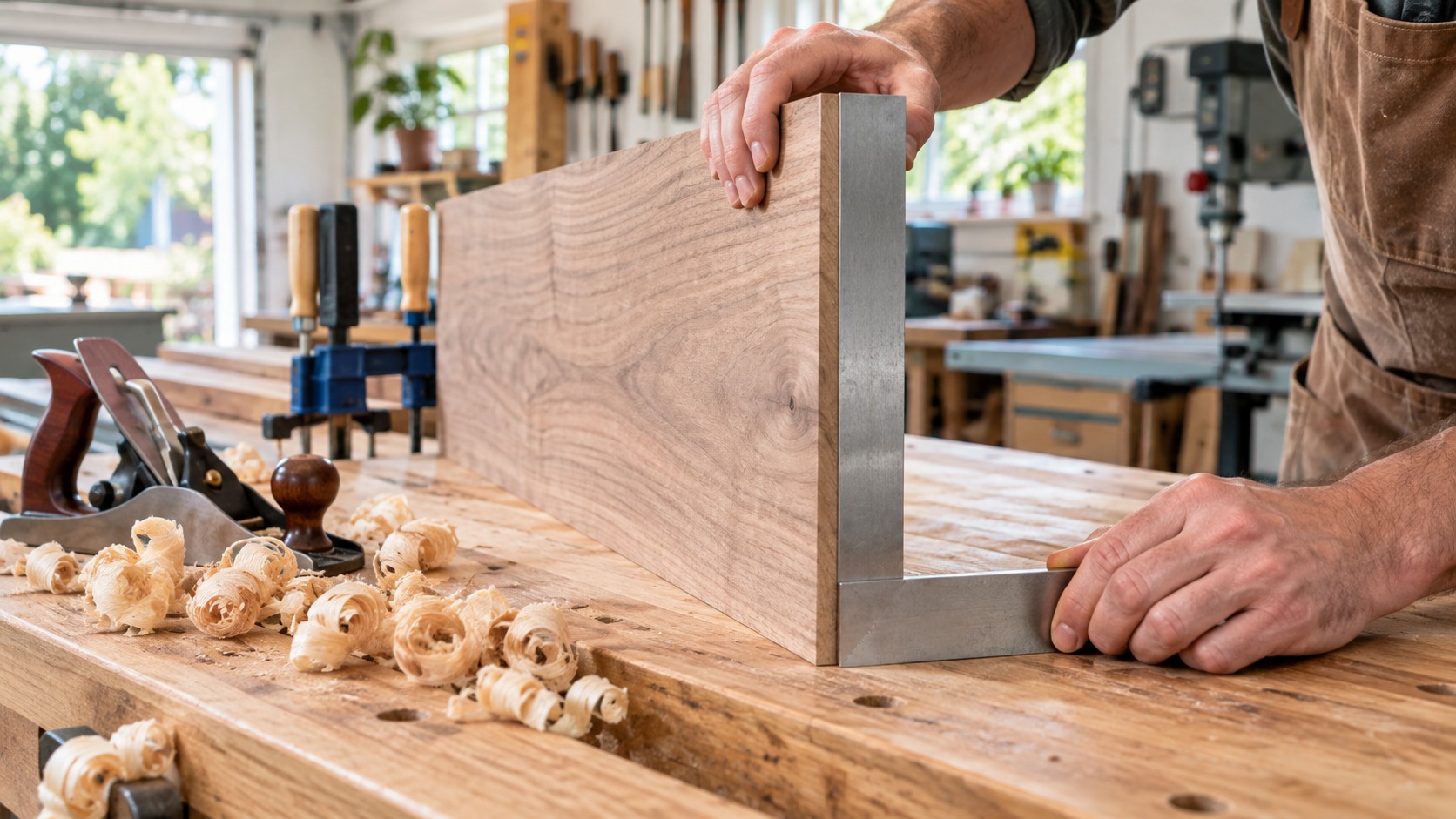
A beginner carpentry kit should make the work more accurate, safer, and easier to repeat. It does not need to include every tool in a professional shop. The best first kit covers measuring, marking, cutting, fastening, clamping, support, safety, and cleanup so small projects can be completed without improvising at every step.
The smartest way to build the kit is to buy tools in the order they protect the work. Layout tools come before fancy saws. Clamps come before complicated joinery. Safety gear and lighting belong in the budget from the beginning. A sharp blade or reliable square can improve a project more than a specialty tool that only solves one rare problem.
Use this guide as a practical buying order for beginner carpentry. Start with tools that help every project, then add more specialized gear as the work becomes more specific.
A: Compare its contents with actual project operations, accessory quality, and missing support or safety equipment first.
A: No. Choose cutting equipment that suits the planned stock, safe workspace, and skills you can develop with proper instruction.
A: Work through a representative assembly and identify the number, reach, and holding capacity needed rather than following one universal count.
A: Not necessarily. Confirm the blade's intended application and test its result on comparable scrap.
A: Not automatically. Handling, speed control, clutch behavior, and appropriate bits may be more relevant to those tasks.
A: No. Gloves can catch in rotating parts; follow the specific tool's operating precautions separately from stock-handling protection.
A: Missing guards, damaged controls, incompatible accessories, and unavailable parts can outweigh its low purchase price.
A: When a recurring operation establishes a real need and you can provide the workspace, accessories, and training to use it safely.
A: The checked measuring tools, marking tools, appropriate clamps, and safety equipment needed for the current operation.
A: Clean reference surfaces, identify worn accessories, protect sharp edges, and return compatible batteries and chargers to their intended storage routine.
Start With a Reliable Tape Measure
A tape measure is the tool most likely to touch every project. It helps size boards, locate studs, mark shelves, plan cuts, check openings, and confirm that parts match before they are fastened. Choose one with clear markings, a firm lock, a hook that moves normally, and a blade that feels readable in the lighting where you work.
A twenty-five-foot tape is a good general size for most home carpentry. Smaller tapes are comfortable for shop work, but they may be short for rooms, walls, decks, or long trim. Very bulky tapes can be tiring for small tasks. The best tape is one you can read quickly and trust consistently.
Check the hook before important work. A bent or loose hook can throw off every measurement. If a tape has been dropped many times or the blade is damaged, keep it for rough layout and buy a cleaner one for precise cuts.
Add a Speed Square
A speed square is one of the best beginner tools because it is simple, rugged, and useful. It marks square lines across boards, guides circular-saw crosscuts, checks corners, and helps lay out common angles. For framing lumber, shelving, blocking, and basic carpentry, it earns its place quickly.
Use the square against a reliable edge. If the board edge is rounded, split, or crooked, the square will copy that problem into the cut line. Hold it firmly and draw a clean pencil line instead of a vague mark.
Beginners often buy saws first, then struggle with layout. A speed square helps the saw follow a real target. It also teaches the habit of checking the board before cutting it.
Buy a Combination Square
A combination square handles smaller layout tasks that a speed square cannot do as neatly. It can mark repeat offsets, check depth, draw parallel lines, transfer measurements, and confirm that small parts are square. It is especially useful for shelves, trim, furniture repairs, cabinet hardware, and shop projects.
Choose one that locks securely and feels solid. A loose head or inaccurate blade turns a layout tool into a source of errors. The markings should be easy to read, and the blade should slide without wobbling.
Use it for repeatable work. If several brackets need the same setback, set the square once and mark each piece from the same setting. That is often more accurate than reading the tape over and over.
Keep Marking Tools Close
A pencil is a carpentry tool, not an afterthought. Keep several sharp pencils near the work area. A dull pencil creates thick marks that are hard to cut accurately. A carpenter pencil is durable for rough work, while a standard pencil or mechanical pencil can be better for fine layout.
Add a fine marker for labels and a utility knife or marking knife when a crisp line matters. Use bold marks for waste areas and light marks on visible faces. When a board has several lines, label the one that matters so old marks do not confuse the cut.
Good marking habits prevent wasted material. A clear line, a waste-side X, and a part label can save more trouble than an expensive tool used on a confusing layout.
Choose One Main Cutting Tool
Most beginners should start with one main saw that matches their projects. A circular saw is the most flexible first power saw for boards, plywood, shelving panels, and rough carpentry. It works even better with a sharp blade, speed square, and straightedge guide.
If your first projects are small trim, boxes, or simple shop pieces, a handsaw or pull saw can also be a smart first choice. It is quiet, affordable, and easy to store. If you expect many repeat crosscuts for trim or framing, a miter saw may become useful, but it does not replace every saw.
A table saw is powerful, but it is not always the best first purchase for a homeowner. It needs space, setup, safety habits, and support for larger material. Build skill with measuring, marking, and supported cutting before collecting larger machines.
Budget for Good Blades
A saw is only as useful as the blade installed on it. A dull or wrong blade can burn wood, wander off line, chip plywood, tear trim, and make the tool feel harder to control. Beginners often upgrade the saw when the blade was the real weak point.
Keep at least one general-purpose blade for rough carpentry and one cleaner-cutting blade for visible edges if you use a circular saw. For plywood, trim, and finish work, a finer tooth count usually helps. For framing lumber, a faster rough blade may be fine.
Store blades where teeth are protected. A good blade tossed loose in a drawer can become damaged quickly. Clean pitch buildup when cuts start burning or dragging.
Get a Drill-Driver Kit
A cordless drill-driver belongs in a beginner carpentry kit because it drills pilot holes, drives screws, installs hardware, countersinks fasteners, and handles many household repairs. A compact drill is easier to control, while a larger model offers more power for heavier work.
Buy useful bits with the drill. Twist bits, brad-point bits, driver bits, countersink bits, and a small masonry bit set cover many common jobs. Cheap bits wear quickly and can damage screws or wander across finished surfaces.
Use the clutch when driving screws. Starting with a lower setting helps prevent overdriving, splitting, or stripping. For delicate hardware, finish by hand if needed.
Own More Clamps Than You Expect
Clamps hold work steady, align parts, pull joints together, and keep both hands free. They make cutting, drilling, gluing, sanding, and assembly safer. Beginners rarely regret buying clamps early.
Start with a few quick-grip clamps and a couple of stronger bar or F-style clamps. Small spring clamps are helpful for light holding, but they do not replace real clamping pressure. Match clamp size to the project: tiny clamps are awkward on shelves, and huge clamps are clumsy on small boxes.
Use scrap pads when clamping visible surfaces. Clamp pressure can dent soft wood or leave marks. The goal is steady holding, not crushing the work.
Create a Stable Work Surface
Good tools struggle on a wobbly surface. A beginner does not need a professional bench immediately, but the work needs support. Sawhorses, a folding workbench, a sturdy table, rigid foam for sheet goods, or a sacrificial plywood top can all help.
The surface should hold the material at a comfortable height and leave room for the blade, drill, or clamp. If the board rocks while you mark it, the mark may be wrong. If the material shifts while cutting, the cut may wander.
Think about the offcut too. Support both sides of a cut so the waste piece does not drop, tear fibers, or pinch the saw. Support is part of accuracy.
Include a Level and Straightedge
A level helps with shelves, brackets, doors, trim, framing, and wall-mounted projects. A small torpedo level is handy in tight spaces, while a longer level is better for shelves and layout across distance. If a level is inaccurate, it causes more trouble than it solves, so check it by flipping it end-for-end on the same surface.
A straightedge is useful for marking long lines, guiding saw cuts, checking boards, and laying out sheet goods. A long level can sometimes serve as a straightedge, but protect it from saw blades and rough handling.
For longer room layout, a chalk line or laser can help. These are not always needed on day one, but they become useful for walls, flooring, cabinets, and larger carpentry.
Do Not Skip Safety Gear
Safety gear should be part of the tool kit, not a later add-on. Safety glasses protect against chips, dust, snapped bits, and flying debris. Hearing protection matters around saws, drills, and repeated impact noise. A dust mask or respirator helps when cutting, sanding, or working with treated, painted, or dusty material.
Gloves are useful for carrying rough lumber, handling sheet goods, and cleanup, but they are not always right around spinning blades. Good shoes, good lighting, and a clean floor also prevent injuries.
Keep safety gear visible and comfortable enough to use. Gear stored in a closed box across the room gets skipped. Gear hanging next to the tools gets used more often.
Add Lighting and Power Support
Poor lighting makes marks hard to see and hides gaps, splinters, uneven cuts, and fastener problems. A portable work light is a simple upgrade that improves accuracy immediately. It is especially useful inside closets, basements, garages, cabinets, and evening work areas.
For corded tools, use an extension cord rated for the load and long enough to avoid stretching across the work awkwardly. For cordless tools, keep batteries charged and store the charger where it is easy to find. A dead battery in the middle of a project turns a simple job into a delay.
Lighting and power are not glamorous tools, but they keep the rest of the kit usable.
Keep Fasteners and Consumables Organized
Screws, nails, anchors, sandpaper, blades, bits, glue, painter’s tape, pencils, and replacement utility blades are part of the kit. Without them, the main tools sit idle or get used poorly. Keep a small assortment matched to the projects you actually do.
Organize fasteners by type and length. Mixed containers lead to wrong screws, stripped heads, and fasteners that are too short or too long for the job. Label containers clearly.
Replace worn consumables before they fail. Fresh blades, sharp bits, clean sandpaper, and good driver tips make beginner work look much better.
Buy Specialty Tools Later
Routers, nailers, planers, table saws, biscuit joiners, pocket-hole jigs, oscillating tools, and laser levels can all be useful, but they do not all need to be first purchases. Let projects reveal what is missing.
If you repeatedly need the same operation, then a specialty tool may be worth buying. If a tool solves one imagined future problem, wait. Borrowing, renting, or using a simpler method can teach what features matter before money is spent.
A beginner kit should grow from real use. The best upgrades are the ones that remove a repeated bottleneck, improve safety, or make a common task more accurate.
Store the Kit So It Gets Used
Tool storage affects the quality of the work more than beginners expect. If the square is buried under cords, the sharp pencils are missing, and the correct bit is loose in a drawer, every project starts with friction. Keep the basic kit together so measuring, marking, drilling, and clamping tools are easy to reach.
A small toolbox, wall rail, open shelf, or rolling tote can work. The system does not need to be fancy. It needs to keep sharp tools protected, batteries charged, blades covered, and small parts sorted. Labeling drawers or bins helps when the project is spread across a garage, basement, or spare room.
Put tools away clean enough to use next time. Sawdust on a square, glue on clamps, and dull blades left in the saw all create future problems. A two-minute reset after the project keeps the beginner kit reliable.
Final Beginner Carpentry Tool Review
A strong beginner carpentry kit starts with measuring and marking tools, then adds a practical saw, good blades, a drill-driver, clamps, work support, safety gear, lighting, and organized consumables. These tools cover the core tasks: layout, cutting, fastening, holding, checking, and cleanup.
Buy tools that make ordinary work more dependable before chasing specialty gear. A readable tape, accurate square, sharp blade, stable clamp, and good light can improve almost every project. Once those basics are in place, every new tool has a clearer purpose.