
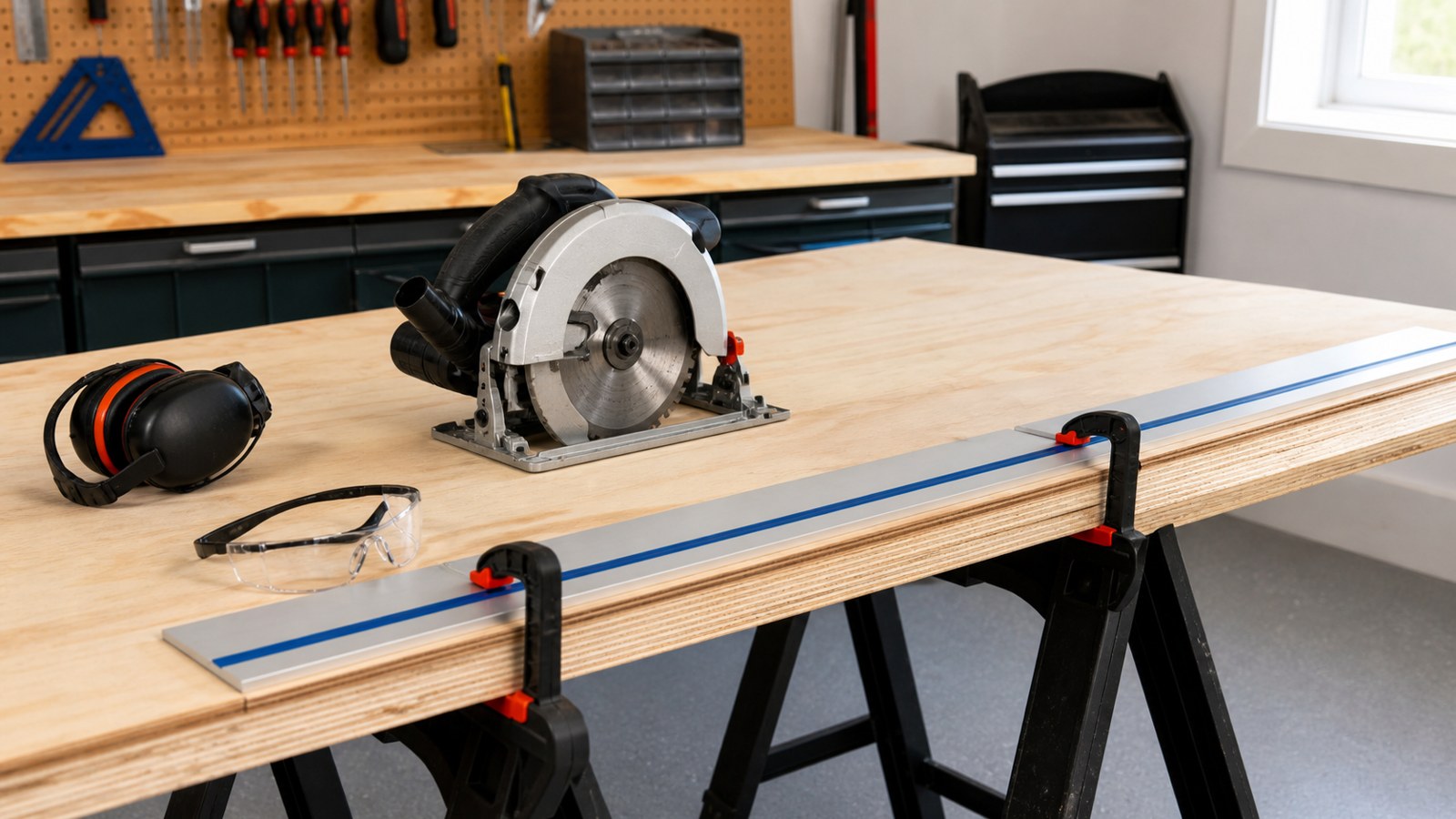
A circular saw is one of the most useful cutting tools a homeowner can own, but the first few cuts should be treated as setup practice, not a race. The goal is to learn how the saw starts, how the blade tracks, how the shoe rides on the work, and how the offcut behaves as the blade exits.
Most first-time mistakes come from poor support, the wrong blade depth, unclear cut marks, or starting the saw before the body and cord are in a safe position. A straight cut is the result of the whole setup, not just a steady hand.
Use this guide to make the first circular saw session controlled and predictable. Start on scrap, keep the work supported, and move to visible project pieces only after the saw, guide, material, and cut line all make sense.
A: Learn the guard, shoe, trigger, depth lever, bevel setting, blade direction, and cord path.
A: Set it just deep enough for the teeth to clear the underside of the material.
A: Use a guide whenever straightness matters or when you are still building control.
A: Match the blade to the material and desired cut quality.
A: Support the work, prevent pinching, keep the shoe flat, avoid twisting, and stand out of the blade path.
A: Common causes include rushing, poor support, no guide, dull blade, or steering after drifting.
A: Support the sheet continuously with foam, a cutting grid, or stable sacrificial boards.
A: Stop for binding, burning, loose work, guard trouble, unclear lines, distraction, or uncertain support.
A: Practice square crosscuts, guided straight cuts, and sheet-good cuts on scrap.
A: Confirm blade, depth, support, line, guide, stance, cord path, eye protection, and offcut control.
Learn the Parts Before Plugging In
Before cutting, identify the trigger, safety switch, blade guard, shoe, depth lever, bevel lock, blade wrench, sight notch, dust port, and battery or cord connection. The saw should feel familiar in your hands before the motor ever starts. If you do not know how to release the trigger, adjust the depth, or check the guard, pause and read the manual.
Move the lower guard by hand with the tool unplugged or the battery removed. It should open smoothly and spring closed without sticking. A guard that hangs open is not a small inconvenience; it is a safety problem that needs to be corrected before cutting.
Also check blade direction. Circular saw blades are marked with arrows, and the teeth need to face the correct way for the saw. A backwards blade cuts badly, burns material, and can make the tool feel unpredictable.
Choose the Right Blade
The blade controls the quality of the cut as much as the saw does. A framing blade with fewer teeth cuts quickly through construction lumber but leaves a rougher edge. A finer-tooth blade cuts plywood and finish material more cleanly, though it may cut more slowly. Do not expect one old blade to perform well on every material.
For a first practice session, use a sharp wood-cutting blade matched to the material. Avoid warped, rusty, missing-tooth, or mystery blades from the bottom of a toolbox. A dull blade forces the saw, heats the cut, and increases the chance of wandering or binding.
If you are cutting plywood, orient the good face based on the blade and saw type. Most standard circular saws cut upward through the material, so tearout is often worse on the top face. A fine blade, painter’s tape, a score line, or cutting from the back side can help on visible surfaces.
Set Blade Depth Correctly
Blade depth should be set just deeper than the material, not dropped all the way down by habit. A common target is for only a small amount of tooth to show below the board. That gives the blade enough reach to cut while reducing exposed blade and making the saw easier to control.
To set depth, unplug the saw or remove the battery, loosen the depth lever, place the saw beside or on the material, and adjust until the blade projects slightly below the work. Lock the lever firmly before cutting.
Too much blade below the work can make the saw feel more aggressive and increase the consequences of a mistake. Too little depth can leave an incomplete cut or cause rubbing. The right depth is a simple setup step that pays off immediately.
Support the Work So It Cannot Pinch
A circular saw cut needs support on both the keeper piece and the offcut side, but the offcut must be free to fall or move without pinching the blade. If the board closes on the blade, the saw can bind or kick. Support is not just about keeping the board off the floor; it is about controlling what happens during the last inch of the cut.
For sheet goods, rigid foam insulation on the floor is a beginner-friendly support because the whole sheet rests flat and the blade can cut slightly into the foam. For boards, use sawhorses, a workbench, or blocks arranged so the cut line is clear and the offcut is not trapping the blade.
Do not hold a board with one hand while cutting with the other if the board can shift. Clamp the work or set it up so it stays still. A stable workpiece makes the saw easier to guide and keeps your hands away from the blade path.
Mark the Cut Clearly
A circular saw removes material equal to the blade’s kerf, so the side of the line matters. Mark the measurement, draw a square line, and put an X on the waste side. That small mark prevents the classic beginner mistake of cutting on the wrong side and ending up short.
Use a speed square for short crosscuts and a straightedge or chalk line for longer cuts. If the cut must be precise, measure from the edge of the saw shoe to the blade and clamp a guide at the correct offset. Do not assume the saw’s notch is perfectly aligned until you test it on scrap.
When accuracy matters, make a practice cut and measure the result. Learn whether your saw cuts slightly left or right of the sight mark. Every saw and operator combination has a feel, and scrap is where you learn it cheaply.
Use a Guide When Straight Matters
A circular saw can follow a pencil line, but beginners usually get better results with a guide. For a crosscut, a speed square can ride against the saw shoe and keep the cut square. For ripping plywood or trimming long edges, a clamped straightedge gives the saw something reliable to follow.
Clamp the guide so it cannot slide when the saw touches it. Then place the saw on the work, push the shoe against the guide, and check that the blade lands on the waste side of the line. Make that check before starting the motor.
A guide does not remove the need for control. Keep steady side pressure against the guide and forward pressure through the cut. If the shoe drifts away, stop after the blade clears the work and reset rather than twisting the saw back into line.
Stand in a Balanced Position
Body position affects safety and cut quality. Stand where you can move the saw forward without reaching across the blade path or leaning into the cut. Keep both feet stable and think about where the saw will finish before it starts.
If the saw has a cord, route it behind the cut and over your shoulder or away from the blade path. If it is cordless, make sure the battery is latched and does not make the saw awkwardly heavy. Loose clothing, jewelry, and dangling drawstrings should be kept away from the tool.
Keep your free hand out of the cut path and away from the underside of the material. The blade is below the board, and beginners sometimes forget that the danger is not only where the top of the saw is visible.
Start the Saw Before Entering the Wood
Set the front of the shoe flat on the work with the blade just clear of the edge. Start the saw and let it reach full speed before moving into the material. Starting with the blade already touching the wood can make the saw jump, mark the edge, or begin the cut unevenly.
Move forward with steady pressure. Do not force the saw. If the motor slows, the blade burns, or the tool fights you, something is wrong: the blade may be dull, the material may be pinching, the depth may be off, or the feed rate may be too fast.
Keep the shoe flat through the whole cut. Tipping the saw changes the cut angle and can make the blade bind. A flat shoe is one of the simplest habits for safer, straighter cutting.
Finish the Cut Calmly
The end of the cut deserves attention. As the blade exits, the offcut may drop, flex, or pull fibers. Keep the saw moving straight until the blade clears the material. Do not lift or twist the saw while the blade is still in the cut.
After the cut is complete, release the trigger and wait for the blade to stop before setting the saw down. Make sure the lower guard closes fully. A spinning blade on a bench, floor, or scrap pile can damage material and create a serious hazard.
Inspect the cut before making the next one. If the edge wandered, the board splintered, or the saw felt rough, correct the setup now. Repeating a bad setup only makes more bad parts.
Practice on Three Basic Cuts
Start with a square crosscut on scrap 2x lumber or a similar board. Mark the line, set the depth, support both sides, and use a speed square as a guide. This teaches startup, shoe pressure, and how the saw exits the board.
Next, practice a longer cut on plywood or scrap sheet material using a clamped straightedge. This teaches guide offset, side pressure, and sheet support. Foam under the sheet makes this practice much less awkward.
Finally, practice trimming a narrow amount from a board. This teaches how small offcuts behave and why support matters. Thin strips can vibrate or break, so take the cut slowly and keep the blade path clear.
Know When to Stop
Stop if the saw binds, the blade guard sticks, the material shifts, the cord gets near the blade, the guide slips, or you lose sight of the cut line. A circular saw is not a tool to wrestle back into control while the blade is buried in wood.
Release the trigger, hold the saw still until the blade stops, and then back up to the setup problem. Add a clamp, replace the blade, change the support, reset the guide, or make the cut in a different direction. Stopping early is part of good saw work.
Also stop when fatigue shows up. Circular saws are loud, dusty, and mentally demanding for new users. Short, careful sessions build skill faster than a long session where attention fades.
Common First-Time Problems
If the cut wanders, the guide may not be clamped, the shoe may not be held against it, or the saw may be moving too quickly. Slow down and let the blade cut. If the edge splinters, try a sharper blade, finer tooth count, tape, a score line, or cutting from the less visible side.
If the saw binds, check whether the offcut is pinching the blade. Rearrange support so the material cannot close on the cut. If the motor strains, inspect blade depth, blade sharpness, and feed speed.
If the board ends up short, review the waste-side mark and kerf. The saw does not cut on a pencil line without removing material. Marking the waste side is not optional when the piece needs to fit.
Control Dust and Distraction
Eye and ear protection should be on before the first cut. A circular saw throws chips quickly, and the noise can make new users rush without realizing it. Dust protection also matters when cutting plywood, MDF, treated lumber, or painted material. Work outside or in a ventilated area when possible.
Keep the floor clear around the cutting area. Offcuts, cords, clamps, and scrap strips become trip hazards when attention is on the saw. After a few cuts, stop and sweep enough to keep the work area readable. A clean floor and a clear bench make the next cut calmer.
If the saw has a dust port or vacuum adapter, use it when it does not interfere with control. Dust collection is helpful, but it should never pull the saw off line or create a new cord problem.
Final Circular Saw First-Cut Review
Using a circular saw for the first time is mostly about setup. Choose a sharp blade, set shallow blade depth, support the material, mark the waste side, clamp a guide when needed, stand safely, let the blade reach full speed, and keep the shoe flat through the cut.
Practice on scrap until the saw feels predictable. A careful first session teaches more than a fast one. Once the setup habits are steady, the circular saw becomes a reliable tool for boards, plywood, framing lumber, shelving, and many basic DIY cuts.


