A fence can feel like a simple yard project until the layout touches a property line, sidewalk, driveway, easement, pool, or neighbor boundary. Height rules and property line requirements decide where the fence can stand, how tall it can be, which side faces out, and whether approval is needed before digging starts.
The safest way to plan is to separate the practical fence design from the rule check. First identify the privacy, pet, security, or boundary problem the fence needs to solve. Then confirm the legal and neighborhood limits that control placement, height, materials, gates, and visibility.
Use this guide as a homeowner planning checklist. It is not a substitute for your local code office, surveyor, HOA, or permit department, but it can help you know what to ask before posts, panels, and concrete make the layout hard to change.
A: Start with a survey, plat, pins, and local setback rules before laying out posts.
A: Maybe, but many areas require setbacks or written neighbor agreements.
A: Height depends on yard area, street exposure, zoning, HOA rules, slopes, and special uses like pools.
A: Often yes, especially when height, material, location, pool barriers, or zoning rules trigger review.
A: Yes. You may need to satisfy both, and the stricter rule can control.
A: Post holes can hit buried utilities, irrigation, drainage, cable, or service lines.
A: It is a legal access or use area that can limit permanent fence placement.
A: Yes. Pool barriers have safety rules for height, gaps, latches, gates, and climbability.
A: Share plans early, confirm boundaries, discuss finished sides, and keep written records.
A: Keep surveys, approvals, permits, HOA letters, utility locate numbers, photos, and contractor notes.
Start With the Real Boundary
The property line is the foundation of the entire fence plan. An old fence, mowing pattern, hedge, retaining wall, or row of trees may suggest a boundary, but those clues are not the same as a confirmed legal line. Before you build near an edge of the lot, find the survey, plat, closing documents, or recorded site plan that shows the actual boundary.
If the line is unclear, hire a surveyor before installing a permanent fence. That cost can feel annoying up front, but it is often cheaper than moving a fence after a neighbor dispute. A survey can identify corners, pins, easements, encroachments, and places where the usable yard does not match assumptions.
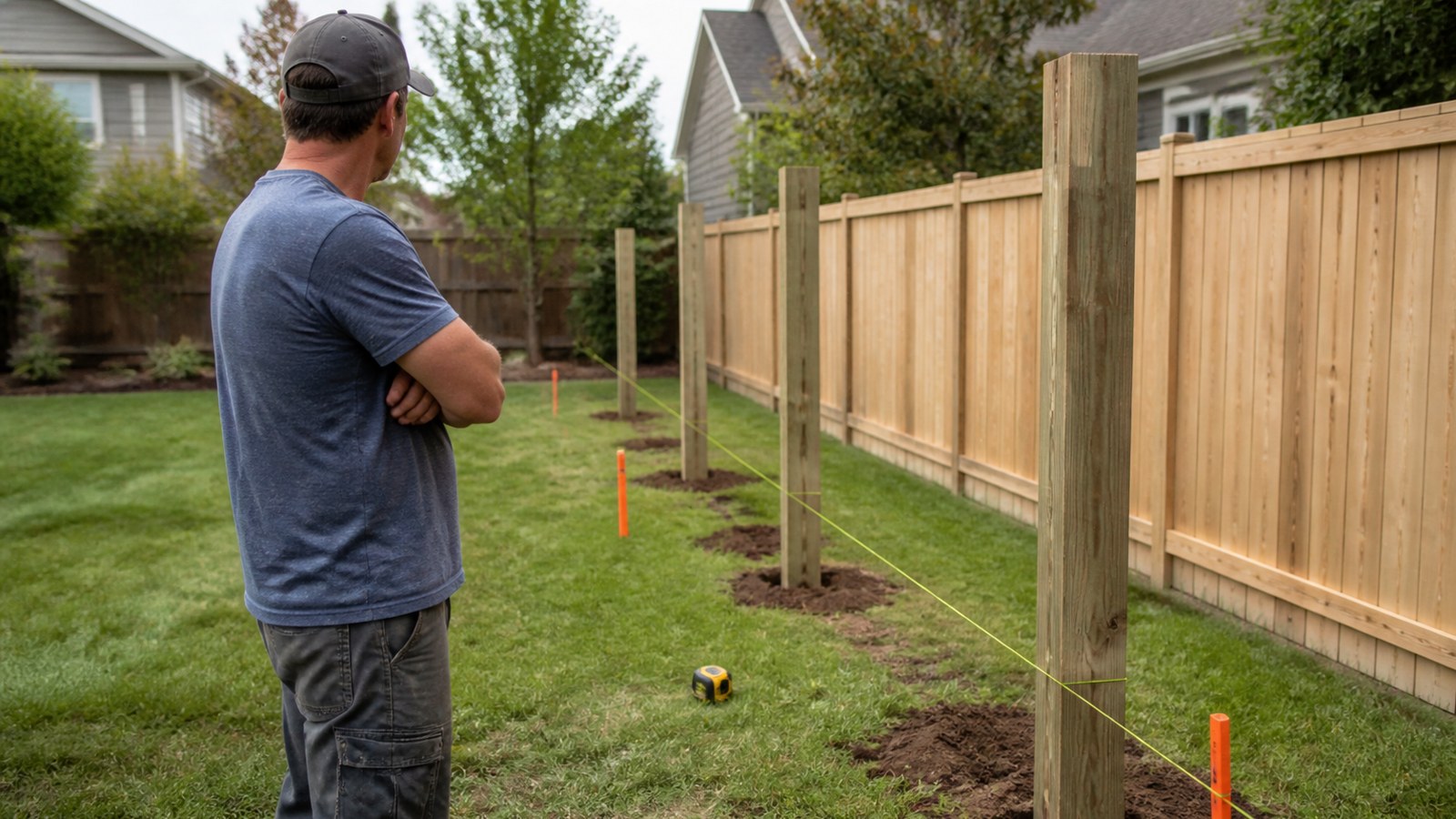
Once the line is known, mark it visibly with stakes and string. Walk the full run and look for trees, slopes, utility boxes, drainage swales, sidewalks, sheds, and neighboring improvements that may affect the final path. The paper boundary and the buildable fence line are related, but they are not always identical.
Know Whether You Can Build on the Line
Some areas allow fences directly on the property line. Others require the fence to sit inside the owner’s property by a specific setback. Even where building on the line is allowed, a small offset may be practical so the homeowner can maintain both sides without stepping onto neighboring property.
Setbacks can also depend on location. A backyard fence may have different rules than a front yard fence, corner lot fence, side-yard fence, or fence near a public right-of-way. Do not assume one height or setback applies everywhere around the lot.
When comparing fence quotes, make sure every contractor is bidding the same placement. A fence built six inches inside the line may change gate openings, landscaping, usable space, and how the run meets existing structures. Small layout differences become big arguments when posts are already set.
Fence Height Often Changes by Yard Area
Fence height rules commonly separate front yards, side yards, and backyards. A city may allow a taller privacy fence behind the front setback while limiting front-yard fences to a lower height for visibility and neighborhood character. Corner lots often have additional limits because a tall fence can block drivers, pedestrians, or cyclists.
Measure height the way your local rule defines it. Some codes measure from natural grade, some from finished grade, and some treat retaining walls differently. If the fence sits on top of a retaining wall, the combined height may trigger a different rule than the fence panel alone.
Grade changes can also make a fence look taller from one side than the other. If your yard is higher than the neighbor’s yard, a standard fence may feel oversized from their side. If your yard is lower, a legal fence may not provide the privacy you expected. Check both sides before ordering materials.
Corner Lots Need Visibility Checks
Corner visibility rules protect sightlines near intersections, alleys, sidewalks, and driveways. The rule may define a triangle or clear zone where fences, hedges, walls, and signs must stay below a certain height. These rules can apply even when the fence is on private property.
Do the visibility check early if the fence is near a driveway or street corner. A beautiful privacy panel is a problem if it blocks a driver from seeing pedestrians or traffic. The same issue can happen at alley exits, shared driveways, and tight side yards where cars back out.
For a corner condition, take photos from the driver’s seat and from the sidewalk. Mark the proposed fence height with a temporary board or pole. If the view feels blocked before construction, ask the permit office how the sightline rule applies.
Permits Depend on More Than Height
Many homeowners assume permits are required only for tall fences. Height matters, but it is not the only trigger. Permits may also be required for fences near streets, pools, retaining walls, easements, historic districts, drainage areas, or commercial edges. Some municipalities require permits for almost any new fence.
Permit applications may ask for a site plan, fence height, material, distance from property lines, gate locations, and information about corner visibility. If the fence surrounds a pool, additional barrier details may be required. If the fence replaces an existing fence, the office may still want to know whether the location, height, or material is changing.
Keep permit approvals with your home records. They can help when selling the property, making repairs, resolving questions with neighbors, or proving that the fence was installed under the rules in effect at the time.
HOA Rules Can Be Stricter Than City Rules
A fence can satisfy city code and still violate HOA or architectural review rules. Associations may control material, color, style, height, post caps, gate design, finished-side orientation, staining schedule, and how the fence connects to neighboring fences. Some require written approval before materials are ordered.
Read the HOA documents carefully and submit the exact design if approval is needed. Include material samples, color names, height, gate location, site plan, and photos when possible. Vague approval can create problems if the finished fence looks different from what the committee expected.
Do not rely only on what another neighbor installed. Their fence may be older, grandfathered, approved under different rules, or simply unnoticed. Your approval should be based on your documents and your lot.
Utilities Must Be Marked Before Digging
Fence posts require holes, and holes create risk. Call the local utility marking service before digging so public underground utilities can be marked. Gas, electric, communication, water, and sewer lines may run in places that are not obvious from the surface.
Public marking may not locate every private line. Irrigation, low-voltage lighting, pool lines, drainage pipe, invisible pet fencing, detached garage power, and privately installed gas or water runs may need separate attention. Walk the yard and list anything you know has been added over time.
Utility markings can affect fence placement, post spacing, gate location, and the choice between hand digging and powered equipment. If a marked line runs through the planned post path, pause and adjust the layout before digging begins.
Easements Can Limit What You Build
An easement gives someone else a legal right to use part of the property for a specific purpose. Utility easements, drainage easements, access easements, and maintenance easements can all affect fence planning. The fence may be allowed, limited, or removable if access is needed later.
Look for easements on the survey, plat, title documents, or local property records. A rear or side easement may explain why utility boxes, drainage structures, or poles sit near the edge of the yard. Building a fence across that area without understanding the easement can create expensive trouble.
If a fence crosses an easement, ask what access must remain. A gate, removable panel, wider opening, or adjusted route may be needed. The goal is to avoid trapping a utility, blocking drainage, or forcing a future crew to tear out new work.
Pool Barriers Have Their Own Standards
Pool fences are not just privacy fences. They may need to meet barrier rules for height, gate swing, self-closing hinges, self-latching hardware, latch height, spacing, climbability, and clearance below the fence. These requirements are usually more specific than ordinary yard fence rules.
If the fence is part of a pool enclosure, confirm the pool barrier requirements before choosing style or hardware. A decorative fence that looks secure may fail inspection if the gate swings the wrong way, the latch is reachable, or horizontal rails create climbing points.
Do not treat pool rules as optional finish details. They are safety requirements. Build the barrier plan around the inspection standard instead of trying to adapt a normal fence after installation.
Finished Side and Neighbor Expectations
Some places require the finished side of the fence to face outward. Even when it is not required, many neighborhoods expect the smooth or more finished face to show toward the street or neighboring property. The rule may be written in municipal code, HOA documents, or both.
Neighbor communication is not the same as legal permission, but it can prevent surprise and resentment. Before work starts, share the planned timing, general location, and type of fence. If access to their side is needed for installation or staining, ask before the crew arrives.
Shared fences deserve extra care. If both neighbors are contributing money, put the agreement in writing. Include cost, ownership, maintenance, material, height, color, removal of old fencing, and what happens if one owner wants changes later.
Gates Need Rule and Access Planning
Gates are often where a compliant fence becomes inconvenient. A gate may need to swing inward, clear a slope, maintain pool barrier rules, allow emergency access, or keep a path wide enough for mowers, trash bins, wheelbarrows, and service work. The best gate location is not always the shortest path.
Check whether a gate can open without crossing a property line, sidewalk, alley, or driveway. Also confirm that latch hardware, lock position, and opening direction do not conflict with local or HOA requirements. Pool gates are especially strict.
Mark gate openings on the ground before posts are set. Stand there with the items that need to pass through: mower, bins, bikes, patio furniture, or tools. A gate that is legal but too narrow will annoy you for years.
Retaining Walls and Slopes Complicate Height
Fences near retaining walls need extra attention. The code may measure total height from the lower grade, or it may treat the wall and fence separately. Structural concerns may also appear if posts are attached to or placed near a wall that was not designed for fence loads.
Slopes create another issue. A stepped fence may stay within panel height rules while following the yard in sections. A racked fence may follow the grade more smoothly but may change bottom clearance. In both cases, the visible height can vary along the run.
If the fence is near a wall, steep slope, drainage route, or drop-off, ask whether a contractor, engineer, or permit reviewer needs to look at the condition. It is better to solve that question before the fence becomes part of a retaining or safety problem.
Document the Approval Trail
Keep a folder for the fence project. Include survey copies, permit approvals, HOA approvals, utility marking tickets, contractor quotes, material names, gate hardware, photos of markings, and final inspection records. These details are easy to lose once the fence is finished.
Photos are especially useful. Take pictures of marked utilities, string lines, post locations, gate openings, drainage areas, and any hidden conditions found during digging. If a question comes up later, dated photos can explain why the fence was placed a certain way.
Documentation also helps with maintenance. When a post shifts, gate sags, or panel needs replacement, knowing the original material, spacing, stain color, and hardware makes repair simpler.
Final Fence Rule Review
Fence height and property line planning should start before materials arrive. Confirm the boundary, setbacks, height limits, permits, HOA rules, utilities, easements, pool requirements, corner visibility, gate access, and neighbor expectations before digging post holes.
A fence is easier to adjust while it is still a plan on paper and string on the ground. Once posts are set, every correction costs more. Careful rule checking may feel slow, but it is what keeps the finished fence useful, legal, and easier to live with on both sides of the line.