Why a Wood Fence Is One of the Best Beginner Outdoor Projects
Building a wood fence is one of those projects that feels both practical and rewarding. It changes the look of a yard, adds privacy, defines boundaries, and creates a real sense of completion around an outdoor space. For beginners, it is also a project that teaches important building skills without requiring advanced carpentry experience. You learn how to plan a layout, measure carefully, work with levels, set posts, fasten rails, and create something that has both structure and style. A wood fence remains one of the most popular fencing options because it strikes a strong balance between cost, appearance, and customization. You can build a simple boundary fence, a tall privacy fence, or a decorative enclosure that complements the style of your home. In every case, the basic process stays similar. Once you understand the sequence, the job becomes much less intimidating. The key to success is not rushing. A wood fence looks simple once it is finished, but the finished look depends on patience in the early stages. Good layout work, straight post placement, and consistent spacing matter far more than most beginners expect. When those parts are done well, the rest of the project becomes easier and the final fence looks clean, strong, and professional.
Start With a Clear Plan Before You Dig Anything
The most common beginner mistake is starting too fast. Before buying materials or digging holes, spend time planning the project. Measure the area carefully and decide exactly where the fence will go. Think about whether you want privacy, security, decoration, or a combination of all three. That choice affects the fence height, board style, gate placement, and material list.
You also need to know where the property line is. Guessing is risky. A fence built a few inches into the wrong area can become an expensive problem later. If the boundary is unclear, get it confirmed before construction begins. It is also smart to check local rules for fence height, setbacks, and permits. Some neighborhoods or cities limit how tall a fence can be in front yards, side yards, or near corners.
While planning, think about the gate early. Many beginners treat the gate like a final add-on, but it needs to be part of the layout from the start. Gate openings require proper spacing, stronger support posts, and enough swing clearance. Deciding this before you build helps everything stay aligned.
Choose the Right Wood and Fence Style
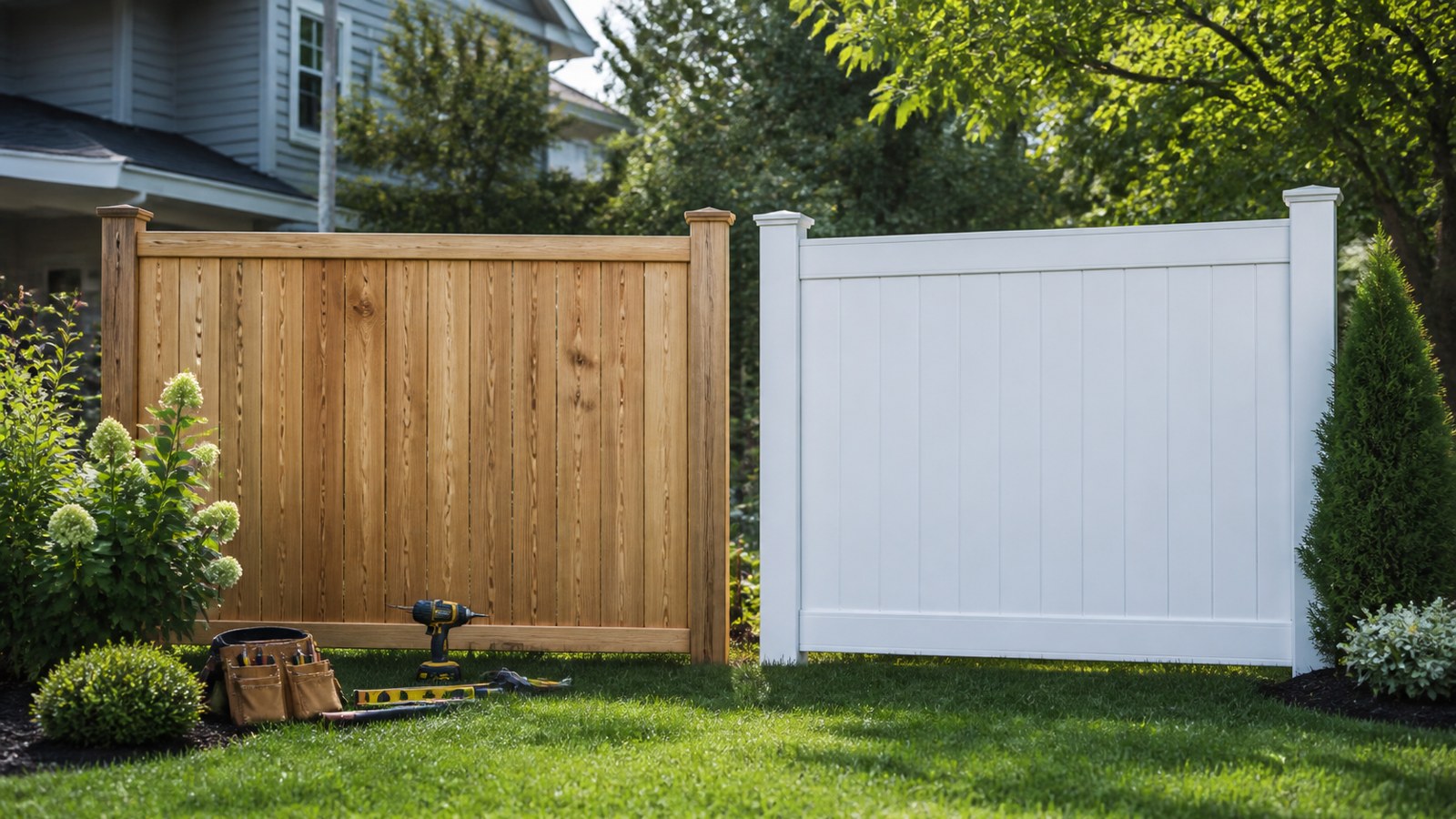
Your material choice affects cost, appearance, and long-term maintenance. Pressure-treated lumber is often the default choice for beginner fence builds because it is widely available, affordable, and treated to resist decay. Cedar is another popular option because it naturally resists insects and rot while offering a warmer, more premium appearance. Pine can work too, especially if it is treated properly, but it may require more consistent upkeep over time.
Fence style also matters. A basic privacy fence with vertical pickets is the most beginner-friendly. It is straightforward to lay out, easy to repeat panel by panel, and forgiving enough that small variations are less noticeable. Horizontal fences can look modern and striking, but they demand more precise alignment and often require stronger framing. Decorative picket fences are simpler in some ways, but they offer less privacy and rely more on visual symmetry. For most first-time builders, a standard wood privacy fence is the best project to start with. It offers clear structure, repeatable sections, and a finished look that adds instant impact to a backyard.
Gather the Tools You Actually Need
A wood fence build becomes much smoother when you have the right tools ready before the first hole is dug. At minimum, most beginners need a tape measure, marking paint or stakes and string, a post hole digger or auger, a shovel, a level, a drill or impact driver, a saw, clamps, and safety gear. A wheelbarrow helps with concrete and moving materials. A speed square and chalk line can also make the work cleaner and faster.
You do not need a huge workshop or advanced equipment, but you do need reliable measuring and leveling tools. Fence building is repetitive, and small errors can compound from one section to the next. A post that is slightly out of line or a rail that is slightly off level can affect every board that follows.
Having materials organized nearby also saves time. Stack posts, rails, and pickets in a way that keeps the worksite efficient and reduces unnecessary walking back and forth. Good setup is part of good construction.
Mark the Fence Line and Set the Layout
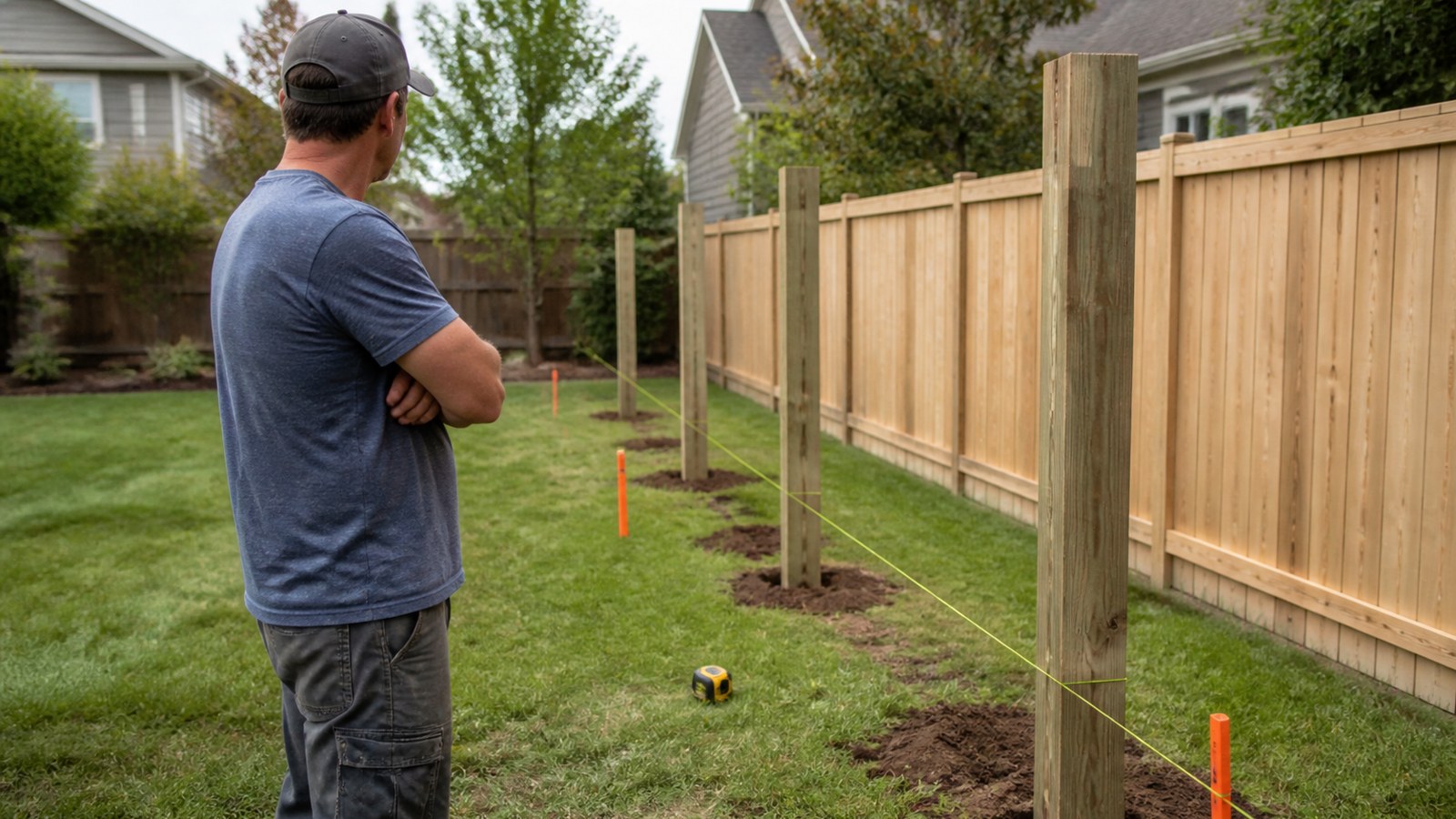
Once planning is complete, mark the fence line using stakes and string. This step gives you a visual guide for the entire project and helps you catch layout issues before the digging starts. Stretch the string tightly so you can clearly see the path of the fence. Measure total length and decide where each post will go. Most wood fence posts are spaced around six to eight feet apart, depending on design, lumber size, and local conditions.
Check corners carefully. These points define the shape of the fence, so accuracy matters. If the fence changes direction, make sure each turn is clean and intentional. If the yard slopes, decide whether you want the fence to step down in sections or follow the contour more closely. A stepped fence is often easier for beginners because each section remains level, even if the ground changes. This is also the stage where you confirm gate openings. Mark them clearly and make sure the surrounding post spacing makes sense. It is much easier to adjust a string line than to rebuild a gate area later.
Digging Post Holes the Right Way
Posts are the backbone of the fence. If they are weak, crooked, or shallow, the whole structure suffers. Digging post holes is hard physical work, but it is one of the most important parts of the project. In many cases, post holes should be deep enough to support the height of the fence properly, often around one-third of the post length below ground. Soil type, frost depth, and local building practices all affect the exact depth, so check what is appropriate for your area.
Try to keep the hole width consistent and wide enough for both the post and the surrounding concrete or compacted support. When digging, stay on the layout line and resist the temptation to make quick adjustments with the post later. A clean hole in the correct location makes the rest of the job much easier.
If the ground is rocky or filled with roots, the work may take longer than expected. That is normal. This stage can be frustrating for beginners, but patience matters. Fence building starts underground long before it looks impressive above ground.
Set Posts Carefully and Let Them Stabilize
Once the holes are ready, set the posts one at a time. Place the post in the hole, check it with a level on multiple sides, and align it to the string line. This step requires care because every fence section depends on accurate post placement. If a post leans or twists slightly, the rails and pickets will reveal that mistake later.
Many beginners use concrete to secure posts, especially for privacy fences and gate posts. Concrete adds stability and helps reduce movement over time. After placing the concrete, recheck the post for plumb and brace it if necessary while it sets. The time spent here pays off for the entire build. Do not rush to attach rails before the posts are ready. Let the posts stabilize fully. This waiting period can feel slow, but it prevents alignment issues and helps the finished fence stay straighter over the long term.
Install Rails to Create the Fence Structure
After the posts are secure, the fence starts to take shape with horizontal rails. These rails connect the posts and provide the attachment points for pickets or boards. Depending on the fence height, most sections use two or three rails. Taller fences typically need three for better support.
Measure the rail placement carefully so each section stays consistent. Use a level and keep the spacing uniform from panel to panel. Inconsistent rail heights may not seem obvious during construction, but they become noticeable once the pickets go on. For beginners, this is a stage where simple clamps can be very helpful. They hold the rail in position while you check level and drive screws or nails.
The rails turn the project from a series of posts into a real structure. Once they are in place, the fence begins to feel manageable and the remaining work becomes more visual and satisfying.
Attach the Pickets With Consistent Spacing
Installing the pickets is where the fence becomes visible as a finished feature instead of a construction frame. This part is repetitive, but that is exactly why consistency matters. Begin at one end and work methodically. Keep the first picket straight and use it as your reference for the rest.
If you want full privacy, place the boards tightly or nearly tightly together, depending on how the wood may expand or shrink with weather. If you want slight spacing for airflow or design, use a spacer block so every gap matches. Beginners often eyeball this part, and that usually leads to a fence that looks uneven once you step back. Check vertical alignment frequently. It is easy to drift slightly as you move along the fence. A string line, level, or occasional visual check from a distance helps keep things straight. This part takes time, but it is where the project gains its clean, finished appearance.
Build and Hang the Gate With Extra Care
A fence gate deserves more attention than most beginners realize. It is the moving part of the structure, which means it handles stress differently from the rest of the fence. If it is weak or poorly aligned, it will sag, drag, or fail long before the fence itself.
Build the gate frame square and strong. Use sturdy hardware and make sure the support posts are solid enough to carry the load. Dry-fit the gate before final fastening if possible. Check swing clearance, latch alignment, and how the gate sits when open and closed.
A well-built gate makes the entire fence feel professional. A bad gate makes even a decent fence look unfinished. Taking extra time here is always worth it.
Finish the Fence for Better Durability and Appearance
Once the structure is complete, the fence is functional, but finishing gives it a better chance to last. Clean up rough edges, trim inconsistent board tops if needed, and inspect for any loose fasteners or alignment issues. Then consider protection. Many wood fences benefit from stain or sealant, especially in areas exposed to strong sun, rain, or seasonal temperature swings.
Some homeowners prefer to let wood weather naturally, especially cedar, but even then, a protective finish can extend the look and life of the fence. Choose a finish that matches the style you want, whether that is natural wood tone, darker stain, or painted color. The important part is applying it properly and maintaining it over time. A finished fence does more than mark a boundary. It looks intentional. It feels complete. It becomes part of the property rather than just a construction project.
Common Beginner Mistakes to Avoid
Most fence problems can be traced back to a few common errors. Poor planning is one of the biggest. Starting without confirmed measurements, unclear boundaries, or a gate plan can create issues that are difficult to fix later. Another frequent mistake is inconsistent post spacing, which throws off rail lengths and board placement. Shallow posts, rushed leveling, and skipping layout checks can also weaken the fence and shorten its lifespan.
Many beginners also underestimate how much visual consistency matters. Slight variations in board spacing, rail placement, or post height may seem minor up close, but across an entire fence line they become obvious. The solution is simple: measure often, step back regularly, and work slowly enough to stay precise.
Fence building is not about speed. It is about repeatable accuracy.
How to Keep Your Wood Fence Looking Strong
After the fence is built, maintenance helps protect your work. Inspect it seasonally for loose boards, shifting posts, rusted fasteners, or signs of moisture damage. Clear soil, mulch, and vegetation away from the base so the wood can dry properly. Reapply stain or sealant as needed based on weather exposure and product recommendations.
A well-maintained wood fence can stay attractive and functional for years. Small repairs handled early are far easier than major rebuilds later. Maintenance may not be the most exciting part of the project, but it is what protects the time and effort you invested in building the fence in the first place.
Final Thoughts on Building Your First Wood Fence
A wood fence may look like a simple line of posts and boards, but building one teaches valuable lessons in planning, structure, patience, and craftsmanship. For beginners, it is a project that delivers visible progress and lasting results. Every stage, from the first string line to the final picket, adds to a structure that serves both practical and visual purposes. The best part of building a wood fence is that it transforms a space while giving you a strong sense of ownership over the result. It is not just about closing off a yard. It is about shaping an outdoor space with your own hands, one measured step at a time. When you plan carefully, work methodically, and focus on consistency, a beginner fence project can look polished, sturdy, and genuinely impressive.