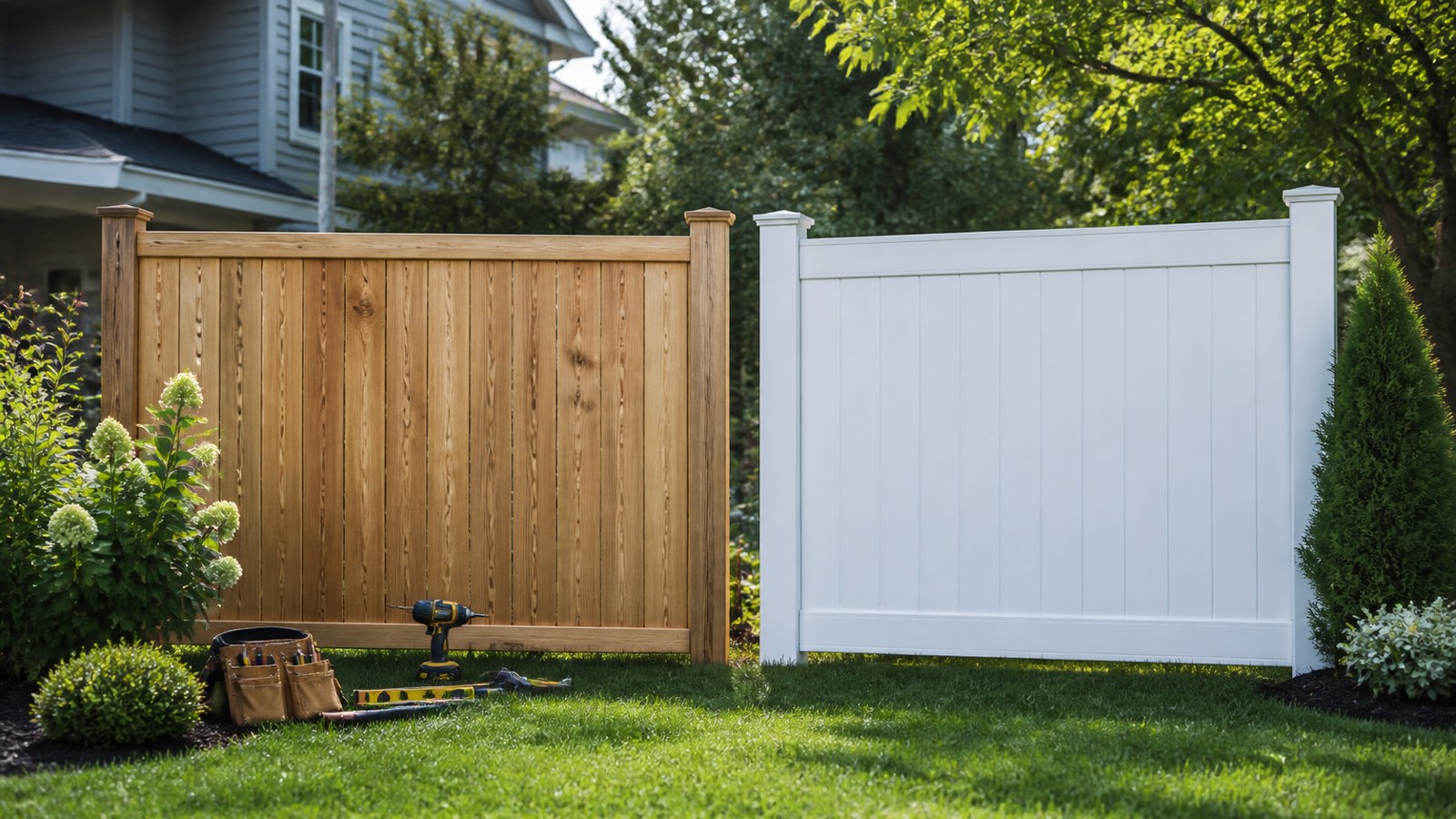
Wood and vinyl fences solve the same basic problem in very different ways. Wood offers a natural look, easy customization, and repairable boards. Vinyl offers a cleaner manufactured appearance, lower routine maintenance, and panels that do not need staining or painting.
The better choice depends on the yard, climate, budget, style of the house, local rules, slope, gate needs, and how much maintenance you are willing to do later. A fence is a long line across the property, so the right material should fit the site as well as the first-day photo.
A: Wood is often cheaper upfront, while vinyl may reduce finish maintenance over time.
A: It depends on product quality, climate, installation, posts, maintenance, and exposure.
A: Vinyl usually needs washing, while wood needs cleaning plus stain, sealant, or paint care.
A: Wood usually looks warmer and more natural, while vinyl looks cleaner and more uniform.
A: Wood is often easier to patch locally, but vinyl can be simple if matching parts are available.
A: It depends on whether the design steps, racks, or needs custom cutting.
A: Both can work, but check height, gaps, wind load, gates, and sightlines.
A: Plan latch security, panel strength, bottom gaps, splinters, climbing, and repair access.
A: Not automatically; compare lifespan, sourcing, recyclability, maintenance chemicals, and replacement waste.
A: Ask about post depth, concrete, wind exposure, gates, warranty, hardware, and replacement parts.
Start With the Yard, Not the Material
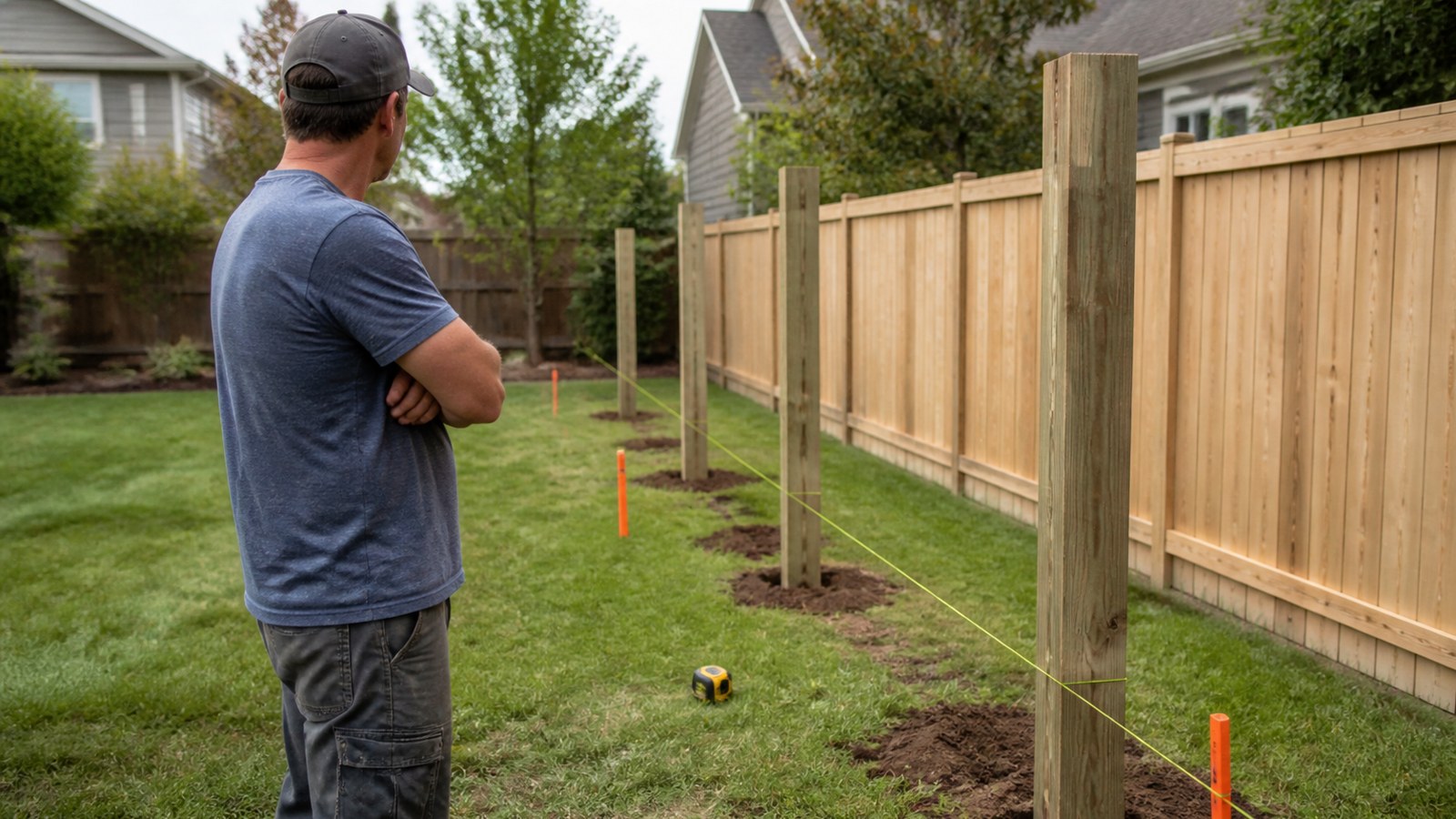
Before choosing wood or vinyl, walk the fence line. Look at grade changes, drainage, sun exposure, trees, mower paths, gate locations, neighbor views, soil conditions, and existing landscaping. The yard often decides which fence will behave better over time.
A flat suburban yard with strong sun may favor a different material than a wooded lot with damp soil and heavy shade. A narrow side yard with a gate needs different planning than a long rear privacy run. Material comparisons are most useful after the site is understood.
How Wood Fences Look
Wood has a natural texture that fits many homes and landscapes. Cedar, redwood, pine, spruce, and treated lumber can be built into privacy fences, picket fences, shadowbox fences, horizontal slat fences, ranch rails, and custom designs. Wood can be stained, painted, sealed, or allowed to weather depending on the species and finish plan.
That flexibility is a major advantage. Wood can follow unusual layouts, match older homes, and be customized with caps, trim, lattice, gates, and varying board widths. The tradeoff is that the look changes over time unless it is maintained.
How Vinyl Fences Look
Vinyl fencing has a cleaner, more uniform appearance. It is commonly available in white, tan, gray, and other limited colors, with privacy, picket, rail, and semi-private panel styles. The color is usually built into the material, so it does not need paint or stain.
The uniform look can be a benefit or a drawback. Vinyl works well with homes that suit crisp, low-maintenance materials. It may feel less natural beside rustic landscapes, older wood details, or heavily wooded lots. Samples help because vinyl can look different in full sun than it does in a catalog.
Maintenance Differences
Maintenance is one of the biggest differences. Wood usually needs cleaning, sealing, staining, painting, or board replacement over time. Sun, rain, sprinklers, soil contact, and insects can all affect how often that work is needed.
Vinyl does not need staining or painting. It usually needs washing to remove dirt, mildew, pollen, and lawn debris. That is less work than refinishing wood, but vinyl is not maintenance-free. A white vinyl fence can still look dirty if it is never cleaned.
Repairability
Wood is usually easier to repair in small sections. A damaged board, rail, picket, or cap can often be replaced with common material. This is helpful when pets, storms, mowers, falling branches, or normal wear damage only part of the fence.
Vinyl repairs can be simple if matching parts are available, but panel systems depend on specific rails, posts, caps, and profiles. If a manufacturer changes the product line, matching an older vinyl fence can become harder. Before buying vinyl, check how replacement parts are handled.
Cost Up Front
Wood often has a lower upfront material cost, especially for basic privacy or picket fences. Prices vary by species, grade, height, market, and design. Custom wood details can raise the cost quickly, but simple wood fencing is often budget-friendly at installation.
Vinyl often costs more up front. The panels, posts, gates, and hardware can be pricier than basic wood, and the system may require specific parts. The higher initial price may be offset by lower maintenance over time, depending on how long you keep the fence.
Long-Term Cost
Long-term cost includes maintenance, repairs, cleaning, finish products, labor, and replacement. Wood may be cheaper to install but more expensive to maintain if it needs staining or painting every few years. Vinyl may cost more at first but require fewer finish-related expenses.
The right calculation depends on whether you do the work yourself. A homeowner who enjoys staining and repairing wood may keep costs down. A homeowner who will hire every maintenance task may prefer vinyl’s lower upkeep.
Climate and Sun Exposure
Climate matters. Wood can absorb moisture, dry out, crack, warp, rot, or attract insects if the species, posts, and finish are wrong for the site. In wet or shaded yards, wood needs extra attention to drainage and airflow.
Vinyl handles moisture well but can expand and contract with temperature changes. Intense sun can make some lower-quality vinyl fade, chalk, or become brittle over time. Wind exposure also matters because solid vinyl privacy panels can catch a lot of force.
Wind and Privacy Panels
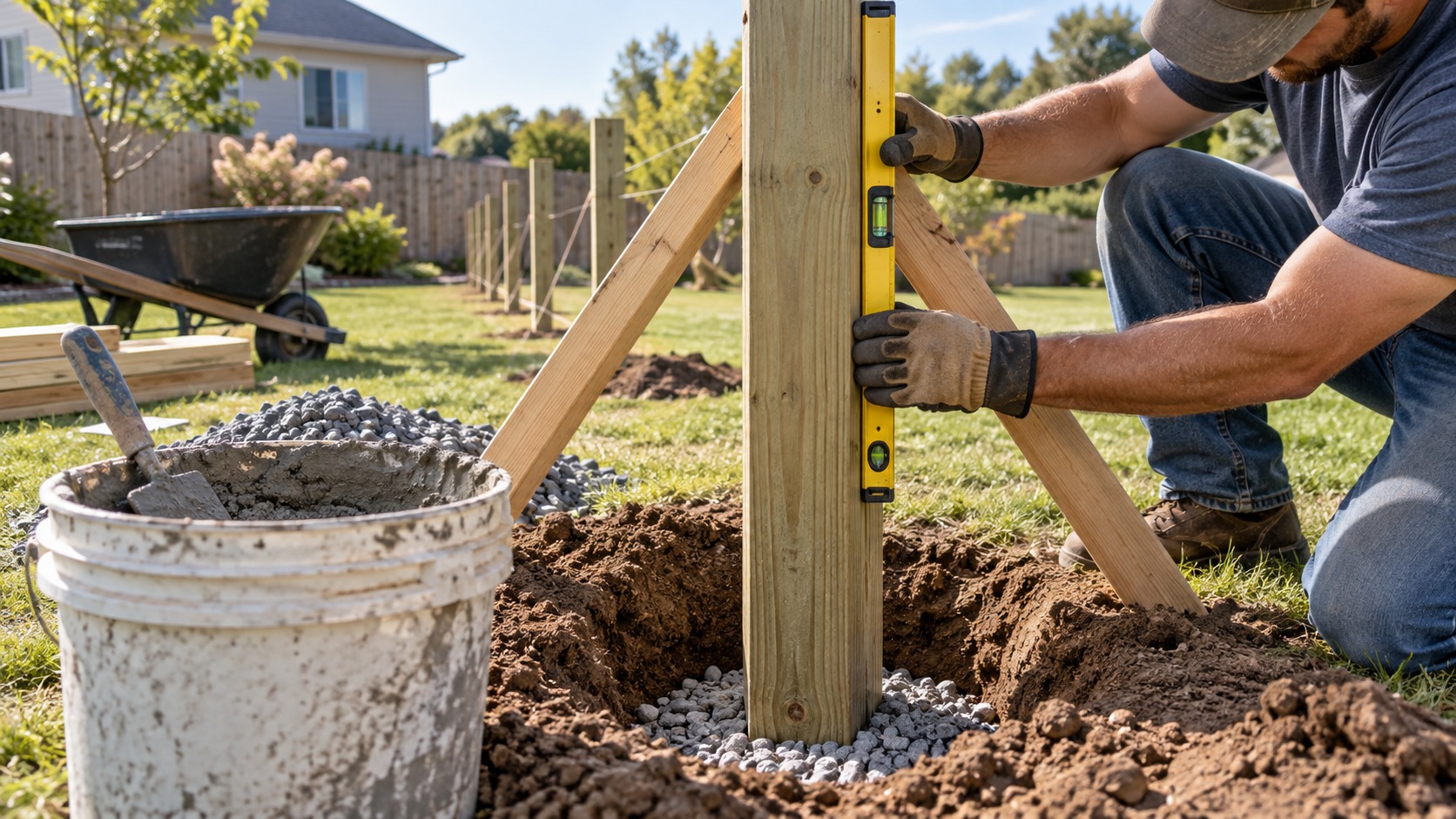
Both wood and vinyl privacy fences need strong posts and proper installation in windy areas. A solid fence acts like a sail. Post depth, spacing, concrete, soil type, panel design, and local wind conditions all affect performance.
Wood can sometimes be adjusted with board spacing or semi-private designs. Vinyl privacy systems rely on the engineered panel and post system. In high-wind areas, check product ratings and local requirements before choosing.
Sloped Yards
Wood is often easier to adapt to slopes because boards and rails can be cut to fit the grade. A custom wood fence can step, rack, or follow uneven ground depending on the design. This flexibility helps on older lots and irregular property lines.
Vinyl panels may step or rack depending on the product. Some vinyl systems do not handle steep slopes gracefully without stair-stepped gaps or special ordering. If the yard is sloped, confirm how the exact vinyl panel handles grade changes before buying.
Gate Performance
Gates deserve special attention. Wood gates can be built to custom sizes and repaired, but they can sag if they are too wide, too heavy, or poorly braced. Good hinges, diagonal bracing, and solid posts matter.
Vinyl gates need hardware and frames designed for the system. They resist rot, but large vinyl gates can still rack or sag if the frame is weak. Check gate width, latch quality, post strength, and whether the gate will handle daily use.
HOA and Local Rules
Some neighborhoods restrict fence material, color, height, style, and location. A homeowners association may allow white vinyl but not stained wood, or require a specific picket design. Local rules may also control setbacks, corner visibility, pool barriers, and permit requirements.
Check rules before ordering materials. A fence that violates a height, color, or placement rule can be expensive to move or replace. Get approvals in writing when required.
Privacy and Noise
Wood and vinyl can both provide privacy. Solid board wood fences and solid vinyl panels block views well. Semi-private styles soften the look and improve airflow but do not hide as much.
Neither material is a perfect sound barrier, but solid fences can reduce some direct noise and improve the feeling of separation. If noise control is the main goal, fence height, mass, landscaping, and distance from the sound source all matter.
Pets and Kids
For pets and children, check gaps, gate latches, climbability, and durability. Wood can splinter if it weathers poorly, but it can also be repaired quickly. Vinyl is smooth and does not splinter, but cracked panels or loose rails need proper replacement.
Dogs that jump, chew, or dig can damage either material. Reinforced gate hardware, buried barriers, and a fence height suited to the pet matter more than material alone.
Environmental Considerations
Wood is a natural material, and responsibly sourced wood can be a good choice. It may require chemical treatments, stains, or sealers depending on the use. Treated lumber should be handled and cut according to safety guidance.
Vinyl is a plastic product with a long service life when made well. It does not need paint or stain, but disposal and manufacturing are part of the environmental picture. The most sustainable fence is often the one that lasts, fits the site, and avoids frequent replacement.
When Wood Is the Better Choice
Wood is often better when the yard needs custom sizing, the house has a natural or traditional style, repairs should be simple, the budget is tighter up front, or the fence must adapt to slopes and irregular layouts. It is also the better choice when paint or stain color flexibility matters.
Choose wood if you are comfortable with maintenance or want a fence that can be modified later. Plan for sealing, staining, painting, cleaning, and replacing parts as the fence ages.
When Vinyl Is the Better Choice
Vinyl is often better when low routine maintenance is the priority, the yard is fairly straightforward, the preferred style fits available panel systems, and matching replacement parts are available. It can be a strong choice for clean privacy lines, pool areas, and homeowners who do not want to stain or paint.
Choose vinyl if the upfront cost makes sense and the product quality is good. Confirm the warranty, gate hardware, color, wind rating, and replacement part availability before committing.
Compare Installation Details
Wood fences can be built board by board, which gives the installer more flexibility. Posts, rails, pickets, and caps can be adjusted on site. This is helpful around trees, uneven ground, odd corners, and custom gate openings.
Vinyl fences usually depend on a panel system. The posts, rails, pickets, and panels are designed to work together. That can make installation clean and consistent, but it leaves less room for improvising. Measurements and post spacing need to match the system.
Think About Color Changes
Wood can change color naturally or be changed intentionally. Stain, paint, clear sealer, and weathering all affect the final look. That flexibility is useful if the house color changes or the yard style evolves.
Vinyl color is less flexible. The factory color is the look for the life of the fence, aside from normal aging. Painting vinyl is possible only with the right products and preparation, and it may affect warranties. Choose a vinyl color you can live with long term.
Look at the Fence From Both Sides
Fence decisions should be checked from inside and outside the yard. The view from the patio may matter as much as the view from the street. Neighbors may see the other side every day, and some local rules require the finished side to face outward.
Wood fence designs can look different on each side depending on rails and posts. Vinyl panels are often more uniform, but posts and rails still affect the view. Walk the line and imagine the full height before ordering.
Plan Around Landscaping
Shrubs, trees, vines, sprinklers, and planting beds affect both wood and vinyl. Sprinklers can keep wood damp and speed finish wear. Dense plants can trap moisture and reduce airflow. Vines can stain, pull, or hide problems until repairs are larger.
Vinyl handles moisture better, but landscaping can still stain panels, push rails, or make cleaning harder. Leave enough room to wash, inspect, and repair the fence. A fence that cannot be reached is harder to maintain no matter what it is made from.
Ask Better Contractor Questions
When getting bids, ask about post depth, concrete, gate framing, hardware, warranty, cleanup, permits, grade handling, and replacement parts. For wood, ask about species, grade, fasteners, finish expectations, and ground contact. For vinyl, ask about wall thickness, UV resistance, wind rating, and part availability.
Two fence bids may look similar while using very different materials and installation standards. The cheapest bid is not always cheapest over time if posts lean, gates sag, or panels are hard to replace.
Final Wood vs Vinyl Fence Review
Wood wins on customization, natural appearance, repairability, and flexibility on tricky yards. Vinyl wins on lower routine maintenance, clean uniform appearance, and resistance to rot and painting chores. Neither is automatically best for every property.
Choose the material that fits the yard, rules, climate, gate needs, budget, and maintenance habits. A fence should look good on day one, but it should also make sense five or ten years later.