Large drywall holes can feel like major damage—but the truth is, they’re surprisingly manageable once you know the right technique. Whether someone fell into a wall during a move, a door handle punched through the sheet, or plumbing repairs left behind a large opening, the repair process follows the same reliable steps. When done correctly, the final result is indistinguishable from the original wall. This guide walks you step-by-step through the entire process, explaining each stage in detail while giving you practical insights that experienced pros use every day. By the end, you’ll understand not only the “how” of drywall repair but the “why” behind each move that leads to clean, flawless results.
A: Patch kits are best for small holes. Anything larger than a few inches across usually needs a proper drywall patch with backing.
A: Yes, for large repairs. Straight, square edges make fitting a patch easier and create stronger, cleaner seams.
A: It’s not recommended. Without backing, the patch can flex and crack, especially in high-traffic areas.
A: Mesh tape can work, but paper tape over solid backing often gives stronger, longer-lasting results.
A: Most large-hole repairs need at least three: a tape coat, a fill coat, and a final feathered finish coat.
A: Wait until the compound is completely dry—usually 12–24 hours for each coat unless you’re using fast-setting mud.
A: Always prime first. Primer seals the repair and prevents dull spots or flashing under the finish paint.
A: Apply another thin coat of compound over the exposed area, let it dry, and sand lightly again.
A: Call a pro if the damage is near structural issues, plumbing leaks, or if the wall feels unstable.
A: With proper backing, careful taping, feathered coats, sanding, priming, and matching paint, a large-hole repair can be virtually undetectable.
Understanding the Nature of Large Drywall Damage
Large holes typically result from impact, remodeling, or utility work. Unlike small dents or nail pops, repairs for large holes must restore both structural strength and surface smoothness. A proper repair requires solid backing, clean edges, and multiple layers of finishing. Skipping or rushing any step leads to cracks, soft spots, or visible seams. Drywall is a sandwich of gypsum wrapped in paper. When it breaks, the edges often crumble and tear, leaving an irregular opening. The first goal of a repair is to convert this broken, unpredictable shape into a clean, workable area—one that can support new material and hold strong under tension and movement.
Step 1: Inspecting the Damage Before You Begin
Before cutting anything, examine the area around the hole. Large impacts often damage more than the visible portion. Press gently around the perimeter to check for loose paper, soft gypsum, or bubbling. Any weak areas need to be removed; patching over unstable material results in cracks later.
Also check the environment behind the wall. Look for electrical wiring, plumbing, or insulation. Older homes may hide wiring that runs horizontally, not vertically. Knowing what’s inside the wall ensures safe and accurate cutting. Don’t rush this step. A few minutes of inspection prevents mistakes that cost hours of fixing later.
Step 2: Cutting a Clean, Square Opening
Irregular openings are impossible to patch cleanly. That’s why professionals always cut a square or rectangular opening around the damaged area. Using a drywall saw or utility knife, cut back the wall until the edges are crisp, stable, and free of loose paper.
This step may feel like you’re making the damage bigger—but it’s essential. A square opening ensures the patch fits perfectly, the taped seams sit cleanly, and the finished repair blends seamlessly into the surrounding wall.
Cutting to the center of studs whenever possible simplifies the process. When the opening lands on a stud, fastening becomes stronger and easier.
Step 3: Installing Backing Strips for Support
If the hole does not reach a stud on either side, you need to create your own support. Without proper backing, the patch may flex, crack, or fall inward. Professionals solve this by installing furring strips or scrap wood behind the opening.
Slide a wooden strip—often a 1×3 or similar scrap—behind the hole, then secure it by driving screws through the drywall into the strip. Repeat on the opposite side. These backing strips act like internal anchors, giving your patch rock-solid stability. This step ensures the patch sits flush and stays secure over time, even under pressure or vibration.
Step 4: Cutting the Drywall Patch for a Perfect Fit
With your clean opening ready, cut a matching piece of drywall. Ideally, the patch fits snugly without forcing it in. A tight but not overly compressed fit is key to preventing cracks around the edges. Use the score-and-snap method for clean cuts: Score the front paper with a utility knife, snap the gypsum core with pressure, then cut the back paper. This keeps edges sharp and professional-looking. Hold the patch over the hole to check alignment. The better the fit, the easier the finishing stage will be.
Step 5: Securing the Patch to the Backing Strips or Studs
Insert the patch into the opening and secure it with drywall screws. Drive screws every 8 to 10 inches along each side, ensuring they land slightly below the surface without tearing the paper. Overdriving screws weakens the connection; underdriving leaves screw heads sticking up under the compound.
The patch should now feel solid when pressed lightly. If it moves at all, add additional screws. This step locks the foundation of your repair firmly in place.
Step 6: Applying Drywall Tape to Reinforce the Seams
Drywall tape reinforces the seams and prevents cracks from forming along the edges of the patch. Choose between paper tape and mesh tape:
Paper tape is strong and provides professional results but requires a layer of compound underneath.
Mesh tape is easier for beginners and sticks directly to the wall but must be covered thoroughly to avoid bubbles.
Center the tape over each seam, smoothing it out flat without wrinkles. A clean tape job makes the next steps dramatically easier, reducing sanding time and improving overall smoothness.
Tape is a structural element—not cosmetic. It holds the patch together just like rebar reinforces concrete.
Step 7: First Coat of Joint Compound: Embedding the Tape
Apply joint compound over the tape using a 6-inch taping knife. Your goal is not to create a perfect finish on this pass. Instead, focus on embedding the tape fully and covering the seams evenly. Expect the surface to look rough and ridged—that’s normal.
Feather the edges slightly to avoid creating hard lines that will be difficult to hide later. Work smoothly, applying consistent pressure. If you see bubbles or lifted tape, lift the tape slightly and add more compound under it. Let the first coat dry completely, usually 12 to 24 hours depending on thickness and humidity.
Step 8: Second Coat: Widening and Smoothing
Now switch to a wider knife—10 or 12 inches. The second coat widens the area, allowing the repair to blend gradually into the surrounding wall. Apply a smooth, even layer that extends several inches beyond the first coat.
This coat eliminates most ridges and transitions. Work in long, controlled strokes, lightly smoothing the compound as you go. The goal is to build up a subtle, feathered surface that hides the underlying seams completely. Let this coat dry thoroughly before proceeding.
Step 9: Final Coat: Creating a Seamless Finish
The final coat should be thin, broad, and nearly invisible. Use your widest knife for this step. Feather the compound outward until the patch disappears into the wall. A good final coat feels satisfying—almost like icing a cake. This coat isn’t about strength—your earlier coats already provided that. The final coat is purely for aesthetic perfection, eliminating tiny imperfections, pinholes, and shadows. When this layer dries, the repair should look like part of the original wall.
Step 10: Sanding: The Critical Finishing Touch
Sanding turns good drywall work into flawless drywall work. Once the compound is fully dry, lightly sand the area using fine-grit sandpaper or a sanding sponge.
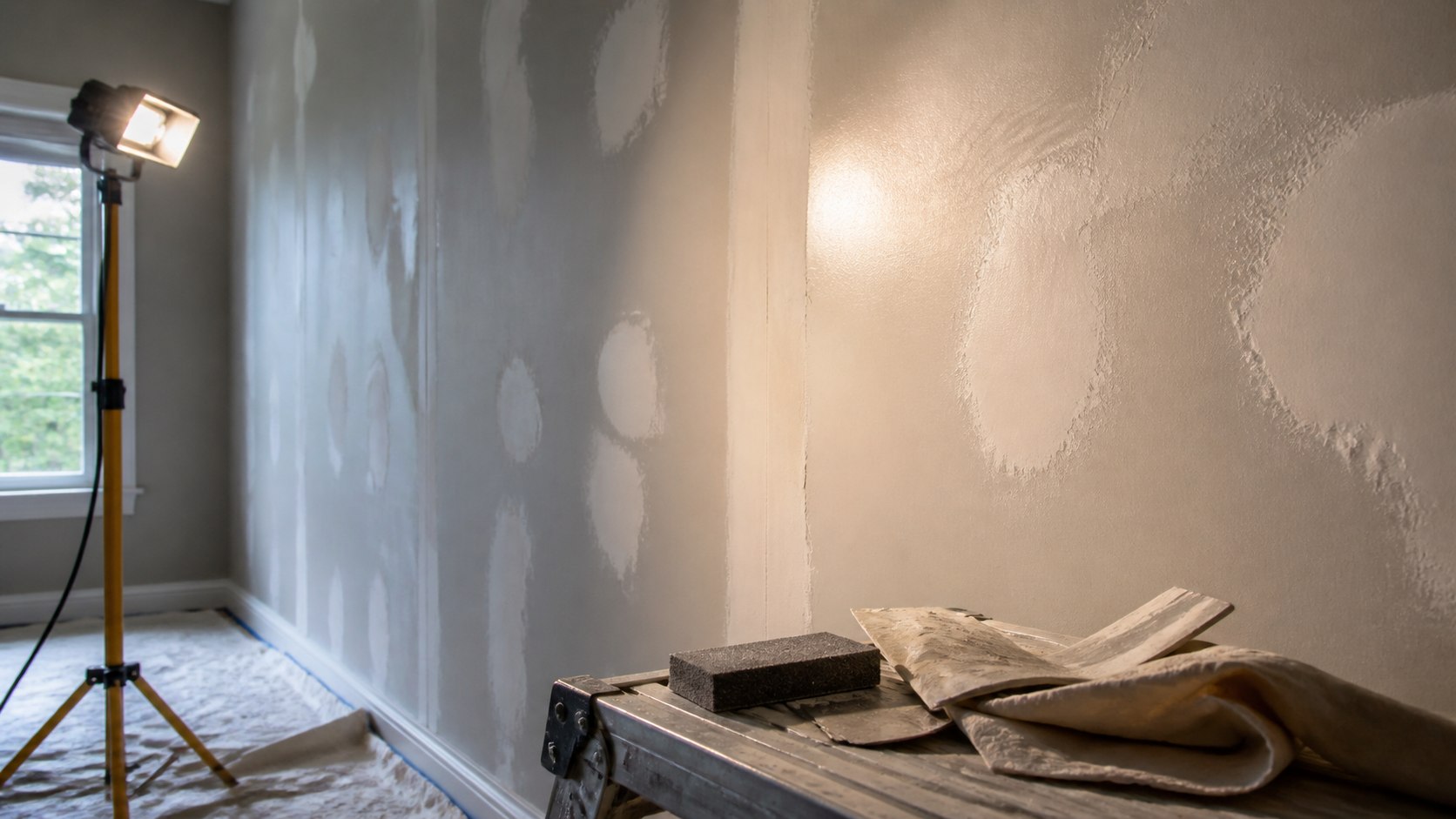
Use soft, circular motions and avoid pressing too hard. The goal is to remove ridges and blend the patch into the surrounding surface—not to sand through your work. Hold a bright light at an angle across the wall; shadows will reveal high or low spots that need attention. If necessary, apply a thin skim coat to correct imperfections. Many beginners rush sanding, but this is where true craftsmanship shows.
Step 11: Priming: Sealing the Repair for Paint
Never paint drywall repairs without priming first. Joint compound absorbs paint differently than finished drywall, causing “flashing”—visible shiny spots where the repair stands out.
Primer seals the surface so your topcoat adheres evenly and consistently. Use a quality drywall primer or a self-priming paint formulated for repaired surfaces. A properly primed patch becomes invisible, even under bright lighting.
Step 12: Painting: Bringing the Repair Back to Life
Now apply your wall paint. Blend the patched area into the rest of the wall using even strokes. Feather the paint outward so the transition is smooth. If your paint is older, consider repainting the entire wall for perfect color consistency. Fresh paint always looks different from aged paint, even if the original can is available. With paint applied, the patch will vanish completely—your once-damaged wall now looks new again.
Common Mistakes to Avoid During Large Drywall Repairs
Even skilled renovators can fall into certain traps. Here are common mistakes that undermine otherwise good work:
Cutting uneven openings
Using too few screws, causing movement
Applying too much mud too quickly
Sanding aggressively and creating waves
Skipping primer
Using mesh tape incorrectly
Failing to feather the compound wide enough
Avoiding these mistakes ensures smooth, durable, professional repairs every time.
Why This Method Works Better Than Patch Kits for Large Holes
Patch kits—especially adhesive mesh squares—are great for small holes but inadequate for large openings. Large areas need solid backing, proper screws, and layered finishing. Trying to fix big holes with mesh-only solutions leads to sagging, cracking, and visible seams.
The method outlined here mirrors what contractors do on full-scale jobs. It focuses on structure first, finish second, aesthetics last—exactly the order needed to produce a permanent repair.
Final Thoughts: Big Holes, Small Problem
Large drywall holes can look intimidating, but with the right process, they become one of the most satisfying repairs in home renovation. Each step builds on the last, turning a broken, crumbling opening into a smooth, strong, invisible panel that blends perfectly with your wall. Once you master this technique, you’ll feel confident tackling future repairs—no matter how big the hole or where it appears. With experience, your repairs will become faster, cleaner, and indistinguishable from professional work.