Drywall and plaster can both create excellent walls, but they solve different problems. Drywall is efficient, familiar, easier to open, and widely supported by modern trades. Plaster is dense, durable, quiet, and often part of the character of an older home. The better choice depends less on which material sounds superior and more on what the house already has.
A smart comparison starts with condition, age, trim, moisture, access needs, budget, and how much disruption the room can tolerate. New construction and major remodels often favor drywall. Sound plaster in an older room may deserve repair because replacing it can change the feel, depth, sound, and historic detail of the space.
A: No. Have its soundness, attachment, moisture history, and significance assessed before choosing removal.
A: A tap may convey surface feel, but acoustic performance requires considering the entire wall and transmission paths.
A: No. Loose layers, active movement, and moisture damage need diagnosis and appropriate repair before cosmetic finishing.
A: It adds thickness and needs suitable attachment while leaving underlying conditions to be assessed.
A: Record return depth, casing relationships, jamb geometry, and any details that depend on the existing wall face.
A: Not necessarily. Coordinate access needs with the trades and ask about appropriately planned selective openings.
A: No. The moisture source and the appropriate assembly must be addressed rather than hidden behind a different panel.
A: Do not rely on that assumption. Obtain appropriate hazard assessment and a suitable work plan before disturbing suspect materials.
A: Include preparation, stabilization, removal if needed, trim effects, protection, finish treatment, priming, painting, and exclusions.
A: Yes when the proposed systems and transitions are properly detailed and the retained construction is suitable.
Start With What Is Already There
The first question is not which material is better in theory. The first question is what wall system the house already has and how well it is performing. Drywall is usually gypsum board fastened to framing, then finished with tape and joint compound. Plaster is usually a layered finish over wood lath, metal lath, gypsum lath, masonry, or another base.
Those systems fail differently. Drywall may show failed tape seams, screw pops, damaged paper, soft areas from water, or poor finishing. Plaster may show surface cracks, loose keys behind the finish, delamination, old patching, or movement from settlement.
A sound plaster wall and a damaged drywall wall should not be judged the same way as a failing plaster wall and a clean new drywall installation. Condition changes the decision.
Why Drywall Became the Modern Standard
Drywall is popular because it is efficient. Sheets cover large areas quickly, materials are widely available, and many contractors know how to hang, tape, finish, repair, and modify it. For new walls, basements, additions, garages, and large remodels, drywall often makes practical sense.
Drywall is also easier to open for wiring, plumbing, insulation, HVAC changes, or future remodeling. A cut section can be patched with common materials, and the repair process is familiar to many homeowners.
That practicality does not make drywall cheap-looking by default. With straight framing, good finishing, proper primer, and the right paint, drywall can create clean modern walls that suit many homes.
Why Plaster Still Matters
Plaster has a density and solidity that drywall usually does not match without upgrades. It can feel quieter, harder, and more permanent. In older homes, plaster is often tied to trim depths, window returns, curved walls, picture rails, ceiling details, and the proportions of the original room.
Good plaster can last for generations. If it is mostly sound, repairing cracks, reattaching loose areas, and skim coating may preserve more character than tearing the room down to framing. The value is not only nostalgia. The material may genuinely suit the house better.
Removing plaster simply because it is old can be a mistake. Age is not the same as failure. The wall should be judged by soundness, moisture history, movement, and how important the original finish is to the room.
Compare Durability and Repairability
Plaster is generally harder than standard drywall. It resists small dents, feels solid when tapped, and can hold up well in hallways, stairwells, and older rooms with daily contact. That hardness is one of the reasons people notice when plaster has been replaced by thin or poorly finished drywall.
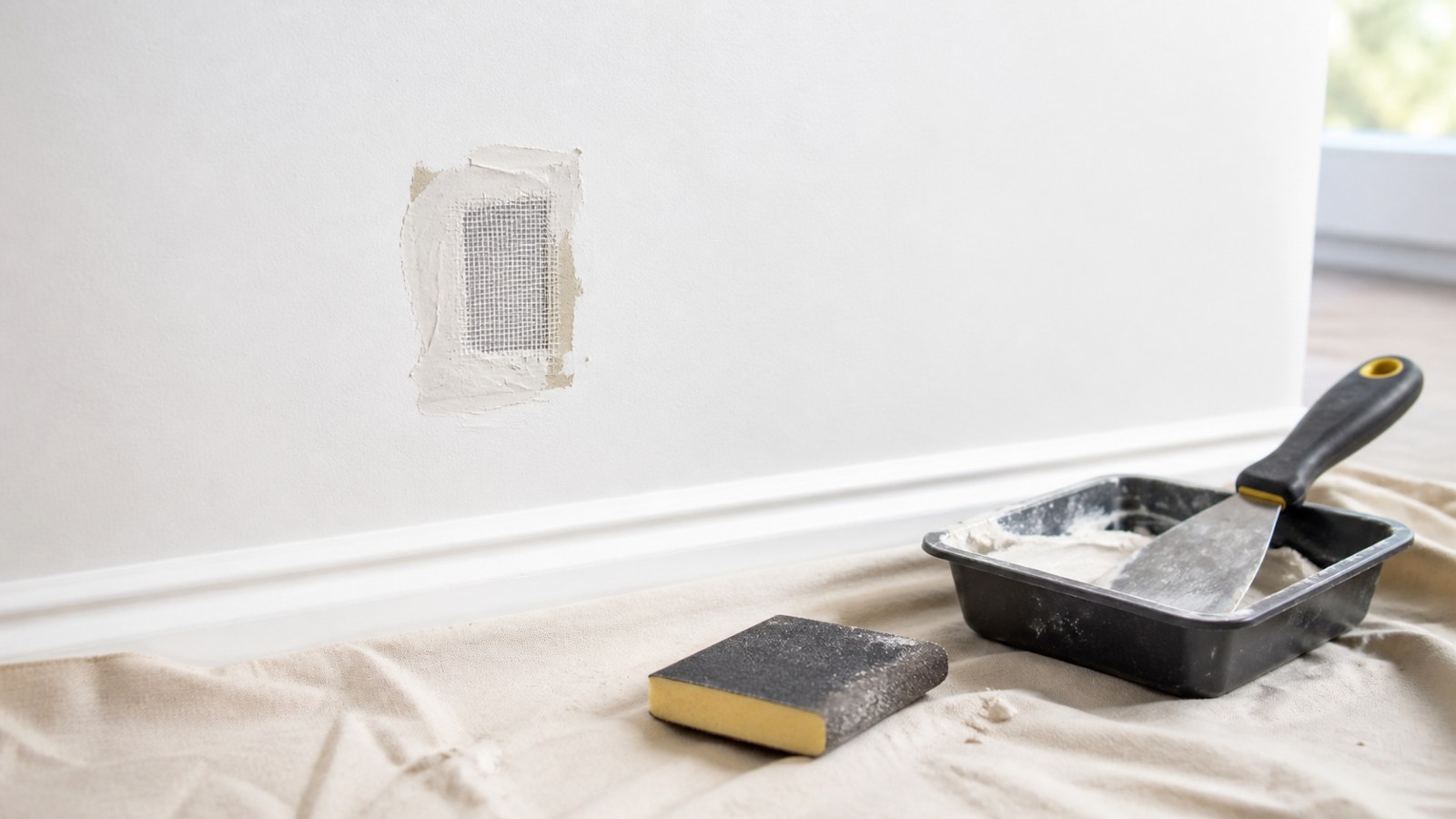
Drywall dents more easily, but it is usually easier to patch. Doorknob holes, failed seams, small dents, and cutouts can often be repaired with common tools and compounds. Matching texture and paint can still take skill, but the basic repair is approachable.
Durability is not only about resisting damage. It is also about how realistic the repair will be when damage happens. A hard plaster wall that requires specialized repair may be less convenient than drywall in a room that changes often.
Read Cracks Before Covering Them
Both drywall and plaster can crack. Drywall cracks often appear at seams, corners, fasteners, or areas where framing moves. Plaster cracks may come from settlement, vibration, loose lath keys, moisture, age, or previous repairs.
The visible crack is only the symptom. A plaster crack with loose material behind it may need reattachment before skim coating. A drywall crack at a failed tape seam may need retaping instead of a quick smear of compound. A crack caused by active movement may return unless the movement is addressed.
Do not make the material decision only by looking at the surface line. Press gently near the crack, listen for hollow spots, look for staining, and consider whether the wall is still moving.
Think About Remodeling Access
If the project involves new electrical runs, plumbing, insulation, data cable, HVAC changes, or wall relocation, drywall is usually easier to open and close. Plaster demolition is heavier, dustier, and more disruptive. It can also damage nearby trim and finishes if the work is not controlled.
That does not mean plaster must be sacrificed during every remodel. Targeted openings can sometimes allow upgrades while preserving the main surface. A careful plaster contractor can patch access areas in a way that respects the room.
The decision should balance access needs against the value of the existing finish. A utility wall in a remodel may be a good drywall candidate, while a formal room with intact plaster may deserve a slower repair plan.
Consider Sound and Feel
Plaster’s mass can help a room feel quieter and more solid. That can matter in bedrooms, offices, stair halls, apartments, and older homes where the wall feel is part of the comfort of the building.
Drywall can also perform well acoustically when the full assembly is designed for sound. Insulation, resilient channels, multiple layers, sound-damping compounds, sealed gaps, and heavier board can all improve performance. Standard single-layer drywall should not be expected to solve every sound problem by itself.
If sound is a major goal, compare wall assemblies rather than only the finish material. The cavity, framing, sealing, and layers matter as much as the face.
Moisture Changes the Answer
Neither drywall nor plaster should be asked to hide active water problems. Wet drywall can soften, grow mold, lose paper bond, and crumble. Wet plaster can crack, stain, detach from lath, or hold moisture in ways that damage surrounding material.
Before repairing or replacing, find the moisture source. Roof leaks, plumbing leaks, condensation, basement seepage, exterior wall problems, and bathroom ventilation issues all need to be solved first.
Once the source is fixed, localized repair may be reasonable. If the wall system is repeatedly wet or damaged across a large area, replacement with the right moisture-aware assembly may be the better path.
Respect Dust and Demolition
Drywall removal is messy. Plaster removal is often much heavier and dustier. Plaster and lath demolition can produce dense debris, sharp lath, old nails, and fine dust that travels through the house. In older homes, demolition may also disturb lead paint or other hazardous materials.
Dust control is not a small detail. Sealing doorways, protecting HVAC returns, using appropriate respiratory protection, managing debris, and planning disposal can become a major part of the job.
When plaster is sound enough to repair, preservation may avoid a level of disruption that homeowners underestimate. When demolition is necessary, plan it like a serious project, not a quick tear-out.
Old Homes Need a Different Lens
In an older home, plaster may be connected to the way the whole room is built. Trim depths, baseboards, door jambs, window casings, ceiling medallions, and curved corners may all assume the original wall thickness and surface character.
Replacing plaster with drywall can flatten details or change how trim lands. Sometimes that can be solved with shims, jamb extensions, skim coats, or careful finish work. Sometimes the replacement simply makes the room feel less original.
Older walls may also hide old wiring, previous patches, unusual framing, lead paint, or other materials that need care. Investigate before demolition. The wall surface may be part of a larger system.
Compare Cost Beyond the Square Foot
Drywall is usually less expensive for new installation because the material and labor are efficient. Plaster repair or restoration often costs more because it needs more skill, more steps, and more drying or setting time.
The true cost should include demolition, dust control, disposal, trim adjustment, primer, paint, access repairs, and finish matching. Removing plaster may look cheaper until the room needs jamb extensions, trim repair, texture blending, and extra paint prep.
Preserving plaster may cost more up front in labor but less in disruption and finish adjustment. The right comparison is the whole room, not only the wall surface.
Compare Paint and Finish Results
Fresh drywall needs proper primer because drywall paper and joint compound absorb paint differently. Poor priming can leave flashing, uneven sheen, and visible seams. Higher paint sheen makes poor finishing more obvious.
Plaster may need sealing, bonding, skim coating, or careful crack treatment before paint. Old plaster can have patches with different porosity, layers of older paint, or subtle waves that become more visible under side light.
Neither material guarantees a beautiful painted wall. The final result depends on surface preparation, primer, lighting, paint sheen, and the skill of the finisher.
When Keeping Plaster Makes Sense
Keep plaster when it is mostly sound, historically important, tied to original trim, acoustically valuable, or central to the home’s character. Repair is especially reasonable when cracks are manageable, loose areas can be stabilized, and the finish can be blended without tearing the room apart.
Plaster repair may include washers, bonding agents, base coat repair, finish coat work, or skim coating. The right method depends on whether the problem is surface cracking, loose plaster, staining, or previous patch failure.
If the wall only needs crack repair, minor patches, skim coating, or paint preparation, replacement may be more disruption than improvement.
When Drywall Makes More Sense
Choose drywall for new partitions, additions, basements, large remodels, damaged walls beyond practical repair, and rooms where broad utility access is needed. Drywall is also practical when the home already has modern finishes and matching plaster is not important.
Drywall can be upgraded when performance matters. Thicker panels, better finish levels, insulation, multiple layers, sound details, and careful framing can make drywall feel more substantial than the cheapest version people imagine.
It is also the better choice when schedule matters. Drywall can move from hanging to finishing to paint on a more predictable timeline than traditional plaster restoration.
Hybrid Repairs Can Be the Best Answer
Many homes end up using both materials successfully. A plaster ceiling may be preserved while one damaged wall is replaced. A closet, utility chase, or secondary room may be drywalled while the main room keeps plaster. A repaired plaster wall may receive a skim coat so old and new areas read as one surface.
Hybrid work succeeds when transitions are planned. Wall thickness, trim depth, corners, texture, outlet depth, and paint prep all need attention. Random patches look random because nobody planned the transition.
If the materials meet in one room, judge the result in that room’s actual light before final paint. A small sample can reveal whether the surfaces will blend or fight each other.
Ask Contractors Better Questions
When getting quotes, ask whether the plan is repair, skim coat, laminate drywall over existing walls, remove and replace, or patch selected areas. Those are different jobs with different costs, risks, and finish results.
For plaster, ask how loose areas will be stabilized, how cracks will be treated, what materials will be used, and how the finish will be matched. For drywall, ask about finish level, primer, texture, trim depth, and whether framing problems will be corrected first.
A good quote should explain the wall system and the intended result. A vague price for “fix walls” is not enough when plaster and drywall options are on the table.
Final Drywall vs. Plaster Review
Drywall is usually faster, cheaper, easier to open, and easier for many homeowners to repair. Plaster is denser, harder, quieter, and often worth preserving in older homes where it supports the character of the room. Neither material is automatically better everywhere.
Choose by the house in front of you. Inspect the existing wall, look for moisture and movement, consider trim and history, compare the full cost of repair or replacement, and think about future access needs.
The best wall finish is the one that fits the building, the budget, the timeline, and the way the room will be used. Sometimes that means new drywall. Sometimes it means keeping the plaster that already belongs there.