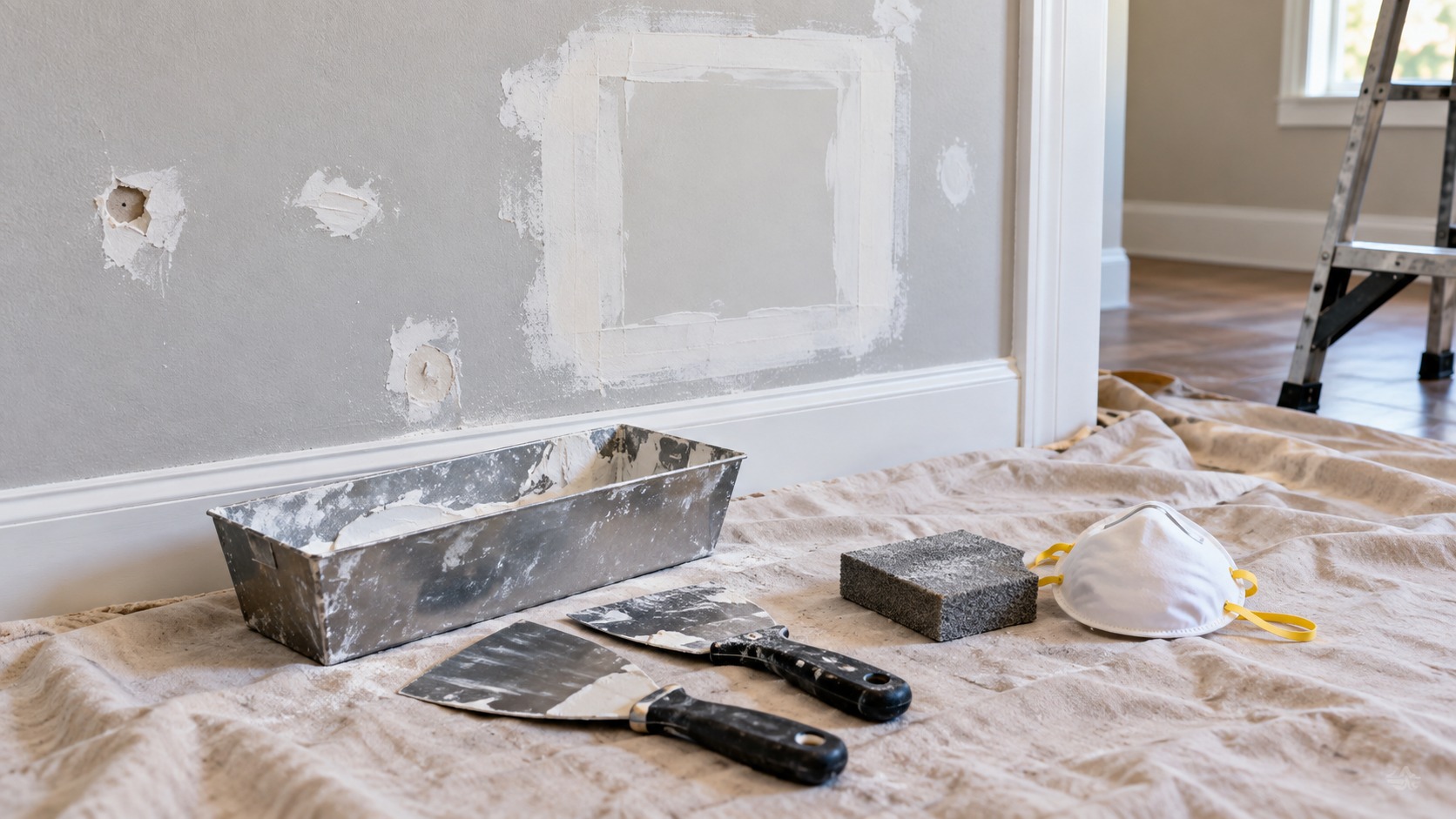
Drywall cracks come back when the repair only covers the line and ignores why it opened. A hairline crack from normal settling, a failed tape seam, a corner bead split, a moisture stain, and a crack that follows structural movement all need different judgment. Fast, clean results start with reading the crack before reaching for compound.
The goal is to remove loose material, stabilize the surface, use tape where the joint needs reinforcement, build thin coats wide enough to hide the repair, match the texture, prime correctly, and watch for recurrence. A good repair should disappear after paint, but it should also make sense for the crack that caused the problem.
A: Identify the affected layer first; a failed board joint and a superficial paint split do not necessarily need the same treatment.
A: Remove or repair the failed reinforcement so the new finish rests on a bonded base.
A: No. Preparation should remove unsound material without needlessly damaging intact board or paper.
A: Not by itself. Investigate the movement and appropriate construction detail before selecting a surface repair.
A: No. Record its growth and related symptoms and obtain a qualified assessment when the pattern raises concern.
A: Damaged facing can react to wet material; use suitable preparation and a compatible sealing method before further finishing.
A: Follow its coating and drying guidance rather than equating set time with decoration readiness.
A: Failed tape, damaged bead, poor support, or movement can remain beneath a cosmetic coating and require a different remedy.
A: Inspect contour, texture, surface absorption, and paint sheen; matching color alone does not guarantee a blend.
A: Document the change and seek assessment of the underlying condition instead of repeatedly covering the growing defect.
Identify the Crack Pattern
Look at the shape before cutting. A straight crack along a seam may point to failed tape or movement at a board joint. A diagonal crack from a door or window corner may point to stress around an opening. A spiderweb crack may be in paint, texture, old compound, or plaster-like skim material.
Mark the crack ends with pencil and take a photo. If the crack grows after repair, the photo gives you a reference. A repair that keeps reopening is giving information, not just being stubborn.
Check for Moisture First
Do not patch a crack that is damp, stained, soft, or musty until the moisture source is found. Water from roofs, plumbing, windows, condensation, showers, or exterior walls can weaken drywall and joint compound. Covering it traps the problem.
If the drywall is swollen, crumbly, sagging, or stained, repair may require cutting out damaged material rather than skim coating the surface. Drywall compound is not a waterproofing product and should not be used to hide active leaks.
Decide Whether Movement Is Still Active
Some cracks are cosmetic. Others reflect movement that will keep happening. Seasonal framing movement, settling, truss uplift, door slams, loose drywall edges, weak backing, and structural shifts can all reopen a repair.
If a crack is wide, growing, stair-stepped, paired with sticking doors, or connected to foundation or ceiling movement, do not treat it as a simple finish flaw. Document it and consider a qualified inspection. The right repair depends on whether the wall is still moving.
Remove Loose Material
Use a utility knife to cut away loose paper, flaking paint, crumbly compound, and lifted tape. Do not dig a trench for no reason, but do remove material that is no longer bonded. New compound needs a stable edge.
Vacuum or brush dust from the crack after trimming. Dust left in the repair can weaken bond and create bubbles. A clean crack takes compound better than a ragged one covered in loose gypsum.
Repair Torn Paper Before Mudding
Torn drywall paper can bubble when wet compound touches it. If paper is fuzzy, peeled, or exposed, trim the loose parts and seal the damaged paper with an appropriate sealer before applying mud. This step prevents the repair from swelling under the first coat.
Skipping the sealer can lead to repeated bubbling, scraping, and recoating. It is faster to stabilize the paper once than to fight blisters through several coats.
Use Tape When the Crack Needs Reinforcement
Hairline surface cracks in paint or shallow compound may only need cleaning, spot compound, and primer. A crack along a drywall joint or failed seam usually needs tape. Compound alone is weak across a moving joint.
Paper tape is strong when bedded correctly. Mesh tape can work in certain repairs when paired with the right compound, often setting-type compound. Choose tape based on the repair, not convenience alone.
Retape Failed Seams
If old tape is loose, bubbled, cracked down the center, or peeling at the edge, remove the failed section. Cut cleanly beyond the loose area until the remaining tape is bonded. Trying to mud over loose tape usually creates a raised patch that fails again.
Bed new tape in a consistent layer of compound, press it flat, and leave enough mud behind the tape for bond. The first coat is not meant to hide everything. It is meant to create a strong base for wider finish coats.
Pre-Fill Wider Cracks
A crack wider than a hairline may need pre-filling before tape or finish coats. Setting-type compound can be useful for deeper gaps because it hardens rather than simply drying from the surface inward. Let the pre-fill firm up before continuing.
Do not pack a deep crack with a thick mound of premixed compound and expect it to stay flat. Thick air-drying compound can shrink, crack, or stay soft. Fill in controlled layers when the gap is significant.
Choose Setting Compound for Fast Repairs
Fast crack repairs often benefit from setting-type compound because it can be recoated sooner and handles deeper prep better than ordinary premixed mud. It is useful when a crack needs pre-fill, when old material was removed, or when a small repair needs to move through multiple coats in one day.
The tradeoff is working time. Mix small batches and clean tools before the compound hardens. A fast-setting product left rough can be harder to sand, so shape it carefully while it is workable.
Cut a Shallow V Only When Helpful
Some cracks benefit from a shallow V-groove that removes weak edges and gives compound a clean channel. This can help with tight cracks in old compound or paint. The groove should be controlled and shallow, not a deep gouge through the drywall face.
If the crack is actually a failed taped joint, cutting a V over the surface is not enough. The failed tape or joint needs to be addressed. Match the prep to the problem.
Use Thin Coats
Thin coats dry flatter and sand easier. A crack repair should build gradually: base coat, reinforcement if needed, fill coat, and finish coat. Heavy compound may look efficient while wet, but it often shrinks, humps, and requires aggressive sanding.
Let each coat dry fully before the next. If the repair feels cool, dark, or soft, it may still be damp. Coating too soon can trap moisture and drag the previous layer.
Feather Wider Than the Crack
A pro-looking repair is wider than the damage. The compound should spread far enough that the transition disappears into the wall. Narrow patches create raised ridges that show under side light after paint.
Use a smaller knife for the first coat and a wider knife for later coats. Keep pressure heavier at the outside edges to feather them thin. The repair should feel gradual under your hand.
Use Side Light While Shaping
Side light is one of the best tools for drywall crack repair. Hold a work light low along the wall and look across the patch. High edges, scratches, pinholes, and humps show up sooner under angled light than they do under ceiling light.
Use the light between coats, not only at the end. If the first fill coat has a ridge, scrape it before the next coat. If the finish coat has a hard edge, feather it while there is still time to correct the shape.
Scrape Before Sanding
Between coats, scrape ridges and crumbs with a clean knife. Scraping removes high spots quickly without filling the room with dust. It also prevents a ridge from being copied into the next coat.
Sand only after the repair is shaped. If you need heavy sanding to flatten the patch, the previous coat was probably too thick. Light sanding should refine, not rescue.
Match Texture Carefully
A smooth patch on a textured wall can stand out as much as the original crack. Orange peel, knockdown, brush texture, skip trowel, and roller stipple all need different touch-up approaches. Practice on scrap cardboard or a hidden area before spraying or dabbing the wall.
Texture matching is often about scale. Too heavy, too light, too sharp, or too smooth will show. Let test texture dry before judging because wet texture usually looks different from finished texture.
Prime the Repair
Fresh compound absorbs paint differently than the surrounding wall. Primer evens out porosity and helps reveal flaws before the final paint. Skipping primer can leave flashing, dull spots, or a patch that shows from certain angles.
After primer dries, inspect with side light. Small pinholes or ridges can be spot coated, sanded lightly, and spot primed. Paint should be the final finish, not the first time the repair is truly inspected.
Blend Paint Beyond the Patch
Even with the same paint can, touch-ups can show if the wall has faded, the sheen has changed, or the texture differs. Feather paint beyond the repair and use the same roller nap or brush style that created the original finish.
On prominent walls, repainting from corner to corner may look better than a small touch-up. The drywall repair can be perfect and still show if the paint blend is too small.
Watch Ceiling Cracks Closely
Ceiling cracks deserve extra attention because gravity, framing movement, truss uplift, moisture, and poor fastening can all be involved. A straight crack at a ceiling seam may need retaping. A sagging or stained crack may need deeper investigation.
Do not ignore ceiling cracks near water stains, bathrooms, roof lines, or attic equipment. Find the cause before repairing the finish. A ceiling repair that hides an active leak can become a larger failure later.
Handle Corner Cracks Differently
Inside corner cracks often occur where walls meet ceilings, where framing moves, or where old tape has failed. The fix may involve removing loose corner tape, bedding new tape cleanly, and coating each side lightly. Heavy mud in corners tends to crack again.
Outside corner cracks may involve damaged corner bead. If the bead is loose, bent, or rusted, compound alone will not solve it. Secure, replace, or repair the bead before finishing over it.
Repair Nail Pops Near Cracks
Cracks sometimes appear with nail pops or screw pops. A raised fastener tells you the drywall may not be tight to the framing. Drive a new drywall screw into solid framing nearby, set it correctly without tearing the paper, then remove or reset the popped fastener as appropriate.
Do not simply cover a popped nail head with compound. If the board still moves, the bump and crack can return. Secure the panel first, then finish the surface.
Patch Over Old Repairs Carefully
Old crack repairs may include layers of paint, texture, caulk, spackle, mesh, or hard ridges of compound. Before adding another repair, scrape or sand the old patch enough to see what is solid. Loose previous repair material should come off.
Caulked cracks are especially tricky because joint compound may not bond well over flexible or glossy caulk. If the old repair was the wrong material, remove it as cleanly as possible and rebuild the surface with drywall-compatible products.
Know When a Crack Needs More Than Compound
If the drywall edge is loose, add fasteners into solid framing before finishing. If backing is missing, the wall may flex and crack again. If the crack follows a joint with repeated movement, the underlying support may need correction.
Compound is a finish material. It cannot replace framing, backing, fasteners, moisture control, or structural repair. When the surface keeps moving, the repair has to address that movement first.
Keep Dust Under Control
Clean results include cleanup. Use light sanding, a sanding sponge, a vacuum attachment where appropriate, drop cloths, and dust barriers for occupied rooms. Drywall dust travels quickly and can make a small repair feel bigger than it is.
Wipe or vacuum the repair area before primer. Dust left on the wall can interfere with paint and leave a gritty finish. A fast repair should still be clean enough for paint to bond well.
Watch for Recurrence
After the repair is painted, keep an eye on it through seasonal changes. If the crack returns in the same line, something is still moving, loose, damp, or unsupported. The second repair should not repeat the first approach without asking what was missed.
Document recurring cracks with dates and photos. That record helps if you need a contractor, inspector, or structural opinion. Recurrence is a clue, not just bad luck.
Final Drywall Crack Repair Review
Clean drywall crack repair starts with diagnosis. Check for moisture, movement, failed tape, loose drywall, torn paper, and texture before applying compound. Remove loose material, stabilize the surface, use tape when the joint needs reinforcement, and build the repair with thin coats.
Feather wider than the crack, scrape before sanding, match texture, prime the patch, and blend paint carefully. If the crack returns, grows, stains, or appears with other movement signs, stop treating it as a cosmetic flaw and look for the cause behind the wall.