A Safe Reset Starts With Knowing Why It Tripped
A tripped circuit breaker is one of the most common electrical problems in a home, but it should never be treated like a random nuisance. The breaker is doing an important job: it has opened the circuit because the wiring was asked to carry more current than it should, a short occurred, a ground fault appeared, or the breaker itself has become unreliable. The good news is that many trips can be handled with a calm reset and a little troubleshooting. The key is to slow down, notice what was running, check for obvious hazards, and bring the circuit back online only when the situation looks safe. This guide walks homeowners through how to fix a tripped circuit breaker step by step, how to tell the difference between a simple overload and a more serious electrical issue, and when the smartest fix is calling a licensed electrician instead of forcing the breaker to stay on.
What a Tripped Breaker Is Actually Telling You
A circuit breaker is a resettable safety switch. When too much current flows through a circuit, the breaker opens the circuit before the wire can overheat. That trip may feel inconvenient because a room, outlet run, or appliance suddenly loses power, but the breaker is not the enemy. It is a warning that the circuit needs attention before power is restored.
Most homeowner trips fall into three broad categories. An overload happens when normal devices collectively ask for too much power, such as a portable heater, vacuum, and gaming setup running on the same circuit. A short circuit happens when energized conductors contact each other or a fault path, often causing an immediate trip. A ground fault happens when current leaks toward ground, which is especially important in damp areas. Each problem can look similar at the panel, so the safest approach is to reset once, observe carefully, and avoid forcing a circuit that keeps opening.
Step 1: Stop and Look Around Before Touching the Panel
Before you reset anything, identify what stopped working and what was running at the moment power went out. Were you using a hair dryer, microwave, portable heater, table saw, pressure washer, or air compressor? Did rain reach an outdoor cord? Did a lamp flicker, an appliance buzz, or an outlet smell hot? These details matter because they help separate a one-time overload from a fault that should stay off.
Do not approach the panel if the floor is wet, the panel is damp, you see smoke, or you smell burning plastic. Keep children and pets away, and avoid working in the dark if you can safely bring a flashlight. A calm pause is part of the repair. It keeps the reset from becoming a reflex and gives you a chance to notice signs that the circuit should not be energized again.
Also check whether the outage affected a single device, a group of outlets, or an entire room. A single dead outlet can point toward GFCI protection or a local receptacle problem, while a whole-room outage usually sends you back to the panel. That quick map gives the reset a purpose and makes the next trip easier to understand if it happens again.
Step 2: Find the Tripped Breaker
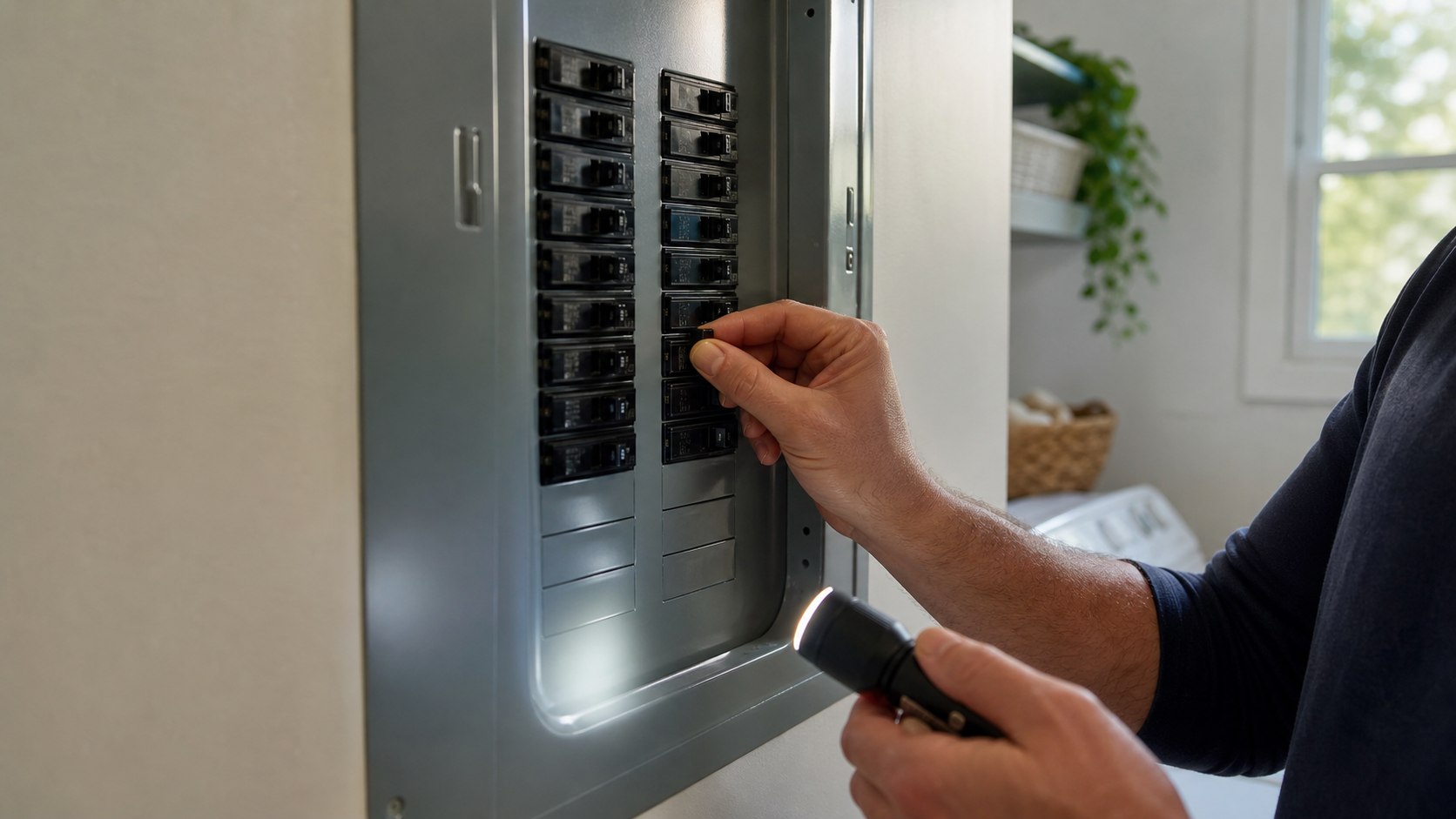
Open the panel door and look for a breaker handle that is not lined up with the others. Many tripped breakers rest in a middle position between on and off. Some may look only slightly out of alignment, so compare the full row of handles instead of glancing once and assuming none are tripped. If your panel schedule is labeled well, match the affected room or appliance to the breaker name. Use your eyes first, and do not remove the panel cover, loosen screws, or reach behind the dead front. Homeowners should only operate the breaker handles accessible at the front of the panel. If the panel has missing covers, exposed conductors, rust, scorch marks, or unusual sounds, close the door and call a professional. The visible handle is the limit of this basic homeowner fix.
Step 3: Reset the Breaker the Right Way
To reset a tripped breaker, push the handle firmly all the way to the off position first. This step matters because many breakers will not re-latch from the middle trip position. After it reaches off, move it back to on with one deliberate motion. Stand slightly to the side of the panel, keep your face away from the opening, and use one hand if possible.
If the breaker stays on, return to the affected area and check whether lights or outlets are working again. If it trips immediately with nothing plugged in or turned on, leave it off. An immediate trip can point to a short, damaged wiring, a failed breaker, or a connected device you have not identified. Resetting over and over is not troubleshooting; it is adding stress to a system that is already warning you.
Pay attention to how the handle feels. A healthy breaker usually moves with a firm, consistent snap. A handle that feels mushy, loose, gritty, or refuses to latch can indicate worn equipment rather than a simple overload. That does not mean you should open the panel; it means the reset has given you useful evidence for a licensed electrician.
Step 4: Reduce the Load Before You Reconnect Everything
If the breaker reset successfully, do not simply turn everything back on at once. Unplug or switch off the devices that were running, then reconnect them one by one. Give motors and heating elements a moment to start before adding another load. If the breaker opens when a specific appliance is used, that device or the total load on the circuit is the likely problem. High-wattage devices deserve special attention. Portable heaters, microwaves, toaster ovens, hair dryers, irons, shop vacs, compressors, and power saws can use a large share of a household circuit by themselves. A circuit can be perfectly healthy and still trip when too many demanding devices run together. Moving one item to another circuit may solve the immediate issue, but repeated overloads often mean the room needs a better long-term electrical plan.
Think about timing too. A refrigerator, dehumidifier, sump pump, or furnace blower may start automatically while another device is already running. When a breaker trip seems random, those background loads are often the missing piece. Watching the circuit over a few normal-use cycles is more helpful than assuming the last device you touched caused everything.
When the Problem Is a GFCI Instead
Sometimes the panel breaker is not the device that opened. Kitchens, bathrooms, garages, basements, laundry areas, and outdoor outlets often have GFCI protection. A GFCI outlet or breaker trips when it senses current leaking from the intended path, which can happen around moisture, damaged cords, or failing equipment. If one outlet or a group of outlets is dead and the panel looks normal, search for a GFCI receptacle with reset and test buttons. Press reset only after checking for moisture and unplugging questionable devices. Outdoor GFCI trips often trace back to wet extension cords, landscape lights, holiday decorations, or tools used after rain. If the GFCI will not reset, trips instantly, or controls an area that remains damp, stop using the circuit until the cause is found. Moisture and electricity deserve more caution than guesswork.
How to Tell Overload From a More Serious Fault
An overload usually has a pattern you can explain. The breaker trips when several normal devices run together, then resets after those devices are turned off or separated. A more serious fault is less forgiving. The breaker may trip instantly, trip with nothing connected, feel warm, make noise, or be associated with flickering, sparks, scorch marks, or a burning odor.
Damaged cords and appliances can create confusing symptoms because the circuit may look fine until that item is plugged in. Inspect cords for cuts, crushed insulation, loose plugs, and heat discoloration. If an appliance trips the breaker on more than one circuit, stop using it. If several unrelated devices trip the same breaker, the circuit itself may need professional testing.
Age can also matter. Breakers can wear out after years of heat cycles and mechanical use, and older panels may have connection issues that do not show from the outside. A homeowner can document symptoms, reduce loads, and stop unsafe use, but internal testing belongs to someone trained to work inside energized equipment.
What Not to Do After a Breaker Trip
Never replace a breaker with a larger one just because the existing breaker trips. Breakers are sized to protect the wire in the wall. Installing a larger breaker on wire that is not rated for it can allow the wire to overheat before the breaker opens. More capacity usually means a properly designed new circuit, not a quick hardware swap. Avoid covering up the problem with extra power strips, cheap adapters, or long extension cords. Those items may spread devices around physically, but they do not change the circuit capacity inside the wall. Also avoid ignoring a breaker that trips every few days. A recurring trip is a pattern, and patterns are how electrical problems ask to be solved.
When to Call a Licensed Electrician
Call an electrician if the breaker will not stay on, if it trips immediately after reset, if you smell heat, if outlets are discolored, if the panel buzzes, if you see moisture near electrical equipment, or if the same circuit keeps causing trouble. You should also call for older panels, unknown wiring, aluminum branch circuits, frequent GFCI trips, or any situation where you are not comfortable identifying the load.
A professional can test voltage, current draw, insulation condition, breaker performance, and connection quality in ways a basic reset cannot. That diagnosis protects the home and saves time because it separates a bad appliance from a bad connection, an overloaded circuit from a failing breaker, and a nuisance trip from a genuine hazard. The goal is not just to get the lights back on. The goal is to restore power with confidence.
If you rent, contact the property manager or landlord instead of attempting repairs beyond resetting accessible breakers and GFCI devices. If you own the home, keep any electrician notes, permits, or circuit changes with the panel schedule. Good records make future troubleshooting faster and help the next person understand what has already been checked.
A Simple Breaker Trip Log Helps
After the circuit is working again, write down the date, affected area, devices running, weather conditions, and whether the breaker reset normally. A short log can reveal patterns that are easy to miss in the moment. If the circuit trips again, you will have useful information ready instead of starting from scratch. For a one-time overload, the fix may be as simple as using fewer high-draw devices on the same circuit. For anything that repeats or feels unusual, keep the breaker off and get help. A tripped breaker is not just an interruption. It is the electrical system giving you a chance to solve a problem before it becomes expensive, damaging, or unsafe.