Use Roof Age to Ask Better Questions
A roof’s age helps with planning, but it cannot tell you exactly how many useful years remain. Materials, installation, weather exposure, maintenance, and the condition of flashing and other components all influence service life. One roof may need major work before a broad published range suggests, while another remains repairable well beyond a familiar milestone. Start by identifying the material and installation history, then arrange an assessment of the actual assembly. This gives age a useful role without turning it into an automatic replacement order. The goal is to recognize developing problems, budget ahead, and choose repairs or replacement for clear reasons rather than waiting for a leak or trusting a warranty label as a forecast. For orientation, the manufacturer ranges discussed below put asphalt around 20–30 years, metal around 40–60, and tile around 50–100. Slate varies markedly with the stone. Identify wood and low-slope membrane systems before assigning a reserve period; copying a number from a different material can mislead more than it helps.
A: No. Actual condition and the complete assembly need assessment.
A: Yes. Installation defects, damage, and local interfaces can fail early.
A: No. Components can have different maintenance and renewal needs.
A: No. Stone type, quality, fastening, exposure, and history matter.
A: No. Identify and assess the membrane system separately.
A: Not necessarily. Water can travel before becoming visible.
A: No. Coverage terms and real-world service life are different.
A: Arrange assessment when evidence or reasonable concern indicates damage.
A: Yes, when its purpose, limitations, and surrounding condition are understood.
A: Material identification, documented history, and a competent condition assessment.
Distinguish the Covering From the Whole Roof
The visible covering is only part of a roof. Flashing, fasteners, deck, underlayment, penetrations, and adjoining walls contribute to keeping the house dry. Those components may age at different rates. A durable tile or slate can remain serviceable while a junction elsewhere needs attention.
This distinction matters when someone quotes a material lifespan. It may describe the covering under suitable conditions rather than an untouched complete assembly. Ask which component is failing and what a proposed repair would address. A useful assessment explains the condition of the roof as a system rather than reducing everything to the age of its most visible layer.
Asphalt Shingles: A Range With Important Limits
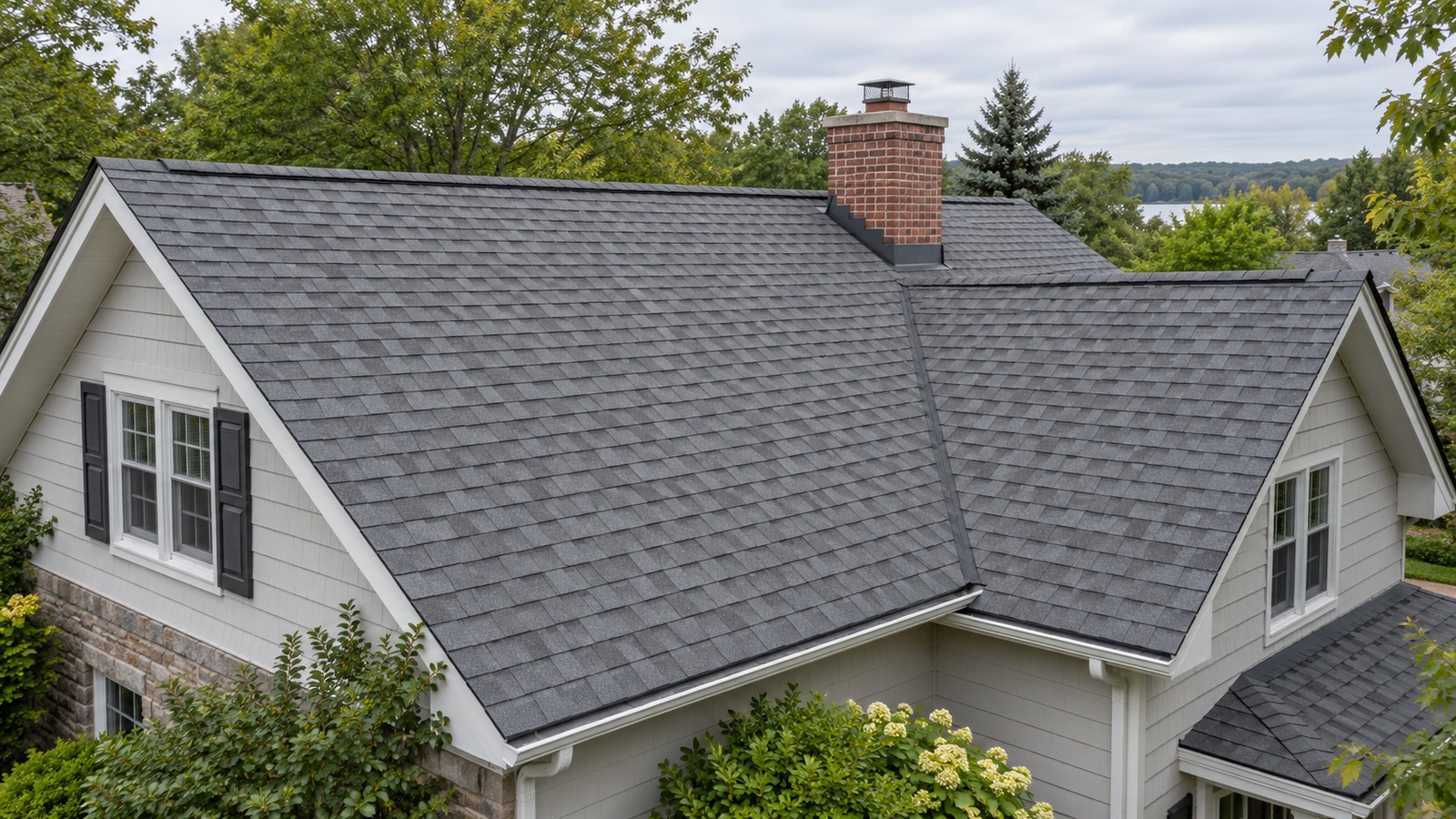
GAF’s homeowner roofing FAQ gives roughly 20 to 30 years as general lifespan context for asphalt shingles, while emphasizing that factors beyond the material affect performance. Treat that as a broad planning range, not a promise for a particular product or house. Shingle type, installation quality, exposure, and storm damage can shift the actual outcome substantially.
Look at condition alongside age. Widespread cracking, curling, missing material, or recurring failures deserve professional assessment. Granules in a gutter need context rather than an instant verdict, since their significance depends on the roof and observed pattern. Keep photographs and inspection findings so changes can be compared over time.
A relatively young roof with a leak should be investigated promptly. The cause may be a local flashing problem, installation defect, storm damage, or another condition that broad lifespan estimates cannot predict. Do not postpone diagnosis because the roof has not reached an expected age. Equally, an older roof should receive a reasoned condition review rather than automatic condemnation.
Metal Roofs: Longevity Depends on the Specific System
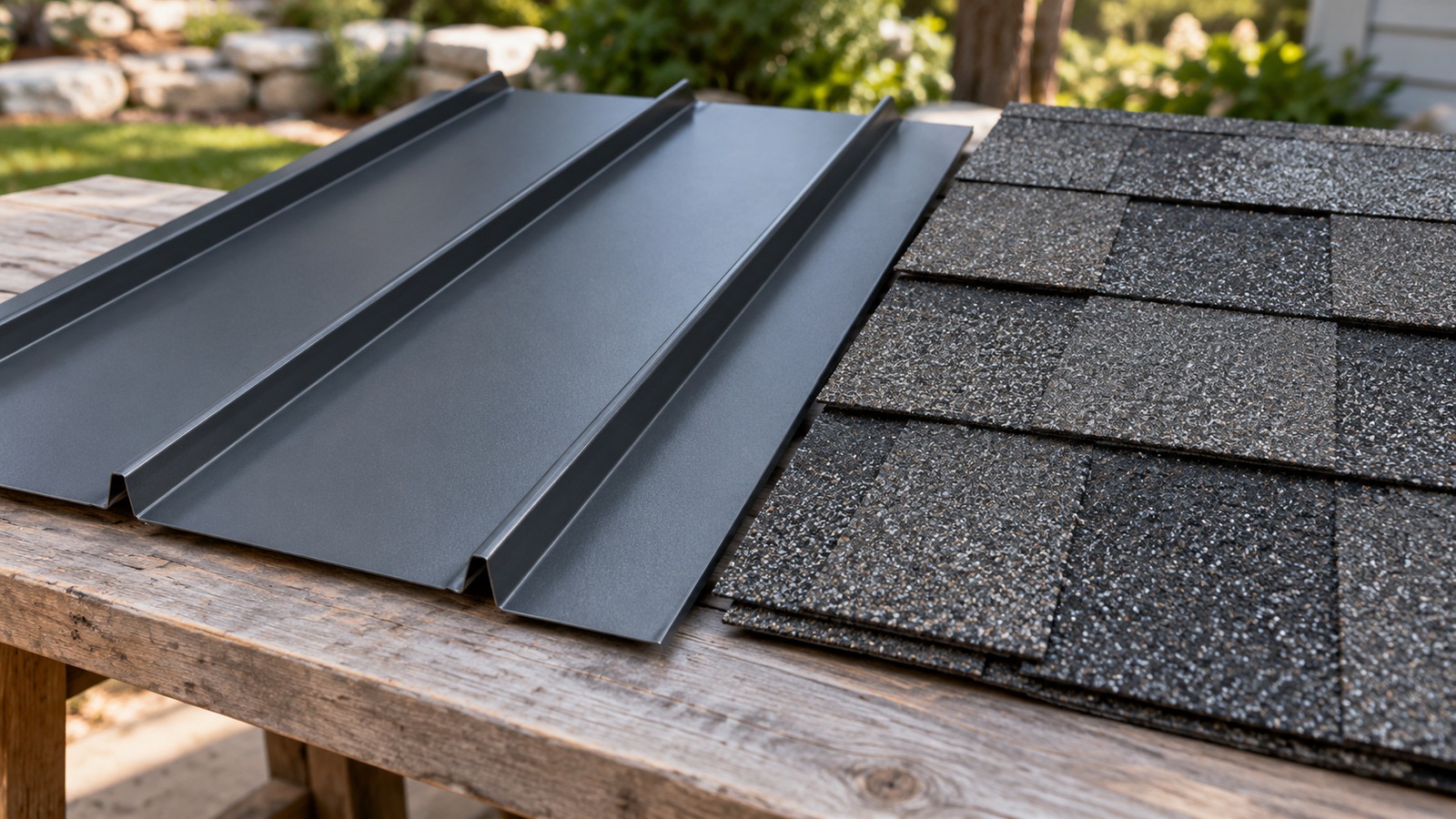
McElroy Metal describes a broad 40-to-60-year service horizon for metal roofs in its residential guidance. The relevant expectation for your roof depends on the metal, coating, attachment, environment, and maintenance. Standing-seam and exposed-fastener systems have different details to inspect. Ask a qualified specialist to identify the installed system before using a generic range to plan the next replacement.
Tile Roofs: Durable Pieces Still Need a Sound Assembly
The Tile Roofing Industry Alliance’s The Facts about Tile Roofs describes a 50-to-100-year-or-longer lifespan, checked October 2026, but individual products, climate, and installation conditions vary. A long-lived tile does not establish the condition of every concealed layer. Broken pieces, flashing defects, and underlayment problems can require work while many tiles remain usable. Have a tile-experienced professional distinguish localized repair from broader renewal.
Access itself can cause damage if someone walks on the roof incorrectly. Arrange inspection and repair through people familiar with the material and its support. Ask whether matching replacement pieces are available and how they will be integrated. Keep product identification where possible, because a later search for an exact profile can be harder than expected.
Slate Roofs: Identify the Stone and Its Condition
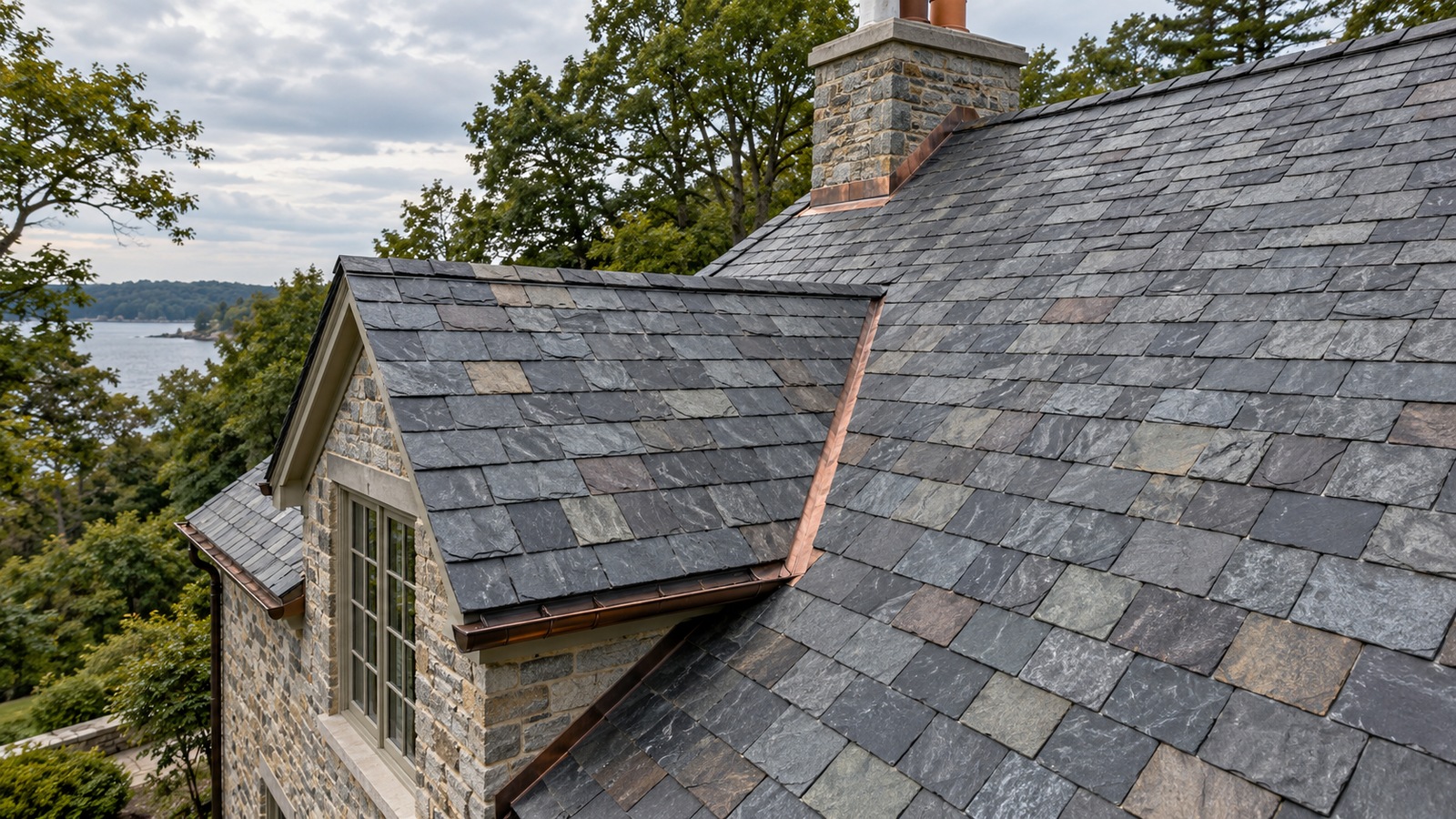
Natural slate varies in durability. National Park Service Preservation Brief 29 discusses a roughly 60-to-125-year span for commonly used historic slates, while treating assessment and maintenance as essential to the decision. That historical context should not be applied indiscriminately to every roof. The stone type, condition, fastening, flashing, and repair history need examination.
A specialist may find that some slates remain sound while fasteners or flashings need work. Alternatively, widespread material deterioration may justify more extensive intervention. The distinction matters financially and, on historic buildings, architecturally. Obtain a documented condition assessment before accepting the claim that old slate must all be replaced.
Do not assume synthetic products inherit natural slate’s service history because they resemble it. Their materials, ratings, installation, and warranties are different. Identify the exact covering first. A realistic maintenance plan begins with knowing what is actually on the roof rather than the appearance it imitates.
Wood Shingles and Shakes Need Exposure-Specific Care
Wood roofs are particularly sensitive to material quality, installation, drying conditions, and surrounding vegetation. The Insurance Institute for Business and Home Safety identifies those variables among the factors affecting cedar roof service life. Avoid assigning one reliable lifespan to every wood roof. Arrange assessment by someone who understands the material and distinguishes ordinary weathering from decay or installation failure.
Debris trapped between pieces and persistent shade can change drying conditions. Maintenance should follow appropriate material guidance rather than aggressive cleaning chosen for appearance alone. Oregon State University Extension discusses the role of periodic care and the influence of climate and roof condition. Ask for a specific care plan that fits the installed roof.
Low-Slope Membranes Require Their Own Assessment
A low-slope roof may use a membrane system with details unlike those of shingles, tile, or metal panels. Product type, seams, flashing, drainage, exposure, and installation affect its service. Identify the membrane through records or a qualified assessment before relying on a lifespan estimate. Standing water, repeated patches, or vulnerable transitions deserve attention, but their implications must be evaluated in the context of the actual system. Do not transfer a steep-roof material range to a flat-looking addition simply because both roofs cover the same house.
Understand What Climate Does to the Roof
Strong sun, temperature swings, storms, wind-driven rain, coastal exposure, and repeated freeze-thaw conditions create different demands. Roof orientation can mean two planes on the same house age differently. Observe which areas receive the harshest exposure and where debris stays wet. Climate is a set of actual conditions, not just a label applied to an entire state.
Storms can also cause damage independent of gradual aging. Arrange appropriate inspection after significant events when there is evidence or a reasonable concern. Keep the event date and accessible photographs with the maintenance record. A roof that seemed sound before a storm may need repair even though its ordinary aging process has not changed much.
Avoid treating climate as a reason to abandon maintenance. A suitable assembly still needs drainage and sound interfaces. Conversely, cleaning alone cannot make a material appropriate for an exposure it was never designed to handle. Ask the assessor to connect observed defects to likely causes rather than explaining every problem with the word weather.
Installation Quality Can Outweigh the Headline Lifespan
Incorrect fastening, poorly integrated flashing, unsupported details, and unsuitable product applications can shorten service or cause early leaks. Those defects may appear while the main material still looks new. The original installation record can help establish what was specified and how it was assembled. A condition assessment should consider workmanship and compatibility rather than assuming that premature trouble proves the material category is poor.
Watch for Changes Without Climbing Onto the Roof
Use safe accessible viewpoints to look for displaced pieces, new debris patterns, damaged edges, or visible changes near penetrations. Inspect interior ceilings and accessible attic areas where it is safe to do so. Moisture stains, damp insulation, or unusual odors need investigation. The water’s visible location may be some distance from its entry point.
Document changes with dates and photographs taken safely from the ground or another suitable location. Arrange qualified access for close inspection. Do not walk on fragile coverings or use an improvised ladder setup to settle a budgeting question. A professional assessment should reduce uncertainty without adding an avoidable injury or material-damage risk.
Separate a Repair Decision From a Replacement Decision
Localized damage may be repairable when the surrounding assembly remains sound and compatible materials are available. Repeated failures, extensive deterioration, or defects affecting much of the system can justify replacement. Ask the contractor to explain the extent of the problem and the expected role of the repair. A patch that buys useful time is different from one that merely hides a continuing leak.
Request alternatives where they are technically reasonable. Compare their scope, expected limitations, disruption, and cost. A repair proposal should not promise a new roof’s service horizon, and a replacement proposal should explain why less extensive work is inadequate. Clear reasoning is more useful than a rule that every roof above a certain age must go.
Coordinate other planned work. Solar equipment, chimney repairs, insulation changes, or an addition can affect the timing of roof work. Discuss those plans before paying for repairs that will be disturbed shortly afterward. The best timing decision considers the house’s broader needs while still responding promptly to active water entry.
Build a Reserve Without Guessing an Exact Failure Year
Use a current replacement estimate and a reasonable saving horizon to plan funds. For example, an invented $18,000 future-project allowance spread over six years suggests setting aside $3,000 annually before considering investment returns, inflation, or changing scope. This is budgeting arithmetic, not a claim that the roof will fail in six years.
Review the reserve when inspection findings or prices change. Keep urgent repairs separate from the long-term replacement fund. A roof with uncertain history may justify an earlier professional assessment so the household can plan intelligently. Financial preparation is valuable even when the remaining service life cannot be predicted precisely.
Keep Records That Make the Next Assessment Better
Save installation dates, product identifiers, warranties, repair invoices, photographs, and inspection findings. Record which areas were repaired and why. If previous owners supplied only an approximate date, label it as uncertain rather than allowing it to become an established fact. Reliable history helps a specialist distinguish a recurring defect from a newly developed problem.
Compare Two Decisions on the Same Aging Roof
Consider an older shingle roof with a new ceiling stain near one penetration. Age makes a wider condition review sensible, but it does not establish the leak’s cause. A roofer might document a local flashing defect with sound adjacent covering, supporting a bounded repair proposal. The report should state what was inspected and what concealed conditions remain uncertain.
Now suppose the inspection also finds widespread brittle covering and repeated failures across several planes. The proposed work changes because the evidence describes a broader problem. Ask how a local repair would perform within that deteriorated assembly and whether matching material can be installed reliably. The comparison is between documented scopes, not between a reassuring age range and a frightening photograph.
Request a written reason for the recommended route and a clear limit on any remaining-life opinion. Photographs can substantiate observed damage while leaving the condition of concealed layers unresolved. Further investigation may be necessary before choosing the final scope. Keep active leak response separate from long-term saving so uncertainty does not become an excuse to leave water entering the house.
Replace the Countdown With a Condition Plan
A material lifespan range is a starting point for attention, not an expiry label. Identify the covering, assess the whole assembly, and respond to actual defects. Arrange inspection intervals appropriate to the roof and local exposure with a qualified professional. Keep the maintenance and financial plans current as evidence changes.
The useful outcome is a house that stays protected and a homeowner who understands the next decision. Some roofs need repair sooner than expected; others remain serviceable longer. Condition, documented causes, and competent assessment should determine what happens next. Age becomes helpful when it supports that process instead of replacing it.