Compare Roof Systems That Suit the Same House
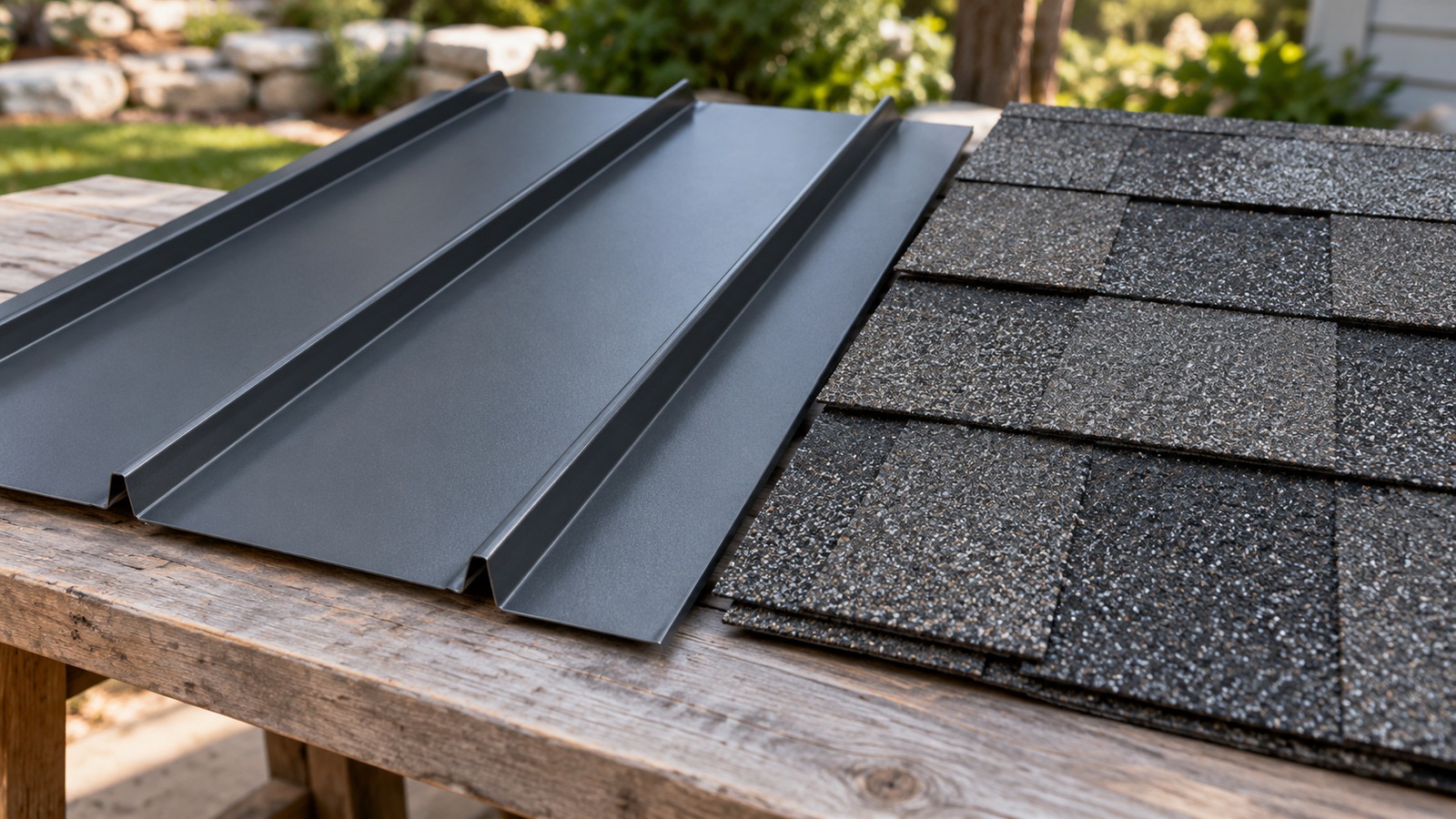
Choosing between a metal roof and asphalt shingles means comparing complete assemblies, not a loose sheet of metal with a single shingle. The installation method, roof shape, exposed fasteners, flashing, attic arrangement, finish, and local installer experience all affect the result. Metal can offer a long service horizon and a distinctive appearance, while asphalt often provides a familiar look and a lower initial project price. Those broad tendencies do not settle the decision for a particular house. Ask how each proposed system will handle your roof’s geometry, weather exposure, maintenance, and future repairs. Then compare current installed quotes and ownership expectations without assuming that every product in either category performs the same way. The short decision is to favor a well-specified asphalt system when initial outlay and familiar local repair capacity dominate, and compare metal when a longer ownership horizon justifies its installed premium. Noise, heat, and durability claims still need the actual assembly and product details; the material name cannot settle them.
A: No. Metal roofing includes several distinct profiles and attachment systems.
A: A finished house has intervening layers that change the sound response.
A: Often it does against premium metal, but exact products and local scope determine the quote.
A: No. Coverage terms and actual aging are different matters.
A: No. Some locations need a designed retention strategy over occupied areas.
A: No. Climate and the complete building determine the outcome.
A: Their inspection and maintenance requirements should be reviewed for the system.
A: They require assessment; cosmetic and weather-resistance effects can differ.
A: Discuss known plans now so compatible attachment and service details are established.
A: The complete appropriate assembly that fits your priorities and has qualified installation support.
Identify the Actual Metal and Asphalt Options
Metal roofing includes standing-seam panels, exposed-fastener panels, metal shingles, and other configurations. The metal, protective finish, profile, attachment, and permitted application vary. A quote that says metal roof leaves too much unanswered. Ask for the exact system and documentation that governs its installation.
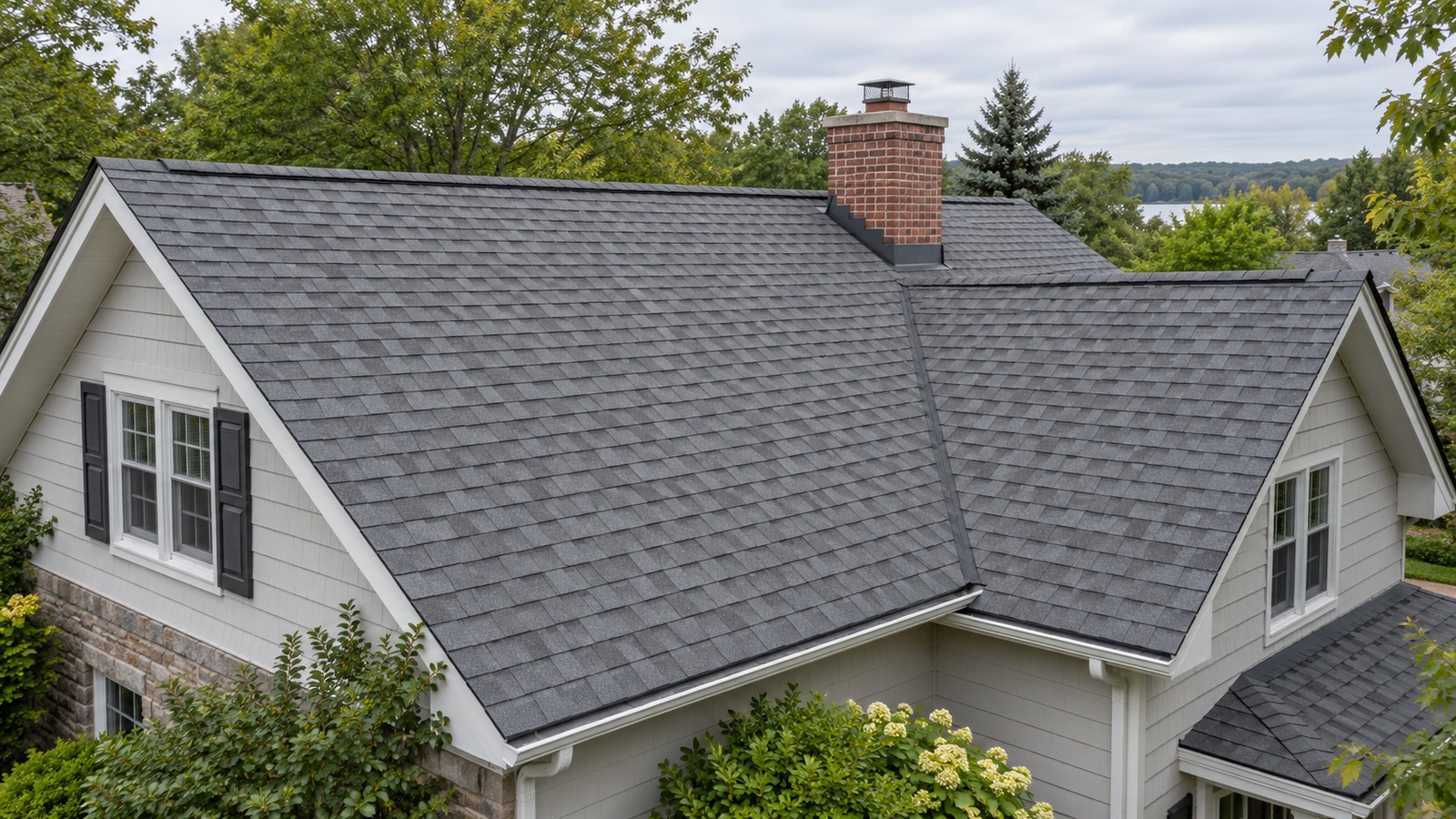
Asphalt shingles also vary in profile, weight, appearance, performance ratings, and system accessories. Compare the proposed product line rather than an unspecified basic roof. Identify the matching starter, ridge, underlayment, and flashing scope. A complete comparison needs two buildable proposals with the same house interfaces addressed.
Let Roof Geometry Shape the Discussion
A simple roof can show long metal lines cleanly, while a roof with many short planes, valleys, and dormers introduces more detail work. Asphalt shingles can accommodate varied geometry, but their transitions still need careful planning. Ask installers to explain difficult junctions and material waste on your actual roof. The style that looks economical on an uncomplicated example may produce a different labor figure on a house with many intersections.
Put the Installed Premium in a Defined Context
JLC’s 2025 Cost vs. Value national model lists $31,871 for asphalt-shingle replacement and $51,865 for metal replacement. These are modeled projects with stated specifications, not quotes for a typical small roof. Read their scope alongside the totals: the asphalt model uses 30 squares, while the metal model also specifies 30 squares. Their approximately $19,994 difference is a comparison within that model, not a guaranteed premium for your home.
Have both contractors price your same measured roof, tear-off, deck assumptions, flashings, and access. Identify the asphalt product and the metal panel, coating, fastening method, and trim. Standing-seam and exposed-fastener systems need separate identification; a low metal material price cannot be compared with a complete asphalt installation.
Check how essential repairs and optional appearance upgrades are handled. If one proposal excludes replacement flashings or assumes sound sheathing while the other includes remedial work, reconcile those lines before judging the material difference. Request a written explanation of the installed premium. The lower complete appropriate assembly may be the better household choice even when another system has a longer advertised service horizon.
Compare Service Horizons Without Predicting a Failure Date
For general context, GAF’s Residential Roofing FAQs gives asphalt shingles a 20-to-30-year span, and McElroy Metal’s residential FAQ describes 40 to 60 years for metal. Both were checked in October 2026. These are manufacturer perspectives on broad categories, not a paired field trial or a forecast for either bid. Weather, detailing, coating, installation, and upkeep can alter actual life substantially.
Ask which components are likely to need attention during your ownership: a local flashing repair, exposed-fastener service, finish maintenance, or a larger replacement. Read warranties separately from expected life. Coverage may divide manufacturing, finish, installation, and weather damage, with different remedies and exclusions. The maintenance route and local contractor availability matter alongside the headline years.
Understand Why Rain Noise Depends on the Assembly
The sound of rain on an open-sided metal-roofed shelter is not a reliable prediction for a finished house. Decking, underlayment, insulation, ceiling construction, and the enclosed space change what occupants hear. McElroy Metal’s residential guidance discusses these intervening layers when addressing noise. Evaluate the complete proposed roof and room arrangement instead of assuming that metal will always be loud or that either covering can guarantee a silent interior.
Discuss Snow, Ice, and Falling Water Where Relevant
Snow and ice behavior depends on roof configuration, climate, surface, and surrounding entrances. A metal system may need specific snow-retention planning over occupied areas or access routes. Have an experienced professional assess that need and design the appropriate system. Do not copy a snow-guard pattern from a photograph.
Asphalt roofs also need suitable detailing for local winter conditions. Ice dams and related moisture problems involve the building and roof assembly rather than the covering alone. Ask how insulation, air leakage, ventilation, drainage, and protective membranes are being considered where applicable. The budget should include the identified solution rather than a generic promise that one material eliminates winter problems.
Compare Maintenance Tasks You Can Actually Arrange
Both roofs need periodic observation and professional attention when defects develop. Debris, damaged flashing, blocked drainage, penetrations, and adjoining materials can cause trouble regardless of the main covering. Inspect safely from accessible locations and arrange qualified roof access. A low-maintenance material is not an instruction to ignore the assembly.
Exposed-fastener metal systems can have particular requirements for fasteners, washers, and maintenance over time. Standing-seam systems have different attachment and movement details, and their seams and flashings still need inspection. Ask the installer to identify the relevant tasks for the exact product. Maintenance should be a documented routine rather than a vague statement that metal never needs work.
Asphalt repairs may involve replacing damaged shingles or addressing disturbed joints and penetrations. Matching older colors can be imperfect. Keep product identification and ask about suitable spare material or future repair availability. Neither category should be selected on the assumption that every later repair will be small, invisible, and easy to schedule.
Consider Hail and Wind Through Product Ratings
Weather performance depends on tested products, installation, attachment, and exposure. A material name alone cannot establish a roof’s wind or impact resistance. Ask for ratings relevant to the proposed assembly and discuss what damage would mean operationally and cosmetically. Some metal surfaces can show dents while remaining weather-resistant, and asphalt damage may require a different assessment. Have the contractor and insurer explain the distinctions relevant to your house rather than relying on a broad sales claim.
Check Corrosion and Finish Compatibility
Metal selection should account for the environment and contact with adjacent materials. Coastal exposure, dissimilar metals, runoff, and product-specific restrictions can influence the suitable system. Use compatible fasteners, flashings, and accessories. Ask the installer to explain how the selected coating and metal fit the location.
Finish appearance can change over time. Review actual samples and the manufacturer’s stated expectations for fading, chalking, and other changes. Asphalt colors also weather and can vary between batches. Evaluate the roof as a large visible surface that will age rather than expecting the initial sample to remain unchanged indefinitely.
Think About Heat and Indoor Comfort Carefully
Roof color and rated surface properties can affect solar response, but indoor comfort depends on the whole building. Insulation, air leakage, attic or roof configuration, climate, and HVAC operation remain important. Avoid promising a fixed utility reduction based only on the covering. Compare appropriate product ratings and obtain a building-specific assessment if energy savings are a major reason for replacement.
A reflective finish may be useful in one context and less important in another. Look at local conditions and the house’s actual performance problem. A hot upstairs bedroom could involve several interacting causes. Replacing the roof covering without diagnosing those causes may leave the discomfort largely unchanged.
Also consider glare and appearance from nearby buildings. View large samples in outdoor light and ask about the proposed finish’s visual character. The choice should satisfy practical comfort goals and fit the setting. An energy-related label does not make every color or profile aesthetically suitable for every neighborhood.
Plan Future Equipment and Penetrations
Solar installations, vents, chimneys, and future service work need compatible roof details. Tell both bidders about known plans before selecting a system. Ask how equipment will attach and how penetrations will be flashed, inspected, and maintained. A later installer should understand the roof’s documented requirements. Good coordination can avoid unnecessary holes, damaged finishes, or disputes between trades about responsibility for a leak.
Compare the Benefits at House Scale
View the exact profile and color beside the siding, masonry, gutters, and trim. Long standing-seam lines can emphasize a simple roof form, while a shingle pattern may relate more quietly to an existing facade. Ask for photographs of comparable houses and include porch roofs or planned additions in the comparison. A finish that looks subtle in your hand can become a strong feature across several roof planes.
Inside, identify the rooms where noise or temperature is an actual concern. A bedroom beneath a compact roof assembly differs from a room below a deep attic. Have the installer explain the proposed layers in that location. If separate insulation or air-sealing work is needed, identify that scope before attributing the whole comfort improvement to the covering.
Use the summary below to organize the decision, then obtain two proposals for your actual house. Its prices are the previously described 2025 JLC national models, checked November 2, 2026; the $19,994 difference belongs to those specified projects. The manufacturer service horizons are broad context, with no guarantee of a replacement year. Neither column establishes a product’s wind, hail, or local exposure suitability.
| Consideration | Asphalt system | Specified metal system |
|---|---|---|
| JLC model cost | $31,871; 30-square shingle replacement | $51,865; 3,000-square-foot standing-seam replacement |
| Attributed life context | GAF: roughly 20–30 years | McElroy Metal: roughly 40–60 years |
| Rain sound | Evaluate the complete roof and room assembly | Evaluate the complete roof and room assembly |
| Maintenance focus | Covering damage, flashing, drainage, and penetrations | Those interfaces plus system-specific finish, attachment, and corrosion checks |
Check Insurance and Resale Claims Directly
Insurance treatment can depend on the product, ratings, location, policy, and insurer. Ask your own insurer about the exact proposed system and obtain the relevant terms before counting a discount. Similarly, resale value is not guaranteed by choosing a more expensive roof. The local market, house condition, and buyer preferences affect the outcome. Keep those uncertain benefits outside the basic project budget until they are supported by specific information.
Use Ownership Arithmetic Without Claiming Certainty
Start with the two complete local quotes rather than invented national averages. Subtract the asphalt total from the specified metal total to identify the actual premium. Confirm that necessary deck repairs, flashings, and disposal are treated consistently before that subtraction.
Choose a period that reflects the household’s expected ownership. List maintenance and possible repairs separately from any assumed full replacement. The service-life ranges above can inform scenarios, but they cannot establish the exact year another roof will be needed.
Test more than one outcome when future costs determine the apparent winner. A metal option should not depend on assuming an unusually early asphalt failure, and an asphalt option should not assume no maintenance. Keep financing and insurance figures tied to actual offers so the comparison remains about the household’s choices.
Choose the Contractor and the Material Together
A high-quality material needs an installer experienced with its system and the house’s difficult details. Ask to see comparable completed work and discuss the approach to valleys, walls, penetrations, and repairs. Review the proposal’s product and workmanship coverage. The roof you buy is the installed assembly, not the best-looking sample in the meeting.
Choose asphalt when its complete cost, appearance, and ownership plan suit the house. Choose an appropriate metal system when its strengths justify the additional initial investment for your priorities. Either decision can be sensible with sound preparation and clear responsibilities. The most useful comparison explains what you will own, how it will be maintained, and why it fits this particular roof.