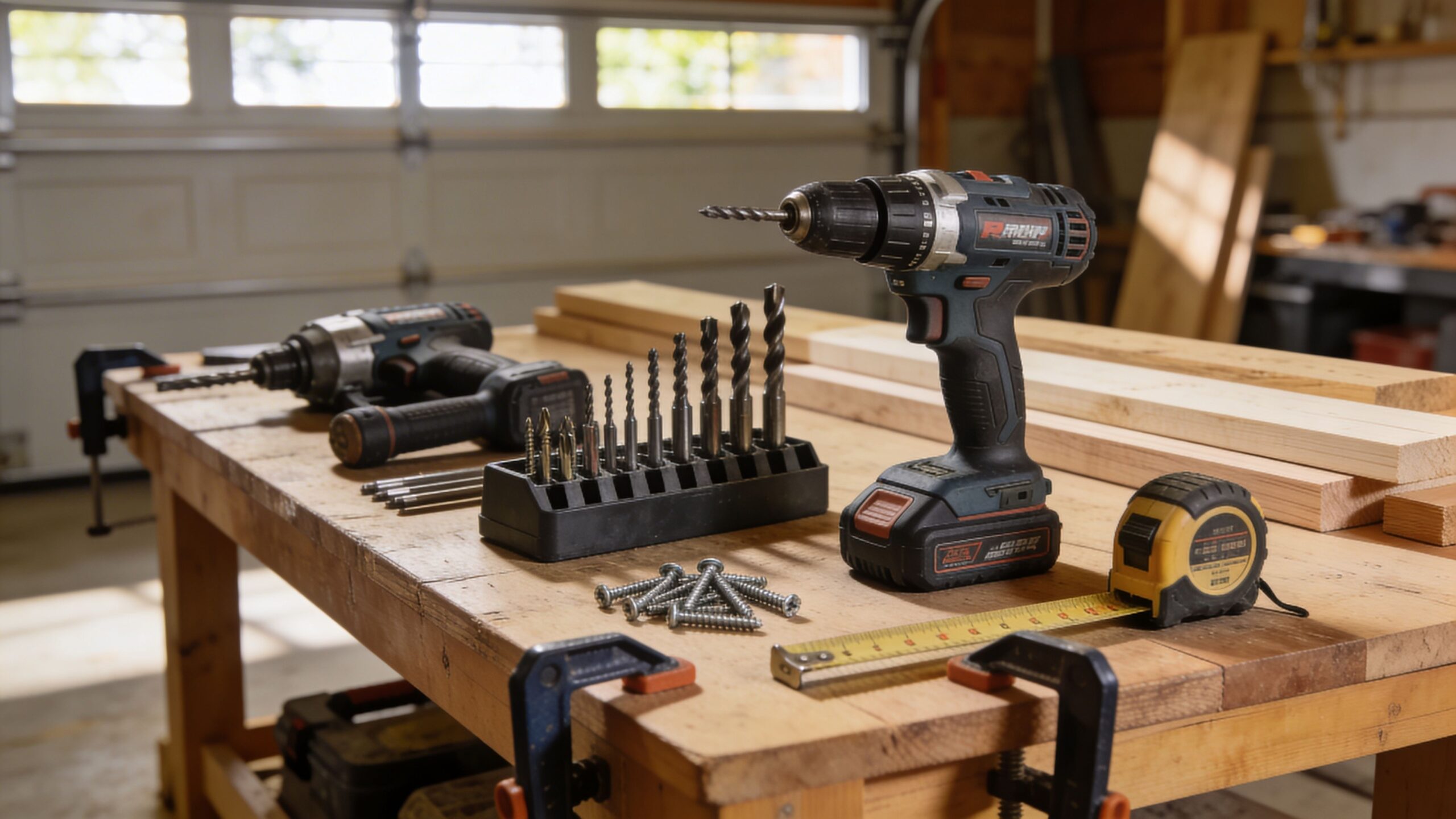
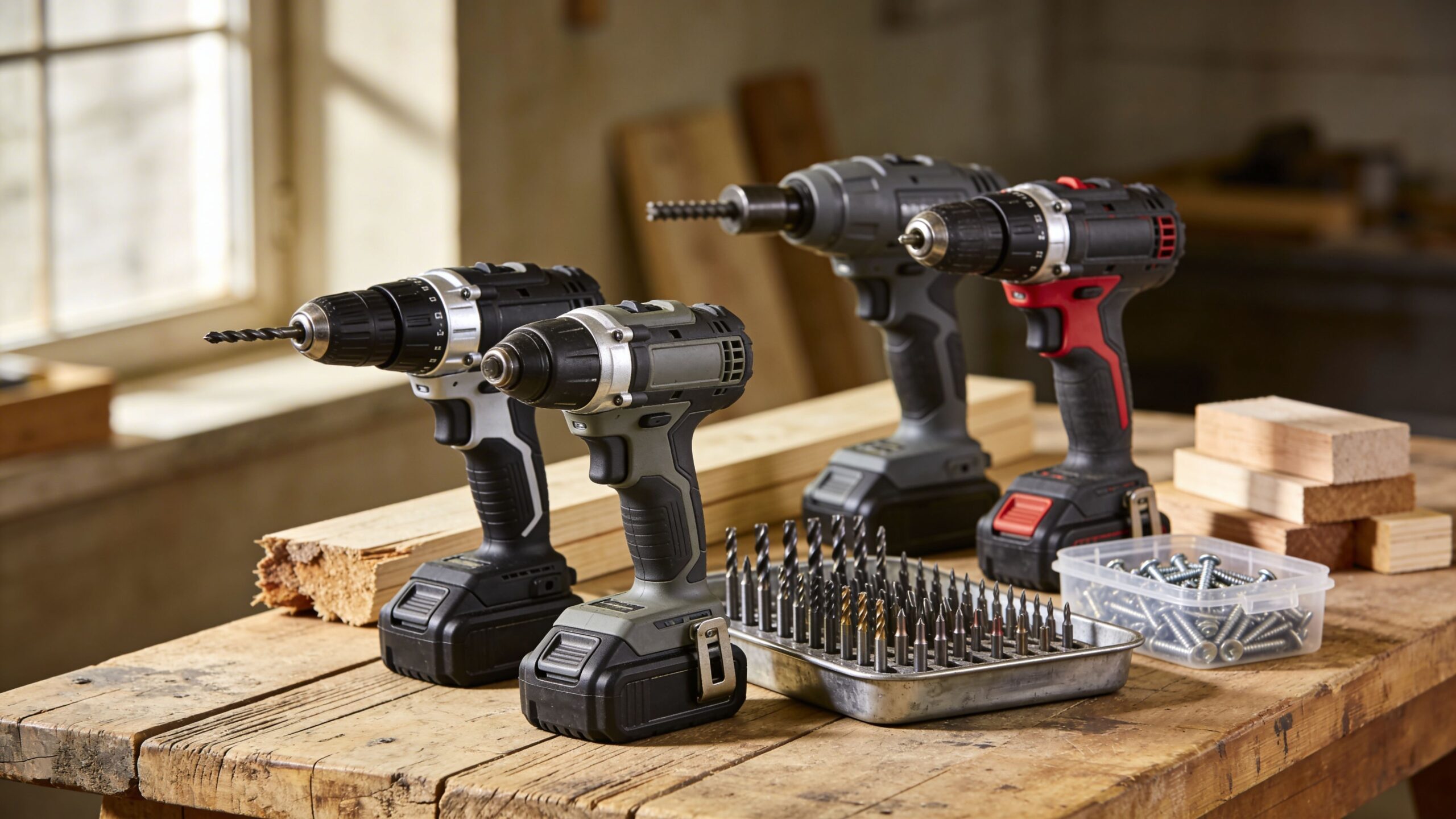
Two Tools That Look Similar but Work Very Differently
At first glance, a drill and an impact driver can seem almost identical. Both are handheld power tools. Both are commonly cordless. Both can spin bits and drive fasteners. To someone just starting out in DIY or home improvement, they can look like two versions of the same machine with only minor differences in shape and branding. That assumption is understandable, but it is also the reason so many homeowners buy one tool without fully understanding what it is designed to do. The real difference between a drill and an impact driver comes down to the kind of work each tool handles best. A drill is the versatile all-rounder. It is built for drilling holes and driving screws across a wide range of materials and project types. An impact driver is the fastening specialist. It is designed to deliver bursts of rotational force that make driving longer screws and larger fasteners far easier, especially in dense material. Both tools are incredibly useful, but they solve different problems. For homeowners, DIYers, and workshop builders, understanding that difference can save time, money, and frustration. Choosing the right tool helps prevent stripped screws, exhausted wrists, stalled motors, and rough-looking results. More importantly, it helps you build a tool setup that actually matches the kind of projects you want to tackle.
What a Standard Drill Is Designed to Do
A standard drill, often called a drill driver, is one of the most versatile tools in any garage or workshop. It is usually the first power tool people buy because it handles such a wide range of common jobs. From assembling furniture and hanging shelves to drilling pilot holes and installing hardware, a drill driver is built to be flexible. The defining feature of a drill is its chuck. This adjustable front section grips many different types of bits, including twist drill bits, driver bits, countersinks, hole saws, and specialty attachments. That flexibility is a major reason drills are so useful. A homeowner can use the same tool to drill holes into wood, drive cabinet screws, and install anchors in drywall with a simple bit change.
Drills also typically include a clutch. This adjustable ring near the chuck lets you control how much torque the tool applies before it stops driving. That feature is incredibly helpful for driving screws without over-tightening them, stripping heads, or sinking them too deep into soft material. For precise work, finish work, furniture building, and general home tasks, this control is a huge advantage. A drill is the tool you reach for when the job requires balance. It offers speed, accuracy, control, and versatility. That is why it remains the default recommendation for beginners and homeowners who want one general-purpose tool.
What an Impact Driver Is Built to Do
An impact driver may look like a drill at first, but its design tells a different story. Instead of a traditional chuck, it uses a quick-change hex collet that accepts quarter-inch hex-shank driver bits and certain hex-compatible drill bits. That alone hints at its purpose: an impact driver is focused more heavily on driving fasteners than on general drilling.
What really sets it apart is the way it delivers power. While a standard drill applies smooth rotational force, an impact driver adds rapid bursts of rotational ضرب-like force as resistance increases. In practical terms, that means it can keep driving screws that would cause many drills to bog down, stall, or twist hard in your wrist.
This makes impact drivers especially useful for long deck screws, structural fasteners, lag screws, construction work, dense framing lumber, and repetitive fastening jobs. They are often louder and more aggressive than drills, but that extra force is exactly what makes them so effective in demanding situations. Impact drivers are not usually the best choice for delicate driving or precision drilling. They are more about muscle and momentum. When the job involves power-hungry fastening, the impact driver often feels like the tool that gets serious work done faster and with less struggle.
The Biggest Difference: Smooth Torque vs Striking Torque
If you wanted to explain the real difference between these tools in the simplest possible way, it would come down to how they create torque. A drill uses smooth, continuous rotational force. It spins at a consistent rate and applies power in a steady way. That makes it easier to control when you are drilling clean holes or driving screws with finesse. An impact driver creates torque differently. It spins too, but when resistance builds, an internal hammer-and-anvil mechanism begins delivering repeated rotational impacts. These bursts help the tool keep turning the fastener without requiring as much physical effort from the user. Instead of pushing steadily against resistance, the impact driver attacks resistance in quick, powerful hits. That mechanical difference changes how each tool feels in use. A drill feels smoother and more controlled. An impact driver feels punchier, louder, and more forceful. The drill is better when you need precision and versatility. The impact driver is better when you need sheer fastening power. Once you understand that one contrast, most of the other differences start to make sense.
Which Tool Is Better for Drilling Holes?
When it comes to drilling holes, the standard drill is usually the better tool. This is the task it was designed to perform. Its chuck accepts a wide variety of bits, its speed is easier to regulate smoothly, and its overall behavior is more predictable when you need accuracy.
If you are drilling pilot holes in wood, boring clean holes for hardware, working with plastic, or drilling carefully into light metal, a drill gives better control. It is also better suited for specialty hole-making accessories such as hole saws, spade bits, Forstner bits, and countersinks. These jobs benefit from consistent rotation rather than the aggressive impacts of an impact driver.
Some impact drivers can use hex-shank drill bits and perform light drilling tasks, especially in wood. But that does not make them a true substitute for a drill. They are generally not as refined for precise drilling, and their aggressive action can make some tasks feel rougher than necessary. If the project involves making clean, well-placed holes, the drill is almost always the smarter choice.
Which Tool Is Better for Driving Screws?
This is where the impact driver often takes the lead. When the goal is driving screws quickly and efficiently, especially longer or thicker ones, an impact driver shines. The bursts of rotational force help it power through dense lumber and heavy fastening tasks without demanding as much pressure from the user. That means less wrist strain, less chance of the tool stalling, and often a smoother experience when working with construction screws, ledger screws, or long fasteners in framing and deck boards. For repetitive fastening jobs, the difference becomes even more obvious. An impact driver can simply feel faster, stronger, and more confident.
That said, a drill is still excellent for driving many common screws, particularly smaller fasteners used in furniture, cabinetry, and light home repairs. Its clutch also gives it an advantage when precision matters more than brute force. You may prefer a drill when installing hinges, assembling flat-pack furniture, or working with softer materials where overdriving a screw is a concern. So the answer depends on the screw and the project. For light to medium everyday screw driving, a drill works beautifully. For tough, long, or repeated fastening, the impact driver usually wins.
Ease of Use for Beginners
For beginners, the drill is often easier to learn first. It behaves more predictably, gives better control at lower speeds, and handles both drilling and screw driving in one package. The clutch helps prevent mistakes, and the chuck accepts a wider variety of bits, making it more flexible for general home use.
A beginner using a drill can learn important basics such as pilot holes, speed control, torque settings, and bit selection. Those skills transfer across almost every future project. A drill also tends to feel less violent in operation, which can make it more approachable for people new to power tools.
Impact drivers are not necessarily difficult to use, but they can feel more abrupt. Their extra noise, striking action, and aggressive power may surprise new users at first. They are excellent tools, but they often make more sense as a second purchase rather than the very first one for a homeowner. If someone is only buying one tool to start, a drill is usually the better first step. It teaches the fundamentals while still being useful for years.
Comfort, Noise, and Feel in Real Projects
These tools also feel very different in the hand. A standard drill is usually smoother and quieter. It gives a more gradual sense of power and often feels better suited to careful tasks. When drilling pilot holes, sinking cabinet screws, or working indoors on finished projects, that calmer behavior can be a real advantage.
An impact driver is typically louder. The hammering mechanism creates a sharp, chattering sound when it engages, and that sound is part of what gives the tool its reputation for power. It also tends to transmit less twisting force back into the wrist when driving difficult fasteners, which is one reason so many contractors and serious DIYers love them. In long fastening sessions, an impact driver can actually feel easier on the body because it does more of the hard work for you. In lighter, more delicate jobs, the drill often feels more controlled and refined. The best way to think about it is this: the drill feels like a precision multi-role tool, while the impact driver feels like a compact fastening powerhouse.
When One Tool Can Replace the Other
A question many people ask is whether they can buy just one of these tools and skip the other. In some situations, yes. In others, not really. A standard drill can handle a surprising amount of screw driving. For many homeowners, it may be enough on its own. If your projects are mostly furniture, shelving, light repairs, and modest woodworking, a good drill driver can cover nearly everything you need. An impact driver can sometimes drill small holes with hex-shank bits, but it is much less versatile overall. It is not a true replacement for a drill if you regularly need precise holes or want access to a broad range of drilling accessories. If you can only own one, a drill is usually the better choice because it covers more ground. But if your projects become larger and more demanding, the ideal setup is often having both. One tool can hold a drill bit while the other holds a driver bit, saving time and making the workflow more efficient. For many DIYers, that combination eventually feels like the perfect pair.
Best Uses for a Drill
A drill is ideal for assembling furniture, hanging wall hardware, drilling pilot holes, installing cabinet pulls, building light woodworking projects, drilling into wood or plastic, and handling general maintenance tasks around the house. It is also better when accuracy matters and when you want to carefully manage depth and torque.
Drills are especially strong in tasks that require both drilling and driving within the same project. Because they are so adaptable, they remain the workhorse tool for homeowners who want versatility more than specialization.
Best Uses for an Impact Driver
An impact driver stands out in deck building, framing, fencing, structural fastening, lag screw installation, and long screw driving into dense material. It is the tool people appreciate most when resistance goes up and a standard drill starts to feel strained. It is also incredibly efficient when driving lots of screws in a row. If your weekend build involves repetitive fastening, the impact driver can feel like a dramatic upgrade in speed and ease.
Which One Should You Buy First?
For most homeowners and beginners, the drill should come first. It is more versatile, easier to learn, and better suited to the widest range of basic household tasks. If you only want one power tool to start your collection, a cordless drill driver is almost always the smartest choice.
If you already own a drill and find yourself doing tougher builds, driving long screws regularly, or feeling frustrated by resistance in dense lumber, then an impact driver becomes the natural next purchase. At that point, it is not replacing the drill. It is expanding what your workshop can do.
Final Thoughts on the Real Difference
The real difference between a drill and an impact driver is not just technical. It is practical. A drill is the flexible, everyday problem solver. It drills holes, drives screws, and handles the wide mix of jobs that come with homeownership and DIY. An impact driver is the focused specialist that takes over when fastening gets tougher, longer, and more demanding. Neither tool is better in every situation. The drill wins on versatility and control. The impact driver wins on fastening force and efficiency. Knowing when to use each one is what separates frustration from smooth, satisfying results. For many people, the answer is not drill or impact driver. It is drill first, impact driver next. Together, they create one of the most useful and capable tool pairings in any home workshop.