Why the Right Drill Matters More Than Most People Think
A power drill is one of the first tools many homeowners buy, and for good reason. Few tools can match its versatility. A good drill can assemble furniture, hang shelves, install curtain rods, build planter boxes, repair fences, mount garage storage, and help with dozens of everyday tasks around the house. It is the kind of tool that quickly goes from a “nice to have” purchase to something you reach for constantly. That is exactly why choosing the right drill matters so much. The wrong drill can feel underpowered, heavy, frustrating, or awkward to control. It may struggle with harder materials, drain its battery too quickly, or make simple jobs feel harder than they should. The right drill, on the other hand, makes work smoother and more enjoyable. It feels balanced in your hand, has enough power for your usual projects, and gives you the confidence to tackle new repairs and builds without hesitation. For homeowners and DIYers, the best power drill is usually not the biggest or most expensive model on the shelf. It is the one that matches the kind of work you actually do. Some people need a lightweight drill for furniture, trim, and light home repairs. Others want something stronger for deck work, workshop projects, and tougher fasteners. Understanding what separates one type of drill from another is the key to making a smart decision.
What Makes a Power Drill “Best” for DIY Use
When people search for the best power drills, they often expect a simple winner. In reality, the best drill depends on how it will be used. A homeowner hanging pictures and assembling shelving has very different needs from someone building a pergola or drilling anchor holes into brick. That is why the best drill is really the one that offers the right combination of comfort, control, power, and versatility for your projects.
For most homeowners, the sweet spot is a cordless drill driver that can handle both drilling and screw driving. It should be easy to carry from room to room, simple to charge, comfortable during longer tasks, and strong enough to work through wood, drywall, and light metal. The best DIY drills also offer thoughtful features that make everyday jobs easier, such as variable speed, a dependable clutch, a sturdy chuck, and good battery life. A great homeowner drill should also grow with your skills. Today you might be assembling furniture and mounting hooks. Six months from now, you may be building storage cabinets or replacing deck boards. The best power drill is one that supports those next steps instead of limiting them.
Understanding the Main Drill Types
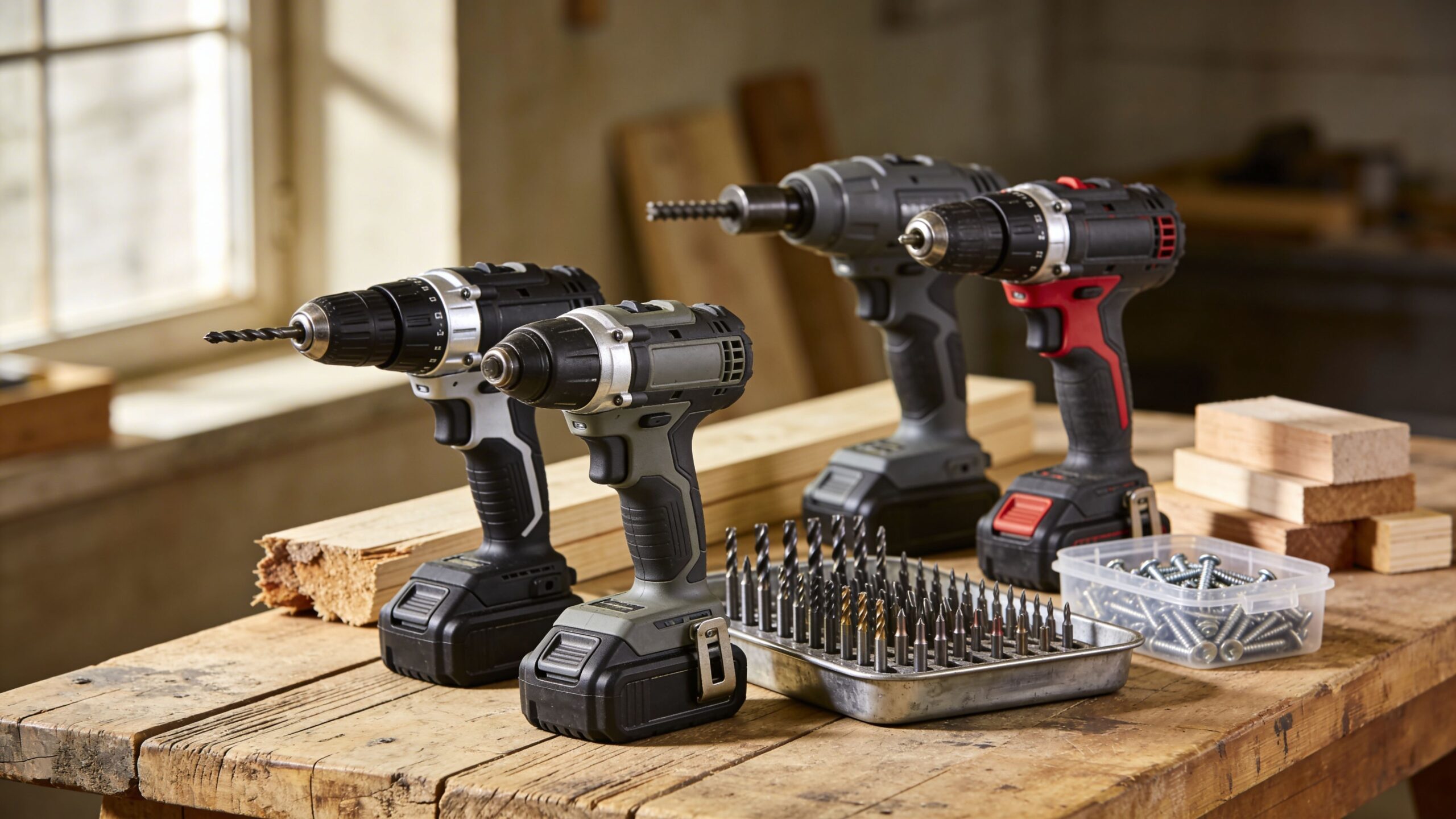
Before you can pick the best drill, it helps to understand the main categories. Although many people use the word “drill” for all of them, these tools are designed for slightly different tasks. A drill driver is the all-around choice for most people. It drills holes and drives screws, making it ideal for household repairs, woodworking, and general DIY use. This is the tool that fits the widest variety of home tasks, which is why it is often the best first drill for a homeowner.
An impact driver looks similar but is built primarily for driving screws and fasteners with more force. It excels when you are working with long screws, dense wood, or repetitive fastening. While it is incredibly useful, it does not fully replace a drill driver because standard drills are still better for many hole-drilling tasks.
A hammer drill adds a pounding action along with the spinning motion. That makes it the right choice for drilling into concrete, brick, and masonry. If your projects include mounting into block walls, installing anchors in concrete, or other masonry work, a hammer drill becomes a major advantage. For many homeowners, a standard cordless drill driver is the best starting point. Later, if projects become more demanding, adding an impact driver or hammer drill can round out the setup.
Cordless Drills Dominate Home Projects for a Reason
For homeowners and DIYers, cordless drills have become the clear favorite. The freedom they offer is hard to beat. You can carry them anywhere in the house, out to the backyard, up a ladder, or into the garage without dragging an extension cord behind you. That flexibility is exactly what makes them so convenient for everyday use.
Modern cordless drills are far more capable than older generations. Improved battery technology has given them better runtime, faster charging, and more than enough power for most household and workshop tasks. A good cordless drill can easily handle cabinet hardware, shelving, light framing, pilot holes, furniture builds, and general repairs. Corded drills still make sense in certain situations. If you work for long stretches in a fixed shop, need continuous power, or plan to use drill attachments for tougher mixing or repetitive heavy-duty work, a corded drill can still be useful. But for the average homeowner, cordless is almost always the better fit. It is simply easier to live with, easier to grab, and more practical for real-world home use.
12-Volt vs 18- or 20-Volt: Which Power Level Is Best?
One of the most common questions buyers ask is whether they should choose a 12-volt drill or a larger 18- or 20-volt model. The answer depends on how much power you truly need and how much weight you want to carry. A 12-volt drill is often one of the best choices for light-duty homeowners. These drills are compact, lightweight, and easy to control. They are excellent for tasks like assembling furniture, installing blinds, hanging wall décor, tightening hardware, and handling everyday fixes around the house. Their smaller size also makes them great for tight spaces and overhead work.
An 18- or 20-volt class drill offers more power, more torque, and often longer runtime. These are better suited for bigger DIY jobs such as drilling larger holes, driving long screws, building outdoor structures, or working with thicker lumber. They are also a good fit for homeowners who want one drill that can handle both normal repairs and more ambitious workshop projects.
For many people, a compact 18- or 20-volt drill hits the best middle ground. It provides more strength than a 12-volt model without necessarily becoming oversized. The best choice comes down to whether you value maximum portability or a little more muscle for future projects.
Comfort, Balance, and Control Are Huge Factors
A lot of buyers get distracted by numbers on the box and forget about something far more important: how the drill actually feels in the hand. Comfort matters. If a drill feels clumsy, front-heavy, or tiring after a few minutes, it will be less enjoyable to use and harder to control. This is especially important for homeowners who may use a drill in awkward positions. Drilling overhead into studs, working inside a cabinet, or driving screws into a backyard project all become easier when the tool feels balanced. A lighter drill often gives better precision and causes less fatigue, which can be more valuable than extra torque you rarely use.
Grip texture, trigger response, handle shape, and overall body length all affect comfort. A compact drill is often the best power drill for beginners because it feels less intimidating and easier to manage. Even experienced DIYers often prefer a smaller drill for daily use because convenience matters just as much as raw strength. The best homeowner drill should feel like a helpful tool, not a workout.
Features That Make the Biggest Difference
Not every feature deserves equal attention, but a few truly matter for homeowners and DIY users. One of the most useful is the clutch. This adjustable setting helps control how much torque the drill applies when driving screws. That means less stripping, less overdriving, and less damage to materials. For furniture assembly, shelving, and finish work, a good clutch makes a real difference.
Variable speed is another essential feature. Slower speeds help with driving screws and drilling into metal, while higher speeds are useful for faster drilling in wood. A drill with responsive trigger control gives you better precision on almost every project. A two-speed gearbox adds flexibility by letting you switch between a lower-power, higher-torque setting and a faster drilling mode. This makes the drill more adaptable to different materials and tasks.
A sturdy keyless chuck matters too. If the chuck grips bits securely and stays tight, drilling becomes smoother and more accurate. Built-in LED lights are also surprisingly useful for dim corners, closets, utility spaces, and cabinets. Brushless motors are often considered a premium upgrade. They usually run cooler, use battery power more efficiently, and tend to last longer than brushed motors. For regular DIYers, they can be worth the investment. For occasional users, a well-made brushed drill may still be perfectly sufficient.
Best Power Drill Setups for Different Homeowners
The best drill is not always a single tool. Sometimes the best setup depends on your skill level and the kinds of jobs you want to do.
For casual homeowners who mostly handle light repairs, a compact cordless drill driver is often the ideal solution. It covers the basics beautifully and keeps things simple. If your typical jobs include hanging shelves, tightening hardware, installing hooks, and assembling home décor, this setup is hard to beat.
For more active DIYers, a drill driver paired with an impact driver is often the strongest combination. The drill can handle pilot holes and standard drilling, while the impact driver takes over for longer screws, tougher fasteners, and more demanding builds. This is a fantastic setup for fencing, deck boards, garage shelving, and larger woodworking projects.
For homeowners who regularly work with concrete or masonry, a hammer drill becomes the better choice. It makes drilling into harder materials far more practical and saves enormous frustration compared to a standard drill. The best drill setup depends on your project list. Once you know what you actually build, fix, or install most often, the right choice becomes much more obvious.
Why Batteries and Tool Platforms Matter
When buying a cordless drill, you are often choosing more than a single tool. You are also stepping into a battery platform. That matters because the battery you buy today may power many other tools tomorrow. A strong battery platform makes it easier to expand your collection over time. If you start with a drill and later decide you want an impact driver, circular saw, work light, blower, or oscillating multi-tool, staying in the same system saves money and keeps charging simpler.
Battery size also affects performance. Smaller batteries keep the drill lighter and easier to handle, while larger batteries add runtime and sometimes more punch. For everyday home use, a smaller pack may be the better fit because it keeps the drill nimble. For bigger outdoor or workshop jobs, larger batteries can be more convenient. The smartest purchase is often not just the best drill itself, but the best overall system for your future projects.
Bits, Accessories, and the Real Secret to Better Results
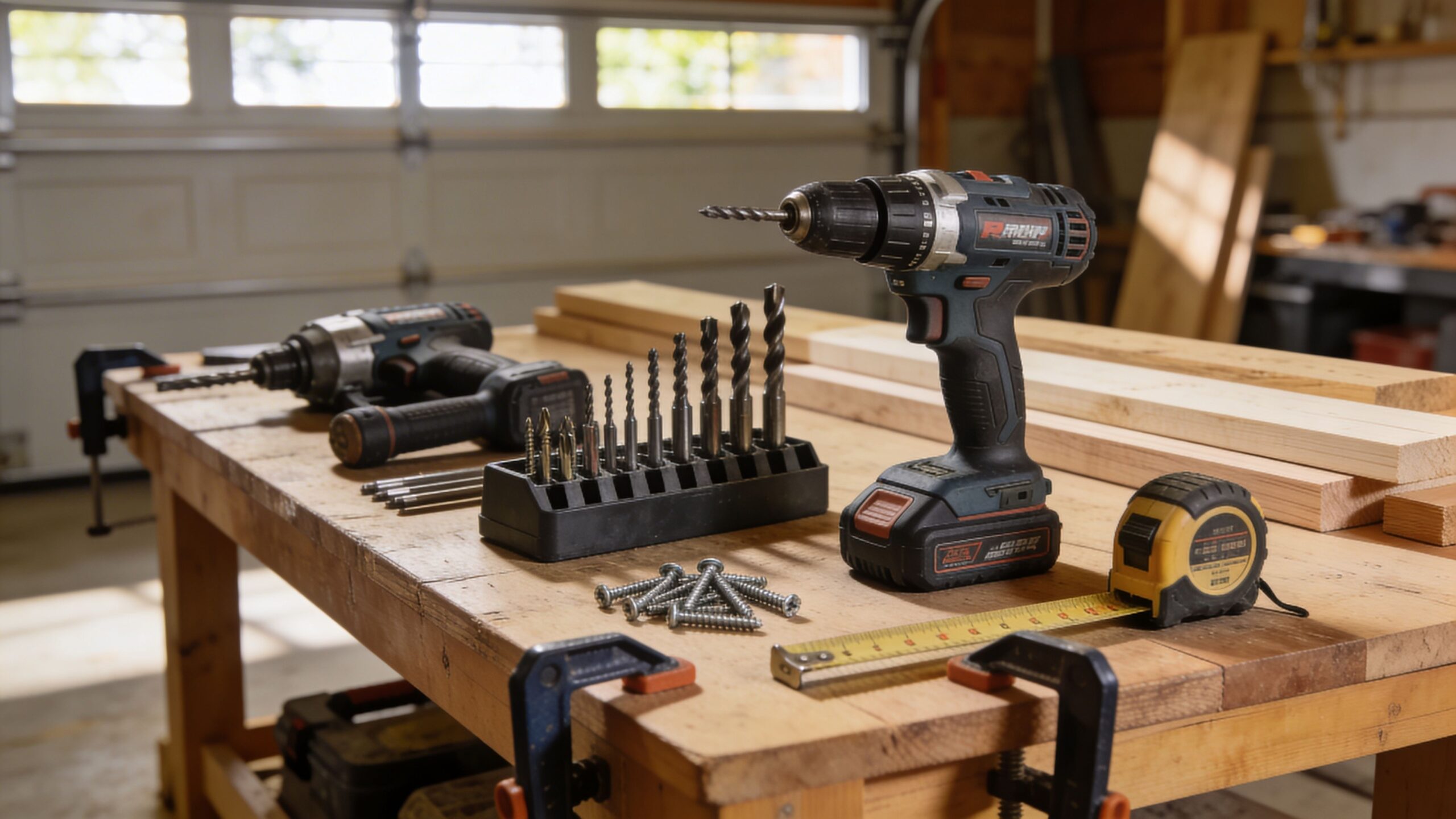
Even the best drill can disappoint when paired with poor accessories. In many cases, the bit matters as much as the tool. Quality drill bits cut cleaner, stay sharper, and make work feel easier. Cheap bits can wander, overheat, or leave rough holes that make the drill seem worse than it really is. Homeowners should have a good range of basic bits for wood, driver bits for screws, and a few specialty pieces such as masonry bits or hole saws depending on their projects. Magnetic bit holders, countersinks, and clamps also make work more efficient and improve results. Many drilling frustrations are actually accessory problems rather than drill problems. A solid drill paired with good bits and the right attachments is what really creates a satisfying DIY experience.
Final Thoughts on the Best Power Drills for Homeowners and DIY Projects
The best power drill for homeowners and DIY projects is the one that matches the work you actually do and makes that work feel easier. For many people, that means a cordless drill driver with good balance, dependable battery life, variable speed, and enough torque to handle both daily home repairs and occasional bigger builds. For others, the best answer may be a drill-and-impact-driver combination or a hammer drill for masonry tasks.
What matters most is not buying the biggest tool or chasing the most aggressive marketing claims. It is choosing a drill that feels comfortable, performs reliably, and supports the kinds of projects you enjoy. A great drill encourages you to fix more, build more, and take on the next project with confidence. For homeowners, that is what makes a drill truly the best. It becomes more than a tool. It becomes the machine that helps transform ideas into finished projects, one screw and one hole at a time.