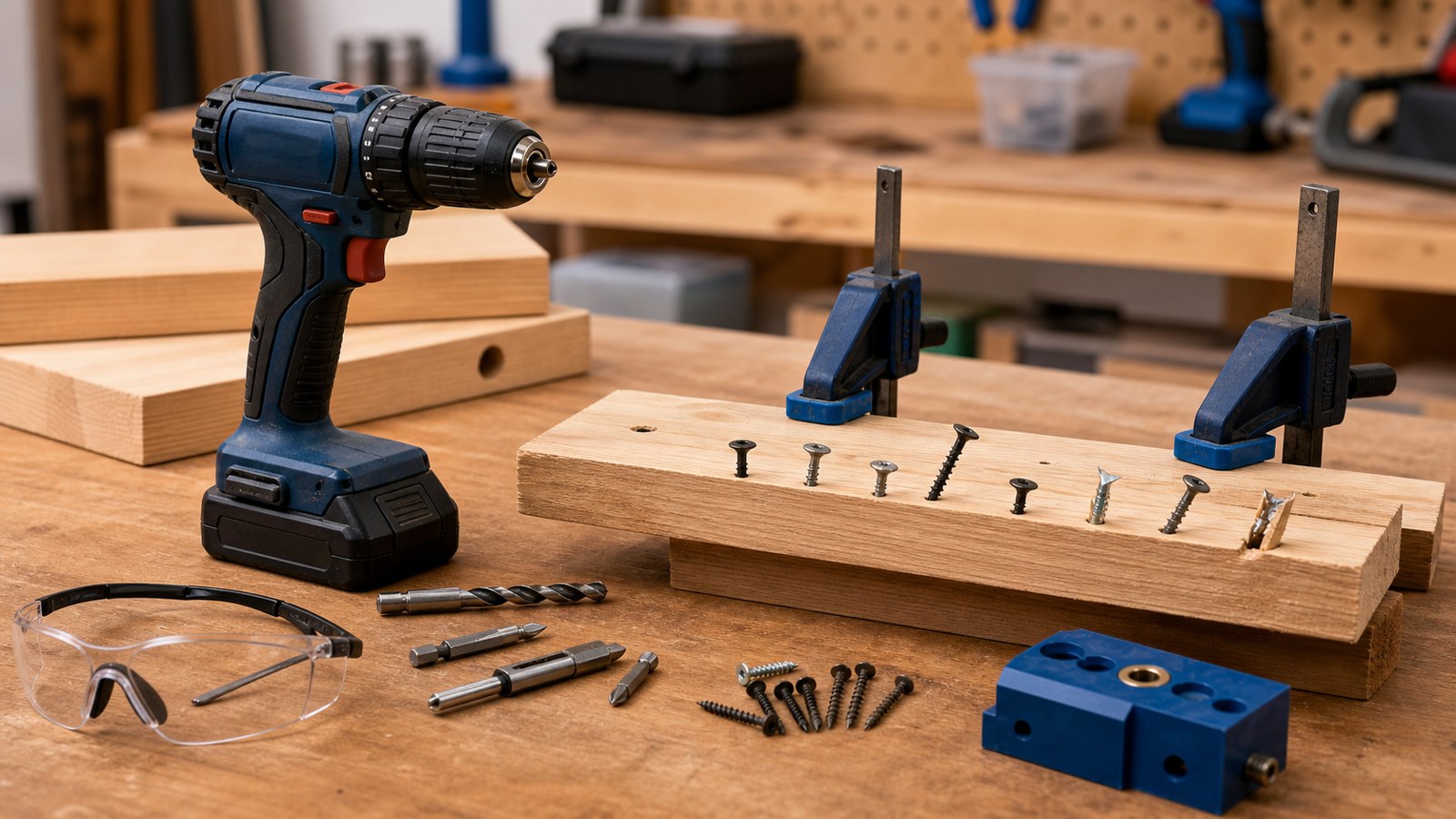
The better drill depends on the work, not just the tool aisle. Cordless drills are easier to grab, carry, and use away from outlets. Corded drills still make sense for long sessions, steady power, and shops where an extension cord is not a problem.
Most homeowners are best served by a good cordless drill, but corded drills have not disappeared for a reason. The right choice comes from the material, runtime, hole size, fastener type, work location, and how often the tool will be used.
A: No. Compare the exact models, operating capacity, gearing, batteries, and intended task rather than judging by power source alone.
A: No. Follow the model's operating and thermal limits even though there is no battery to recharge.
A: A suitable charged cordless tool often reduces power-routing steps, but its controls and capacity must still fit the work.
A: Yes. Compare access, task requirements, cord management, and complete cost with the cordless alternative.
A: No. Include compatible output, working weight, charging provision, and the workload you expect.
A: Do not assume that. Follow the tool and battery restrictions for moisture and operating conditions.
A: It may exclude the battery and charger needed to operate it, along with any task-specific accessories.
A: No. Use a charger explicitly compatible with the battery and follow the manufacturer's charging instructions.
A: Identify a genuine access, control, runtime, or backup need before purchasing another usable tool.
A: Compare similarly capable tools as complete working setups, including power provision, handling, accessories, and expected use.
The Simple Difference
A cordless drill runs on a rechargeable battery. It is portable, convenient, and easy to use anywhere the battery has charge. A corded drill plugs into an outlet. It does not need batteries, but it depends on power access and safe cord management.
That basic difference affects everything else. Cordless tools win on mobility and setup speed. Corded tools win on unlimited runtime and predictable power as long as the outlet and extension cord are appropriate for the tool.
Where Cordless Drills Win
Cordless drills are best for everyday home projects. Hanging shelves, assembling furniture, drilling pilot holes, driving screws, installing hardware, working outdoors, repairing fences, and moving around a house all favor cordless convenience.
The lack of a cord matters more than beginners expect. There is no extension cord to drag through the room, no plug to relocate, and no cord to catch on a ladder, cabinet, or workpiece. For quick tasks, the cordless drill is usually the tool people actually reach for.
Where Corded Drills Still Make Sense
Corded drills still make sense for long drilling sessions, budget workshops, mixing light materials with the right tool, repetitive holes near a bench, and situations where batteries would slow the work. A corded drill can sit unused for months and still run when plugged in.
They can also be affordable. If someone rarely needs a drill but wants reliable power for occasional holes, a basic corded drill may be cheaper than buying a cordless platform with batteries and charger.
Power Is Not Just Voltage
Many shoppers compare cordless voltage to corded amperage as if the numbers tell the whole story. They do not. Drill performance depends on motor design, gearing, battery quality, bit sharpness, speed setting, and how the tool handles load.
A quality cordless drill can outperform a cheap corded drill for many jobs. A heavy-duty corded drill can outperform a light cordless model in sustained drilling. Compare the tool class and intended use rather than assuming one category is always stronger.
Runtime and Battery Life
Cordless runtime depends on battery size, tool efficiency, material, bit size, temperature, and age of the battery. Driving a few cabinet screws uses little energy. Drilling large holes through framing or masonry can drain batteries quickly.
If cordless is the main tool, owning a spare battery helps. One battery can charge while the other works. For occasional DIY use, a single battery may be fine, but it should be charged before a project day.
Battery Platforms Matter
Buying cordless tools often means buying into a battery platform. The drill battery may also power an impact driver, circular saw, light, sander, jigsaw, blower, or yard tool. That can be a major advantage if the platform fits future projects.
Before buying, look at the whole tool lineup, battery cost, charger options, and whether replacement batteries are easy to find. A cheap cordless drill is less appealing if batteries are expensive, weak, or discontinued.
Weight and Balance
Cordless drills carry battery weight. Compact models can feel light and nimble, while larger hammer drills with big batteries can be tiring overhead. Corded drills may be lighter at the tool body, but the cord can pull, snag, or add drag.
For overhead work, cabinet installation, curtain rods, and light-duty tasks, balance matters. A tool that feels powerful on paper may be awkward in the hand after ten minutes. Hold the drill before buying when possible.
Control for Driving Screws
For driving screws, clutch control is important. Most cordless drills have adjustable clutches that help prevent overdriving or stripping screws. Many corded drills are better at drilling than delicate screw driving, though some models offer variable speed control.
If the project involves many screws, a cordless drill or impact driver is usually easier to control. Start slowly, use the right bit, and set the clutch low before increasing power on visible work.
Drilling Large Holes
Large spade bits, auger bits, hole saws, and masonry bits demand more from the tool. A strong cordless drill can handle many of these jobs, especially with fresh batteries. A corded drill may be better when the work is repeated, heavy, or close to an outlet.
Use side handles when provided, keep bits sharp, clear chips often, and avoid forcing the tool. Large bits can bind and twist the drill suddenly. Power is useful, but control is what protects the work and the user.
Shop Work vs Around-the-House Work
In a shop, corded tools are less inconvenient because outlets and benches are nearby. A corded drill can live at a workstation and handle repeated boring, sanding attachments, or jig work without battery planning.
Around the house, cordless usually wins. Moving from room to room, climbing ladders, working outside, and handling quick repairs all favor portability. The best tool is often the one that makes the job easy to start.
Outdoor Projects
Cordless drills are excellent outdoors because outlets may be far away. Fence repairs, deck work, garden structures, sheds, gates, and exterior hardware all benefit from battery portability. There is no cord across wet grass, walkways, or ladders.
For outdoor corded work, use a properly rated extension cord and GFCI protection. Keep cords away from water, sharp edges, and trip paths. Cord safety matters as much as drill power.
Extension Cord Safety
A corded drill needs the right extension cord. A thin or overly long cord can reduce performance and overheat. Use a cord rated for the tool and environment. Outdoor work needs outdoor-rated cords.
Route cords where they cannot be cut, pinched, tripped over, or pulled off a ladder. Corded tools are reliable, but the cord adds a jobsite hazard that cordless tools avoid.
Cold Weather and Storage
Batteries do not love extreme temperatures. Cold can reduce runtime, and heat can shorten battery life. Store batteries according to the manufacturer’s instructions and avoid leaving them in hot vehicles or freezing garages for long periods.
Corded drills are less sensitive to battery storage because they do not have batteries. For people who use a drill only a few times a year, that simplicity can be useful.
Maintenance and Long-Term Cost
Cordless drills may eventually need replacement batteries. Batteries are often the most expensive part of the system. Corded drills avoid that cost, but they still need clean vents, good cords, and safe storage.
For frequent users, cordless battery cost is usually worth the convenience. For rare users, a corded drill can be a low-maintenance backup. The best value depends on how often the tool comes out and whether more cordless tools are planned.
When to Own Both
Many DIYers eventually own both. A cordless drill handles most daily tasks, while a corded drill stays ready for long sessions, dirty work, backup use, or projects where batteries would be annoying. Owning both is not wasteful if each tool has a role.
If buying only one, start with the tool that matches the most common work. For most homeowners, that is cordless. For a bench-focused hobbyist on a tight budget, a corded drill may still be reasonable.
What About Impact Drivers?
An impact driver is not the same as a drill. It is excellent for driving screws, lag bolts, and fasteners, but it is not always ideal for clean holes. Many cordless kits include both a drill and impact driver because they complement each other.
If the work is mostly fastening, an impact driver may matter as much as the drill choice. If the work is drilling clean holes, use a drill with the right bit and speed control.
Best Choice for Beginners
A beginner usually benefits from a cordless drill with adjustable clutch, variable speed, two speed ranges, a comfortable grip, and batteries from a platform with room to grow. A compact 18V or 20V-class drill is enough for most household work.
Do not buy only by maximum power. A drill that is too heavy or aggressive can be harder to control. Comfort, clutch settings, battery quality, and bit selection matter more for everyday success.
Features That Matter Most
Look for variable speed, a clutch, a keyless chuck, comfortable grip, useful LED placement, and enough torque for common materials. A two-speed gearbox is helpful because low speed gives control for driving screws and larger bits, while high speed helps with smaller holes.
Brushless motors can improve runtime and durability, but they are not the only thing that matters. A well-balanced brushed drill may still be fine for light home use. The tool should feel controllable before it feels impressive.
Match the Drill to the Material
Drywall anchors, softwood, hardwood, metal, masonry, tile, and composite decking all ask different things from a drill. Cordless drills handle most wood and household fastening. Masonry may need a hammer drill or rotary hammer depending on the hole size and material.
Do not blame the drill before checking the bit. A dull bit, wrong bit type, or poor speed choice can make any drill feel weak. Sharp bits and correct technique often matter more than upgrading the tool body.
Good Projects for Cordless Drills
Cordless drills shine on cabinet hardware, curtain rods, flat-pack furniture, pilot holes, deck screws, fence repairs, small shelves, door hardware, picture hanging, and general repairs. These jobs involve movement, short bursts of drilling, and frequent repositioning.
They are also convenient for quick fixes. If a hinge is loose or a bracket needs pilot holes, a charged cordless drill can be working in seconds. That convenience is why cordless tools get used so often.
Good Projects for Corded Drills
Corded drills make sense for repeated bench drilling, long shop sessions, mixing small batches with appropriate attachments, drilling many holes near an outlet, and backup use when batteries are dead. They are also useful for someone who wants a reliable drill without maintaining a battery platform.
A corded drill is less convenient on ladders, roofs, yards, and large rooms, but it can be dependable in one place. If the work is stationary, the cord becomes less of a drawback.
Do Not Ignore Bits and Accessories
The best drill will disappoint with poor bits. Keep twist bits, brad-point bits, spade bits, countersinks, driver bits, masonry bits, and hole saws matched to the material. Replace worn driver bits before they strip screws.
Accessories should be chosen with the same care as the drill. A sharp bit, correct pilot hole, and proper clutch setting can make a modest drill perform better than an expensive drill used carelessly.
When Power Becomes a Safety Issue
More power is not always safer. Large bits can bind, twist wrists, damage workpieces, or throw the user off balance. This is true for both corded and cordless drills. Use side handles when available and keep a firm stance.
Start holes slowly, let the bit cut, and back out to clear chips. For awkward positions, overhead drilling, or ladder work, control matters more than maximum torque. A smaller drill used carefully can be safer than a heavy tool used aggressively.
The Best Answer for Most Homes
If a homeowner is buying a first drill today, cordless is usually the better starting point. It covers the widest range of repairs, installs, and weekend projects with less setup. Choose corded only when the work is mostly stationary, budget is tight, or unlimited plug-in runtime matters more than convenience.
Final Cordless vs Corded Drill Review
Choose cordless when mobility, quick setup, ladder work, outdoor work, and everyday repairs matter most. Choose corded when unlimited runtime, low cost, shop use, or occasional plug-in reliability is more important.
For most homes, a quality cordless drill is the better first choice. A corded drill remains useful as a backup or shop tool, especially when long drilling sessions and steady outlet power matter more than portability.